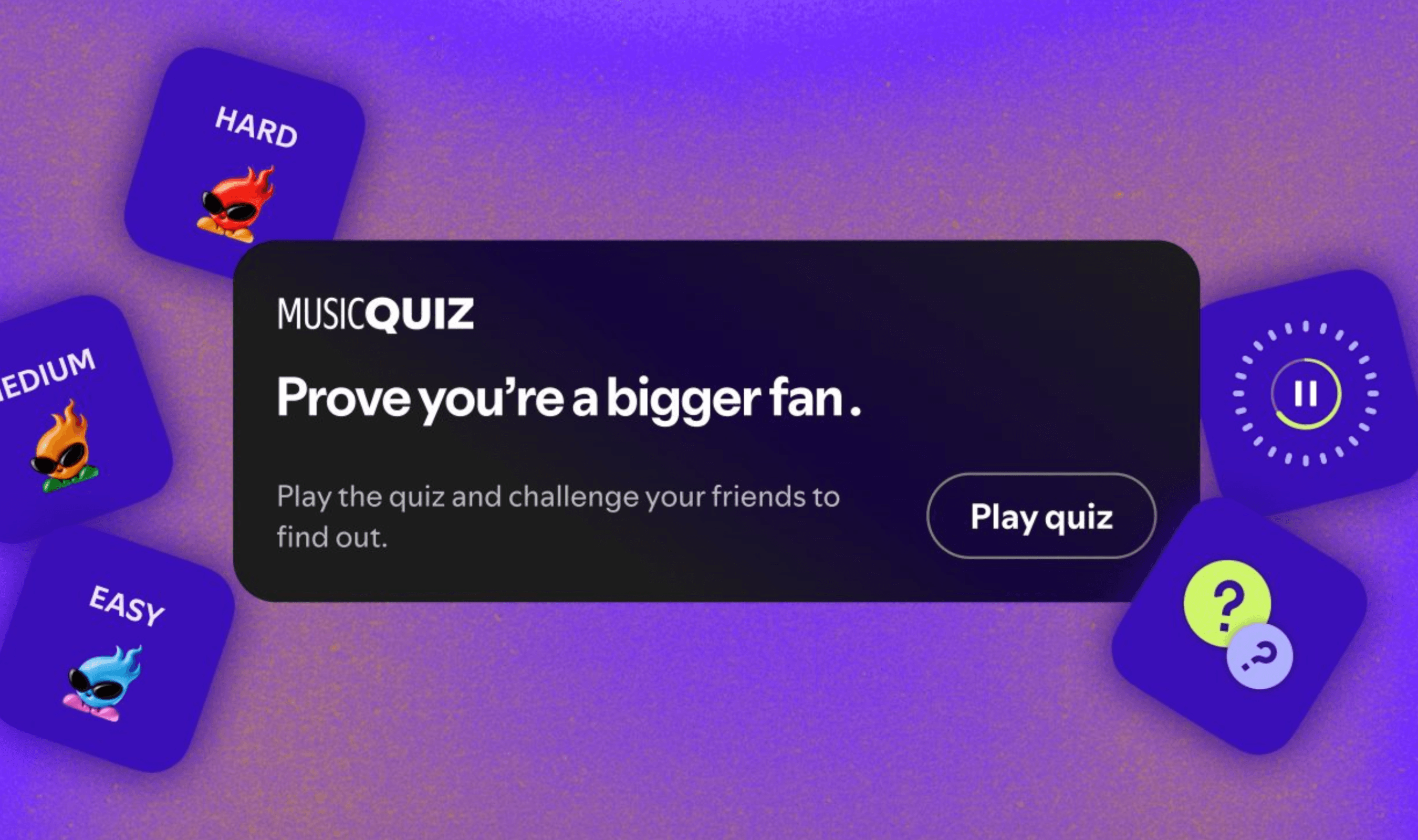
Spotify is expanding Music Quiz today with quizzes covering more than 2,000 artists, letting listeners identify songs, recognize artwork and answer questions about musicians while using the app. The rollout covers 11 countries and initially serves Spotify Premium users aged 18 or older. The quizzes launch in English for selected artists, and Spotify says access will reach listeners gradually.
Eligible markets include India, Indonesia, Singapore and Nigeria, alongside South Africa, Australia and New Zealand. Listeners in Canada, Ireland, the U.S. and the U.K. are also included in the initial rollout. Spotify cautions that some listeners and artists will not have Music Quiz immediately, even as the feature begins reaching those markets.
Read more: Spotify Opens Fresh Finds Forward to About 10,000 Indie Artists a Year
To find a quiz, listeners need the latest Spotify app version and must start playing a song by an artist taking part. Scrolling down within the Now Playing view brings them to a Music Quiz card, which they can tap to begin answering questions about that artist and their work. Completing the quiz reveals a score, and listeners can share their results with friends to compare performances.
The questions draw on an artist's catalog as well as significant events and milestones in their career. Some challenges ask listeners to identify a song from a preview of its audio, while others use album artwork reveals or music trivia. Spotify says it plans to expand the selection of artists and add languages and markets beyond those included at launch.
The broader rollout follows Spotify's first Music Quiz earlier this year, which gave ARMY a way to test their knowledge of BTS. That earlier experience focused on BTS, while the expansion brings quizzes about more than 2,000 artists to eligible Premium listeners.
The Premium restriction contrasts with Spotify's recent kids music setting, whose rollout began September 15 for mobile listeners worldwide on both Free and Premium. That control lets users exclude children's and family music from the history used for recommendations, including removing earlier listening from their taste profile.