
SpaceX faces its highest-stakes Starship test yet Thursday, and not just because of the 407-foot rocket.
Flight 13 is the company's first launch since its record-shattering $1.75 trillion IPO in June. It's also the first time Starship will carry live Starlink satellites instead of dummy payloads. And it all happens under the scrutiny of NASA, which needs Starship ready for the Artemis III moon mission in 2027.
The Federal Aviation Administration cleared SpaceX to fly again after closing its mishap investigation into the May 22 booster failure. The FAA identified the most probable root causes as "heat effects on propulsion system components during the ascent and erroneous engine alarm system settings," the agency said in a statement Monday.
SpaceX has since modified the engine startup sequence and alarm systems. The company said it made "several hardware and operational modifications" to prevent a repeat of the issue that caused the Super Heavy booster to rotate 90 degrees in the wrong direction during hot staging. The May 22 flight, the debut of the V3 Starship configuration, was largely successful otherwise.
The upper stage deployed 20 satellite simulators and two modified Starlinks that captured footage of Starship in space. But the booster's engines failed to relight properly, and it crashed into the Gulf of Mexico. One of the upper stage's three Raptor engines also failed after separation.
SpaceX is targeting a 90-minute launch window opening at 6:45 p.m. ET Thursday from its Starbase facility in Texas. The company has backup windows on July 17 and 18, according to FAA airspace notices. The mission marks the quickest turnaround between Starship launches yet, just 55 days since Flight 12.
It will also be the second-ever flight of the V3 configuration, which at 407 feet is the tallest and most powerful rocket ever launched. For the first time, Starship will deploy 20 functional V3 Starlink satellites designed to "connect with the larger Starlink constellation via high-capacity lasers," SpaceX said on its website.
Six of the satellites carry cameras to photograph Starship's exterior. The satellites will burn up in the atmosphere about 20 minutes after deployment.
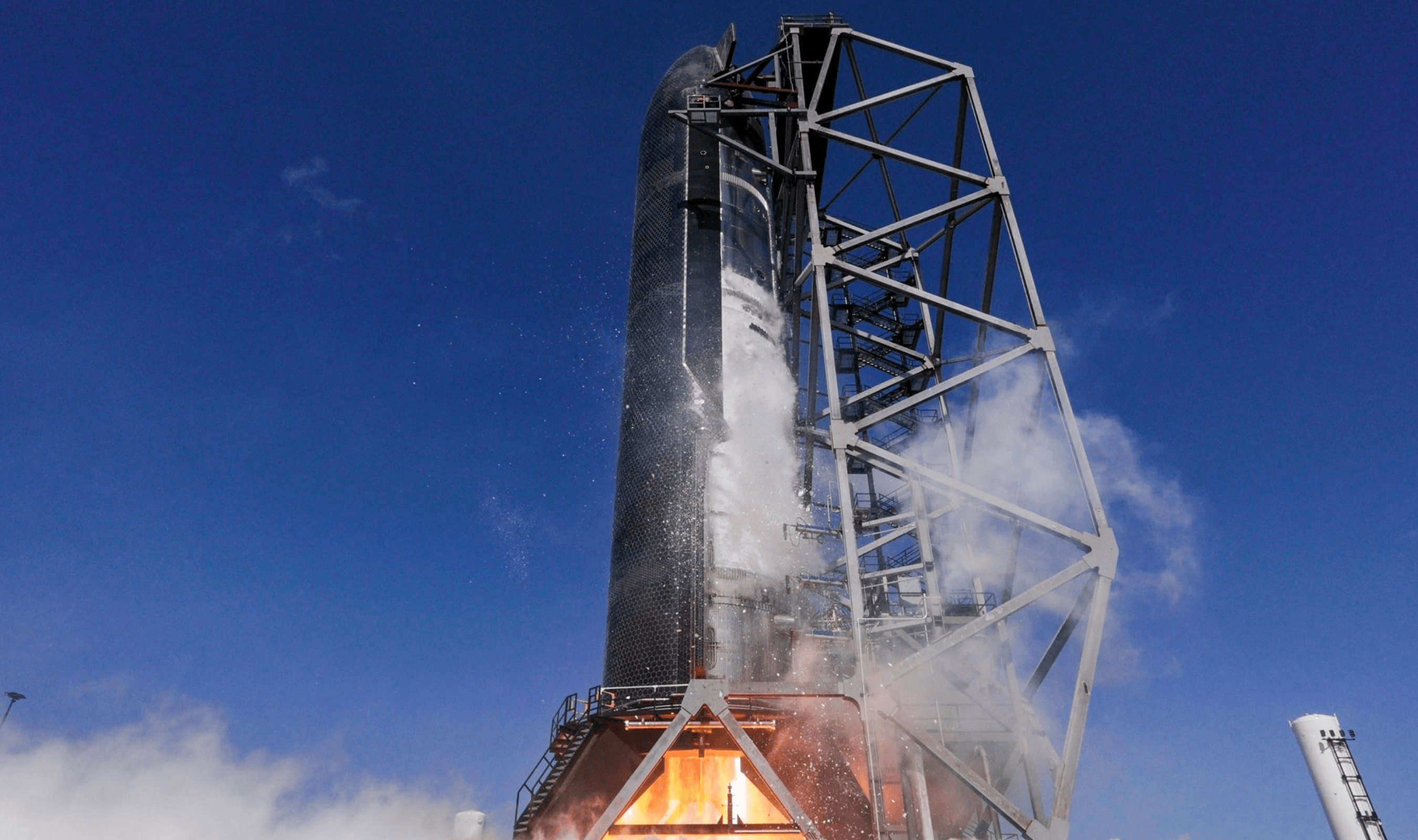
SpaceX has already moved Booster 20 back to pad 2 at Starbase, and Ship 40, the upper stage, was transported to the pad today for a wet dress rehearsal. The stakes extend beyond the flight itself.
This is SpaceX's first test as a public company, testing whether the market accepts the "fly, fail, fix" approach that CEO Elon Musk has called "rapid unscheduled disassembly." SpaceX went public June 12 on the Nasdaq in the largest IPO in stock market history, raising nearly $86 billion.
NASA is watching closely. The agency is under contract with SpaceX to have a Starship variant ready for Artemis III, which will send astronauts to Earth orbit to test lunar landers from SpaceX and Blue Origin.
SpaceX released a 34-minute documentary titled "Critical Path" this week that follows engineers through the final push to get the V3 Starship off the ground in May, a window into the pressure the company faces to deliver.