

In a development for the wearable AI market, Sensory, Inc. a leader in edge AI for speech recognition and biometrics, announced today that it will optimize its ultra-efficient Sensory Micro engine for use in Qualcomm's newly unveiled Snapdragon Wear Elite platform. This collaboration promises to bring high-performance wake word detection, speech recognition, and biometric capabilities to next-generation wearables while consuming only a fraction of the power typically required.
The announcement comes just days after Qualcomm revealed its premium Snapdragon Wear Elite chipset at Mobile World Congress 2026 in Barcelona. The new platform represents a major leap forward for wearable computing, featuring a 3nm process node with big.LITTLE architecture for the first time in Qualcomm's wearable lineup.
A Perfect Match for Low-Power Wearables
Sensory's technology suite includes Sensory Micro, a compact version of its keyword spotting technology specifically optimized for resource-constrained environments. The company has developed a model format compatible with Qualcomm's audio technology stack that can store multiple speech models and key phrases while leveraging standard Qualcomm modules and interfaces.
"Running Sensory's speech and biometric technologies directly on Qualcomm Technologies' Low Power Island will open exciting new applications for on-device AI," said Todd Mozer, CEO of Sensory, Inc. "We're now able to deliver high-quality wake word and voice control experiences at extremely low power, ensuring privacy, responsiveness, and battery efficiency, all at the edge."
The integration is particularly significant because Snapdragon Wear Elite features what Qualcomm calls "low-power islands", specialized sub-systems within the main chip optimized for specific duties such as audio processing. These islands include an eNPU (embedded Neural Processing Unit) dedicated to always-on AI tasks like keyword detection, activity recognition, and noise suppression.
Technical Integration Details
Sensory has created a modified Android audio system that works smooth alongside other modules in Qualcomm's audio processing software stack. Paired with a new packing and unpacking toolset, the module can be integrated with Qualcomm and Android sound system layers to handle Sensory models natively.
This enables applications to extract model data such as keyphrase strings, counts, and types dynamically. The system also returns detailed recognition results and confidence levels to applications using existing Qualcomm Technologies' pathways, simplifying developer integration across diverse product designs.
"This partnership showcases how we work together to unlock rich voice interfaces on power constrained devices," said John Kehrli, Senior Director of Product Management at Qualcomm Technologies, Inc. "It makes it easier for OEMs to add security-focused, voice-first experiences to next-generation wearable devices powered by Snapdragon Wear Elite."
Snapdragon Wear Elite: A New Era for Wearables
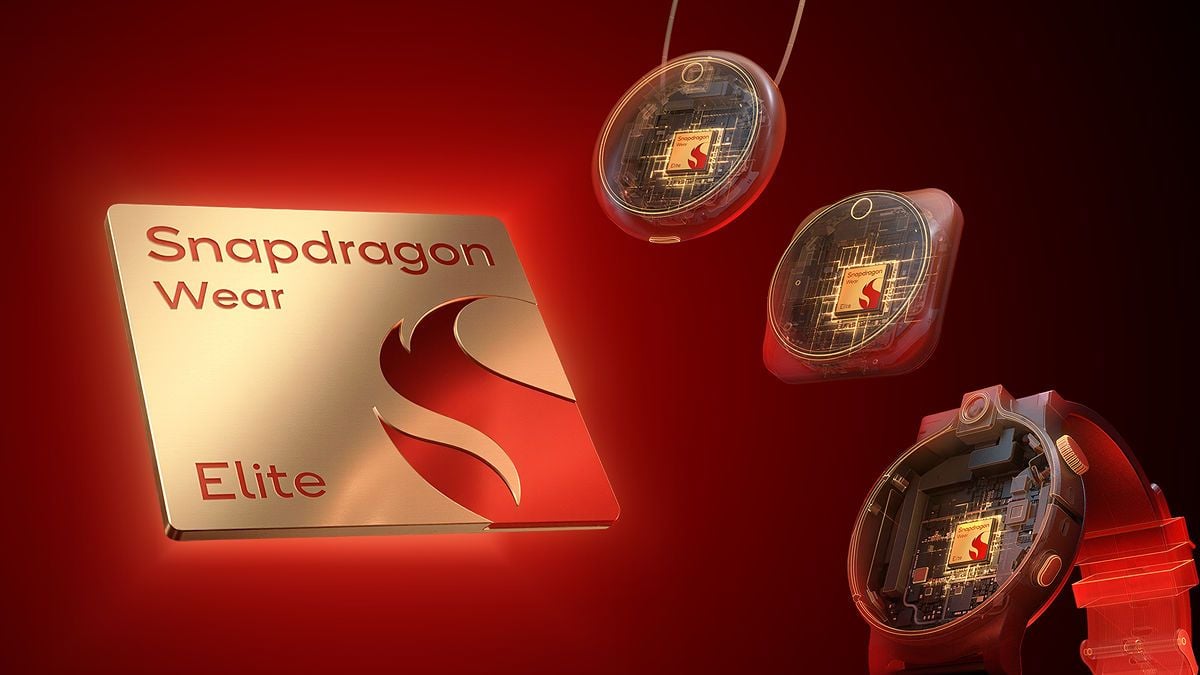
The Snapdragon Wear Elite platform represents a substantial upgrade over previous generations. Key specifications include:
- 5x increase in single-core CPU performance compared to the W5+ Gen 2
- Up to 7x improvement in GPU performance with 1080p at 60 FPS support
- Hexagon NPU capable of running up to 2 billion parameters on-device
- eNPU dedicated accelerator for low-power always-on AI tasks
- 30% longer battery life compared to previous generation chips
- 50% charge in just 10 minutes for typical 300, 600 mAh wearable batteries
The platform also introduces what Qualcomm calls "hex-connectivity," featuring Wi-Fi 6 (802.11ax), Bluetooth 6.0, Ultra Wideband (UWB) for device unlocking use cases, GNSS location services, 5G RedCap for efficient cellular connectivity, and NB-NTN satellite connectivity.
Samsung has already confirmed that its next-generation Galaxy Watch will use Snapdragon Wear Elite to become an "even more wellness companion." Google has aligned its vision with the new platform, saying Wear OS is "reimagining the smartwatch experience and moving from an operating system to an always with you intelligent system that understands and works for you," according to remarks at MWC 2026.
Beyond smartwatches, the platform is designed for various AI form factors including smart glasses, AI pins with cameras, pendants, and other portable devices. The combination of Sensory's speech and biometric technologies with Snapdragon Wear Elite's processing capabilities opens up new possibilities for:
- Always-on voice assistants that work without draining battery life
- Biometric authentication through voice patterns or other physiological signals
- Context-aware recommendations based on real-time sensor data
- Natural voice interactions without cloud dependency
- Enhanced privacy through on-device processing
Sensory brings considerable expertise to this partnership, having powered over 2 billion devices globally through partnerships with Amazon, Google, Microsoft, Samsung, and other major technology companies (Sensory's website notes it powers over 3 billion devices). With more than 60 patents in speech recognition and biometric technologies spanning automotive, consumer electronics, wearables, medical devices and more.
Qualcomm says the first commercial devices powered by Snapdragon Wear Elite are expected to be available in the coming months. With Sensory's optimized technology stack now integrated into the platform's low-power islands, consumers can expect smarter wearables that understand natural voice commands while maintaining all-day battery life, a combination that has long eluded the wearable industry.