

Samsung announced the Exynos 2600 processor on Friday, marking the world's first 2nm smartphone chip. The company confirmed mass production has begun for the Gate-All-Around (GAA) technology processor, which will power Galaxy S26 series devices launching in February.
The Exynos 2600 delivers 39% better CPU performance and 113% higher generative AI capability compared to its predecessor, according to Samsung. The chip features a 10-core CPU architecture with one C1-Ultra core clocked at 3.8GHz, three C1-Pro cores at 3.25GHz, and six efficiency cores at 2.75GHz.
Samsung's new processor integrates CPU, NPU, and GPU into a single compact chip designed for enhanced AI and gaming experiences. The Xclipse 960 GPU, based on AMD's RDNA 3 architecture, offers twice the compute performance of previous generations and up to 50% better ray tracing.
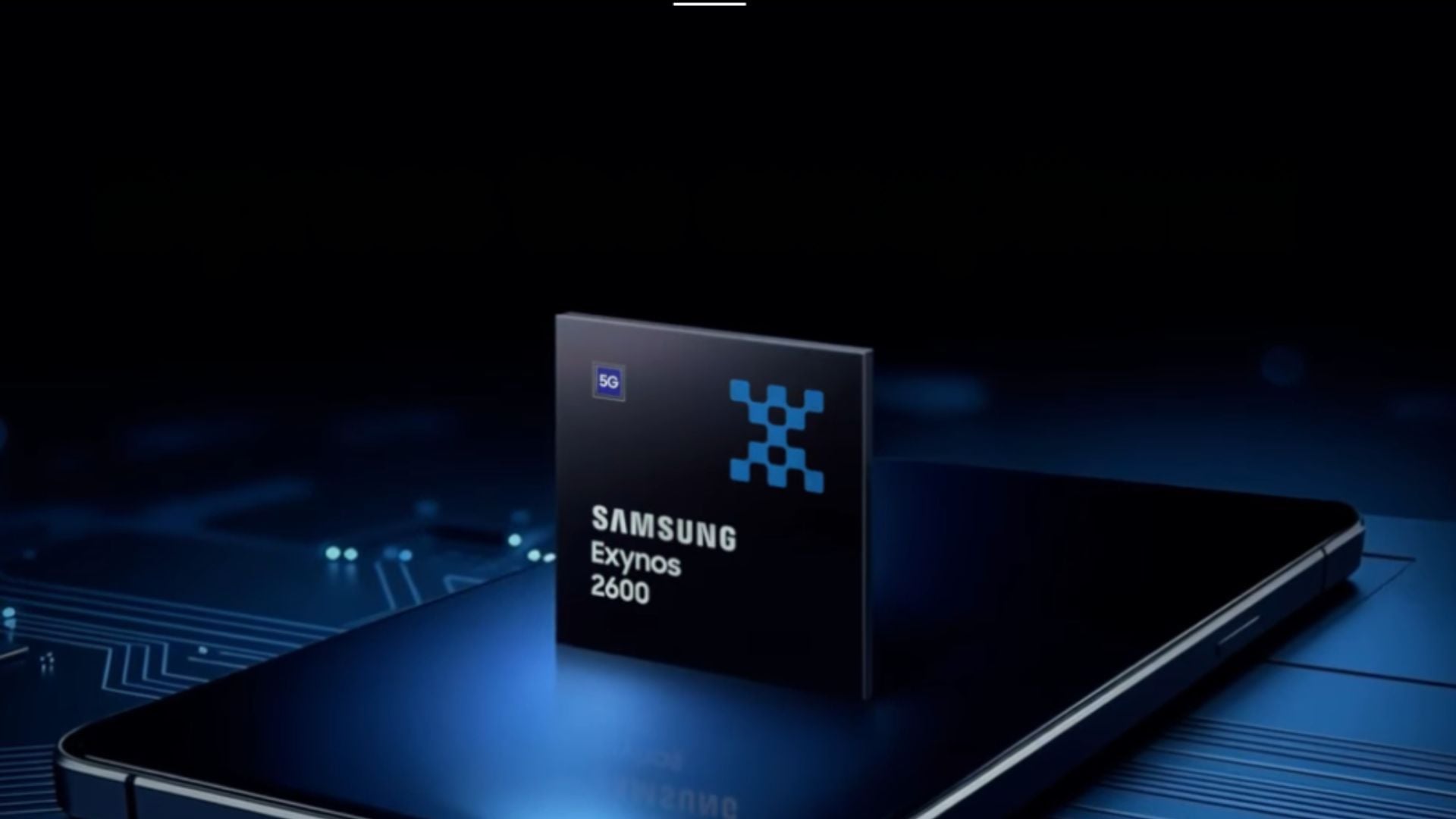
The company plans to launch Galaxy S26 smartphones in February in the United States, with the Exynos 2600 expected to power S26 and S26+ models in select markets. Samsung will continue its regional chip strategy, with some regions receiving Snapdragon-powered variants instead.
Industry sources indicate Samsung began commercial production of the 2nm processor last month. The Exynos 2600 reportedly outperforms Qualcomm's Snapdragon 8 Elite Gen 5 by 30% in NPU performance and 29% in graphics processing capability.
Samsung's thermal improvements include a new Heat Path Block design that reduces thermal resistance by 16%. The chip supports camera sensors up to 320 megapixels, 8K video recording at 30fps, and displays up to 4K resolution with 120Hz refresh rates.
Security enhancements feature hardware-backed post-quantum cryptography for future-proof protection. The Visual Perception System enables real-time detail detection, while Deep Learning Video Noise Reduction improves low-light video quality.
Samsung's Exynos Neural Super Sampling (ENSS) technology uses AI-based upscaling and frame generation for smoother gameplay. The company claims the ISP is 50% more power-efficient than previous designs, addressing historical thermal concerns with Exynos chips.
The Galaxy S26 series launch represents Samsung's most significant semiconductor advancement since adopting GAA technology. Early 2026 smartphone buyers will determine whether the 2nm process delivers promised efficiency gains against competing platforms from Qualcomm and MediaTek.