
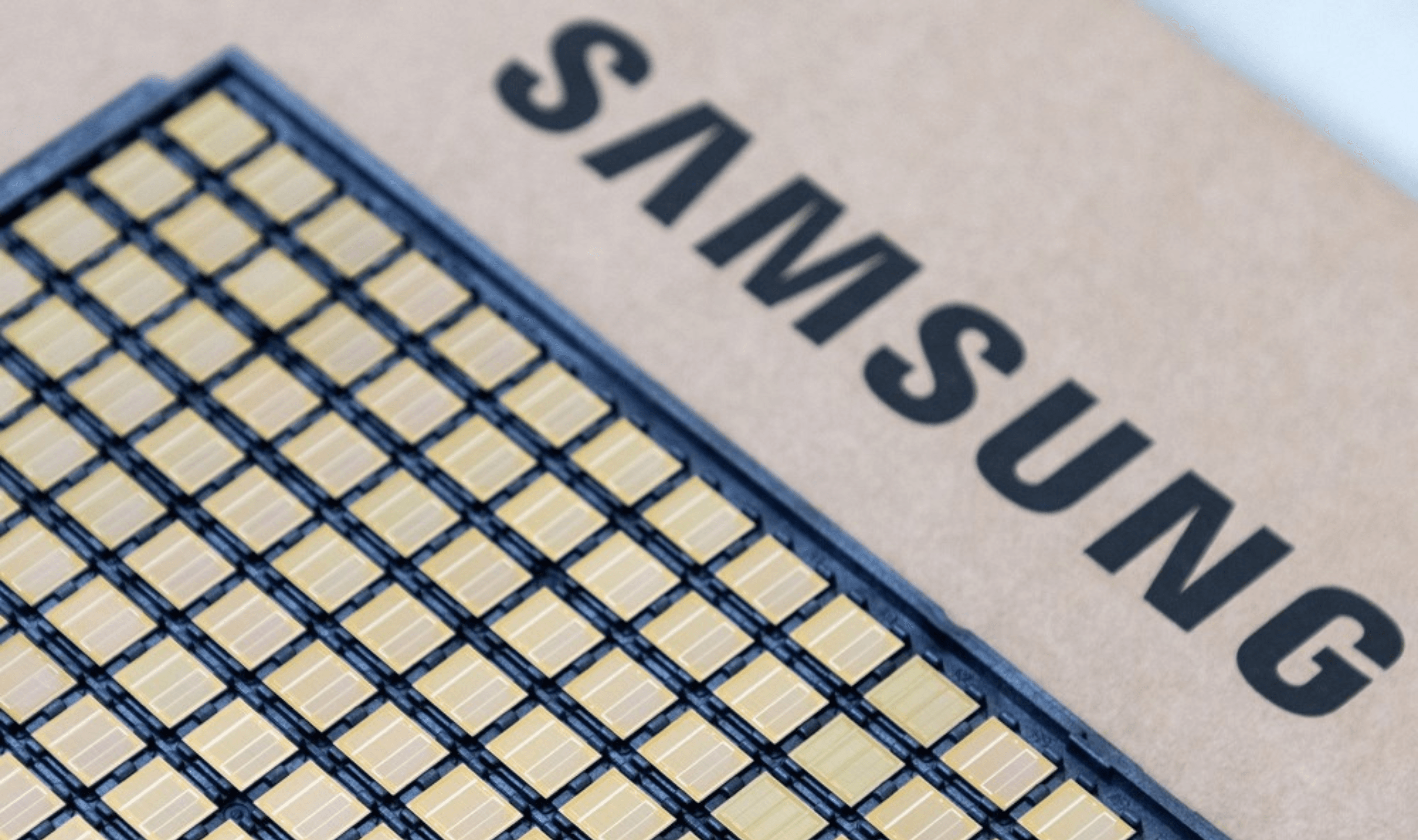
Samsung Electronics started shipping commercial HBM4 memory chips to customers including Nvidia on Thursday, claiming an early lead in the race to supply AI accelerator components.
The Korean chipmaker moved up its timeline by about a week to begin mass shipments ahead of rival SK Hynix. Samsung shares jumped 7.6% on Nextrade, renewing an all-time high following the announcement.
Samsung's HBM4 delivers 11.7 gigabits per second processing speed, 46% faster than the 8 Gbps industry standard. The chips run 22% faster than HBM3E's maximum 9.6 Gbps pin speed, with potential to reach 13 Gbps as AI models grow more complex.
"We're now demonstrating Samsung's true capabilities once again," said Jaihyuk Song, president and chip division chief technology officer. "You can see this as us returning to our original state."
The company achieved stable yields by leveraging advanced 1c DRAM processors and 4-nanometer logic technology. Samsung skipped conventional designs to adopt its most advanced 6th-generation 10nm-class DRAM process from the outset.
Total memory bandwidth per stack has nearly tripled to 3.3 terabytes per second compared to HBM3E. Power efficiency improved 40% through low-voltage through-silicon via technology and optimized power distribution networks.
Samsung expects HBM revenue to triple in 2026, driven by strong AI-driven memory demand. The company plans to begin manufacturing HBM chips at its P5 facility in Pyeongtaek from 2028.
The 12-layer HBM4 offers capacities from 24GB to 36GB, with 16-layer versions reaching 48GB planned for later release. Samsung is preparing to ship HBM4E samples in the second half of this year, with customized HBM products scheduled for 2027.
Samsung competes with SK Hynix and Micron Technology for Nvidia orders. HBM4 chips will power Nvidia's upcoming Vera Rubin accelerators, considered the most capable semiconductors for training and operating AI.
Micron told investors on Wednesday it began producing HBM4 chips in high volumes. SK Hynix said in October it would begin supplying HBM4 to customers in the fourth quarter, shifting to full-fledged sales in 2026.
Samsung's milestone marks a comeback after falling behind domestic contender SK Hynix in recent years. The company is consistently receiving supply requests from global hyperscalers that design their own customized AI chips, such as ByteDance which is negotiating with Samsung for manufacturing and memory supply.
The company had previously announced mass production plans for HBM4 memory chips this month.