
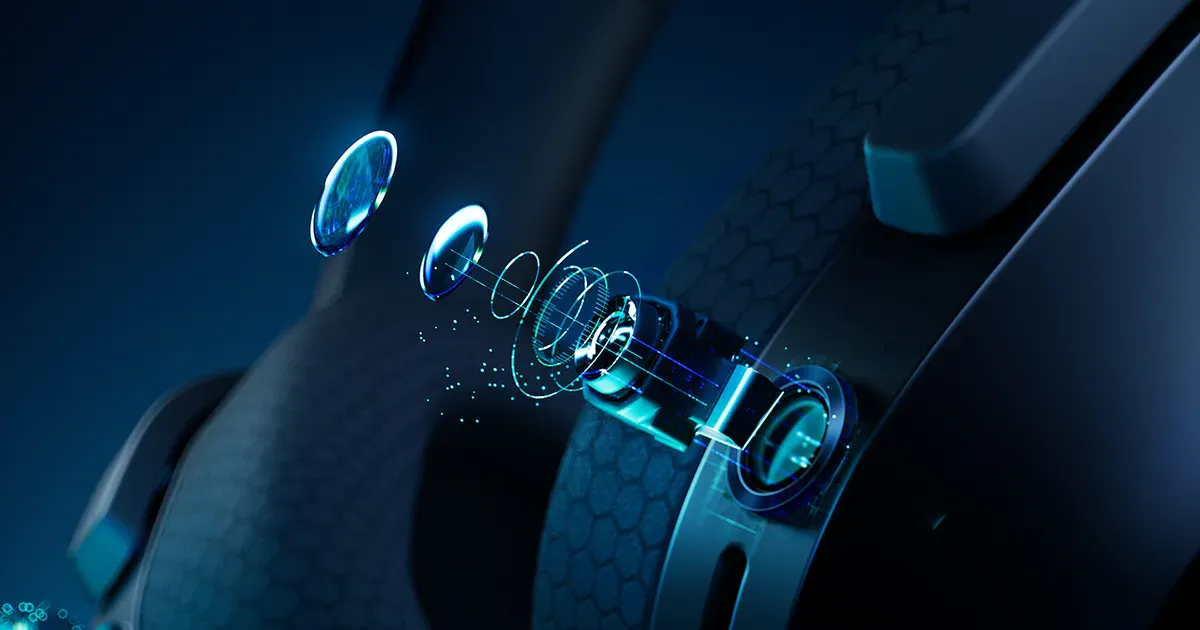
Razer unveiled Project Motoko at CES 2026, a concept AI wearable that integrates dual cameras and microphones into a headphone form factor. The device targets the 1.4 billion existing headset users rather than competing directly with smart glasses.
Powered by Qualcomm Snapdragon silicon, Project Motoko features first-person-view cameras positioned at eye level for real-time object and text recognition. Its microphone array captures both near and distant audio, while the headphone design provides more internal space for components than smart glasses.
The wearable integrates with major AI models including OpenAI, Google Gemini, and xAI's Grok. Razer CEO Tan Min-Liang said the company will invest over $600 million into artificial intelligence over the next few years, hiring 150 AI scientists as part of its AI-focused strategy.
Project Motoko can translate text, program custom workouts, and suggest recipes using available ingredients. In testing, the wireless headset achieved up to 36 hours of battery life, significantly longer than Meta's Ray-Ban AI glasses, which get about six hours on a single charge according to The Verge.
Razer plans to release Project Motoko this year at a "slight premium" over high-end headphones. The company's most expensive current headset retails for $400. Razer went private in 2022, which the company says allows it to focus on long-term AI investments.
The headphone approach addresses several smart glass limitations. Most people already own audio gear but not everyone wears glasses regularly, and prescription wearers avoid expensive lens investments. Headphones also offer superior sound quality and larger batteries.
Alongside Project Motoko, Razer introduced Project AVA, a desk-bound holographic avatar that gives physical form to AI assistants. The cylindrical device uses cameras and microphones to interact with users and will launch in the second half of 2026 with a $20 reservation fee.
Razer's AI push extends beyond consumer hardware. The company launched Razer QA Companion in November 2025, an AI tool that helps game developers catch 25% more bugs and reduce QA time by 50%. About 50 studios have already adopted the platform.
The gaming peripherals maker sees AI in gaming as "completely untapped" with 150 million users on its software platform. CEO Tan Min-Liang believes mainstream adoption will come to gaming rather than Razer needing to broaden beyond its core audience.
Project Motoko remains a concept with no guaranteed commercial release. Razer has a history of showcasing speculative hardware at CES, with many concepts never reaching production.