
The US cleared roughly 10 Chinese companies to buy Nvidia's H200 chips this week, but not a single unit has shipped, leaving the world's most valuable chipmaker stuck between dueling US and Chinese priorities. The Commerce Department approved Alibaba, Tencent, ByteDance, and JD.com to purchase Nvidia's second-most-powerful AI accelerator. Distributors Lenovo and Foxconn also received authorization.
Each approved buyer can purchase up to 75,000 chips under the licensing terms, either directly from Nvidia or through intermediaries.
Nvidia shares rose 2.3% on the news, trading near $225.83. The problem: Beijing has told its domestic tech firms to hold off. Chinese companies pulled back after receiving guidance from the State Council, which is pushing a supply-chain security review aimed at reducing dependence on US semiconductors.
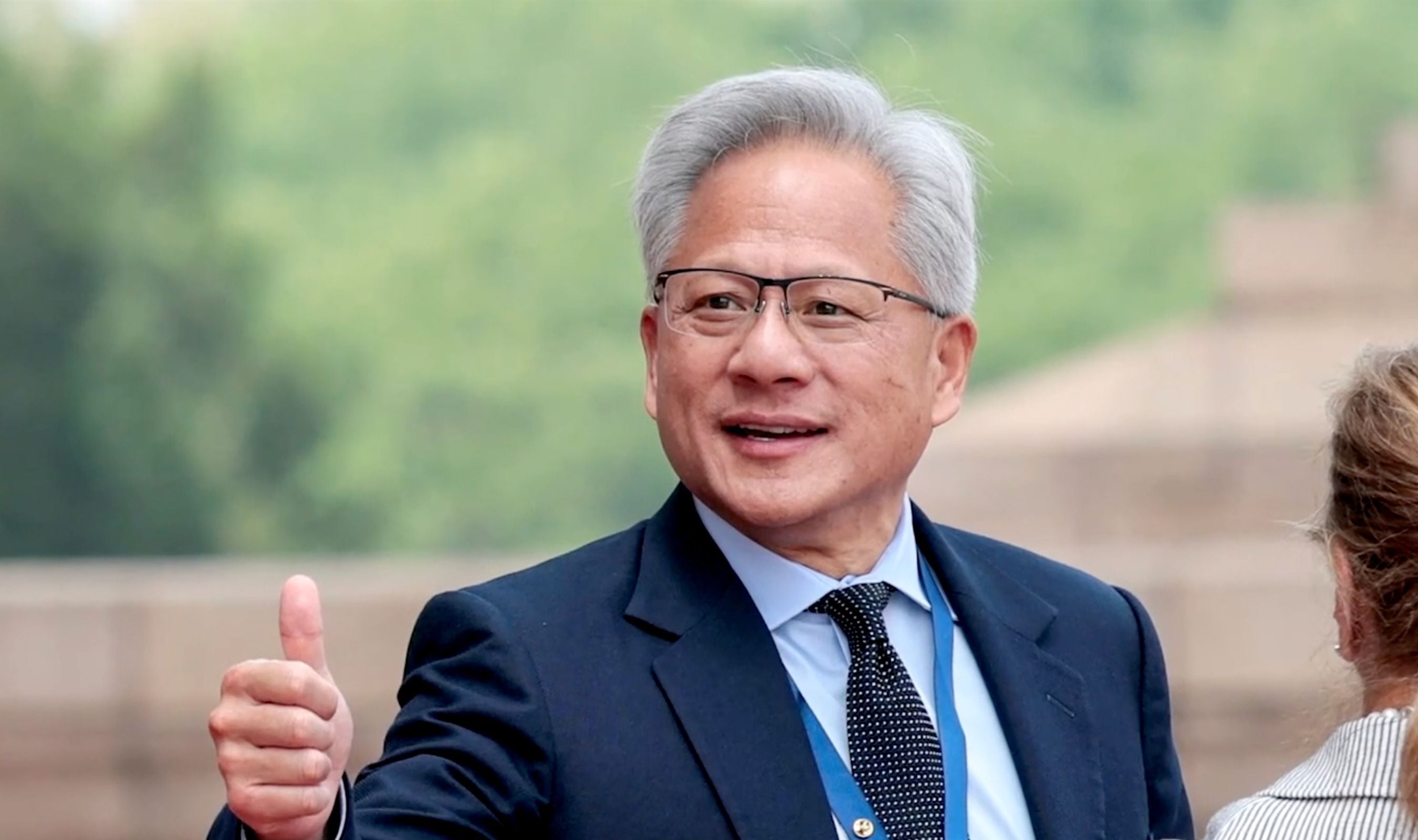
Pressure is also mounting within the Chinese government to either block or closely scrutinize potential purchases, with some officials worried the chips could contain hidden vulnerabilities tied to a US requirement that H200s pass through American territory. That is the context for the trip Jensen Huang did not originally plan to take. Nvidia's CEO was left off the White House delegation to Beijing earlier this week.
Trump reversed course, called Huang directly, and picked him up in Alaska as Air Force One refueled en route to the summit with Xi Jinping.
Huang now lands in Beijing alongside Trump, Tim Cook, and Elon Musk, looking for two things: a green light from Beijing on the H200 deliveries Washington already cleared, and a reciprocal easing on Chinese export curbs targeting rare-earth magnets and chip-grade gallium. The H200 is the variant Nvidia has been allowed to sell into China under the Trump administration's case-by-case review framework, introduced last December. It sits below the H100 and well below the Blackwell-generation B200, which remains entirely off-limits for Chinese customers.
Before US export controls tightened, Nvidia commanded roughly 95% of China's advanced chip market. China once accounted for 13% of the company's revenue, and Huang has estimated the country's AI market alone could be worth $50 billion this year.
Nvidia has confirmed purchase orders exist. Huang told investors in March that H200 production had been restarted to fill Chinese orders.
What he has not said publicly is when those orders convert into actual shipments.
Wolfe Research reiterated Nvidia as its top AI semiconductor pick this week, calling it "our best idea" even after the stock trailed Broadcom, Marvell, and AMD over the previous six weeks. The research firm noted that Nvidia's $1 trillion disclosure during its GTC conference did not capture all potential opportunities, including unbilled future contracts and revenue from the Rubin pod architecture.