
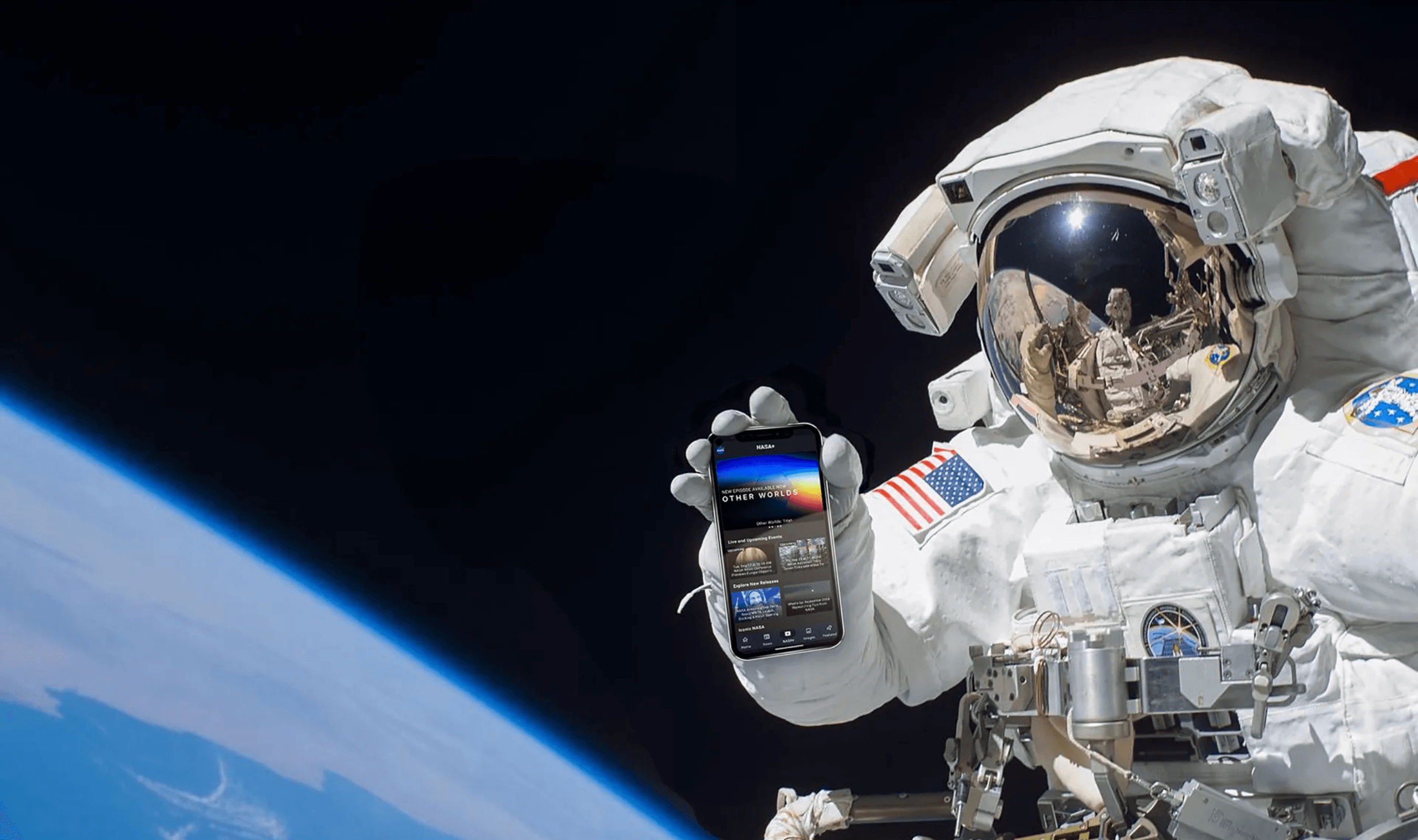
NASA will allow astronauts to bring iPhones and other smartphones on upcoming missions, Administrator Jared Isaacman announced February 5. The policy change applies to Crew-12 International Space Station flights and the Artemis II lunar mission scheduled for March 2026.
Astronauts can now carry modern smartphones instead of decade-old camera equipment. The Artemis II mission previously planned to use a 2016 Nikon DSLR alongside GoPro cameras that were ten years old at launch.
Smartphones will provide more spontaneous documentation of experiments and transient phenomena during missions.
Isaacman challenged NASA's traditional approval processes to qualify consumer hardware for spaceflight on an accelerated timeline.
"We challenged long-standing processes and qualified modern hardware for spaceflight on an expedited timeline,"
he stated. This operational urgency aims to benefit scientific research in orbit and on the lunar surface.
Crew-12 launches to the International Space Station next week, while Artemis II will send four astronauts on a 10-day lunar flyby. Artemis II marks the first crewed mission beyond low Earth orbit in over fifty years, following a figure-eight trajectory around the Moon known as a Lunar Free-Return path.
Smartphones entering space must still pass rigorous testing standards. Devices typically undergo electromagnetic compatibility checks under MIL-STD-461 specifications, with radio frequencies often disabled to prevent interference.
Thermal, vacuum, acoustic, vibration, and radiation testing ensure equipment survives launch and space environments.
This isn't the first smartphone in space. An iPhone 4 reached the International Space Station in 2011 aboard the space shuttle Atlantis, carrying the SpaceLab for iOS app developed by Odyssey Space Research. Astronauts used the device's gyroscope, accelerometer, and cameras for experiments.
The European Space Agency tested smartphone-based systems as early as 2015 with its mobiPV platform, which allowed astronauts to access procedure lists using wrist-mounted devices. Current ISS crews already use tablets for operational tasks and family communications.
NASA's policy shift comes as the agency develops future communications infrastructure. While high-speed laser links are planned for Artemis missions, Nokia and NASA's lunar 4G/5G "network-in-a-box" won't be tested until Artemis III next year. For now, smartphone photos from deep space will travel via NASA's Deep Space Network.
The decision reflects broader changes in space technology adoption. Traditional space-rated equipment often lags consumer technology by years, with cameras planned for Artemis III missions already approaching obsolescence before launch.
Smartphones offer continuously updated imaging capabilities without lengthy certification cycles.
Isaacman's announcement signals NASA's willingness to reconsider established protocols.
"This is a small step in the right direction,"
he concluded, framing the smartphone approval as part of larger process improvements for future exploration missions.