

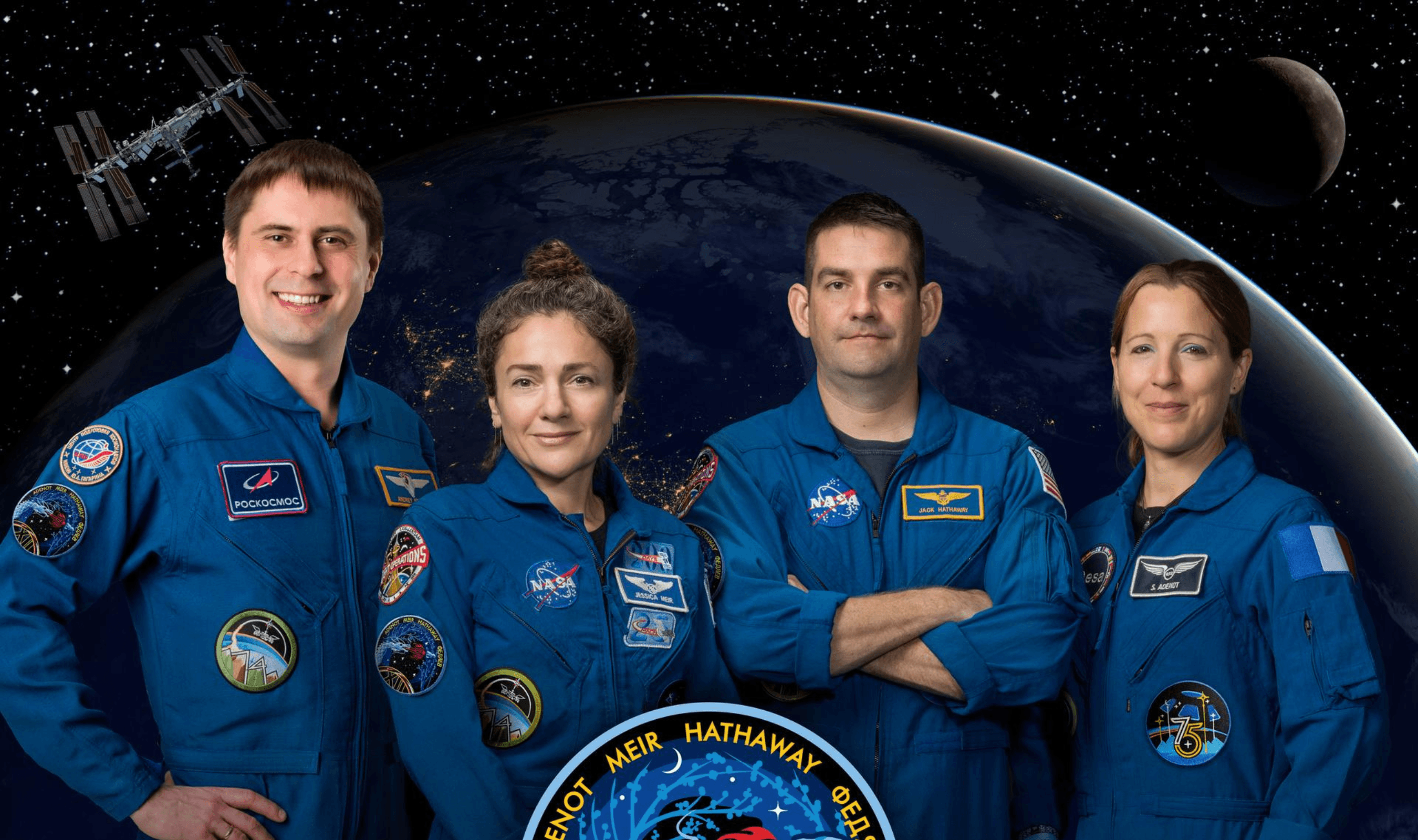
NASA and SpaceX delayed the Crew-12 mission to February 12 due to high winds along the flight path. The International Space Station has operated with just three astronauts since mid-January following an unprecedented medical evacuation.
Crew-12 will lift off from Space Launch Complex 40 at Cape Canaveral Space Force Station in Florida at 5:38 a.m. EST Thursday. The mission brings four astronauts to restore the station's normal seven-person crew complement.
NASA astronauts Jessica Meir and Jack Hathaway will serve as commander and pilot. They join European Space Agency astronaut Sophie Adenot and Roscosmos cosmonaut Andrey Fedyaev as mission specialists.
The orbiting laboratory has functioned with a skeleton crew since Crew-11 departed a month early in January. That mission ended abruptly when a crew member experienced a health issue requiring the first medical evacuation in ISS history.
Weather conditions forced the delay from Wednesday to Thursday. High winds up to 28 knots along the staging area created unacceptable conditions for a potential abort scenario.
"We could see high winds along a lot of that track," said Steve Stich, NASA's Commercial Crew Program manager.
Teams will reassess weather on Tuesday morning. Thursday's forecast shows only slight improvement, with better conditions expected Friday. NASA has backup launch opportunities through February 17 if needed.
Crew-12 represents the 12th crew rotation mission under NASA's Commercial Crew Program. The Dragon spacecraft named Freedom previously flew Crew-4, Crew-9, and private Axiom missions 2 and 3.
The four astronauts will conduct an eight-month mission aboard the station. Their research includes studies of pneumonia-causing bacteria, on-demand intravenous fluid generation, and automated plant health monitoring.
SpaceX conducted maintenance on the crew access arm at Kennedy's Launch Pad 39A in preparation for the mission. The company removed the arm to repair bearings that support the structure, marking only the second human spaceflight to launch from SLC-40.
United Launch Alliance's Vulcan rocket launch from nearby SLC-41 adds scheduling complexity. The Space Force mission is scheduled for Thursday at 3:20 a.m. EST, just hours before Crew-12's planned liftoff.
NASA's Artemis 2 wet dress rehearsal at Pad 39B also factors into range scheduling. Teams continue troubleshooting hydrogen leak issues from a recent test while preparing for another rehearsal in early March.
The ISS has maintained continuous human presence for over 25 years. Crew-12 will join Expedition 74 members already aboard: NASA astronaut Chris Williams and Roscosmos cosmonauts Sergey Kud-Sverchkov and Sergei Mikaev.
Sophie Adenot becomes the second French woman to fly to space.
"At that moment, I told myself: one day, that will be me," she said about watching previous space missions.
Jack Hathaway makes his first spaceflight after selection in NASA's 2021 astronaut class. The Navy commander has accumulated more than 2,500 flight hours in 30 different aircraft.
Jessica Meir returns for her second station mission. She previously completed the first three all-woman spacewalks with Christina Koch during Expedition 61/62.
Andrey Fedyaev makes his second long-duration stay aboard the laboratory. The Roscosmos cosmonaut spent 186 days in orbit during NASA's SpaceX Crew-6 mission in 2023.
Following launch, Falcon 9 will accelerate Dragon to approximately 17,500 mph. The spacecraft will dock autonomously to the space-facing port of the station's Harmony module about 42-44 hours later.
NASA and SpaceX completed a dry dress rehearsal with the flight team on Monday. The exercise went smoothly despite a minor communications issue resolved by switching to a ground backup server.
SpaceX replaced a check valve on the Falcon 9 rocket following a static fire test. Engineers discovered sluggish pressure response during the engine burn demonstration on Sunday.
The aging ISS is scheduled for decommissioning in 2030. NASA plans to push the station into Earth's orbit before controlled reentry over the Pacific Ocean.
Commercial companies now provide human space transportation services, allowing NASA to focus resources on deep space missions like the Artemis campaign to the Moon.
Crew-12's arrival will restore the station's normal seven-person crew complement, ending the skeleton crew operations that began in mid-January following the first medical evacuation in ISS history. The launch is scheduled for 5:38 a.m. EST on February 12.


