
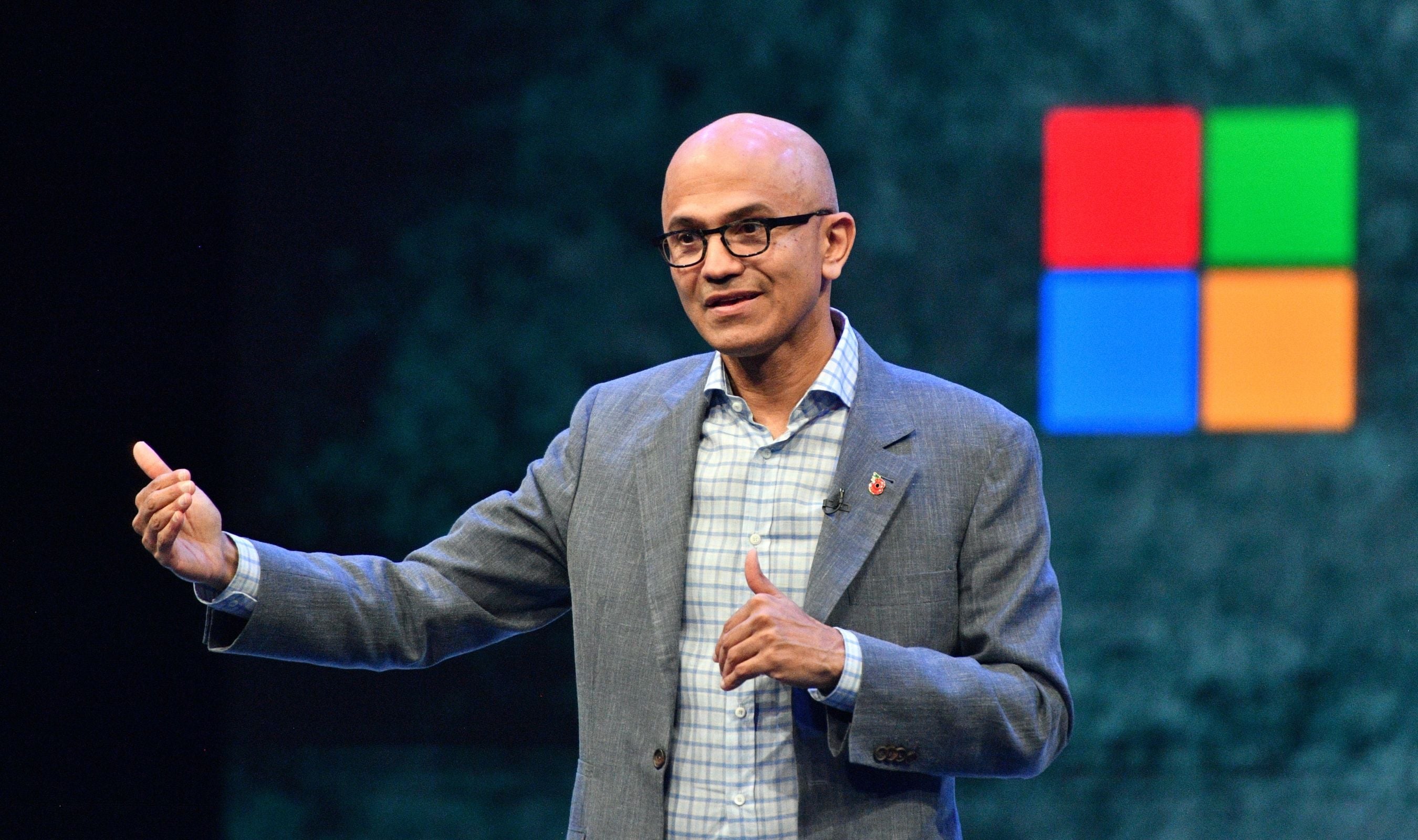
Satya Nadella warned over the weekend that every enterprise using AI is quietly handing over its most valuable secrets, and he named the companies positioned to profit from that fear.
In a long-form post on X titled "The Reverse Information Paradox," the Microsoft CEO argued that businesses "pay for intelligence twice, once with money, and again with something even more valuable: the proprietary knowledge you must reveal to make that intelligence useful."
The warning carries weight because Microsoft itself holds a roughly 27% stake in OpenAI and has integrated the startup's models into Azure AI, Microsoft 365 Copilot and GitHub Copilot. The company also invested in Anthropic.
Nadella is effectively telling customers to be wary of the same ecosystem Microsoft helped build.
"The seller learns more and more about you as you use what you purchased, while you learn very little about what the seller is learning in return," Nadella wrote, describing a dynamic he called the "reverse information paradox", a mirror image of economist Kenneth Arrow's classic Information Paradox. The problem, Nadella explained, is that models learn from "exhaust": the prompts employees write, the tools agents use, and the corrections people make when the model is wrong. "Every correction is distilled into institutional know-how," he wrote.
"It's the kind of knowledge a competitor could never buy, and the kind that leaks almost imperceptibly."
Nadella laid out five principles for enterprises to protect themselves: building private evaluation systems, creating proprietary learning environments within their own networks, keeping the orchestration layer independent of any single model provider, optimizing costs by decoupling from any one model, and compounding these into a continuous learning loop.
He also took aim at the industry's double standard. "While the great innovation that comes from model providers having fair use rights to train models on public data is needed, I find it ironic that the status quo is to then turn around and impose restrictive terms on distillation," Nadella wrote, referring to the practice of using a model's outputs to train cheaper alternatives. In February, Anthropic accused Chinese open source models of sending millions of prompts to Claude for exactly this purpose.
The subtext is clear: enterprises are already moving toward open source models they can run on their own premises. Idit Levine, CEO of Solo.io, told TechCrunch she sees companies asking, "Can I take an open source model and run it on-prem?
It will do almost 90% of what the big one's doing. It will cost way less." Open models accounted for 29% of all traffic routed through Vercel's AI gateway last month.
A Microsoft spokesperson told The Register that Copilot and Azure AI Foundry are Redmond's answer to the problem, separating context, memory and agent harnesses from the models themselves. The company argues the issue is structural, not just a data governance problem.
"In consuming intelligence, you are creating intelligence. And what you create should belong to you," Nadella wrote.