
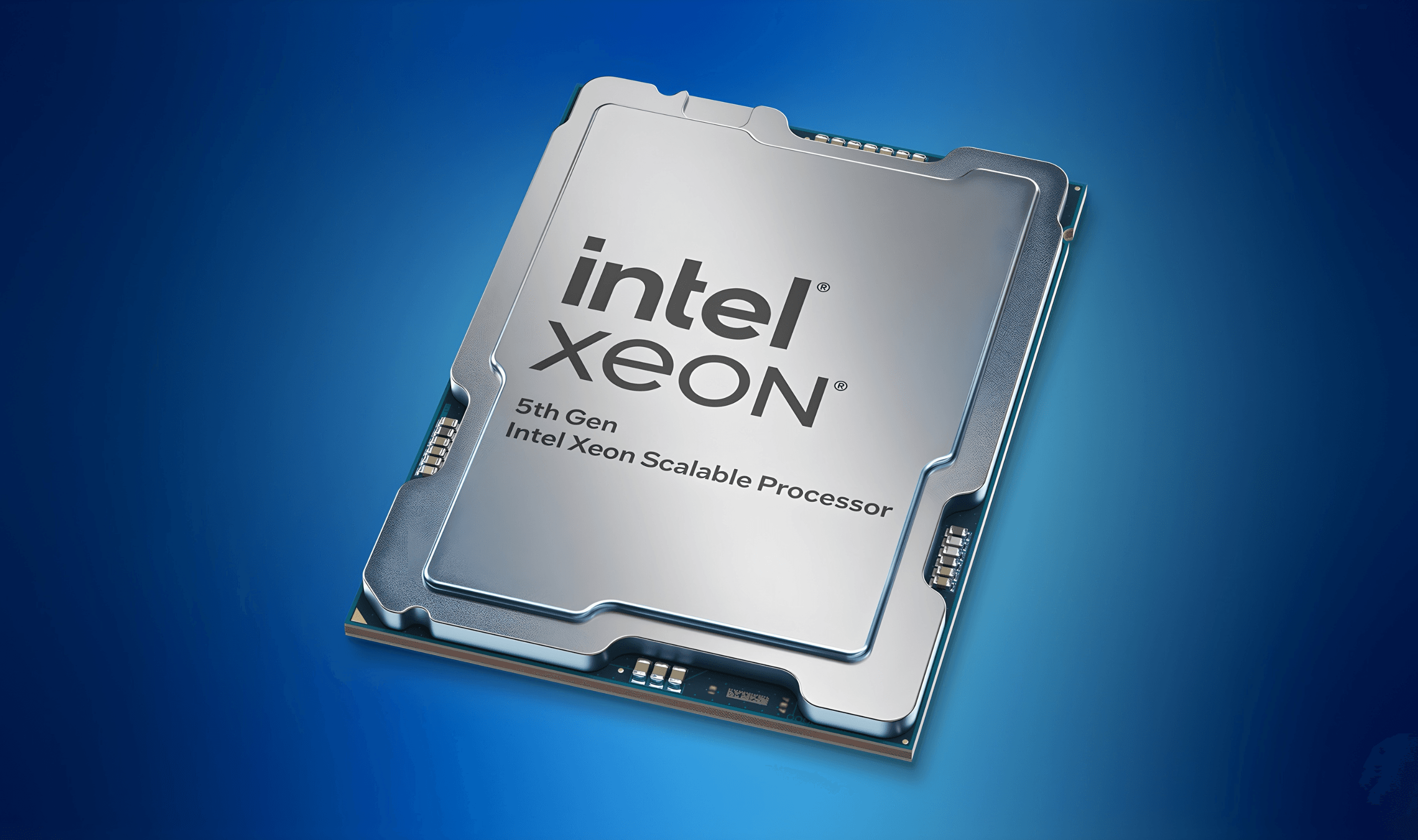
Intel launched its Xeon 600 series workstation processors this week, marking the company's return to desktop workstations after nearly three years. The new lineup brings server-class Granite Rapids architecture to professional desktops with configurations reaching 86 cores and support for up to 4TB of memory.
The Xeon 600 series replaces Intel's previous Xeon W-2500 and W-3500 workstation chips based on Sapphire Rapids architecture. All 11 SKUs in the new family use the Redwood Cove microarchitecture first introduced in Intel's Meteor Lake mobile processors. The flagship Xeon 698X delivers 86 cores and 172 threads, while entry-level models start at 12 cores.
Intel claims the Xeon 600 series offers up to 9% better single-threaded performance and 61% higher multi-threaded performance compared to previous generation Xeon W processors. The company's promotional materials highlight these gains across rendering, AI workloads, and simulation software.
Memory capacity represents a significant advancement for desktop workstations. Xeon 600 processors support eight-channel DDR5 memory with speeds up to DDR5-6400, enabling configurations that address up to 4TB of system RAM. This doubles the capacity of AMD's Threadripper Pro 9000 WX series and quadruples standard Threadripper 9000 memory limits.
The top five SKUs include support for Multiplexed Rank DIMMs (MRDIMMs), allowing memory from multiple ranks to combine for effective speeds up to DDR5-8000. This marks the first introduction of MRDIMM technology to desktop workstations, previously available only in data center deployments.
Platform connectivity expands with 128 PCIe 5.0 lanes directly from the processor, enabling configurations with multiple high-end GPUs alongside fast NVMe storage without contention. The processors also support Compute Express Link 2.0 for memory-coherent connections between CPU and external devices.
Each core includes Intel Advanced Matrix Extensions with FP16 datatype support, improving AI training and inference workloads. Intel claims up to 17% faster performance in AI and machine learning tasks compared to previous generation processors.
Pricing for boxed processors ranges from $499 for the 12-core Xeon 634 to $7,699 for the flagship 86-core Xeon 698X. Five of the 11 SKUs will be available as individually boxed retail units, with the boxed lineup topping out at the 64-core Xeon 696X.
Intel expects Xeon 600 workstation systems to begin appearing from late March 2026. Major workstation manufacturers including Dell, HP, Lenovo, and Supermicro have announced plans to integrate the new processors into their professional product lines. New W890 chipset motherboards from these vendors will launch alongside the processors.
The Xeon 600 series competes directly with AMD's Threadripper Pro 9000 series, which currently dominates high-end workstation markets. AMD's platform offers 96 cores in its top configuration but supports less memory capacity than Intel's new offering.
Intel's workstation push arrives as organizations reassess remote work infrastructure and distributed computing strategies.
The processors address emerging requirements in edge computing deployments where organizations need server-class reliability and management capabilities in office environments rather than traditional data centers.
For developers, the alignment between Xeon 600 workstations and Intel's data center architecture matters. Code built, tested, and refined locally behaves consistently when scaled outward using Intel's oneAPI software ecosystem.
The Xeon 600 series represents Intel's most aggressive assault on the professional desktop workstation market in years. The company's ability to sustain this market position depends on maintaining competitive process technology and preventing the execution missteps that allowed AMD to capture workstation market share during Intel's previous manufacturing challenges.