
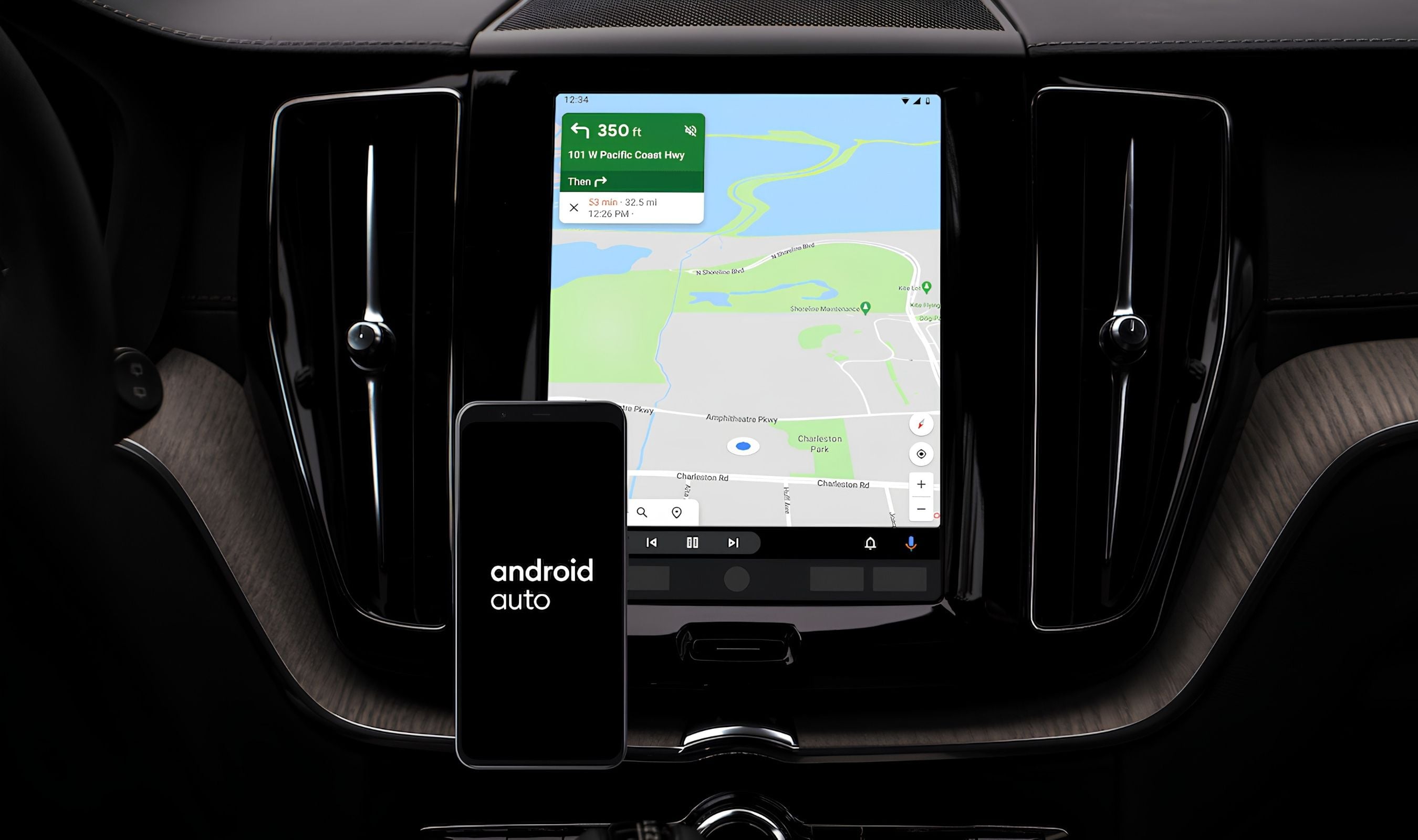
Over 250 million cars compatible with Android Auto are getting the platform's most significant redesign since launch, and for once, Google's Gemini AI is the most practical part of the package.
Announced at the Android Show: I/O Edition earlier this month, the 2026 Android Auto refresh brings a full-screen interface that finally adapts to any display shape, ultrawide rectangles, circular screens like the Mini's, or the irregular quadrilateral display in BMW's Neue Klasse. Google calls the centerpiece feature Immersive Navigation, the biggest update to Google Maps in over a decade.
It renders buildings, overpasses, and terrain in vivid 3D, with stop signs, traffic lights, and lane markings highlighted to reduce tricky-turn anxiety. The UI adopts Material 3 Expressive design from Android phones, with customizable widgets that overlay on the map view. Drivers can pin a favorite contact, a one-tap garage door opener, or weather at a glance without obscuring navigation. On the entertainment side, Android Auto finally supports full HD video playback at 60fps in supported cars from BMW, Ford, Genesis, Hyundai, Kia, Mahindra, Mercedes-Benz, Renault, Skoda, Tata, and Volvo. YouTube, HBO Max, and other apps will work while parked, and when the car starts moving, video smooth transitions to audio-only in apps that support background audio.
Dolby Atmos spatial audio is also rolling out, starting with BMW, Genesis, Mahindra, Mercedes-Benz, Renault, Skoda, Tata, and Volvo. But the real story is what Gemini can do in the car, and where it can't.
Google built-in vehicles like the Volvo EX60 get the deepest integration. Engadget's demo showed a driver telling Gemini to "darken" the sunroof (it obeyed instantly) and asking it to describe footage from a front-facing camera. When the assistant spotted San Francisco's Transamerica Pyramid, it volunteered that the building held the city's tallest title for 48 years. It's the kind of contextual awareness that feels natural rather than forced. For Android Auto users whose phones have Gemini Intelligence (available later this year), the assistant gains Magic Cue capabilities. If a contact texts asking for an address while you're driving, Gemini scans your messages, email, and calendar, then offers a one-tap reply with the right information.
It can also order dinner through DoorDash hands-free.
Google built-in cars also get Gemini awareness of vehicle-specific details. A driver can ask whether a TV box will fit in the cargo area, and Gemini responds with rough dimensions and a verdict.
HBO Max and Zoom are coming to Google built-in infotainment systems as well.
Most of the enhancements work whether you access Android Auto through a phone or directly through the car. The visual presentation differs slightly, Google built-in tweaks Material 3 Expressive to accommodate each automaker's design language and hardware, but the core features are universal across Android 11.0 and up. The trade-off is clear: Google built-in cars unlock Gemini features that phone-based Android Auto can't touch, like voice-controlled hardware settings and camera awareness. That's a strong incentive for automakers to bake Google directly into dashboards rather than relying on drivers to plug in their phones.