Updated July 13, 2026: Google has set its next Made by Google event for August 12, while a new retail leak points to August 20 sales for four expected Pixel 11 models. Google still has not confirmed the Pixel 11 names, retail date, pricing, or specifications.
Google's Made by Google event will take place in New York City on August 12 at 3 p.m. PT and 6 p.m. ET. The official invitation promises the next generation of Pixel, although it does not identify any Pixel 11 models.
Reports consistently point to a four-device family comprising the Pixel 11, Pixel 11 Pro, Pixel 11 Pro XL, and Pixel 11 Pro Fold. A single retail leak now claims that preorders will begin around the event and that all four phones will become available on August 20.
The strongest hardware rumors include a TSMC-built 2nm Tensor G6, new camera sensors, brighter OLED displays, and 256GB of storage as the new minimum. An FCC filing for a Google phone with open and closed operating modes also provides the clearest official evidence yet for an approaching foldable, although the filing never calls it the Pixel 11 Pro Fold.
Pixel 11 at a Glance
| Release Date | Made by Google event on August 12, 2026 (confirmed); August 20 retail availability (rumored) |
| Lineup | Pixel 11, Pixel 11 Pro, Pixel 11 Pro XL, and Pixel 11 Pro Fold (reported; retail names unconfirmed) |
| Price | European and UK prices from €999 and £879 (rumored); possible US prices from $899 to $1,899 by model (speculative) |
| Processor | TSMC 2nm Tensor G6 with a seven-core CPU and PowerVR GPU (rumored) |
| Displays | 6.3-inch Pixel 11 and Pro, 6.8-inch Pro XL, and dual Pro Fold OLEDs (rumored); Samsung M16 materials (reported) |
| Memory and Storage | 8GB or 12GB RAM on Pixel 11, 12GB or 16GB on Pro models, 256GB minimum, and up to 1TB on Pro models (rumored) |
| Cameras | New Chemosh, Bastet, and Barghest sensors (rumored); 4K Cinematic Blur, low-light video, and 100x zoom features with model eligibility unknown (reported) |
| Batteries | Minimum-rated capacities of 4,840mAh, 4,707mAh, 5,000mAh, and 4,658mAh by model (rumored) |
Launch Plans Come Into Focus
The event date is firm, while the retail identity of Google's next phones remains unofficial. Google's invitation, published by 9to5Google, schedules Made by Google for August 12 but does not name the Pixel 11 family.
Reportedly, billbil-kun expects preorders around the August 12 presentation and retail availability on August 20. The same date is assigned to the Pixel 11, Pro, Pro XL, and Pro Fold, contradicting earlier suggestions that the foldable might arrive later.
Android Authority has reported the four expected retail names and the Cubs, Grizzly, Kodiak, and Yogi codenames. Google has not officially adopted any of them.
Pricing and Storage Point Upward
The latest commercial leak suggests a higher cost of entry, partly because every model reportedly starts with 256GB rather than 128GB. According to billbil-kun, the leaked prices cover Europe and the UK and do not establish US pricing.
- Pixel 11 with 256GB at €999 or £879 (rumored)
- Pixel 11 Pro with 256GB at €1,199 or £1,079 (rumored)
- Pixel 11 Pro XL with 256GB at €1,399 or £1,279 (rumored)
- Pixel 11 Pro Fold with 256GB at €1,999 or £1,799 (rumored)
The same leak says the Pixel 11 will offer up to 512GB, while all three Pro models will reach 1TB. Reported Pixel 11 colors are Light Sterling, Midnight Haze, Fuchsia, and Moss, while both slab Pro models reportedly come in Light Fog, Midnight Haze, Dune, and Pine. The Fold is limited to Midnight Haze and Pine in the leak, and every 1TB configuration is reportedly Midnight Haze only.
Based on the European figures rather than US retail information, 9to5Google estimates possible US starting prices of $899, $1,099, $1,299, and $1,899 for the four models. Those dollar amounts are speculative extrapolations, not leaked or confirmed US prices.
Familiar Designs Get Targeted Changes
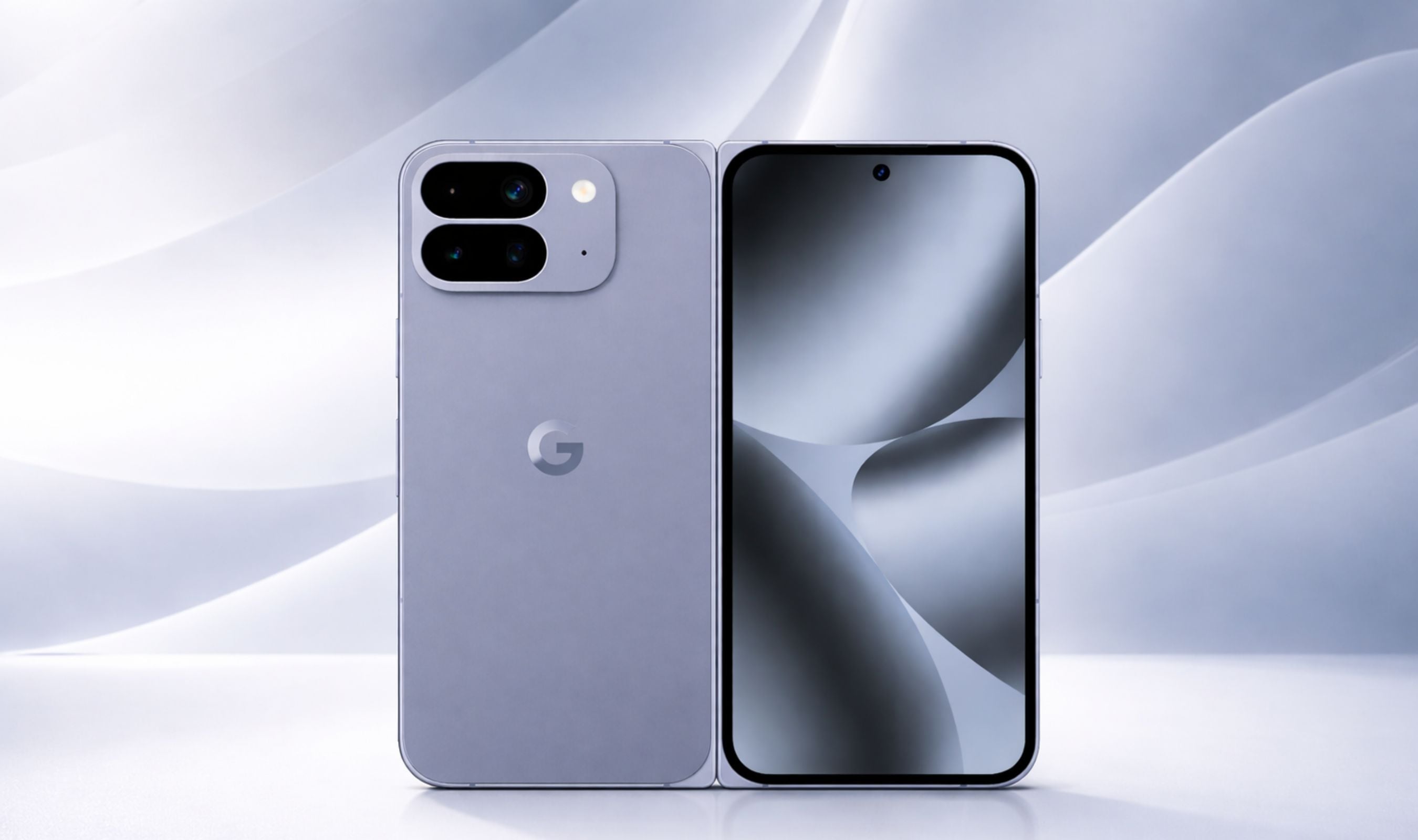
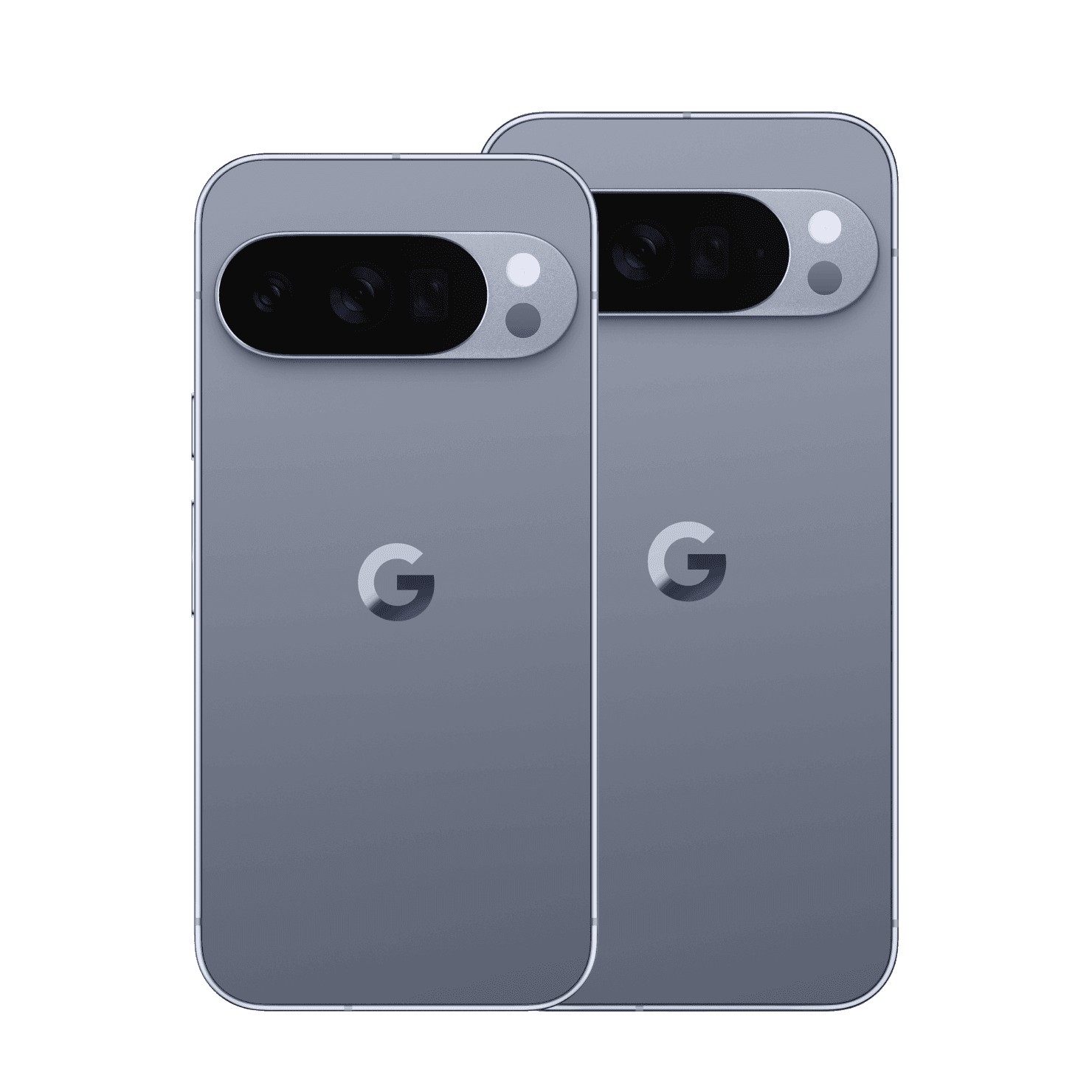
Leaked CAD renders suggest that Google is refining its established Pixel design instead of replacing it. The three slab phones retain familiar proportions with a more glass-like camera-bar treatment, while the Fold reportedly becomes thinner and receives a redesigned camera island.
- Pixel 11 reportedly measures 152.8×72×8.5mm, with thinner-looking bezels and a darker glass-style camera bar, according to OnLeaks and Android Headlines.
- Pixel 11 Pro reportedly measures 152.7×71.8×8.4mm and retains a largely unchanged shape with an all-glass camera bar, in 9to5Google's coverage of CAD data from OnLeaks and Android Headlines.
- Pixel 11 Pro XL reportedly measures 162.7×76.5×8.5mm and carries a 6.8-inch display within nearly unchanged proportions, in 9to5Google's coverage of CAD data from OnLeaks and Android Headlines.
- Pixel 11 Pro Fold reportedly measures 155.2×150.4×4.8mm unfolded and 155.2×76×10.1mm folded, according to OnLeaks and Android Headlines. Earlier CAD reporting points to approximately 8-inch and 6.4-inch displays.
The Fold dimensions would make it thinner than its 5.2mm unfolded and 10.8mm folded predecessor, but Google has not verified the measurements. CAD material can also be unreliable for small bezel, material, and color details.
Tensor G6 Leads the Hardware Story
The biggest rumored internal change is Tensor G6, which could deliver a substantial CPU upgrade without an equally dramatic graphics advance. Mystic Leaks says every model will use a TSMC 2nm chip with one Arm C1-Ultra core at 4.11GHz, four C1-Pro cores at 3.38GHz, and two C1-Pro cores at 2.65GHz.
ETNews reports that Samsung Display will supply M16-material OLED panels for the Pixel 11 series. ETNews claims gains in brightness, color, lifespan, and power efficiency, although exact panel sourcing for each model remains unknown.
- Pixel 11 with a 6.3-inch 1080×2424 OLED, a 60 to 120Hz refresh rate, and up to 2,200 nits of HDR brightness (rumored)
- Pixel 11 Pro with a 6.3-inch 1280×2856 OLED, a 1 to 120Hz refresh rate, and up to 2,450 nits of HDR brightness (rumored)
- Pixel 11 Pro XL with a 6.8-inch 1344×2992 OLED, a 1 to 120Hz refresh rate, and up to 2,450 nits of HDR brightness (rumored)
- Pixel 11 Pro Fold with a 2076×2160 inner OLED at 1 to 120Hz and up to 2,050 nits of HDR brightness, plus a 1080×2342 cover OLED at 60 to 120Hz and up to 2,450 nits (rumored)
Minimum-rated battery capacities are rumored at 4,840mAh for the Pixel 11, 4,707mAh for the Pro, 5,000mAh for the Pro XL, and 4,658mAh for the Fold. These are not marketed typical capacities. The same leak assigns 8GB or 12GB of RAM to the Pixel 11 and 12GB or 16GB to each Pro model.
- A PowerVR C-Series CXTP-48-1536 GPU derived from an older architecture, potentially limiting the graphics improvement (rumored)
- A Titan M3 security chip, Santafe TPU, and Metis GXP image-signal processor (rumored)
- A MediaTek M90 modem identified as MT6986D, replacing Samsung Exynos modems (rumored)
- A secondary low-power nano-TPU for sleep, breathing, cough, and fall-related processing, according to earlier leaked chip documents reported by Android Authority (reported)
The May leak also says the Pro models lose their thermometer and describes Pixel Glow as a small RGB notification array resembling Nothing's Glyph concept. Its functions and supported models remain unclear, including whether it will appear on the Fold. The same source says Project Toscana, Google's reported infrared face-unlock hardware, will not debut with Pixel 11.
No benchmark from production hardware supports the performance claims, and the rumored GPU could amount to only a modest gaming improvement. No credible Pixel 11 charging wattage has been reported, and the storage technology's UFS generation remains unknown.
Camera Upgrades Focus on Sensors and Video
The camera rumors center on new sensors rather than a fully documented lens overhaul. According to Mystic Leaks, the Pixel 11 and Pro Fold will receive a new main sensor codenamed Chemosh that is believed to be 50MP. The Pixel 11 Pro and Pro XL reportedly use a new Bastet main sensor and Barghest telephoto sensor.
Leaked Google chip documents previously reported by Android Authority point to several computational photography and video features. The documents do not establish which Pixel 11 models will receive each capability.
- Cinematic Blur recording at 4K and 30 frames per second (reported)
- Post-capture video relighting (reported)
- Ultra Low Light Video designed for approximately 5 to 10 lux (reported)
- Machine-learning-assisted 100x photo and video zoom (reported)
Sensor sizes, suppliers, apertures, optical zoom ranges, ultrawide hardware, and selfie cameras remain unknown. There is also no credible Pixel 11 report establishing telephoto macro support. The reported 100x feature should not be treated as a standard Pixel 11 specification until model eligibility is known.
Android 17 and Gemini Intelligence
Google released Android 17 on June 16, making it the expected software baseline for the August phones. Google has not announced Pixel 11 software specifications or a support term.
Google has also announced that Gemini Intelligence will reach the latest Pixel phones in waves during summer 2026. The announcement does not explicitly identify the Pixel 11 series or make these features exclusive to new hardware.
- Multi-app task automation
- Gemini-assisted Chrome browsing and autofill
- Rambler voice rewriting
- Natural-language custom-widget creation
A Bloomberg report by Mark Gurman and Chris Welch, republished by the Los Angeles Times, says several of Google's newly announced Android features will debut on the Pixel 11 series but does not identify exactly which ones. The report separately describes Rambler, expanded multi-step automation, Create A Widget, and creator-focused tools, with the creator features arriving first on Pixel devices generally. Some may also reach Samsung phones, and their hardware requirements remain unsettled.
The Fold Has the Strongest Official Trail
A Google FCC filing for phone model GZDQ6 documents open and closed operating modes, strongly indicating a foldable design. Its testing covers 5G mmWave and sub-6GHz, non-terrestrial-network connectivity, NFC, UWB, Thread, and wireless power. The filing confirms only a Google phone called GZDQ6, not the Pixel 11 Pro Fold retail name.
Android Authority reports that a MediaTek-algorithm reference in the SAR paperwork supports the possibility of a MediaTek modem. That reference does not explicitly confirm the rumored M90 model.
Should You Wait for the Pixel 11
Anyone who can postpone a purchase until August 12 should wait for Google's presentation. The event is only a month away, and it should resolve major questions that current leaks cannot answer.
- Wait for official US pricing, preorder offers, and country availability if cost is the deciding factor.
- Wait for charging specifications and typical battery capacities if endurance matters most.
- Wait for the complete camera breakdown if zoom, video, or selfie performance will determine your model choice.
- Foldable buyers have the strongest reason to wait because GZDQ6 has reached the FCC, but its price, durability specifications, and retail identity remain unconfirmed.
People who need a phone immediately should make that purchase using confirmed specifications and current prices rather than Pixel 11 rumors. There is no official Pixel 11 specification sheet yet, and several important details could differ when Google announces the hardware.
Where the Pixel 11 Stands Today
The clearest current picture is a four-model Pixel 11 family led by Tensor G6, new displays and camera sensors, higher minimum storage, and expanded Gemini Intelligence features. Most of that picture still comes from leaks and reports rather than Google.
Google has confirmed the August 12 event, Android 17, and the broader Gemini Intelligence rollout, while its FCC paperwork confirms an approaching phone with foldable operating modes. August 20 availability for all four expected models is plausible based on the latest retail leak, but it remains unconfirmed.