
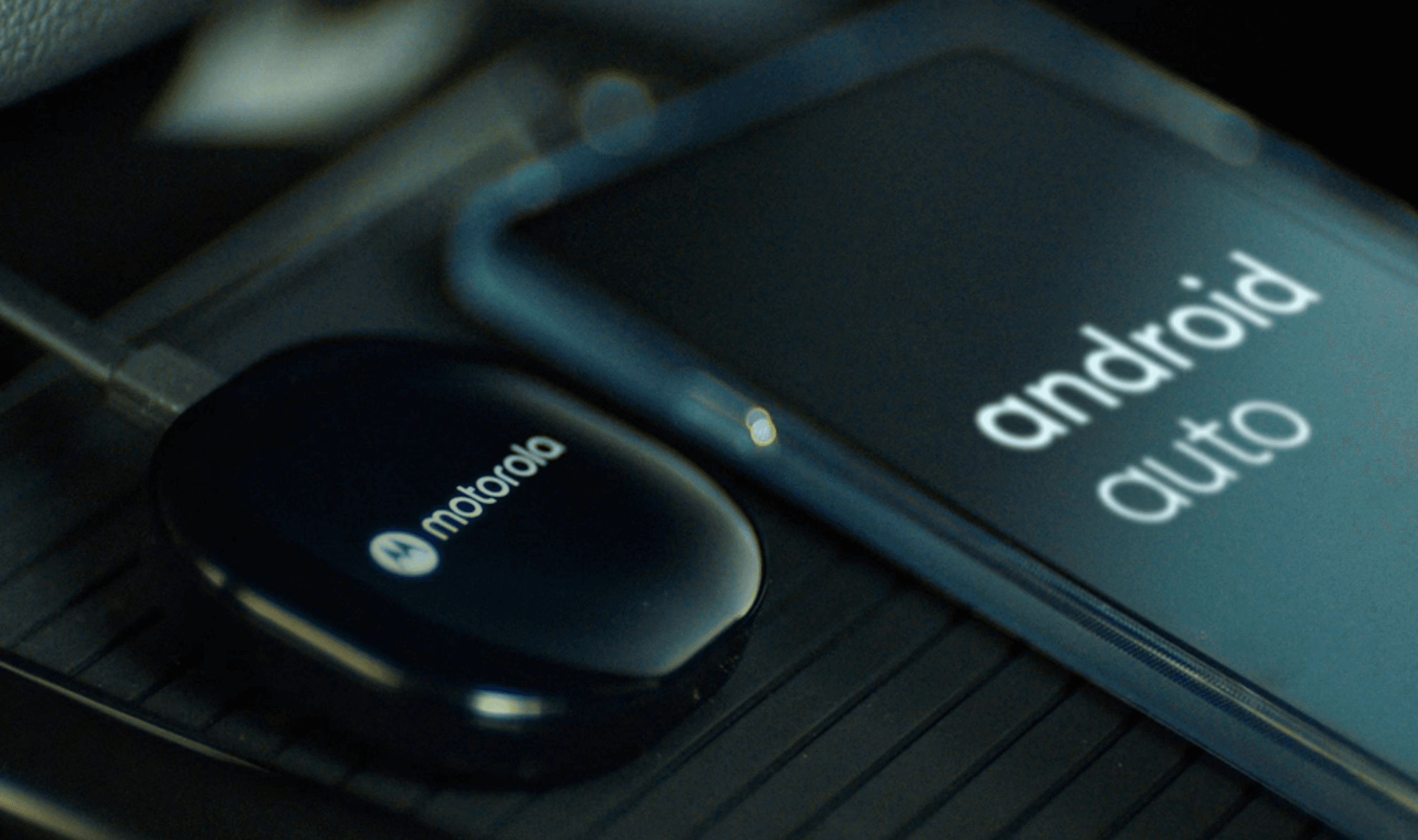
Motorola's MA2 wireless Android Auto adapter surfaced in FCC filings this week, revealing a detachable cable design and USB-C support for the long-awaited sequel. The regulatory documents show the MA2 addresses the original model's biggest complaint while targeting an April 2026 release.
The MA1 launched in January 2022 as the only Google-approved wireless Android Auto adapter. Four years later, its successor appears ready with key improvements.
FCC listings posted to Reddit by user Electrical-Plum-751 show the MA2 manufactured by Meizhou Guo Wei Electronics, the same company behind the original.
Detachable cables solve the MA1's most notable durability issue. The original featured a non-removable USB-A cord that left users stranded if it frayed or their vehicle required USB-C. The MA2 includes both USB-A and USB-C connections, according to photos in the regulatory filing.
A physical switch on the device's side could address multi-user frustrations. Wireless Android Auto and CarPlay adapters often struggle when switching between paired phones in shared vehicles. The switch's exact function remains unspecified, but it may streamline transitions between drivers.
9to5Google estimates an April 2026 launch based on the MA1's timeline. That model debuted 2-3 months after its FCC filing appeared.
The MA1 launched at $90 but frequently drops to $45 during sales. Industry sources suggest the MA2 will target the original's premium price point.
The adapter market serves millions of vehicles lacking built-in wireless connectivity. While wireless Android Auto debuted in 2018, many cars still require USB cables. Adapters like the MA2 convert wired-only systems, eliminating dashboard clutter and connection hassles.
GM's recent announcement adds urgency to wireless solutions. The automaker confirmed 2028 models will drop CarPlay and Android Auto entirely, opting for Google Built-in infotainment. This move affects both iPhone and Android users seeking projection features.
Current alternatives include the AAWireless TWO, recently discounted to $43.99 on Amazon. That represents over $20 off its regular price, though the sale follows a pattern of brief price drops. The device improves connection strength and device switching compared to earlier models.
Technical specifications from the FCC filing reveal dual-band Wi-Fi support. The MA2 operates on both 2.4GHz and 5GHz networks, crucial for stable connections in congested urban areas. Single-band adapters often drop connections when navigating through dense Wi-Fi environments.
Power delivery comes directly from the vehicle's USB port without external adapters. This simplicity raises questions about compatibility with older cars providing limited current. Some vehicles offer just 500mA through data-only ports, potentially insufficient for simultaneous Bluetooth and Wi-Fi operation.
The wireless adapter market matured significantly since early offerings from AAWireless and Carsifi launched around 2020-2021. These devices typically retail between $70-90 but struggled to reach mainstream awareness beyond tech enthusiasts. Motorola's retail partnerships could change that dynamic.
Compatibility remains a question mark despite FCC documentation. Certain vehicle manufacturers, particularly some Honda and Mazda models, exhibit finicky behavior with third-party wireless solutions. The MA2's testing across diverse platforms will determine its real-world reliability.
The original MA1 earned positive reviews for reliability despite its fixed cable limitation. As the only adapter with Google's official backing, it set expectations for smooth operation that the MA2 must meet or exceed.
Early indications suggest the sequel addresses the most common complaints.
Motorola hasn't announced official pricing or availability, but the FCC leak provides substantial detail about the product's design and functionality. The company's established retail relationships could place the MA2 in front of consumers who've never considered wireless adapters previously.
The MA2's arrival coincides with broader shifts in automotive infotainment. GM's move away from smartphone projection systems highlights the tension between native vehicle software and mobile device integration. Wireless adapters offer a compromise for drivers unwilling to abandon familiar interfaces like Android Auto.
Regulatory filings target an April 2026 release for the MA2, which will include a detachable cable design to address the original MA1's biggest durability complaint.