
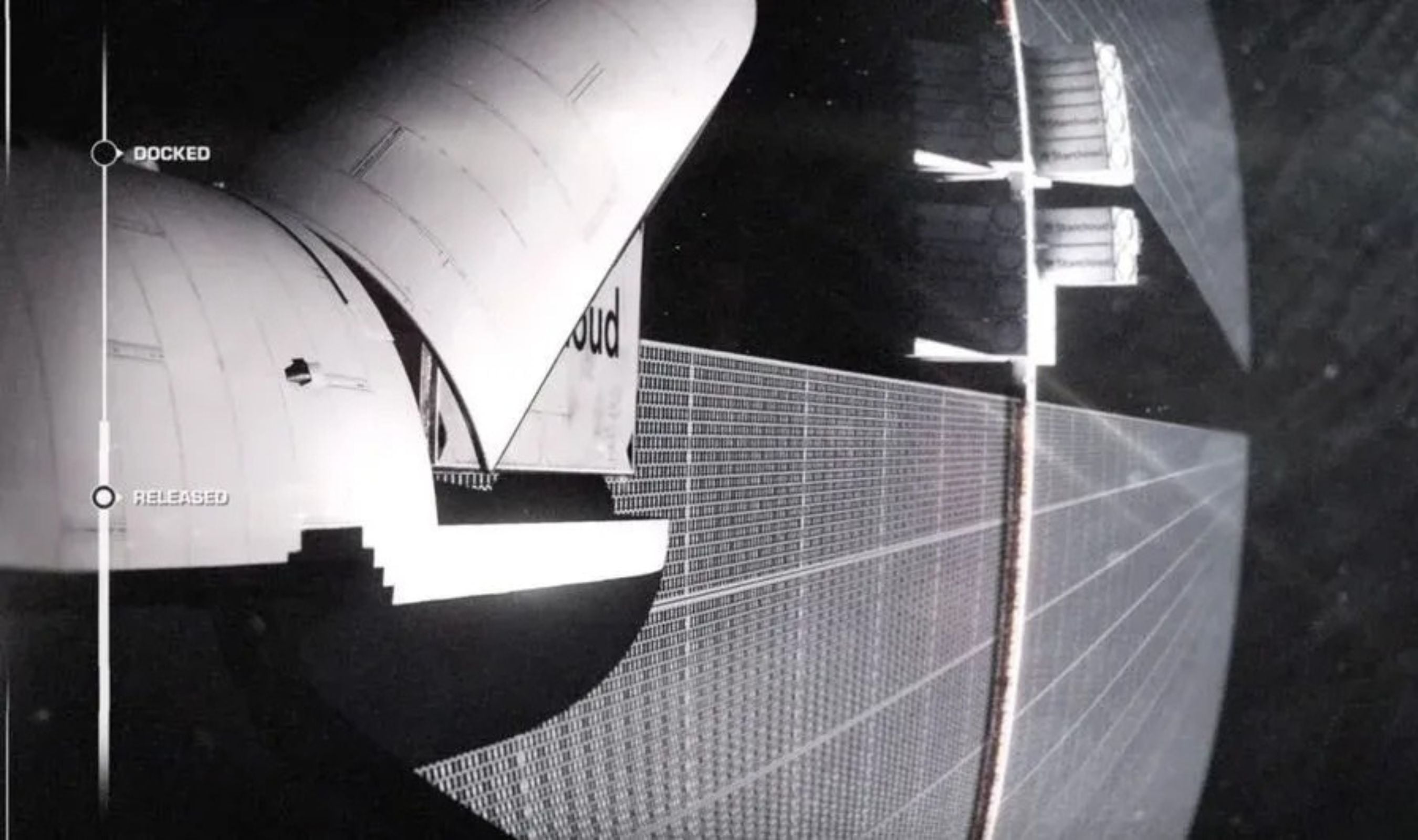
Google is in advanced talks with SpaceX to launch orbital data centers, turning a moonshot AI infrastructure project into a potential anchor deal for what could be the largest IPO in history. The discussions, confirmed by Google on Tuesday and first reported by the Wall Street Journal, center on using SpaceX rockets to launch Project Suncatcher satellites. Google announced the initiative late last year as a research effort to network solar-powered satellites equipped with its Tensor Processing Units into an orbital AI cloud.
Google already owns a 6.1% stake in SpaceX from a $900 million investment in 2015. Now the two companies are negotiating a deal that would give SpaceX's IPO pitch a powerful marquee customer. The company confidentially filed for a public listing this summer with a targeted valuation between $1.75 trillion and $2 trillion, and Polymarket bettors give it an 87% chance of being the largest IPO this year. The irony is hard to miss. Elon Musk helped launch OpenAI in 2015 as a counterweight to Google's AI ambitions after falling out with co-founder Larry Page over AI safety.
Now SpaceX and Google are racing toward the same frontier. A partnership would mark the second time Musk made peace with an AI rival he has publicly criticized.
Project Suncatcher aims to launch two prototype satellites with partner Planet Labs by early 2027. Sundar Pichai described the effort as one of the company's moonshots, saying Google will send "tiny racks of machines" into orbit for testing before scaling. The CEO said space-based data centers could become the standard approach for expanding computing infrastructure within a decade.
SpaceX has been pitching orbital data centers as its next major commercial product to prospective investors. Musk argued on X in December that "satellites with localized AI compute" will be the lowest-cost way to generate AI bitstreams in less than three years. The company recently filed for authorization to launch up to 1 million satellites to support its orbital ambitions.
Google is also talking to other rocket-launch companies, according to the Journal. That gives it use in negotiations as SpaceX prepares for a June IPO, with Polymarket pricing a June 30 listing at 70%. The terrestrial economics remain murky. As TechCrunch noted, today's data centers on the ground are much cheaper than orbital alternatives once satellite construction and launch costs are factored in. But the calculus changes with scale and SpaceX's reusable Falcon 9 platform, which the company has flown 649 missions with 610 landings.
SpaceX has been bulking up its AI portfolio ahead of the IPO. The company merged with Musk's xAI in February, valuing the combined entity at $1.25 trillion, and secured an option to acquire AI coding startup Cursor for $60 billion later this year.
Last week, Anthropic agreed to use the full computing power of SpaceX's Colossus 1 facility in Memphis with more than 220,000 Nvidia GPUs and expressed interest in working with the rocket company to develop multiple gigawatts of space-based orbital data centers.