



Robot vacuum tiers used to be easy to read. Cheap robots picked up dust and crashed into furniture. Mid-range robots cleaned competently and called it a day. Flagships pulled the genuinely interesting tricks (the camera-free navigation that maps a room in three minutes, the carpet detection that actually changes how the robot cleans, the base station that washes its own mops in steaming hot water).
Technobezz is supported by its audience. We may get a commission from retail offers. Reviews ethics statement.
Narwal Freo Z10 Turbo Review: This Mid-Range Robot Beats Most Flagships at Carpets, Edges, and Self-Maintenance
The Narwal Freo Z10 Turbo is the first mid-range Narwal that drops the flagship-only CarpetFocus mechanical brush cover into a robot under $600 at launch.
Updated May 12, 2026May 12, 2026
•16 min read

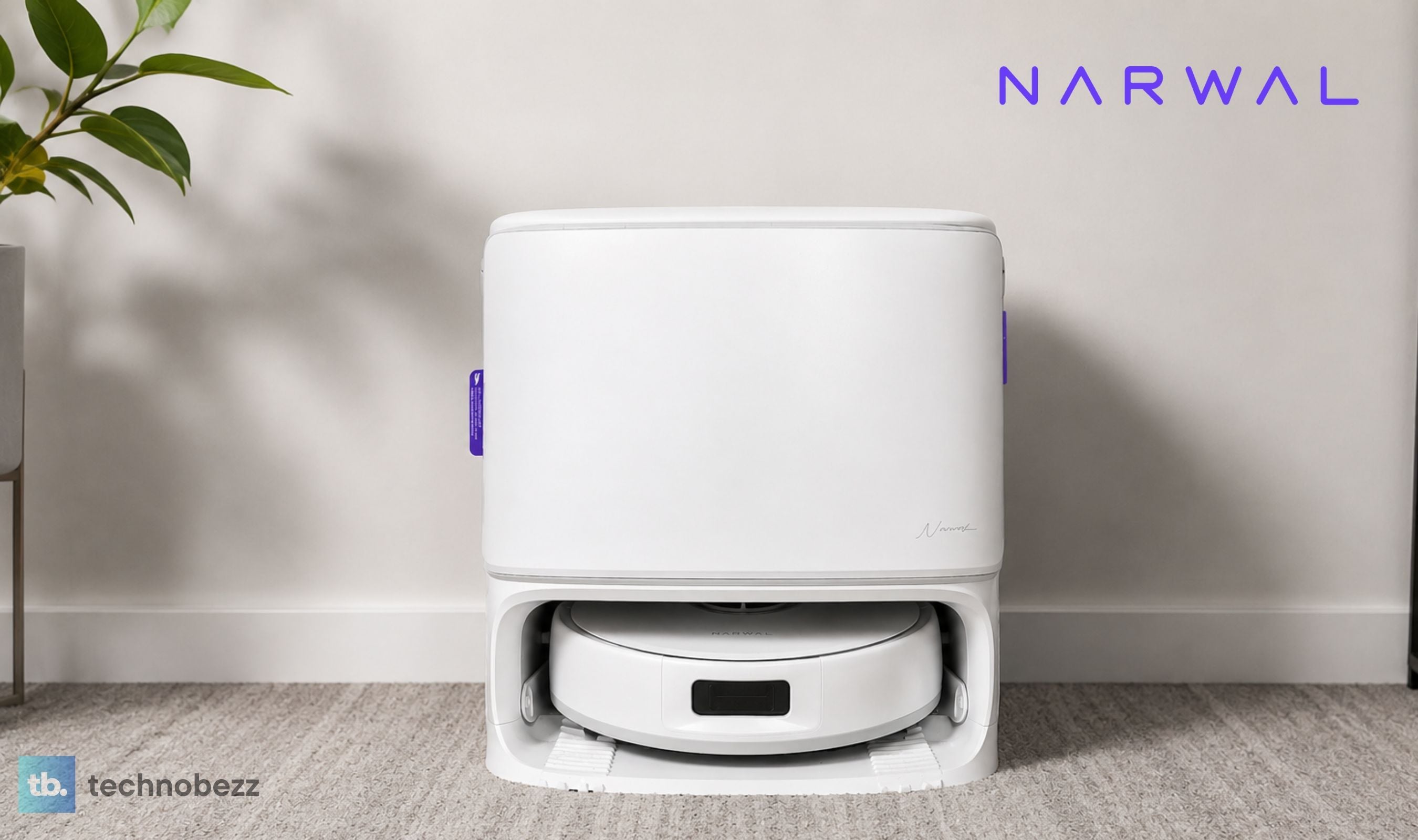
Credit: Technobezz
Get Deals Like These in Your Inbox
The best prices, straight to your inbox.
9.3/ 10

Best for Anyone with a mix of hard floors and carpet who wants flagship-grade carpet cleaning, camera-free navigation for privacy, and an all-in-one base station with hot-water mop wash, without paying flagship money
Narwal Freo Z10 Turbo Robot Vacuum and Mop
Suction Power25,000 Pa
CarpetFocus TechnologyYes (auto mop lift + mechanical brush cover seal)
Carpet Cleaning ModeCarpet Max with Dual-Pass Zigzag (perpendicular directions)
Mopping SystemEdgeReach extending mop pads with 12N downward pressure
Tangle-Free SystemSGS-certified DualFlow with auto-detangling side brush + zero-tangling floating roller
NavigationTri-laser structured light + LDS radar (camera-free)
The Narwal Freo Z10 Turbo is the first robot we've tested that drops one of those flagship tricks into a mid-range body without softening any of the engineering around it. After running this thing across hardwood, low-pile carpet, a bath mat edge, hair patches, a coffee spill, milk, flour, and the kind of slow real-world living that only comes out across a month, the headline isn't the spec sheet. It's the moment the robot crosses onto carpet and visibly changes shape underneath.
We tested the white Freo Z10 Turbo as a daily driver across two main floors with a mix of surfaces and a few deliberately chaotic test patches. The press unit shipped ahead of the May 18 launch with a $599.99 limited launch price (against an MSRP of $899.99), and our short read is straightforward: this is the first non-flagship Narwal that genuinely looks like a flagship in the field.
The 25,000 Pa suction, the CarpetFocus mechanical brush cover, the tri-laser camera-free navigation, the EdgeReach mopping with 12N of downward pressure, and the all-in-one base station with sealed dust bag and hot-water mop washing all line up as a cohesive package rather than a feature list scrambling for attention. The flaws are real but small, and we'll get to them. What you came for first is what makes this robot different.
Narwal Freo Z10 Turbo Robot Vacuum and Mop - Best Mid-Range Robot Vacuum With Flagship Carpet Cleaning
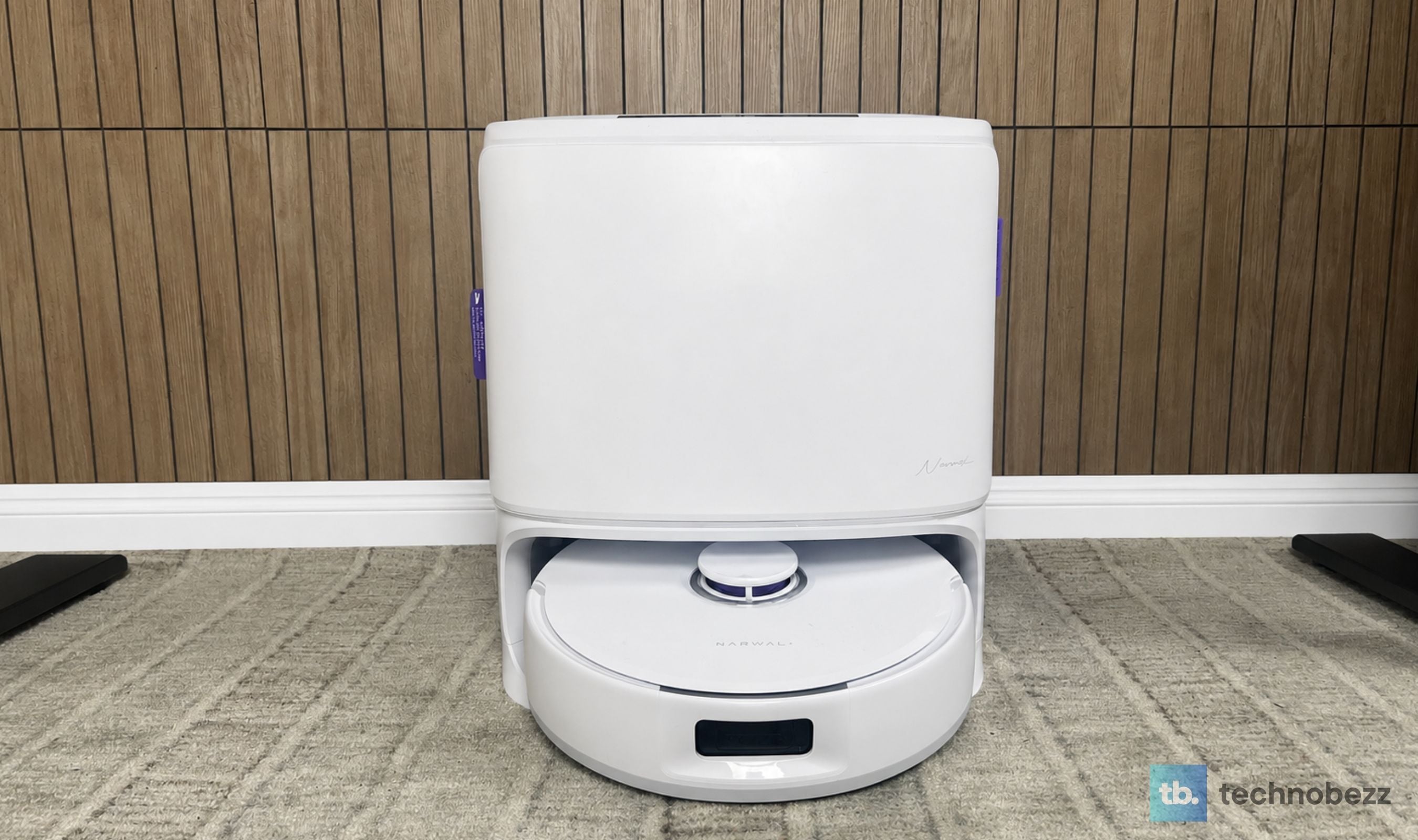
The Narwal Freo Z10 Turbo is a robot vacuum and mop combo with 25,000 Pa of suction, an industry-first CarpetFocus mechanical brush cover that drops into place when the robot detects carpet, an EdgeReach mop system that extends to clean baseboards and corners with 12N of downward pressure, an SGS-certified DualFlow Tangle-Free System for hair and pet households, tri-laser structured light with LDS radar for camera-free navigation, and an all-in-one base station that auto-empties dust into a sealed bag, washes the mop pads in 113-140°F hot water (up to 167°F for sterilization), and supports up to 120 days of maintenance-free operation. The U.S. launch is May 18, 2026, with limited launch pricing of $599.99 from May 18 to May 31, then $899.99 MSRP.
Key Highlights
- 25,000 Pa of suction power, among the highest in this price range
- CarpetFocus Technology with mechanical brush cover that physically seals the suction zone on carpet
- Carpet Max Mode with Dual-Pass Zigzag cleaning across both grain directions
- EdgeReach Mop System with extending mop pads and 12N downward scrubbing pressure
- SGS-certified DualFlow Tangle-Free System with auto-detangling side brush and zero-tangling floating roller
- Tri-laser structured light and LDS radar for camera-free, millimeter-precise navigation
- Auto mop lift on carpet detection so rugs stay dry
- All-in-one base station: auto-empty, hot-water mop wash, mop drying, sealed dust compression
- Hot-water mop wash from 113°F up to 167°F for pasteurized sterilization
- Up to 120 days of maintenance-free operation between dust bag swaps
- Camera-free design for users who don't want a lens in their living room
- Narwal app with 3D mapping, no-go zones, per-room schedules, and live status
- Built-in speaker with voice prompts for status, errors, and dock health
Pros
- Genuinely flagship-level carpet performance dropped into a mid-range price tier
- Suction is among the strongest we've measured in any sub-$700 robot vacuum
- Mechanical brush cover on carpet is the kind of physical engineering you can feel working
- Auto mop lift on carpet detection is fast, smooth, and reliable across multiple test passes
- Tri-laser navigation maps a full floor in minutes and finds corners other robots skip
- Camera-free design solves the privacy concern that keeps a real chunk of buyers off camera-based robots
- EdgeReach mop genuinely cleans baseboards and corners, not just the open floor
- Hair handling is excellent across both human and pet hair, no clumping in the brush
- 120-day sealed dust bag turns the robot into a near zero-thought appliance
- Hot-water mop wash with sterilization mode means you never touch a dirty mop pad
- App is among the best we've used on any robot, with intuitive 3D views and quiet mode
- Quiet mode genuinely is quiet, low enough for nighttime use without waking the house
- Mid-size form factor moves between rooms and gets under most furniture without snagging
- Build quality looks and feels like a more expensive product than the launch price suggests
Cons
- No camera means no AI object recognition for stray socks, charging cables, or pet messes
- Hot-water sterilization mode adds time to the post-clean cycle, fine but not fast
Who It's For
This is the right robot for anyone with a mix of hard floors and carpet who's been priced out of flagship vacuums. Pet households where hair tangling is the biggest pain point. Privacy-conscious buyers who don't want a camera-equipped robot wandering the house. Apartment dwellers who want flagship-level cleaning without the flagship base-station footprint, and homeowners with multi-room layouts where camera-free LDS mapping handles full coverage in minutes. The CarpetFocus carpet cleaning is a real differentiator if you have any meaningful carpet area. The 12N edge mopping is the kind of detail that matters once you've lived with robots that leave a baseboard line of dust the day after they ran.
Skip if
Skip this if you specifically need AI camera obstacle recognition for stray cables, socks, or pet accidents. The camera-free design is a deliberate privacy positioning, not a downgrade, but it does mean the Narwal Flow 2 (Narwal's 2026 camera-equipped flagship with VLM-based recognition) is the better pick if AI object detection is the feature you most need. Also skip if you live in a small apartment where the all-in-one base station footprint is a real space tradeoff, in which case a smaller dock-only mid-range robot makes more sense. And if your floors are entirely hard surface with no carpet anywhere, the CarpetFocus flagship trick that justifies a chunk of this robot's price is wasted on you, and a less expensive option will get you most of the way there.
Design and Form Factor
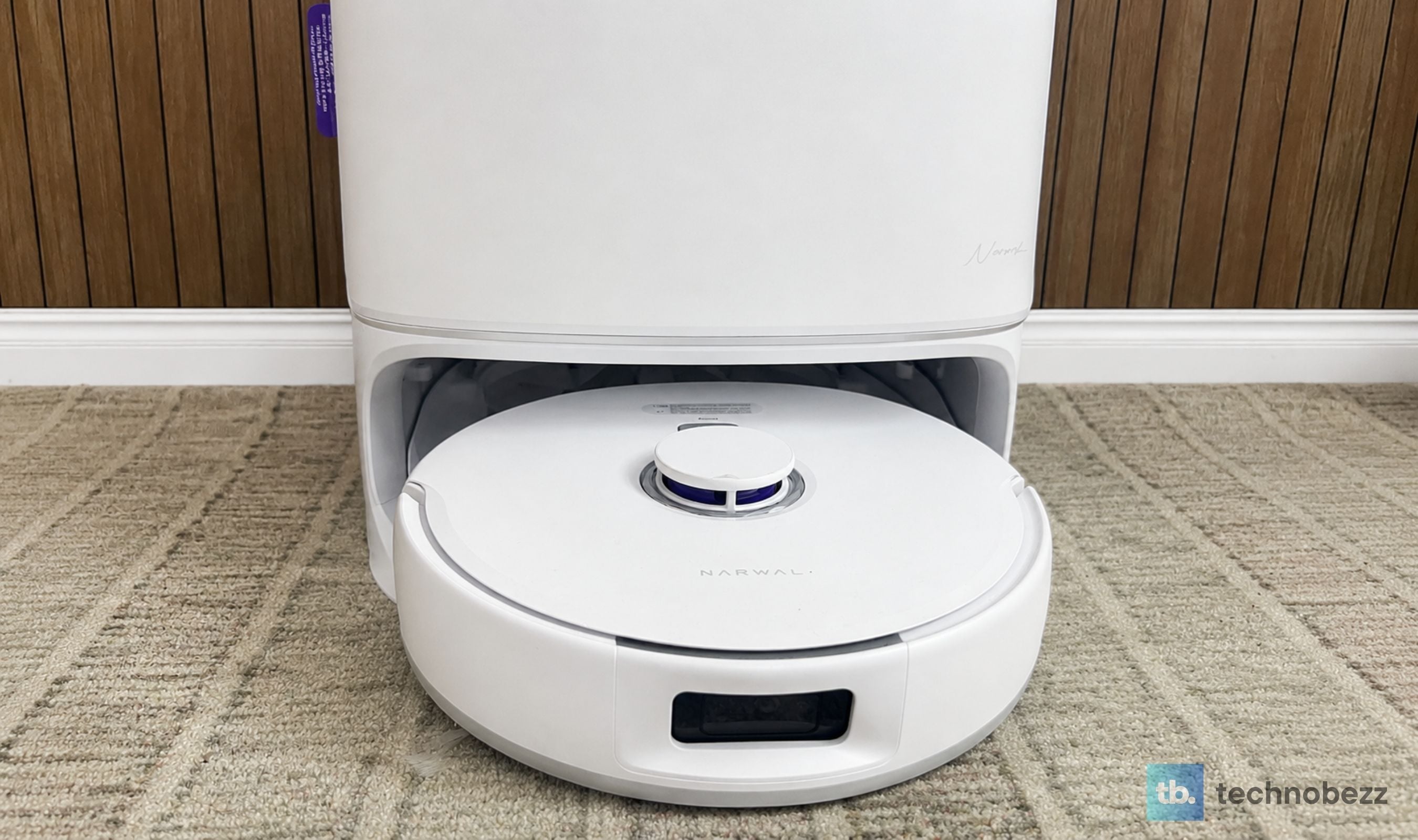
The first thing that lands when you pull the Z10 Turbo out of the box is how restrained the design is. The robot itself is white, clean, and minimal, with the LDS turret on top and a small surface display that shows status. There's no chrome, no aggressive trim, no oversized branding. The base station picks up the same language. White, clean lines, hidden water tanks, a single textured opening for the dirty water and the dust bag access. It looks like a piece of quiet luxury appliance rather than a piece of consumer tech, which is the kind of styling we don't get often in this category and immediately appreciated.
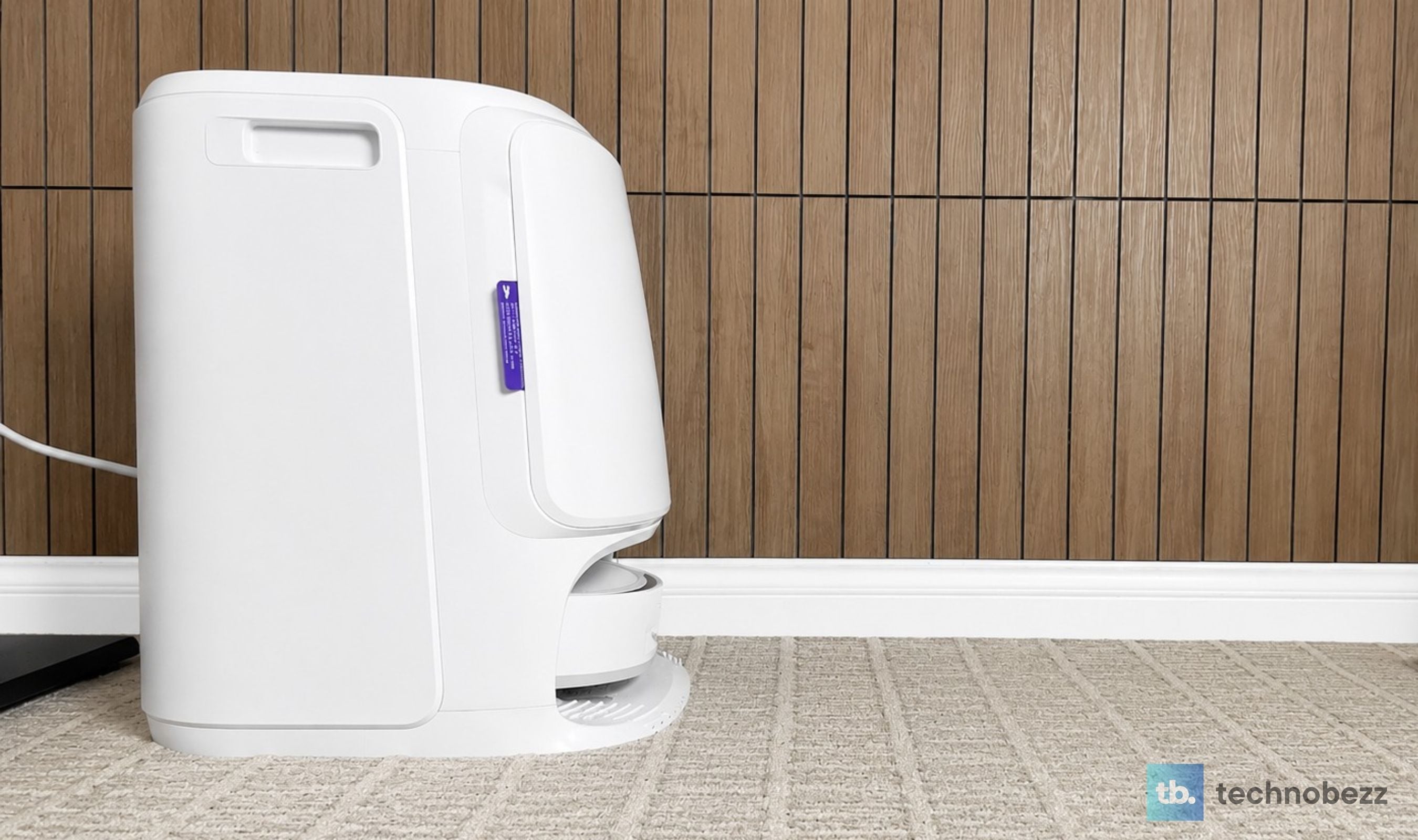
The robot is mid-sized in both footprint and weight, which is exactly where a robot vacuum should land. Heavy enough to feel substantial when you pick it up to carry it upstairs, light enough that the carry isn't a chore. It clears under a typical sofa, slides under the dining table, and handles a half-inch carpet edge without hesitation. The base station is the bigger consideration. It's not enormous, but it has presence, and you'll want to plan its location intentionally. Tucked into a corner of a kitchen, a hallway recess, or a laundry alcove, it disappears. In the middle of a room, it's a piece of furniture you have to acknowledge.
The CarpetFocus Moment
This is the headline feature, and seeing it work in person is what made the spec sheet click. When the Z10 Turbo crosses onto carpet, three things happen in maybe a second and a half. The mop pads lift up off the floor so the carpet stays dry. A mechanical brush cover drops into place underneath the suction inlet, sealing the airflow zone against the carpet surface. And the suction audibly ramps up, with the brush cover focusing the airflow into a high-pressure zone that lifts dust the way a stationary upright vacuum would. We watched this transition with a phone wedged at the carpet edge to film the underside, and the mechanical movement is genuinely satisfying.
The cleaning result tracks with the engineering. We pre-staged a low-pile area rug with flour pressed into the fibers, ground coffee scattered on top, and a few clumps of pet hair from our two dogs. On Carpet Max Mode with the Dual-Pass Zigzag pattern, the robot ran two passes across the rug from perpendicular directions and pulled out essentially everything. Not surface dust. The deep stuff that lives in carpet fibers and that most mid-range robots leave behind. CarpetFocus is normally a flagship-only feature on the Narwal lineup, and dropping it into a $599 launch price is the trickle-down that makes this whole robot make sense as a buying decision.
The 25,000 Pa Suction in Real Conditions
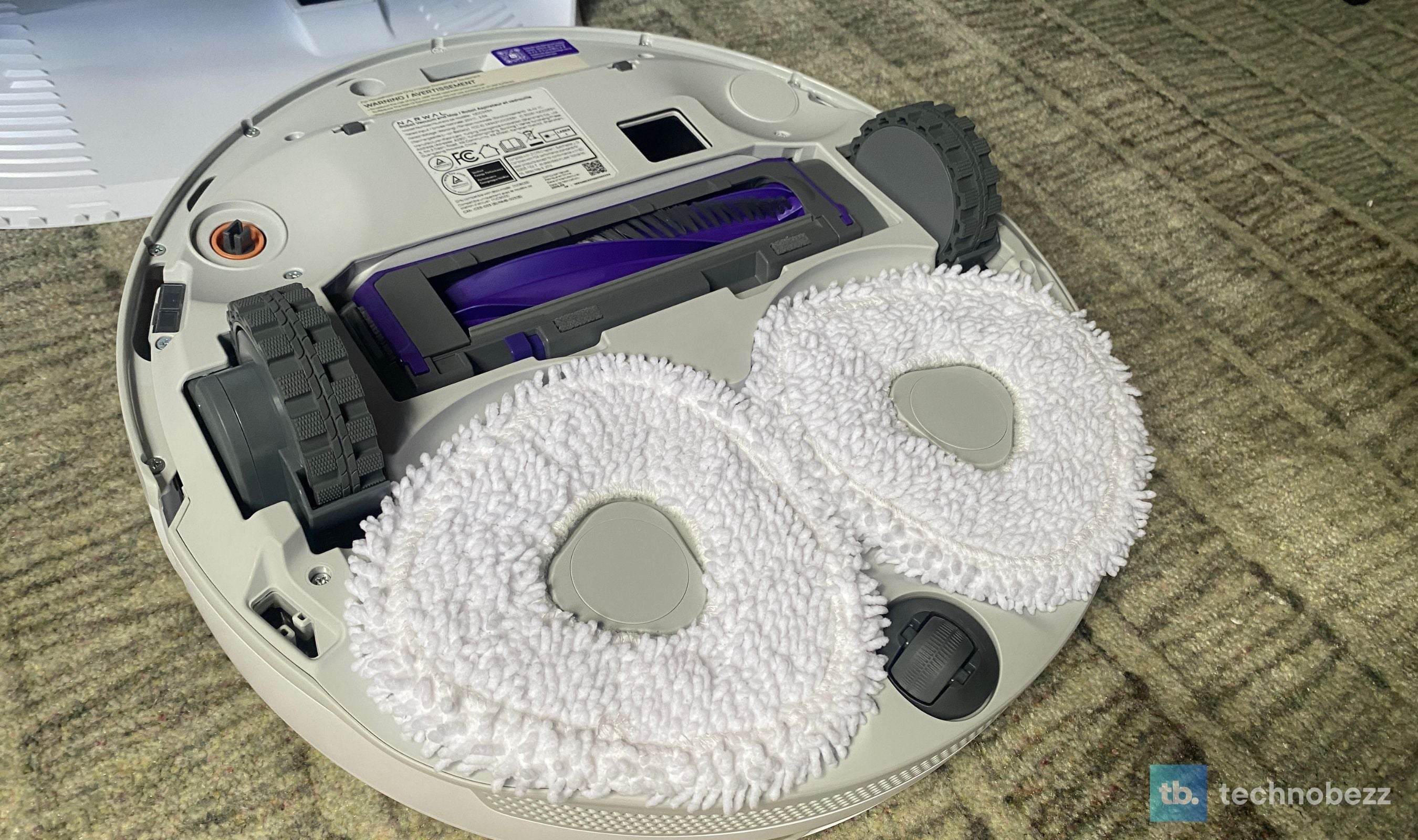
Suction numbers on a spec sheet are easy to print and hard to translate into reality. We ran the Z10 Turbo across a sequence of deliberate spills and debris patches: spilled milk, ground coffee, scattered flour, a layer of fine cereal crumbs, and the daily mix of dust and pet hair that builds up on hardwood without anyone trying. The robot pulled all of it. On the first pass for most messes, on the second pass for the heaviest concentrations. What stood out is that the robot doesn't give up when it doesn't get something on the first try. It re-routes, comes back, and tries again until the spot reads clean to its sensor array.
On hardwood the suction is overkill in the best sense, and the floor reads visibly cleaner after a single run than what we get from competing mid-range robots that quote 8,000 to 15,000 Pa. On carpet, the CarpetFocus seal is what makes the 25,000 Pa figure land, because air leakage is the thing that quietly kills suction performance on textile floors. Sealing the airflow zone with a mechanical brush cover is one of those engineering decisions that's expensive to do well and that most mid-range robots don't bother with. Narwal bothered.
Camera-Free Navigation
The Z10 Turbo runs tri-laser structured light combined with LDS radar for navigation, and notably no cameras anywhere on the device. This is a deliberate positioning. Narwal's flagship Flow 2 leans into vision-based AI with cameras and a Vision Language Model. The Z10 Turbo goes the other direction, and we appreciated it. There's a real chunk of buyers (the privacy-conscious ones, parents with kids, people who don't want a lens watching their living room) who would not buy a camera-equipped robot at any price. For them, this is the rare robot that can do flagship-level cleaning without compromising on the privacy angle.
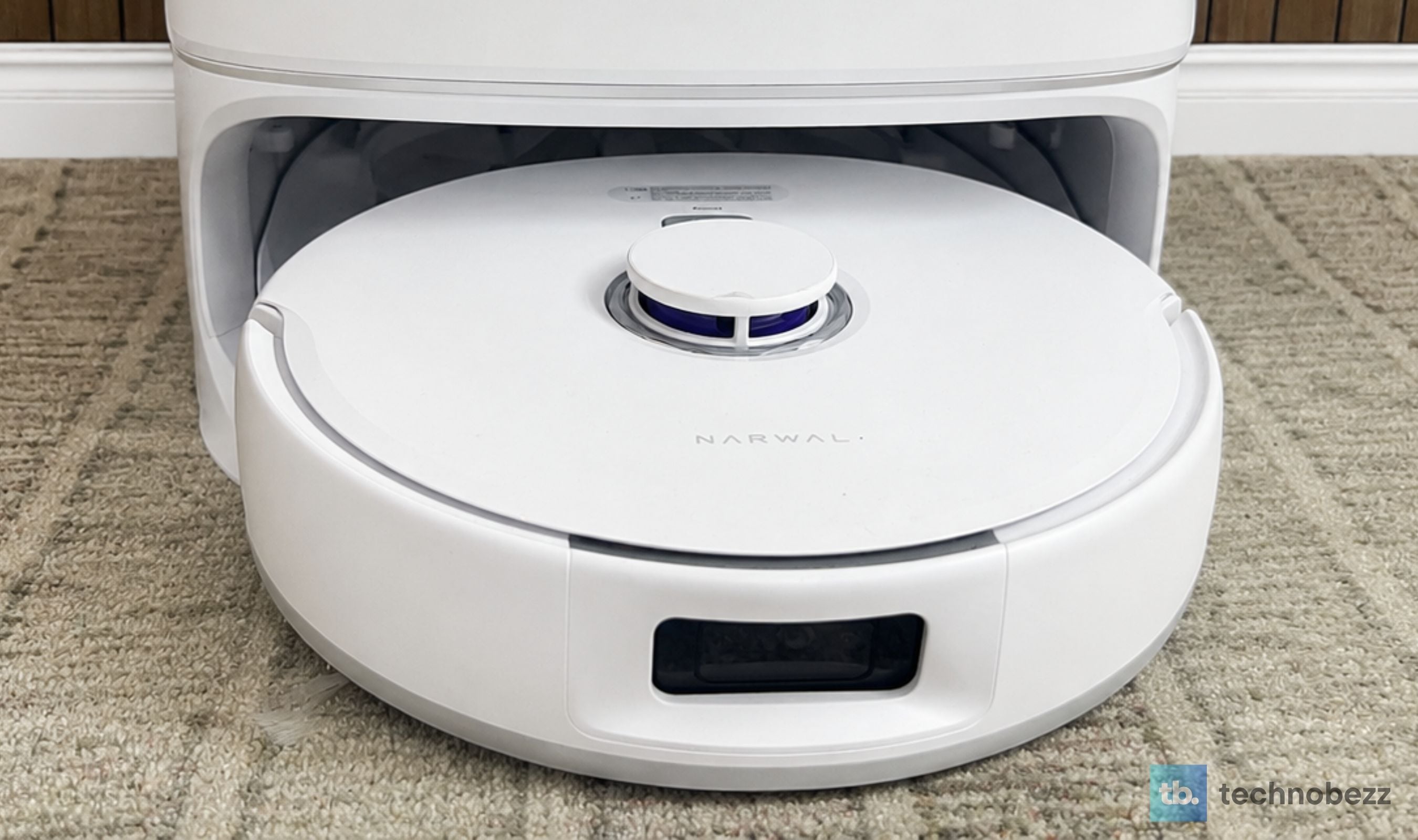
What surprised us is how well the camera-free navigation actually performs. Initial mapping took roughly five minutes for our first floor. The robot found and recognized rooms, doorways, edges, furniture, and carpet boundaries on its first run. Across a month of daily use, we never saw it miss a corner, never saw it get stuck somewhere it shouldn't have, and never saw it bump into a piece of furniture hard enough to register.
Edge-to-Edge Mopping and 12N Pressure
Edge cleaning is where mid-range mopping robots usually fall apart. They mop the open floor competently, then stop two inches short of the baseboard and leave a visible dust line that you end up wiping by hand. The Z10 Turbo's EdgeReach Mop System extends one mop pad outward when it's running along a baseboard or into a corner, so the pad physically reaches into the spots most robots don't bother with. The 12N of downward pressure is the other half of that story. It's hard to describe without using the word "scrubbing" because that's what it does. The mop pads aren't just dragging a damp cloth across the floor. They're applying real force.
We ran the mop on a kitchen floor that had weeks-old dried coffee splash marks and a few patches of dried milk near the breakfast counter, both of which are exactly the kind of dried stains that prove or disprove a mopping system. The Z10 Turbo got them on the first pass on most of the floor, and on the second pass for the toughest dried patch. The dirty water that came out into the base station tank was the kind that makes you uncomfortable about how dirty your floor secretly was. That's a good sign for a mop. The hot-water mop wash on the dock cycles between 113°F and 140°F based on how dirty the pads are, and the sterilization mode goes up to 167°F. After a month the mop pads still look new.
Tangle-Free Hair Performance
The DualFlow Tangle-Free System is SGS-certified for what that's worth, and what it actually means in our testing is that we never had to cut hair out of the brush head. We deliberately staged a clump of long hair on the floor and ran the robot over it. The hair vanished into the dust bin, the side brush stayed clean, and the floating roller brush rotated freely with no visible tangles. We repeated the same test with a smaller clump of pet hair from the same dog-household source, with the same result. Anyone who's owned a robot vacuum and routinely had to flip it upside down to cut hair out of the brush will know exactly why this matters. It's not a glamorous spec but it's the one that quietly determines whether a robot vacuum keeps working or sits in a closet within six months.
The Base Station and the 120-Day Story
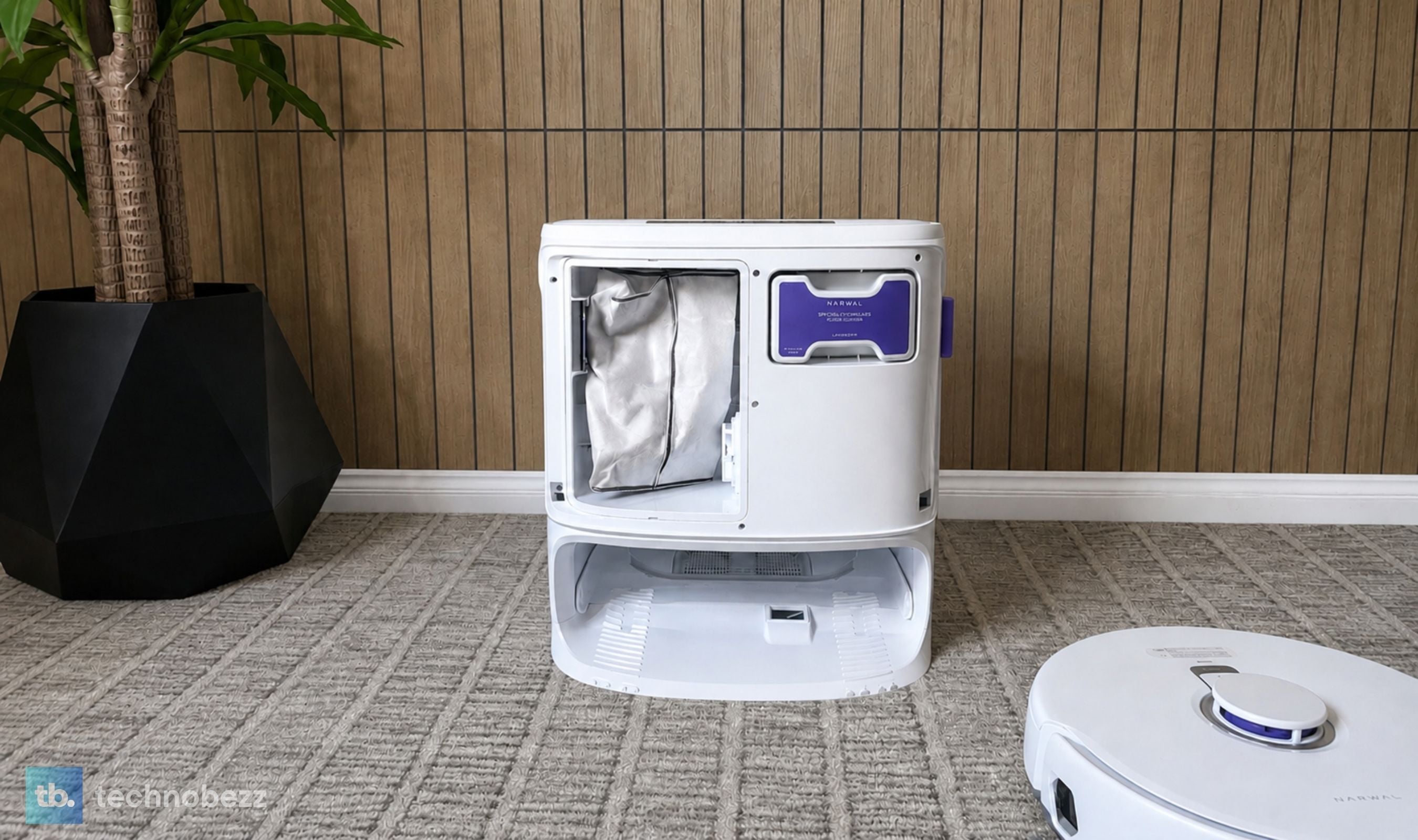
The all-in-one base station is the part that turns the Z10 Turbo from a robot you babysit into a robot you forget about. After the robot finishes a clean, it docks, and the station starts its post-cleaning cycle. The dust bin auto-empties into a sealed bag with compression, so the bag fills slowly. The mop pads get washed in hot water (the temperature adjusts based on how dirty the pads are), and the pads then dry on the station so they don't develop the wet-mop smell that haunts cheaper robots. Periodically the station will also self-clean its own internals, and the only thing the user does is refill the clean water tank, empty the dirty water tank, and swap the dust bag every 120 days or so.
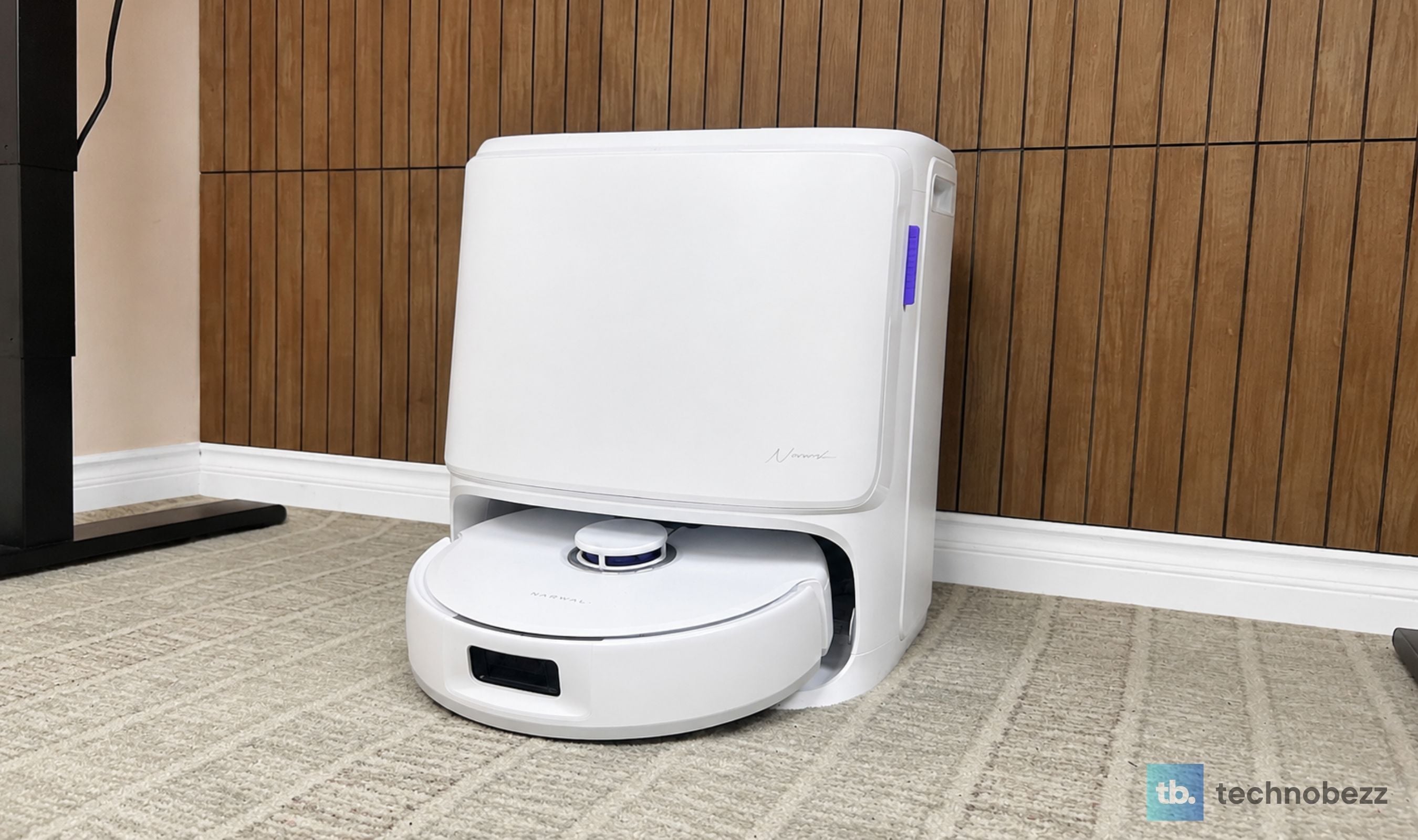
The 120-day figure is plausible based on how slowly the dust bag is filling. After a month of daily use we're maybe a quarter of the way through the bag's capacity, which scales out cleanly to roughly four months at our usage rate, in line with Narwal's 120-day claim. For reference, our prior robot vacuum used a non-sealed dust bin that needed emptying every 5 to 7 days. The compression and the sealed bag together are the difference between a robot that earns its place in the home and one that competes for your attention every week.
The Narwal App
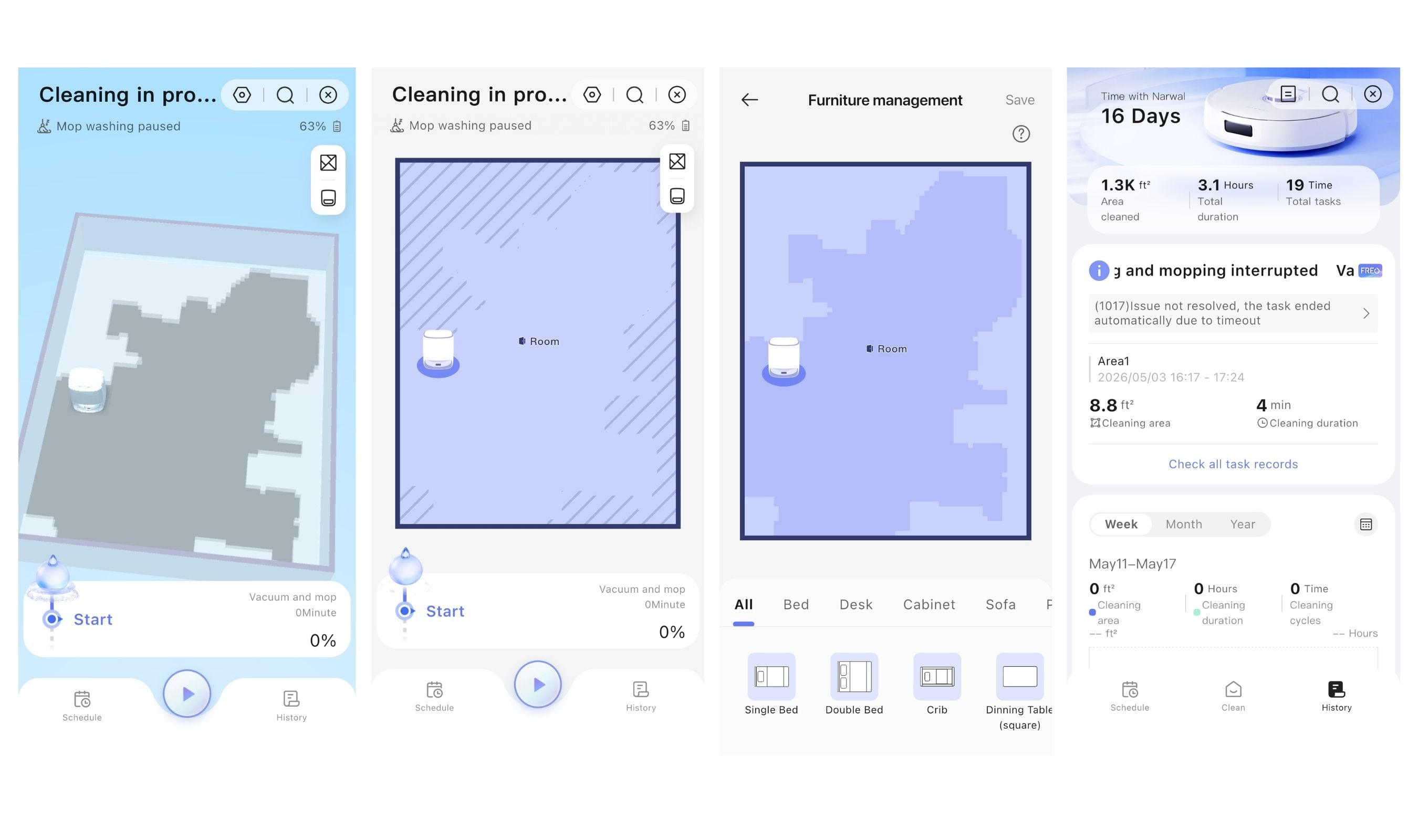
The Narwal app is one of the better robot vacuum apps we've used, and a real chunk of the daily Z10 Turbo experience lives in it. The 3D map view shows the home with furniture placed where the robot has detected it, and you can drop no-go zones, no-mop zones, and per-room cleaning schedules with the kind of touch interface that doesn't make you re-read the menu each time. Suction modes, water flow rates, room order, and quiet mode all live one tap away. Status tracking is genuinely useful, with a clear progress bar, current task description, and dock health indicators that tell you at a glance whether the dust bag, water tanks, and filter are doing fine.
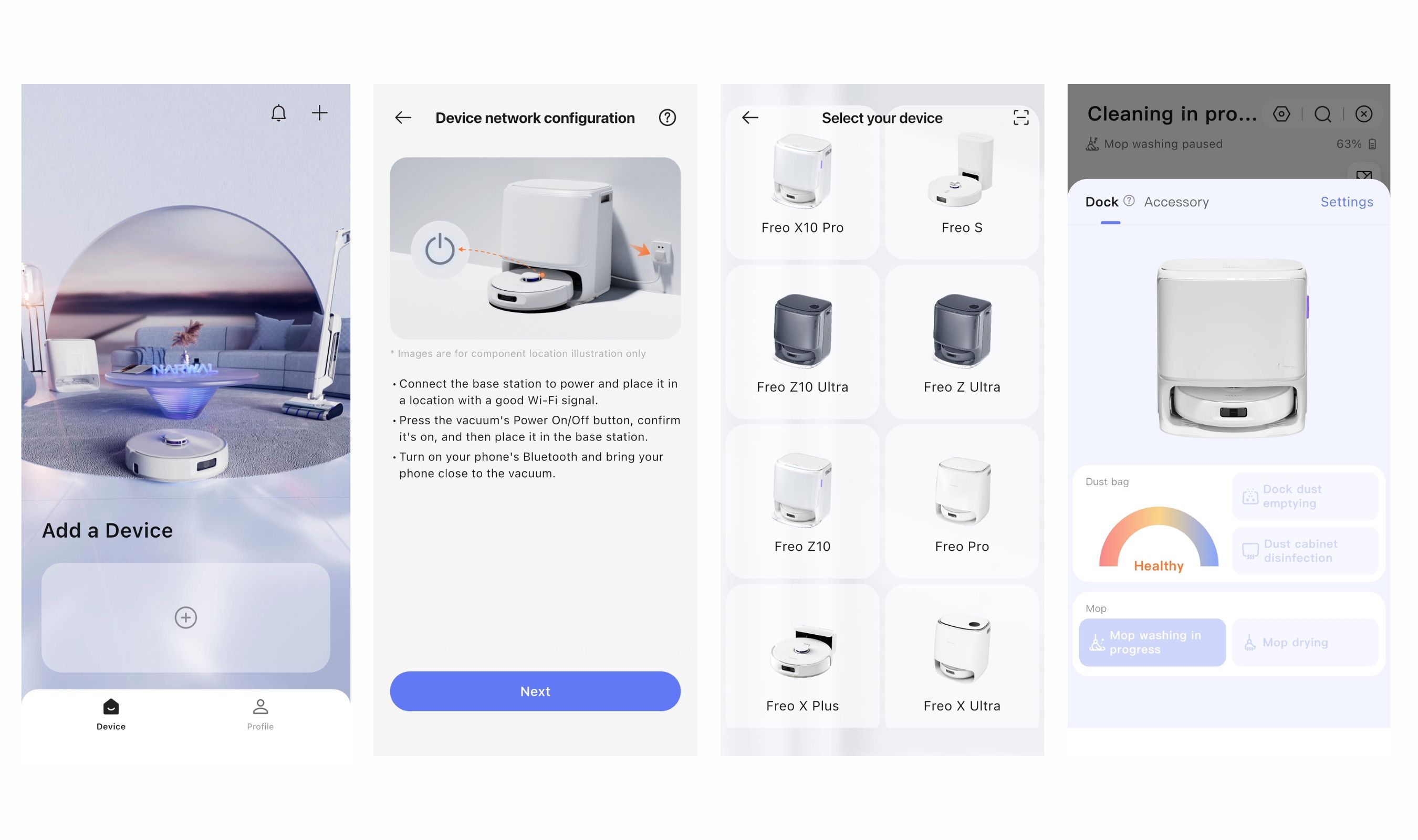
Quiet mode is the feature that earned its place fastest in our daily routine. With one tap, the robot drops to a noise level that's noticeably below most ambient appliances, low enough to run during a phone call or after a kid's bedtime without anyone noticing. The built-in speaker on the robot itself prompts spoken status updates ("cleaning paused", "returning to dock", "refilling water"), which is more useful than it sounds when you're three rooms away and want to know if it's done.
This product was provided to Technobezz for review. We independently select what we review. The manufacturer had no input on this article and did not see it before publication. All opinions are our own.
FAQ
How does CarpetFocus work, exactly?
When the robot's ultrasonic carpet sensor detects carpet underneath, two physical things happen. The mop pads lift up off the floor so the carpet doesn't get wet, and a mechanical brush cover drops down to seal the suction inlet against the carpet surface. The seal eliminates air leakage that normally kills suction power on textile floors, and the suction itself ramps up at the same time. The combination is what lets the robot pull deeply embedded dust out of carpet fibers in a way most mid-range robots can't. CarpetFocus is normally a flagship feature on Narwal's lineup, and the Z10 Turbo is the first non-flagship model to get it.
Is the camera-free navigation actually accurate?
Yes, more so than we expected. The Z10 Turbo runs tri-laser structured light combined with LDS radar, which together build a high-resolution map of the home in roughly five minutes on a first run. Across a month of daily use we never saw it miss a corner, get stuck where it shouldn't have, or fail to recognize a piece of furniture it had previously mapped. Camera-free is a privacy positioning, not a navigation downgrade.
How loud is it?
In standard mode it's about as loud as a typical mid-range robot. In Quiet Mode (selectable from the app), it drops to a noise level you can comfortably run during a phone call, after bedtime, or while a kid is napping. Carpet Max Mode is the loudest, but that's only on while the robot is actively crossing carpet, and the trade-off there is meaningful suction.
Does the base station really go 120 days without intervention?
Yes for the dust bag, with normal use. The sealed bag with compression slowly accumulates dust without any user contact. You will need to refill the clean water tank and empty the dirty water tank more often, on a roughly weekly cadence depending on how aggressively you mop. The 120-day figure is specifically for the dust side of the maintenance equation.
How does it compare to the Freo Z10 Ultra and the Narwal Flow 2?
The Z10 Ultra has 18,000 Pa of suction and uses dual RGB cameras for AI obstacle recognition. The Flow 2 is the 2026 flagship with up to 30,000+ Pa, a Vision Language Model, and full camera-based intelligence. The Z10 Turbo sits between them in suction (25,000 Pa, higher than the Ultra), goes camera-free by design, and brings flagship CarpetFocus down to a mid-range price. If you want camera-based AI object detection, the Flow 2 is the pick. If you specifically want flagship carpet performance and camera-free privacy at a mid-range price, the Z10 Turbo is the right tool.
Is the launch price worth it, and what about MSRP?
At $599.99 launch pricing (May 18 to May 31), this is one of the easiest robot vacuum recommendations we've made. CarpetFocus alone justifies a meaningful chunk of the price, and the rest of the package (suction, navigation, edge mopping, tangle-free brushes, all-in-one base station) lines up with what flagship robots cost noticeably more for. At $899.99 MSRP after May 31, the math is closer but still defensible if your home has real carpet and you want flagship-level cleaning without the camera or the flagship sticker. If you can hit launch pricing, do it. If not, watch for sale windows.
Final Thoughts
The Narwal Freo Z10 Turbo is the rare mid-range robot vacuum that doesn't feel mid-range. The CarpetFocus mechanical brush cover is the headline feature and the moment that turned this from a competent robot into a category-shifter for the price tier. The 25,000 Pa suction backs that headline up across hardwood, carpet, and the kind of debris real homes produce. The camera-free navigation is fast, accurate, and aligned with the privacy-conscious chunk of the market that flagship cameras quietly exclude. The edge mopping with 12N of pressure cleans baseboards and corners that mid-range robots usually skip. The base station with sealed dust compression and hot-water mop wash turns the robot into a genuine appliance.
At $599.99 launch pricing, this is one of the easiest robot vacuum recommendations we've made in years. At $899.99 MSRP after May 31, it's still a strong pick for households with real carpet and a preference for camera-free design, with the caveat that the absolute price moves it out of impulse-buy territory. The flaws (base station footprint, no AI object detection, post-launch MSRP) are real but minor. The strengths (CarpetFocus on a non-flagship, suction that punches into flagship territory, EdgeReach mopping, tangle-free hair handling, the app, the build quality) are the kind of details that hold up across a month of daily use rather than disappearing after the first run. This is the mid-range robot vacuum we'd buy now.
Share this article
More reviews
Review
Tribit PocketGo Review, a Small Speaker With Big Sound
Review
The Baseus Bowie MC2 Is the Open-Ear Pair I Keep Forgetting to Take Off
Review
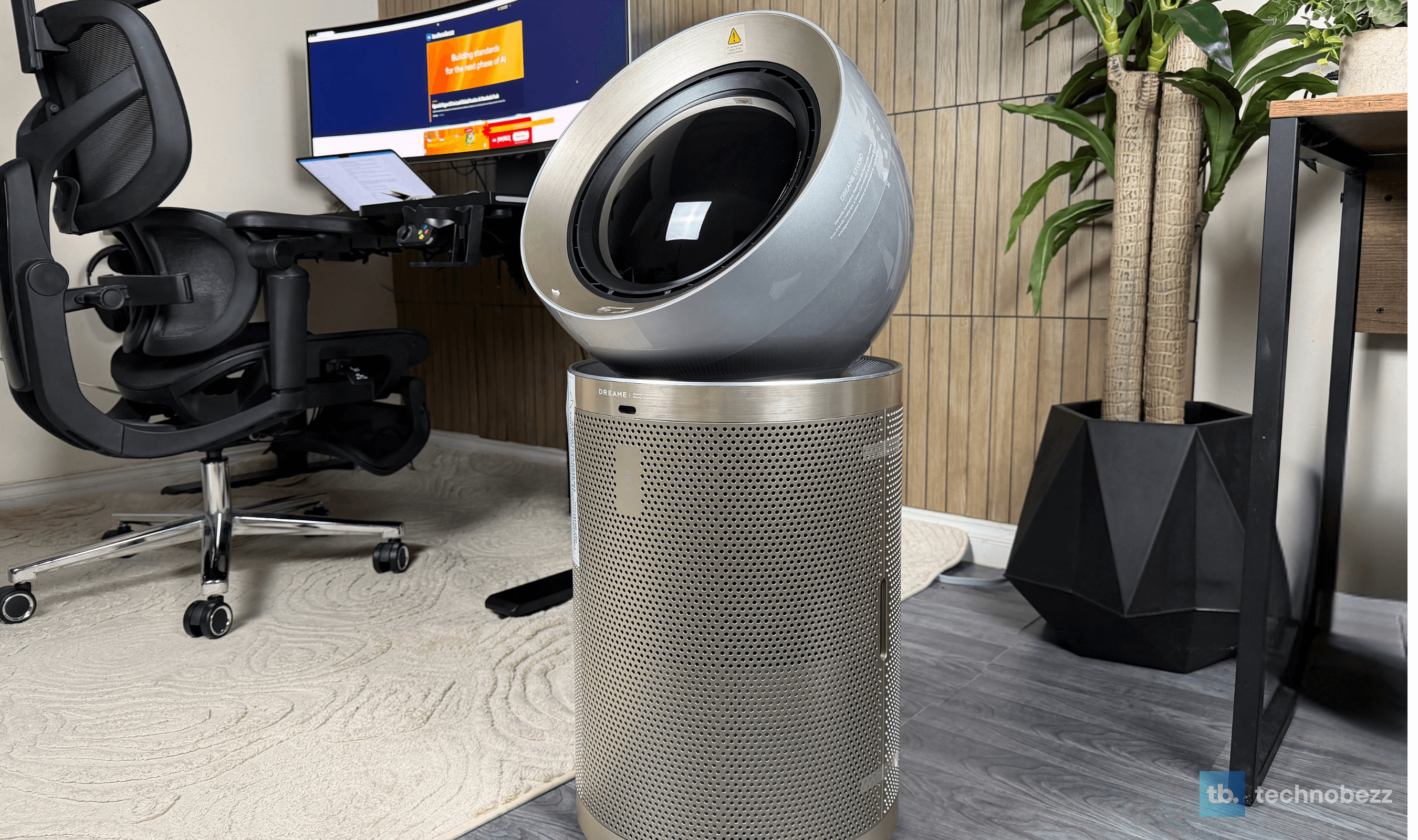
The Dreame AirPursue PM20 Purifies, Heats, Cools and Follows You Around the Room
Review
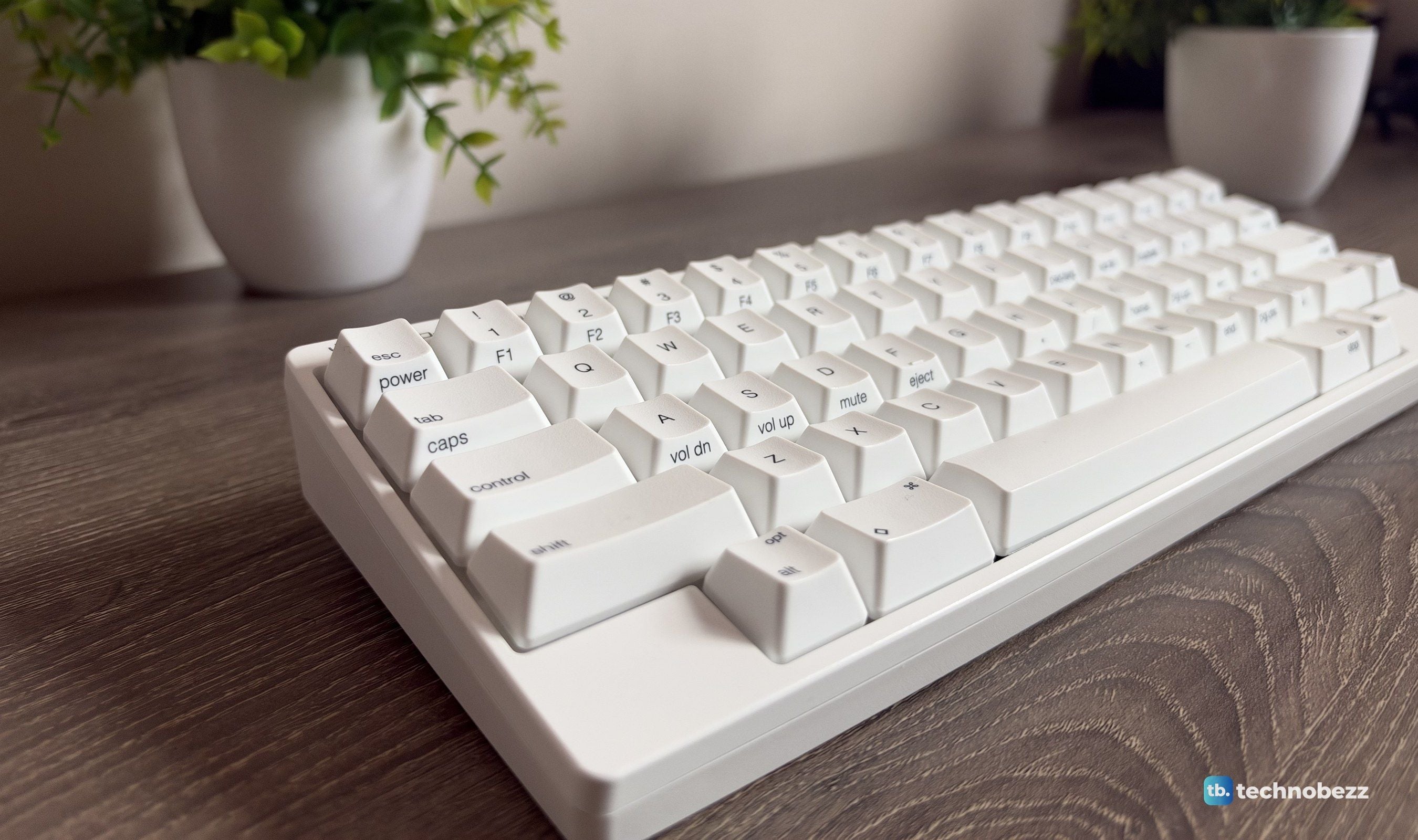
I Spent Weeks Looking for a Flaw in the HHKB Professional HYBRID Type-S
ReviewiPhone 18 Pro Max vs iPhone 17 Pro Camera Comparison in DaylightReviewDreame D20 Air Plus Review, Built Like a Robot That Costs Three Times as MuchReviewThe Boulies EP600 Moves in More Directions Than Any Chair We Have TestedReviewNarwal Freo 20 Edge Review, Reaching the Corners Without Dragging the DirtReviewHisense M7SR Review, an Easy First Step Into MiniLEDReviewKYY X90D Review, Two Extra Screens From One USB-C CableReviewI've Used the 15-inch MacBook Air M5 for Months, and It's the Best Laptop I've Ever OwnedReviewUltenic AC1 TriFlex Review, the Wet Dry Vacuum That Pulls Its Own Weight