
This article is brought to you in partnership with CZUR.
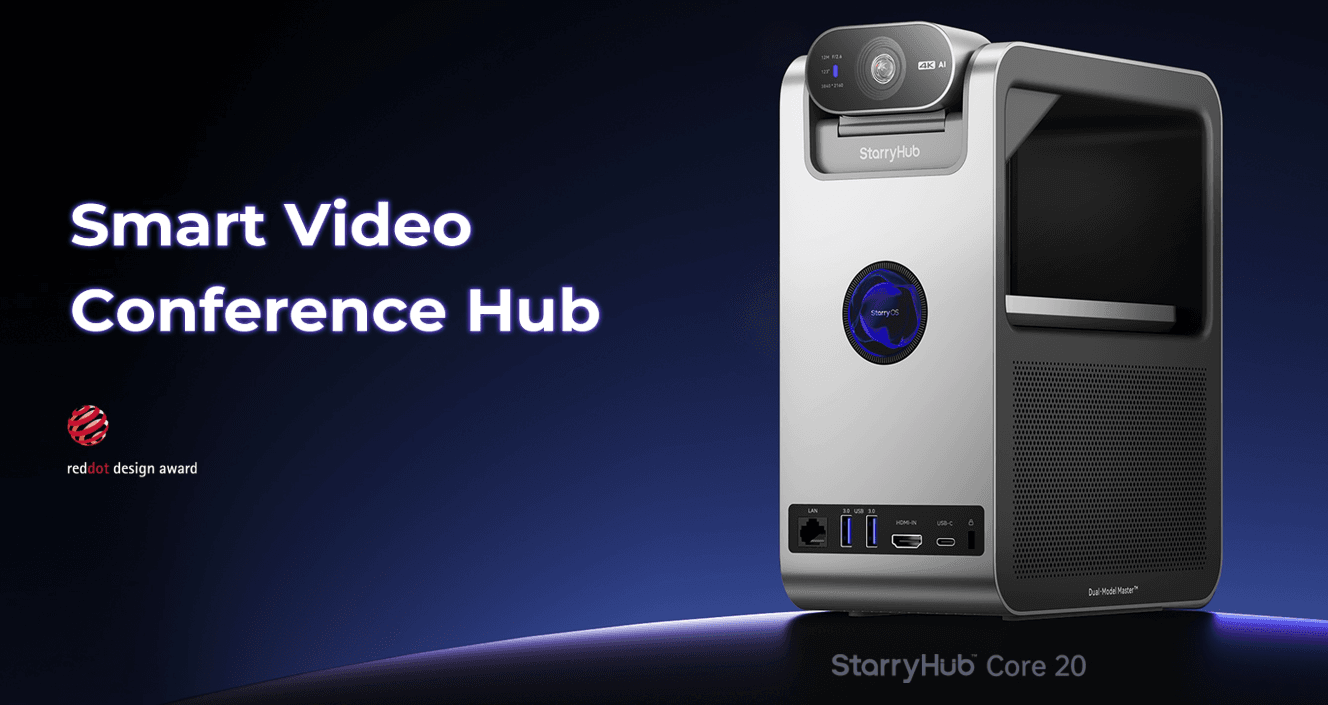
CZUR's StarryHub Core20 folds a 4K AI camera, a six-microphone array, and a full meeting system into one compact box that plugs into any HDMI screen and runs without a computer attached. The company is aiming it squarely at huddle rooms and small offices, the spaces that rarely get dedicated conferencing hardware, and it rates the device for rooms of up to 20 people.
Video calls have standardized on a familiar rig in large conference rooms. A mounted camera, a ceiling microphone, and a room PC or a dedicated appliance driving the whole thing. Smaller rooms almost never get that treatment. They fall back on whoever carried in a laptop, its built-in webcam aimed at one corner and its microphone catching half the table. CZUR built the Core20 around that gap. It lands in the same all-in-one class as video bars from Logitech, Poly and Jabra, but it drops the separate computer and the per-room software license by running its own operating system on board.
Turning Any Screen Into a Meeting Room
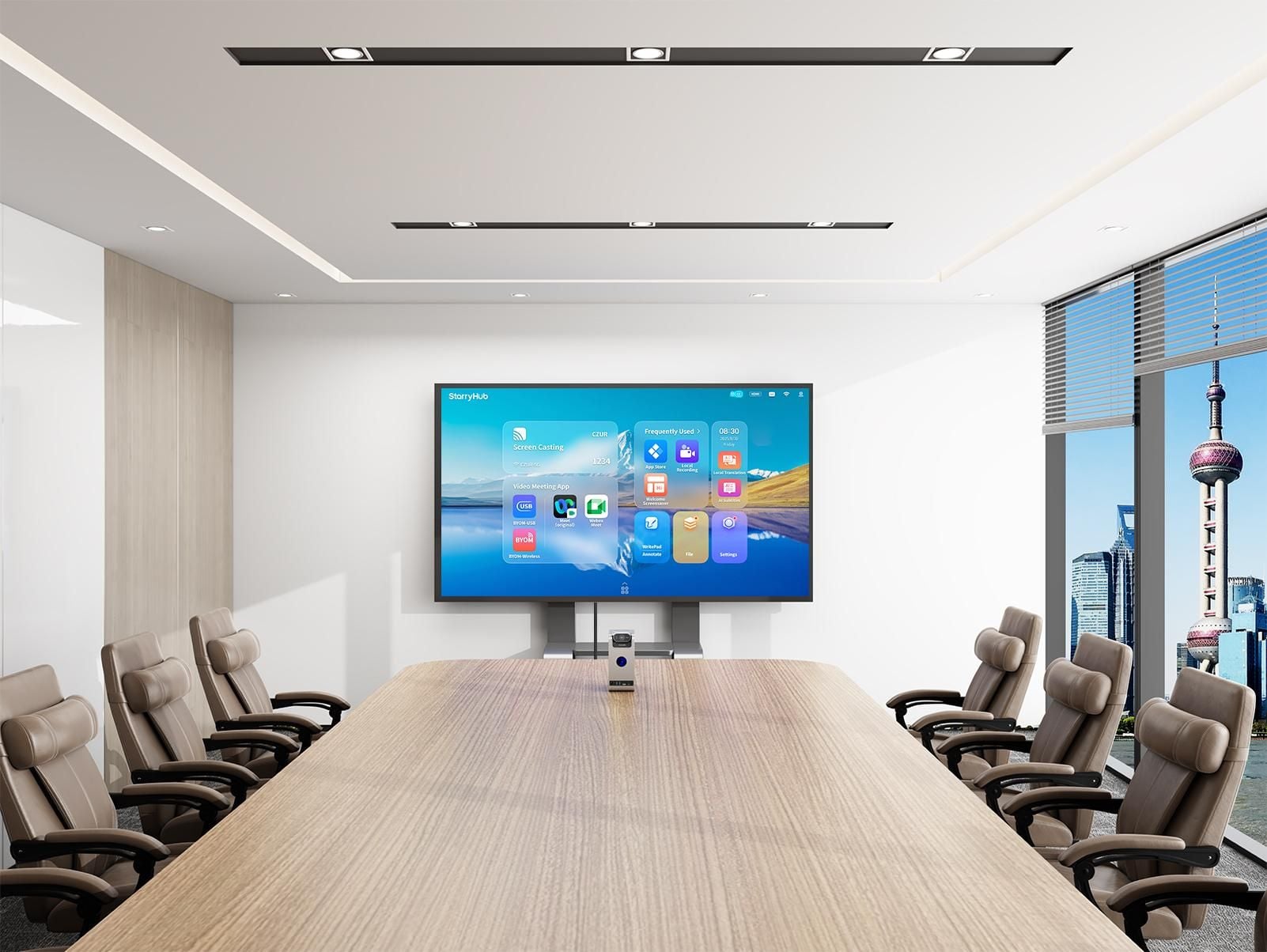
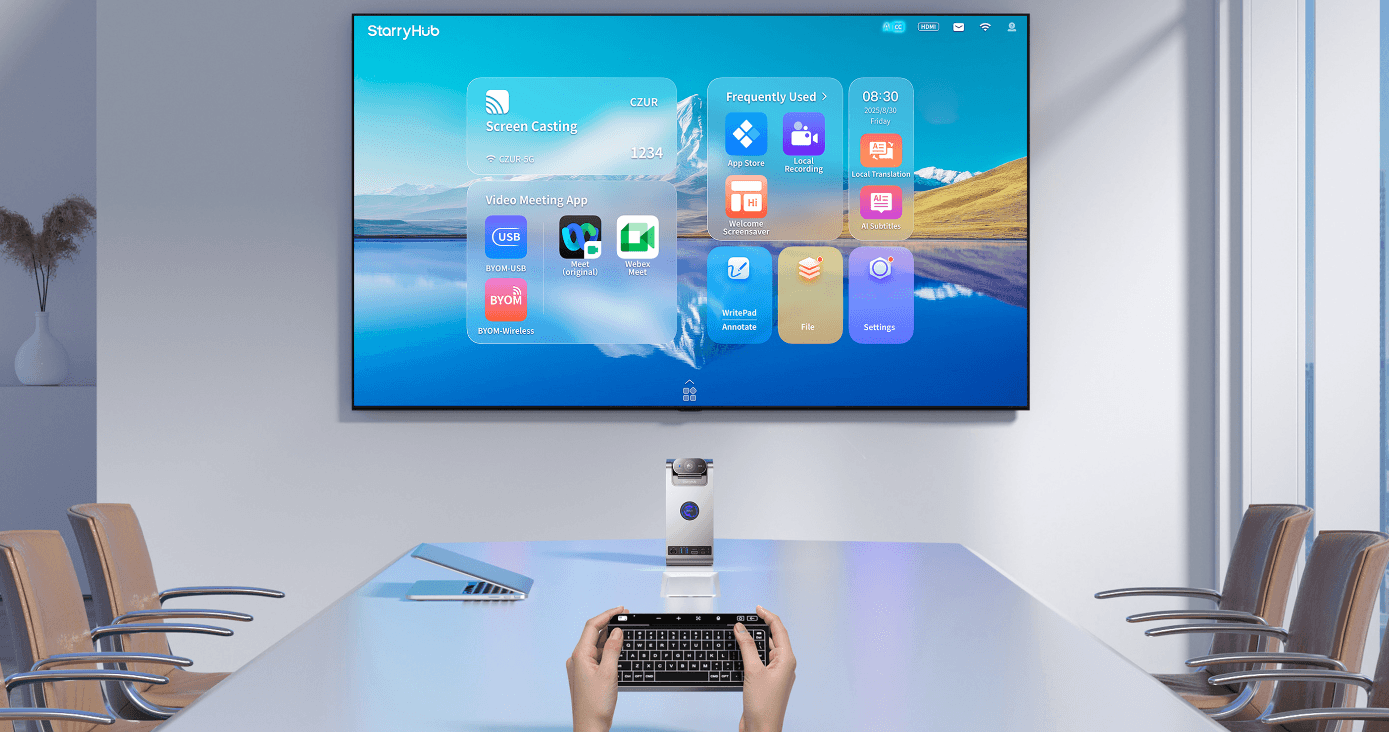
The premise is that the room already has a display. The Core20 connects to an HDMI screen or TV, powers on, and turns it into a working conferencing endpoint. No PC, no laptop tether, no dongle to hunt for before the call starts.
Running the show is StarryOS 6.0, CZUR's own meeting operating system built on Android 14. Because the software lives on the device, the Core20 boots straight into a meeting interface rather than a desktop, which is what lets it skip the computer entirely. An eight-core processor, a dedicated 6 TOPS AI unit, and 32GB of onboard storage handle the camera work, casting and recording locally. Connections cover the room the same way: HDMI in and out, two USB 3.0 ports, USB-C, wired Ethernet, and Wi-Fi 6, with the HDMI output pushing up to 4K at 120Hz.
A 123-Degree View That Frames the Room
The camera captures 4K at 3840 by 2160 through a 12-megapixel half-inch sensor, with a 123-degree ultra-wide field of view that takes in a full small-room table from the front of the space. HDR handles mixed light from a window on one side and a screen on the other.
AI smart framing does the part manual cameras get wrong. The Core20 detects who is in the room and adjusts the shot so participants sit centered and evenly sized, rather than leaving a fixed wide frame with three people clustered in a corner. CZUR runs the imaging through a stack it calls PureMirror 1.0, which adds subject tracking, low-light cleanup and distortion correction. When the camera is not in use it retracts flat into the housing, a physical privacy cover rather than a software toggle.
Six Microphones for a Full Table
Audio runs on a six-microphone array with 360-degree pickup, rated to catch voices from five to six meters out, which is what lets one unit serve a table of up to 20. CZUR pairs it with echo cancellation, noise reduction and near-far voice leveling under a package it brands PureVoice 2.0. Those are the exact failure points that make small-room audio the most common complaint on a call.
The company's pitch for the array is plain, 360-degree, crystal-clear audio from any seat. Twin six-watt speakers handle the return path, with separate tuning for a conference call and for playing back media in the room. The practical target is the far end hearing a natural voice from every chair, not a hollow room tone with one person three times louder than the rest.
Running Zoom, Teams, and Meet
The Core20 works with the platforms most offices already schedule on, Zoom, Microsoft Teams and Google Meet, alongside other Android-based conferencing apps. That compatibility is the point of a device meant to stand in for a laptop, because standardized room hardware only helps if it joins the same calls the rest of the company books. For offices comparing small-room meeting solutions, the result CZUR is selling is one consistent camera and microphone in every small room, with each team keeping the meeting software it already uses.
Casting, Gestures, and On-Device Recording
Around the call itself, the Core20 carries features aimed at how small meetings actually run. Wireless casting supports up to four screens sharing to the display at once, across Miracast, AirPlay, Chromecast and CZUR's own CZUR Share, so a group can move between presenters without swapping cables. AI gesture control lets a presenter steer the camera with a hand signal instead of reaching for a remote. A bilingual live translation mode targets two-language calls, and local recording keeps audio, screen and video captures on the device's own storage for review afterward.
Who the Core20 Is For
The buyer most likely to get value here runs several small rooms and wants each one to behave the same on a call, without provisioning a PC or paying a per-room software license for every huddle space. Offices standardizing their meeting rooms, and teams that gather in spaces too small to justify a full video-bar installation, are the clearest fit.
Small-room conferencing has spent the last few years catching up to the big rooms, as hybrid work turned every corner with a screen into a possible meeting space. All-in-one hardware that needs no dedicated computer answers that shift directly, and the Core20 packages the camera, the microphones and the compute into a single unit built for it.
The CZUR StarryHub Core20 launches through CZUR's Core Series, with the full specification and rollout details on CZUR's product page. It ships with a one-year hardware warranty, and a direct purchase link will follow once the store listing goes live.