
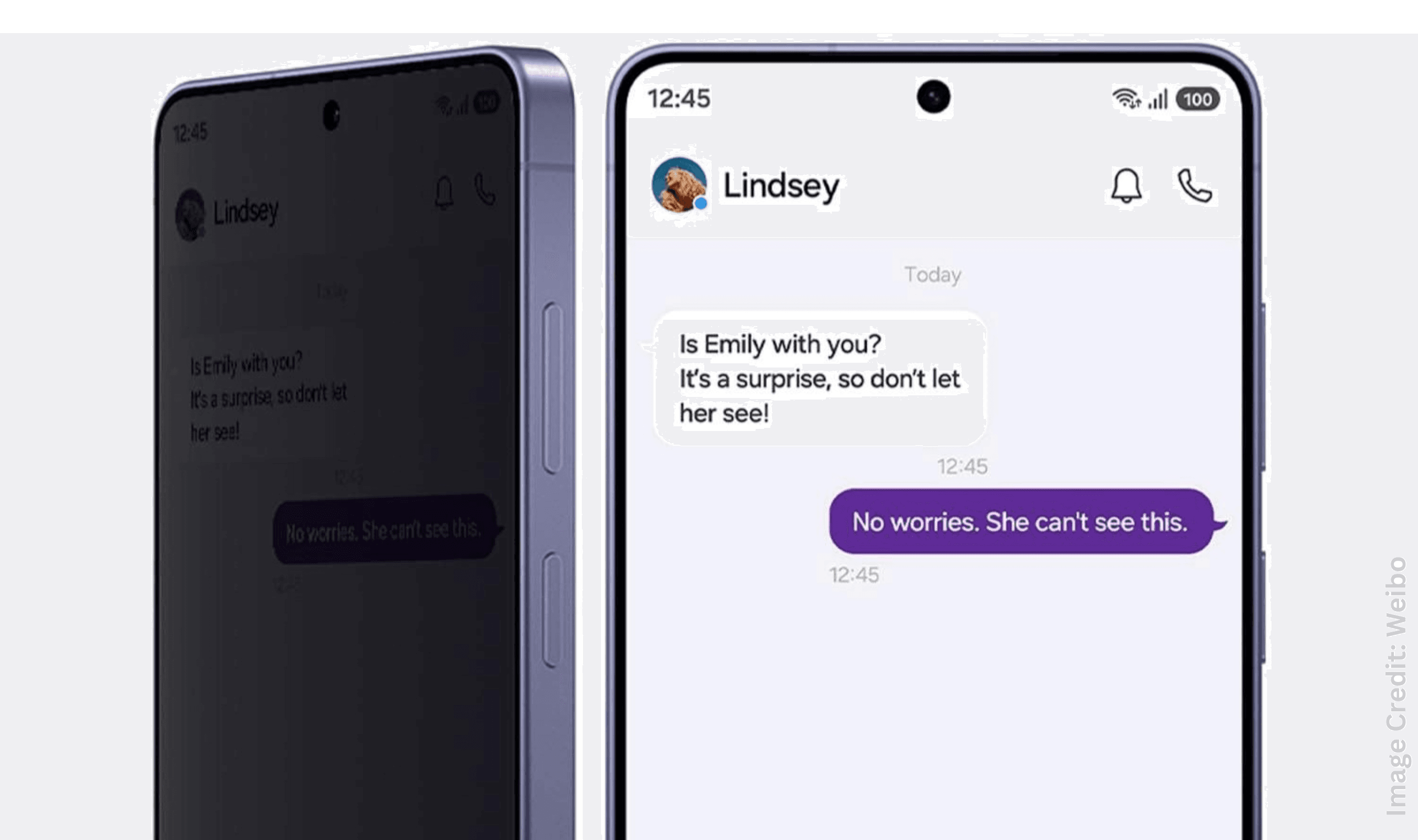
Hardware-level privacy displays, set to debut in Samsung's Galaxy S26 Ultra next week, are already being tested by major Chinese smartphone makers for their own flagship launches later this year.
Multiple Chinese manufacturers including Xiaomi, Oppo, and Vivo have begun evaluating display panels with built-in anti-peeping technology according to tipster Digital Chat Station, with other brands like OnePlus and Realme expected to launch flagship devices in the same timeframe.
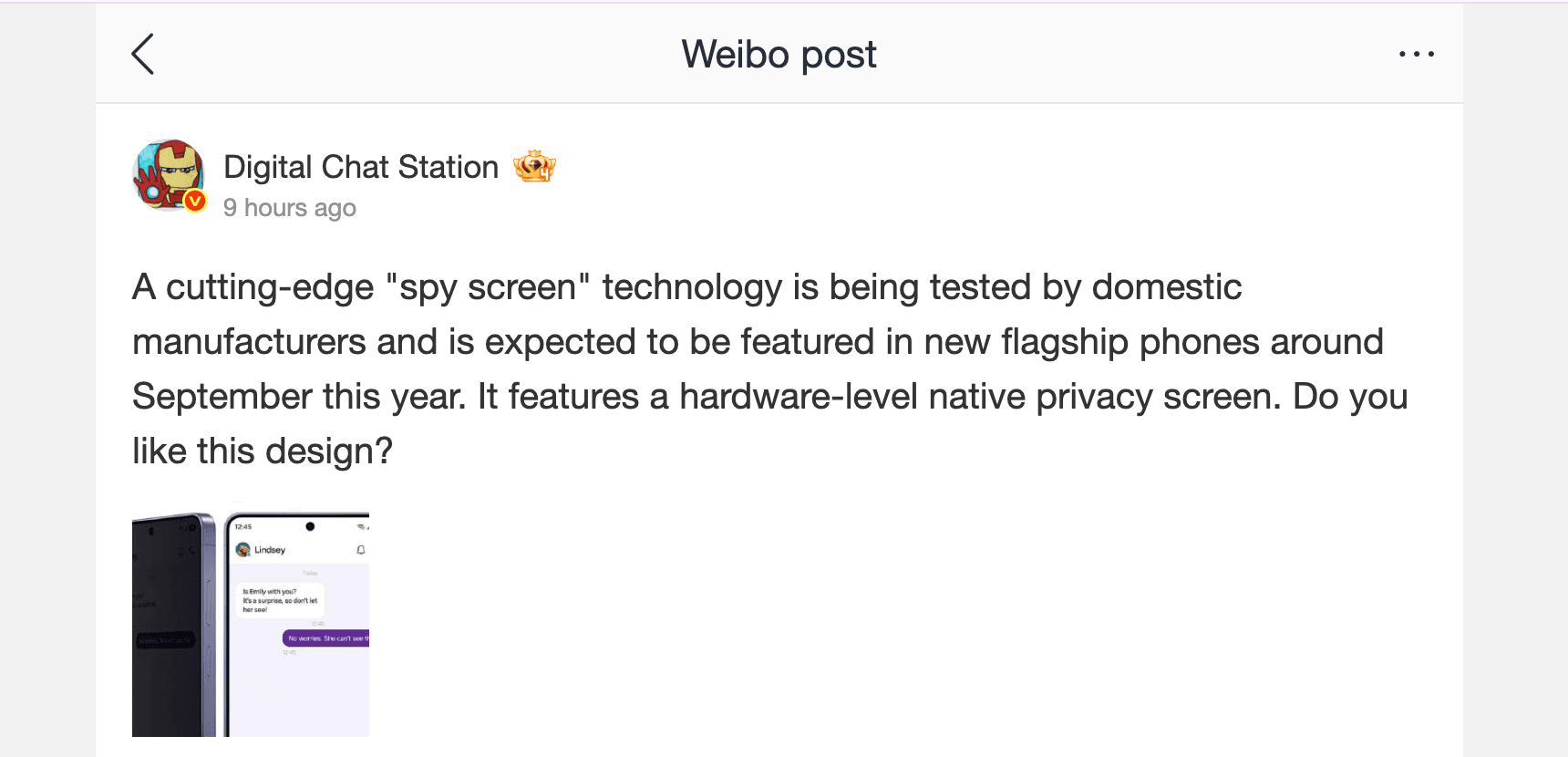
The hardware approach physically narrows viewing angles through the display panel itself rather than relying on software filters or external screen protectors.
Samsung's implementation in the upcoming S26 Ultra uses new AMOLED technology to obscure on-screen content from side angles. Only the person holding the device can clearly view sensitive information like banking apps or personal messages.
Chinese brands are developing similar solutions that work at the hardware level to avoid brightness loss and clarity issues associated with traditional privacy accessories.
Flagship models expected in the fall could be first to incorporate the technology.
The Xiaomi 18 series is tipped for a September launch, while the Vivo X500 lineup and Oppo Find X10 series are expected in October, all potentially featuring native anti-peep displays if testing proves successful.
OnePlus and Realme typically unveil their premium devices in the same window.
Manufacturers appear likely to limit the feature to top-tier variants following Samsung's pattern of exclusivity for the Ultra model. This approach makes sense given the added complexity and cost of integrating privacy controls directly into display panels rather than using software solutions.
The rapid adoption by Chinese competitors suggests hardware privacy screens could become standard in premium Android smartphones rather than remaining a single-brand differentiator.
That successful testing could make built-in privacy displays common across high-end devices before year-end.
None of the companies involved have officially confirmed plans for hardware privacy displays in upcoming devices. All current information comes from leaks and early reports about display panel testing.