
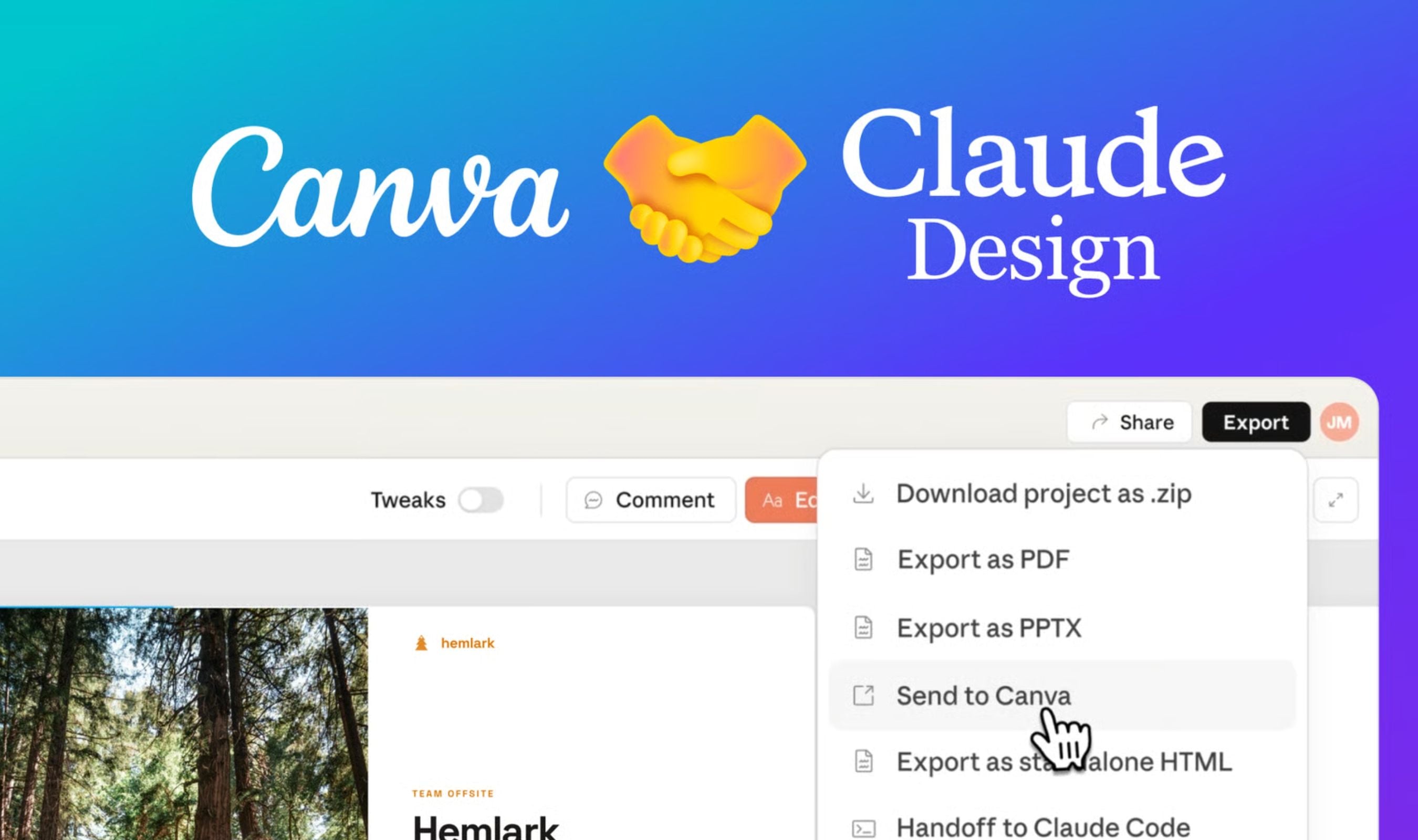
Anthropic's new Claude Design tool runs on Canva's visual engine, making the platform an essential backend for AI-generated content rather than a potential casualty. The feature launched this week as part of Anthropic Labs, powered by the company's latest vision model Claude Opus 4.7.
It bridges what has been a persistent gap in AI workflows: turning text descriptions into fully editable creations without manual conversion steps. The platform becomes the rendering layer inside Claude through a partnership that builds on integration work started last July. Millions of users have already created visuals from within Claude conversations using a Model Context Protocol connector that launched in mid-2025.
"one of the biggest gaps in today's AI market: turning AI-generated content into real, usable work."
The collaboration addresses what CEO Melanie Perkins calls this gap. Instead of producing static images or code snippets that require separate editing software, Claude now generates content that opens directly in Canva's drag-and-drop editor.
This positions Canva as infrastructure rather than just another application competing with AI solutions. The company's Design Engine handles brand consistency automatically when users have corporate templates configured, applying colors, fonts and layouts according to preset rules without manual enforcement.
Claude Design arrives as part of a broader push into AI-powered creation at both companies. Anthropic made its feature available in research preview for Claude Pro, Max, Team and Enterprise subscribers this week.
Canva simultaneously unveiled Canva AI 2.0 at its Create conference in Los Angeles, where more than 6,500 attendees saw demonstrations of how the platform now handles interactive content alongside traditional visual work. The company also introduced HTML importing capabilities that let users bring interactive content generated in applications like Claude directly into Canva for refinement and publishing.
This makes it what it claims is "the first platform to unify visual, document and interactive content creation in a single collaborative editor."
Business metrics show why both companies see value in deeper integration. Canva reached $3.5 billion in annual revenue last year, up from an estimated $2.8 billion the year before.
Monthly active users grew from 180 million to 265 million during that period, with more than 31 million paid subscribers now using the platform regularly. The company's valuation reached $42 billion in an August employee stock sale following steady growth throughout last year.
For Anthropic, embedding Canva solves practical problems around brand governance and editability that have limited adoption of pure AI visual solutions among enterprise teams.