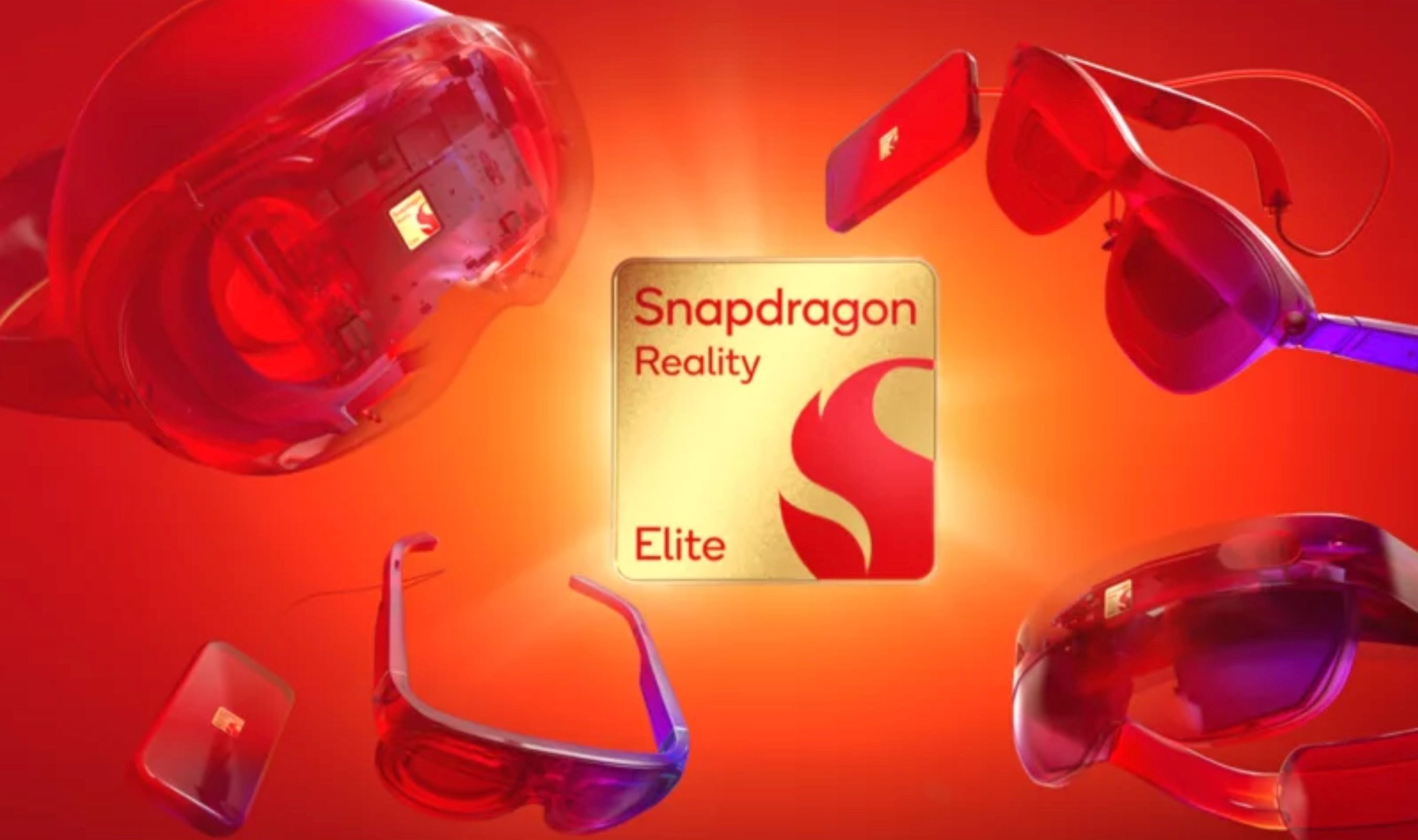
Qualcomm is betting the post-smartphone era will run on its silicon, and it just laid out the full blueprint. At improved World Expo 2026, the company unveiled Snapdragon Reality Elite, its flagship XR chip, alongside START, a white-label toolkit that lets any eyewear brand ship smart glasses without building the tech stack themselves. CEO Cristiano Amon told CNBC that Qualcomm is already working on more than 40 AI wearable designs spanning jewelry, camera earbuds, pins, and watches.
"I think there's going to be a lot of experimentation with different form factors," Amon said.
Snapdragon Reality Elite replaces the XR2+ Gen 2 as Qualcomm's highest-end VR, AR, and MR chip. It delivers up to 60% higher GPU performance, 30% higher CPU performance, and 160% higher NPU performance over the previous generation. The neural processing unit hits 48 TOPS, enough to run a 3-billion-parameter language model at 45 tokens per second on-device.
The chip supports 4.4K per-eye resolution at 90 fps, a modest bump from 4.3K, but the bigger story is efficiency. Qualcomm claims 20% longer battery life at the same workload and thermals running up to 12 degrees Celsius cooler under load.
Reality Elite is designed for two device categories: standalone video-see-through headsets (the Meta Quest approach) and lightweight tethered optical-see-through glasses that overlay digital content directly into the wearer's field of view. XREAL's Project Aura, the Android XR glasses shown at Google I/O, is the first announced device. A product from Play for Dream is also in the pipeline.
The second announcement, START (Scalable Turnkey AI-Ready Toolkit), is where Qualcomm's strategy gets interesting. It bundles a hardware module built on the AR1+ chip with software, companion iOS and Android apps, an AI cloud stack, and three white-label reference designs: audio-plus-camera (similar to Meta's Ray-Ban), monocular display, and binocular display.
Qualcomm has already signed its first START partner: UK-based Inspecs, the eyewear house behind Barbour, CAT, Superdry, and O'Neill. The company made a $10 million strategic equity investment in Inspecs, subscribing for 7.5 million new shares at 1 pound each.
It's a signal that Qualcomm is not just licensing silicon but taking a financial stake in the supply chain that will build these devices. The START program mirrors the reference design playbook Qualcomm used in the early 2010s to help manufacturers build Android phones. The logic is the same: traditional eyewear companies have the design expertise, retail distribution, and consumer trust to sell smart glasses as fashion accessories, but they lack the chip architecture and AI software to build them.
Qualcomm fills that gap and captures the silicon layer regardless of which brand wins.
Matthew DeHamer, Qualcomm's director of product marketing, called the chip a "new phase" for the company's mixed reality offerings, with more focus on see-through devices and generative AI features.
Ziad Asghar, Qualcomm's senior vice president and general manager of XR, wearables and personal AI, said XR adoption continues to expand with more than 60 million devices already in the market. The company is betting that number accelerates as START lowers the barrier for new entrants and Amon's 40-device pipeline turns into shipping products.
Qualcomm has not disclosed pricing for the Reality Elite platform or a timeline for when consumer devices will reach retail.