If your Android phone shows "Connection Problem or Invalid MMI Code" when you dial something like *#21# or *135#, don't panic. This is one of those errors that looks scarier than it actually is. Most of the time it comes down to a dual-SIM mix-up, a network setting, or your carrier no longer supporting an old USSD code.
The fixes below work on Samsung Galaxy, Google Pixel, OnePlus, Motorola, and basically any Android phone running Android 12 through Android 16. The fastest fixes are at the top, so start there before moving to the deeper ones.
Find Your Cause First
This error has a handful of common causes, and the symptom tells you which one you're dealing with. Use the table below to jump straight to the fix that matches your situation instead of working through all 15.
Match the behavior you're seeing on the left, then go to the fix on the right.
| What you're seeing | Most likely cause | Try this first |
|---|---|---|
| Every code fails, even *#06# | Dialer glitch or SIM not registering | Toggle airplane mode, then clear the Phone app cache |
| *#06# works but carrier codes fail | USSD not reaching the network | Disable the unused SIM, then turn off VoLTE |
| Only certain codes fail | Code needs a pause or wrong syntax | Add a comma or plus to the code |
| It started after a system update | Telephony or dialer bug | Clear the Phone app cache, then reset network settings |
| Happens on a dual-SIM phone | Code routed to the wrong slot | Set the call SIM to Always Ask |
| A code that used to work now fails | Carrier dropped legacy USSD support | Contact your carrier |
What an MMI Code Is and Why It Fails
An MMI (Man-Machine Interface) code is a string of numbers and symbols, usually starting with * or #, that you type into the dialer to trigger a function. Some are handled entirely by your phone, and others get sent to your carrier as a USSD request to check things like your balance or call forwarding.
That difference matters for this error. A code like *#06# shows your IMEI and runs locally on the device, so if it works but a balance check fails, your phone is fine and the request just isn't reaching the network.
The error appears when the phone can't complete the request. The usual culprits are a dual-SIM conflict, VoLTE or Wi-Fi Calling routing the request in a way the carrier rejects, a confused dialer cache, or a carrier that has quietly stopped supporting an older code.
Toggle Airplane Mode
This is the first thing to try because it works more often than you'd expect. Pull down your notification shade, tap Airplane Mode, wait about 15 seconds, then tap it again to turn it off.
This forces your phone to drop and re-register on your carrier's network, which clears most temporary signal hiccups. Try your MMI code again right after the signal bars come back. If it works, you're done.
Restart Your Phone
A full restart clears glitches in the telephony stack that a simple airplane toggle can miss, including a SIM that failed to register cleanly on boot. It is especially worth doing if the error started after a system update.
Hold the power button, tap Restart, and try the code again once your phone boots back up.
Add a Comma or Plus Sign to the Code
This is an old trick that still works in 2026. Some carriers need a brief delay before processing a USSD command, and adding a comma at the end forces that pause.
So if your code is *2904*7#, try dialing *2904*7#, instead. You can also try adding a plus sign at the start, like *+2904*7#, which can help when a code chains multiple parts together.
To type these on the dial pad, long-press the asterisk (*) key to get the comma, or long-press 0 for the plus sign. If a code only fails some of the time, this is usually the fix.
Set the Call SIM to Always Ask
On dual-SIM phones, the most common cause of this error is the code being routed through the wrong SIM, often one without an active plan. Forcing your phone to ask which SIM to use lets you send the code through the right line.
On Samsung, go to Settings > Connections > SIM Manager, then under the calls or voice option choose Ask every time (older models call it Always ask). On Pixel, go to Settings > Network & internet > SIMs > Calls and select Ask every time.
Now redial your code and pick the SIM tied to your carrier account when prompted. This alone resolves a large share of cases.
Disable One SIM
If the prompt above still routes the code wrong, temporarily turning off the SIM you're not using removes the conflict entirely.
On Samsung, go to Settings > Connections > SIM Manager and toggle off the unused SIM. On Pixel, go to Settings > Network & internet > SIMs, tap the SIM you don't need, and turn it off.
Try your code again. If it works, you've confirmed the dual-SIM setup was the problem, and you can re-enable the other SIM afterward.
Turn Off VoLTE or Wi-Fi Calling
VoLTE (Voice over LTE) and Wi-Fi Calling route voice and supplementary services differently from older connections. On some carrier profiles, USSD codes don't process correctly over those paths, so turning them off briefly can let a stuck code go through.
On Samsung, the toggle is usually under Settings > Connections > Mobile networks as VoLTE calls or 4G calling. Wi-Fi Calling sits under Settings > Connections > Wi-Fi Calling.
Toggle them off, run your code, then turn them back on. Note that some newer phones and carrier profiles no longer show a VoLTE toggle because it is managed automatically, in which case skip to the next fix.
Set Your Network Mode to Auto
If you've manually locked your phone to 5G or LTE only, certain MMI codes won't go through because they rely on older network channels to execute.
On Samsung, go to Settings > Connections > Mobile networks > Network mode and select the option that includes all generations, such as 5G/LTE/3G/2G (auto connect). On Pixel, the equivalent lives under Settings > Network & internet > SIMs > Preferred network type.
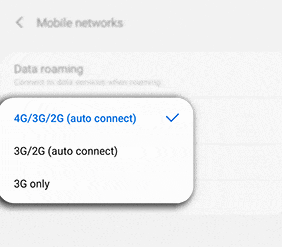
This lets your phone pick the right network type for the command instead of being forced onto one that the code can't use.
Clear the Phone App Cache
Your dialer app stores cached data that can get corrupted, causing it to misread or strip symbols from your MMI codes. This is a frequent cause when the error appears right after a software update.
Go to Settings > Apps > Phone (called Dialer on some phones), tap Storage, then Clear cache. Restart and test the code again.
If clearing the cache doesn't help, return to the same screen and tap Clear data. This resets the dialer's settings but won't delete your contacts or call log, which are stored separately.
Boot Into Safe Mode
A third-party app such as a call blocker, security tool, or custom dialer can interfere with USSD processing. Safe Mode disables all third-party apps so you can test whether one of them is the cause.
Press and hold the power button, then touch and hold Power off until you see the Safe mode prompt, and tap it to confirm. You'll see "Safe mode" in the corner of the screen once it boots.
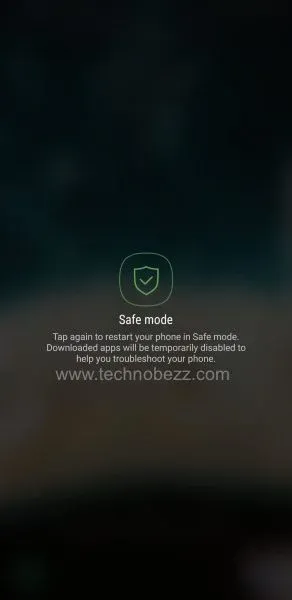
Now try your MMI code. If it works in Safe Mode, one of your installed apps is the problem. Restart normally, then uninstall recent apps one at a time until the error stops.
Check Your SIM Card
A loose, dirty, or damaged SIM is one of the most overlooked causes, and it tends to make every code fail rather than just one. Pop your SIM tray out, gently wipe the gold contacts with a soft dry cloth, and reseat it firmly.
While the tray is out, check for visible scratches or chips on the SIM. If you have another phone handy, test the SIM in that device.
If the SIM card error follows the SIM to the other phone, the SIM is at fault and your carrier can issue a free replacement.
Reset APN Settings
Incorrect APN (Access Point Name) settings can interfere with how your phone communicates with your carrier, including USSD requests, especially after switching networks or restoring a backup.
Go to Settings > Connections > Mobile networks > Access Point Names, tap the three-dot menu, and choose Reset to default.
If your carrier requires custom APN values, you'll need to re-enter those afterward, so note them down before resetting.
Reset Network Settings
This clears all saved Wi-Fi passwords, Bluetooth pairings, and mobile network configurations and rebuilds them from scratch. It is effective when something deeper in your connectivity stack is broken, and it doesn't touch your photos, apps, or messages.
On Samsung, go to Settings > General management > Reset > Reset network settings. On Pixel, go to Settings > System > Reset options > Reset Wi-Fi, mobile & Bluetooth.
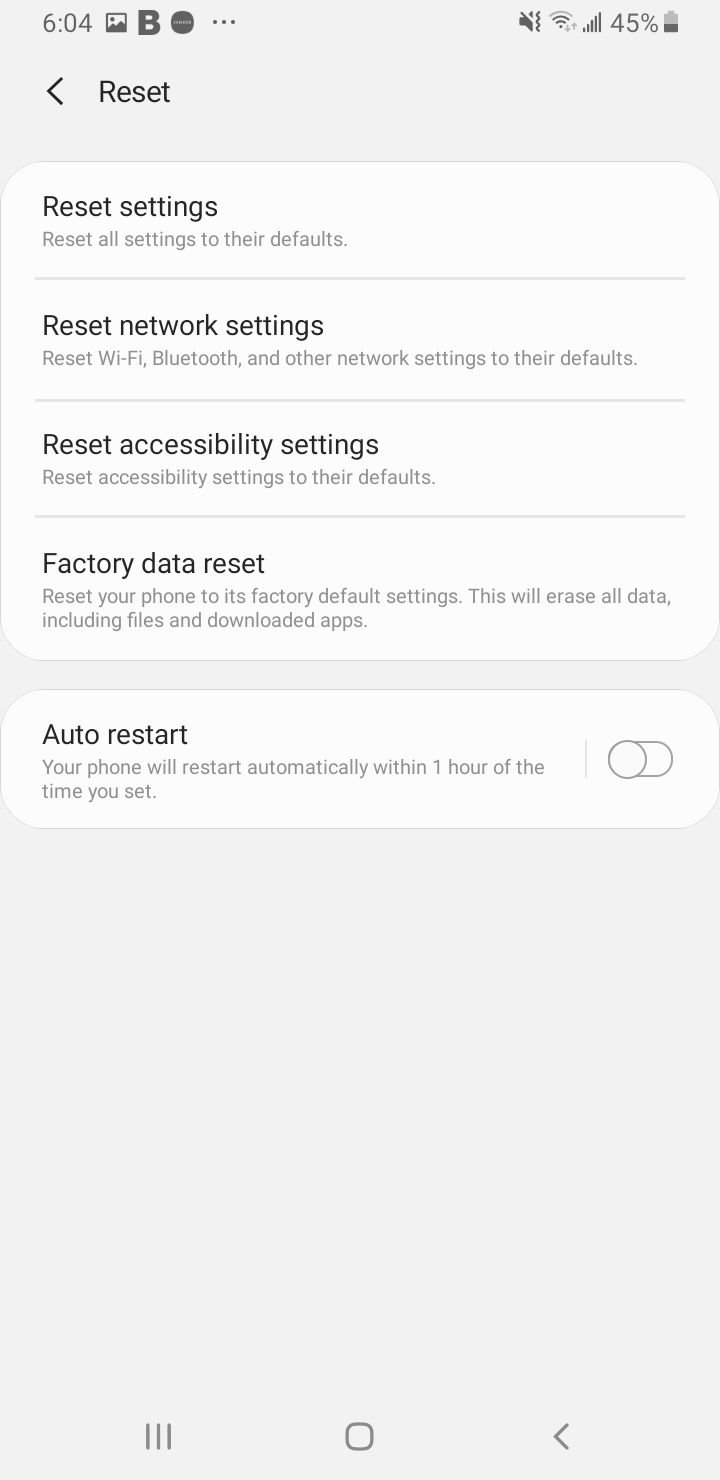
Your phone will reconnect to the network, and you'll need to re-enter Wi-Fi passwords afterward. Once it's back online, try your MMI code again.
Update Your Phone's Software
Bugs in the telephony or IMS layer of Android can break MMI code processing, and manufacturers regularly ship fixes for connectivity issues in their monthly security patches.
Go to Settings > Software update (on Pixel, Settings > System > Software updates > System update) and install anything pending. Restart and try again.
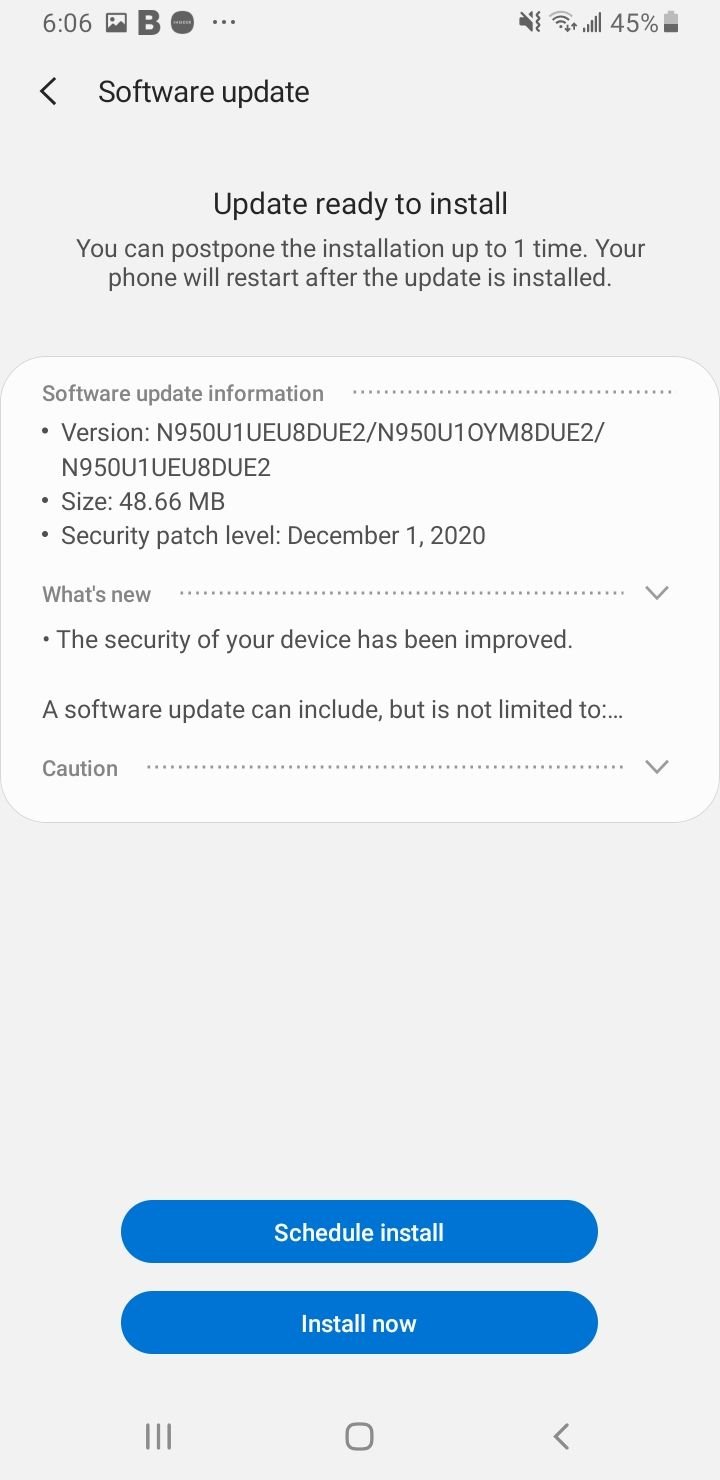
If you're on a custom ROM or rooted firmware, make sure your radio firmware matches your system build, since a mismatch there can cause exactly this kind of error.
Factory Reset as a Last Resort
If nothing above works, a factory reset wipes the phone clean and clears any deep software conflict. Back up your photos, contacts, and app data first, because everything on the device gets erased.
On Samsung, go to Settings > General management > Reset > Factory data reset. On Pixel, go to Settings > System > Reset options > Erase all data (factory reset).
After the reset, set the phone up as new and test the MMI code before restoring your backup. If the code works at that point, you'll know the issue was software, and a careful restore should keep it fixed.
Contact Your Carrier
Sometimes the problem isn't your phone. Your carrier may block certain USSD codes on your account, or they may have moved your line to VoLTE and 5G infrastructure that no longer supports an older MMI command.
This is the likely answer when a code that worked for years suddenly stops, even after every fix above. Legacy USSD commands are being deprecated as networks modernize, and that decision sits entirely on the carrier's side.
Call your carrier's support line and ask whether your account has any USSD restrictions or recent network changes. They can often reset your network profile or issue a new SIM from their end, which clears it immediately. For a related provisioning issue, see how to fix the SIM card not provisioned MM2 error.
Frequently Asked Questions
What is an MMI code on Android?
An MMI (Man-Machine Interface) code is a sequence of numbers and symbols you type into the dialer to trigger a function, such as checking your IMEI or call forwarding. Some run on the phone itself, while others are sent to your carrier as USSD requests.
Why does *#06# work but other codes fail?
The *#06# code runs locally on your device to display your IMEI, so it doesn't need the network. If it works while balance or call-forwarding codes fail, your phone is fine and the request simply isn't reaching the carrier, usually because of a dual-SIM, VoLTE, or carrier issue.
Is this a SIM problem or a carrier problem?
Put your SIM in another phone and try the same code. If it fails there too, the SIM or your carrier account is the cause. If it works in the other phone, the problem is with your device's settings or software.
Will Safe Mode or a network reset delete my apps?
No. Safe Mode only temporarily disables third-party apps and everything returns on a normal restart. Resetting network settings clears Wi-Fi, Bluetooth, and mobile configurations but leaves your apps, photos, and messages untouched.
Do MMI and USSD codes still work on 5G networks?
Many still work, but some do not. As carriers move to VoLTE and 5G standalone networks, certain legacy USSD codes get deprecated, so a code that used to work may have been dropped by your carrier on the newer infrastructure.
Does a factory reset fix the Invalid MMI Code error?
It can, but only if the cause is a software conflict on your phone. Test the code right after the reset and before restoring your backup. If it still fails on a clean device, the problem is your SIM or carrier, and a reset won't help.
First published February 9, 2025. Last updated June 4, 2026.