
I've spent the past two weeks testing the VIOFO A329S 3CH dash cam across highway commutes, late-night drives, parking lots, and everything in between. After reviewing dozens of dash cams over the years, I can confidently say that VIOFO has built something genuinely special here. The A329S doesn't just record your drive. It creates a comprehensive safety system that works around the clock to protect your vehicle.
Technobezz is supported by its audience. We may get a commission from retail offers. Reviews ethics statement.
VIOFO A329S Review: The 4K Triple-Channel Dash Cam That Leaves No Blind Spots
The VIOFO A329S 3CH combines a 4K 60fps front camera, 2K rear camera, and 210-degree fisheye interior camera with IR night vision, all powered by Sony STARVIS 2 sensors. After three weeks of…
Updated March 20, 2026Mar 20, 2026
•17 min read


Credit: Technobezz
Get Deals Like These in Your Inbox
The best prices, reviewed weekly.
In This Review
9.5/ 10
Best for Daily commuters, rideshare drivers, and fleet operators who want the best triple-channel 4K dash cam with cabin coverage and comprehensive parking protection
VIOFO A329S 3CH
Channels3-Channel (Front + Rear + Interior)
Front SensorSony STARVIS 2 IMX678 1/1.8" 8MP
Rear SensorSony STARVIS 2 IMX675 1/2.8" 5MP
Interior SensorSony STARVIS 2 IMX675 1/2.8" 5MP with 4x IR LEDs
Front Resolution4K (3840x2160) at 60fps, 30fps with HDR
Rear Resolution2K (2560x1440) at 30fps with HDR
What impressed me most wasn't any single feature, but how everything works together. The triple Sony STARVIS 2 sensors, the Wi-Fi 6 connectivity, the hybrid parking mode, the SSD storage support. These aren't just spec-sheet bullet points, they solve real problems that dash cam owners have been dealing with for years. After extensive testing in every condition I could throw at it, here's my full breakdown.
VIOFO A329S 3CH - Best 4K triple-channel dash cam
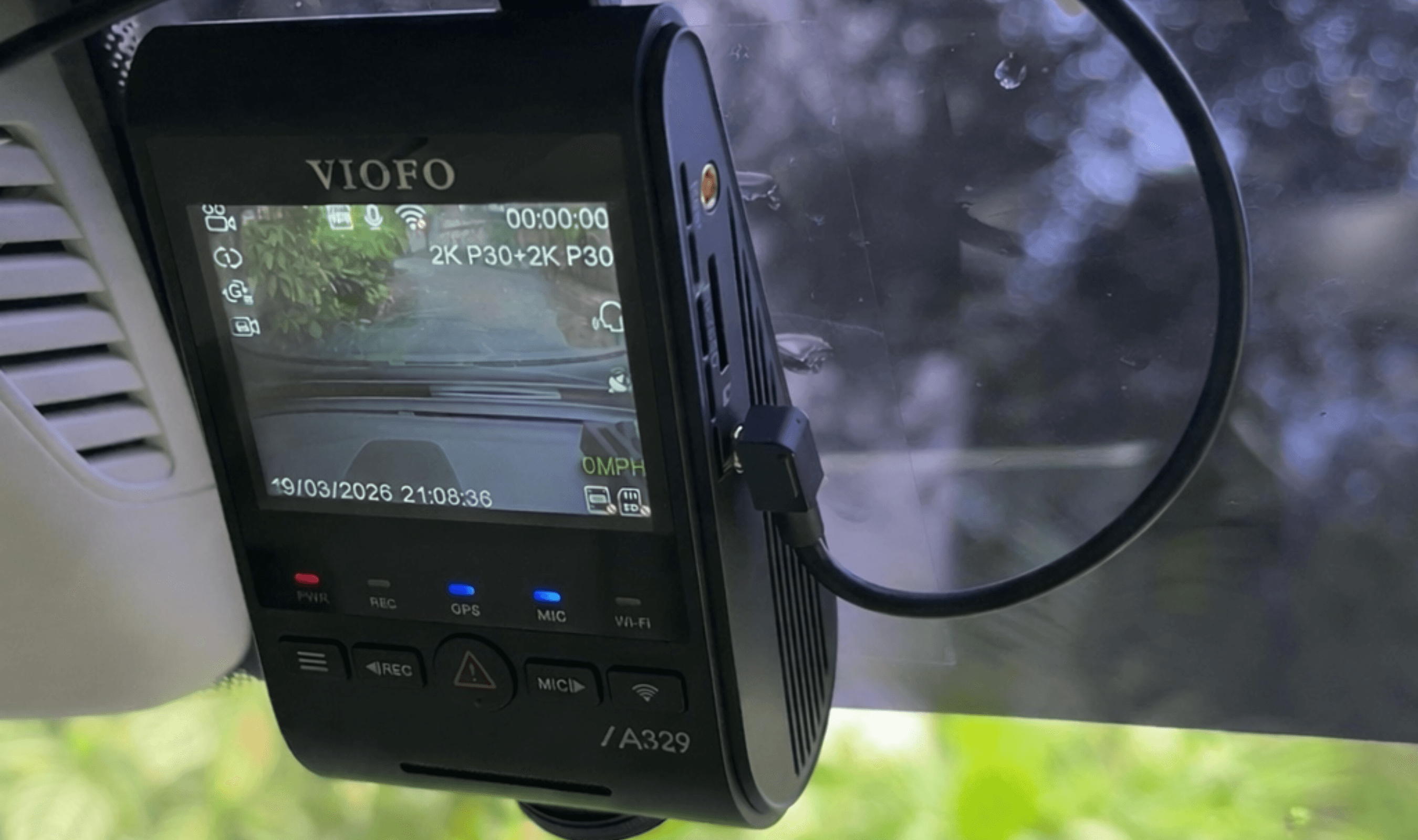
The VIOFO A329S 3CH combines a 4K 60fps front camera, a 2K HDR rear camera, and a 2K fisheye interior camera with infrared night vision, all three powered by Sony STARVIS 2 sensors and a quad-core ARM Cortex A53 chipset. With Wi-Fi 6, SSD support up to 4TB, five parking modes, and a supercapacitor design built for extreme temperatures. This is a dash cam engineered for people who take road safety seriously. At $469 on Amazon, it sits at the premium end of the market, but delivers flagship performance to match.
Key highlights
- 4K (3840x2160) at 60fps front recording with Sony STARVIS 2 IMX678 1/1.8" 8MP sensor
- 2K (2560x1440) at 30fps rear recording with Sony STARVIS 2 IMX675 1/2.8" 5MP sensor
- 3-channel HDR for capturing license plates in all lighting conditions
- Wi-Fi 6 (2.4GHz and 5GHz) for transfers up to 30MB/s
- Supports up to 4TB external SSD and 512GB microSD card simultaneously
- Five parking modes including hybrid parking recording and low-power impact detection
- Built-in quad-mode GPS (GPS, BeiDou, Galileo, GLONASS)
- Voice control in English, Chinese, Russian, and Japanese
- USB 3.0 port for ultra-fast video transfers
- Ultra-slim 2.8mm coaxial rear camera cable for clean installation
- Front CPL filter and dual Type-C 45W car charger included
- Supercapacitor design (no battery) for extreme temperature reliability
- 2.4" high-resolution LCD display
- Geo-fencing for automatic parking mode control
Pros
- Exceptional 4K 60fps video quality that captures license plates with ease, day or night
- Triple STARVIS 2 sensors deliver noticeably less noise and motion blur than competitors
- 210-degree fisheye interior camera covers the cabin plus views through both side windows
- Wi-Fi 6 is a genuine upgrade. A one-minute 4K clip downloads in under 10 seconds
- SSD support up to 4TB means weeks of uninterrupted recording without overwriting
- Five parking modes provide the most comprehensive off-road protection in any dash cam
- Hybrid parking mode intelligently switches to low-power when battery voltage drops
- Ultra-slim coaxial cable makes rear camera installation significantly easier than competitors
- Front CPL filter included in the box (most competitors charge extra)
- Supercapacitor handles extreme heat and cold better than battery-powered cameras
- Compact wedge design tucks behind the rearview mirror without obstructing your view
- Multiplex video stitches front, rear, and interior footage into a single clip for easy sharing
Cons
- No microSD card included at a $399 price point
- 4K 60fps and HDR cannot be used simultaneously
Who it's for
Daily commuters who want insurance-grade evidence, road trip enthusiasts who need weeks of storage, rideshare and delivery drivers who need reliable always-on recording with cabin documentation, and anyone who parks in public lots and wants comprehensive 24/7 protection.
Skip if
You want a simple plug-and-play cam without extra accessories, you're on a tight budget , or you need a single-cable solution with no installation involved.
Design and Build Quality
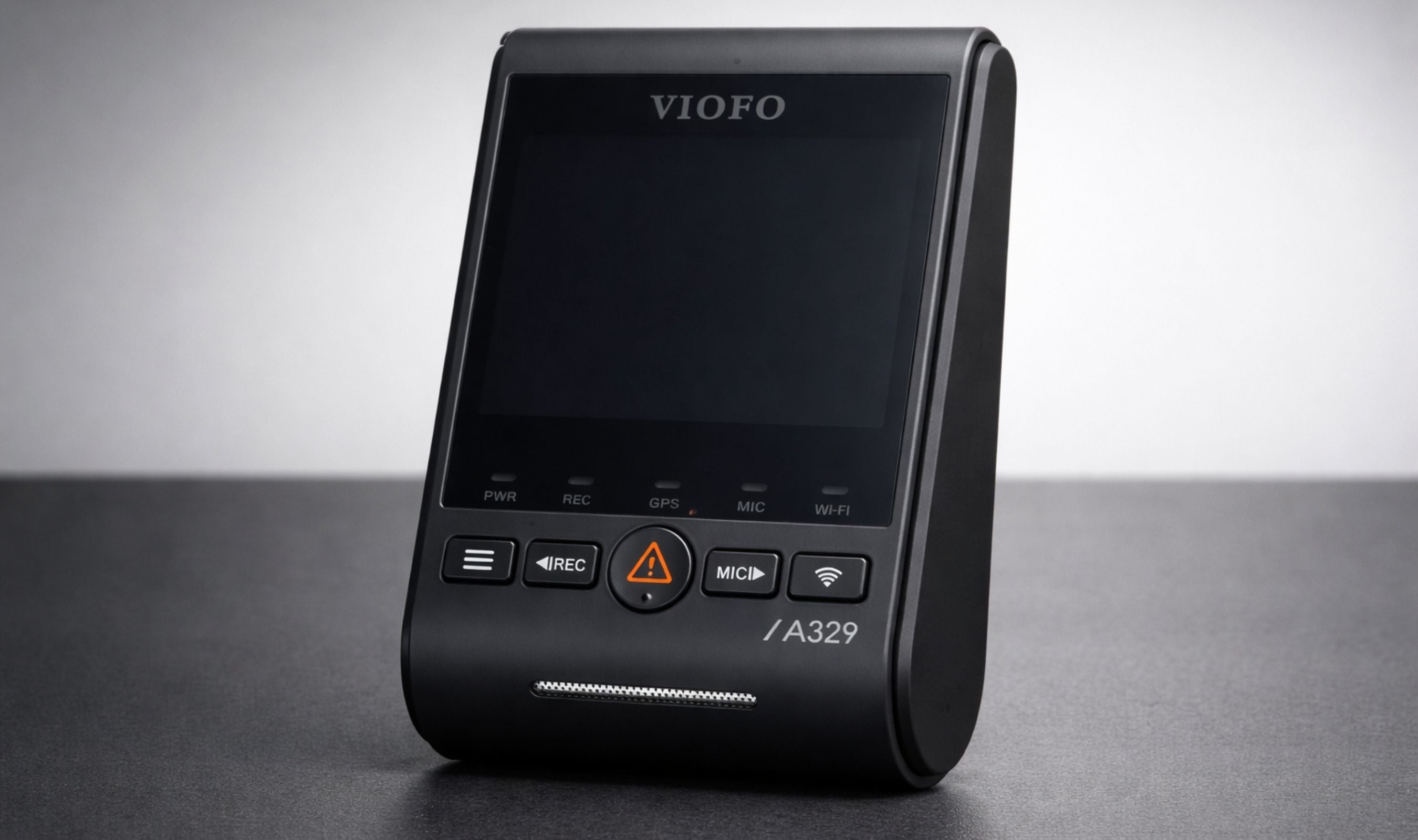
The A329S follows VIOFO's proven wedge-shaped design, and that's a good thing. The front unit is compact enough to tuck behind your rearview mirror without obstructing your sightline, yet substantial enough to house a 2.4-inch LCD display and all the physical controls you need. The matte finish feels professional rather than flashy. This isn't a device that screams "I have a dash cam" to anyone walking by.
Build quality is solid plastic throughout, but VIOFO clearly prioritized function over aesthetics. After weeks of use in varying temperatures, the unit hasn't shown any signs of warping, creaking, or loosening from its mount. The 3M adhesive mount with the integrated GPS module is a clever touch. You install the bracket once, slide the camera in, and you're recording. If you ever need to remove the camera, it detaches cleanly and reattaches in seconds without messing with cables.
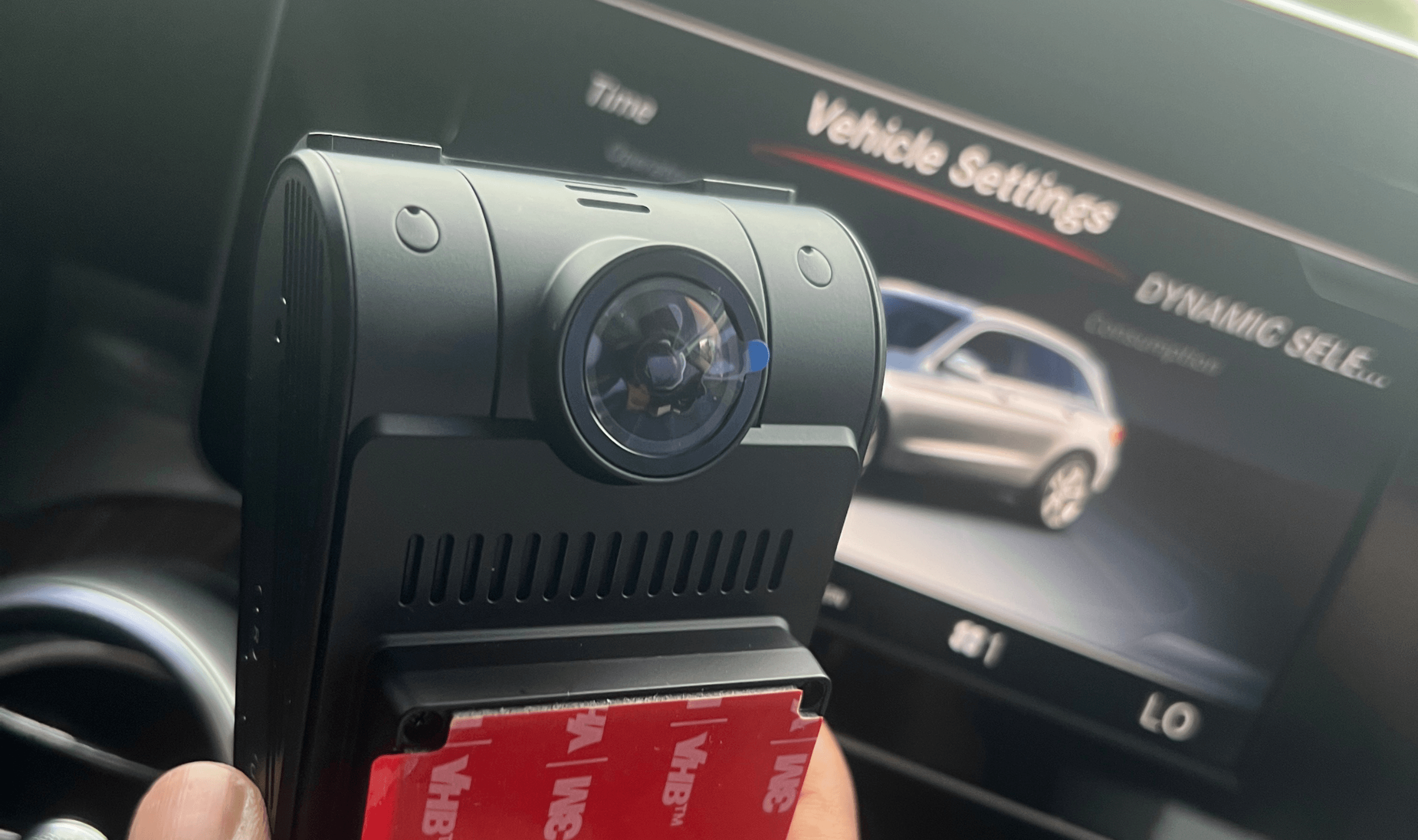
The rear camera is a compact cylinder-style unit that mounts flush against the rear window. It's small enough to be nearly invisible from outside the vehicle, and the 160-degree field of view captures an impressively wide angle.
The interior fisheye camera is the same cylinder form factor as the rear, but with a 210-degree ultra-wide lens and four infrared LEDs for night vision. That 210-degree field of view is not a typo. It captures the entire cabin, including views through the driver and passenger side windows. For rideshare drivers, fleet operators, or anyone who wants a complete record of what happens inside and around their vehicle, this third camera adds a layer of coverage that most dual-channel setups simply can't provide.
The IR LEDs activate automatically in low light, producing clear black-and-white footage of the cabin even in complete darkness. All three units feel purpose-built for the job.
One standout design choice is the ultra-slim coaxial cable connecting the front and rear units. At just 2.8mm, it's noticeably thinner than the standard USB cables used by most competitors. Running this cable along the headliner and down the A-pillar was significantly easier than my previous dash cam installations. The coaxial design also means it's resistant to electromagnetic interference from other in-car electronics. The slim cable makes it look nearly OEM once tucked away.
What's in the Box
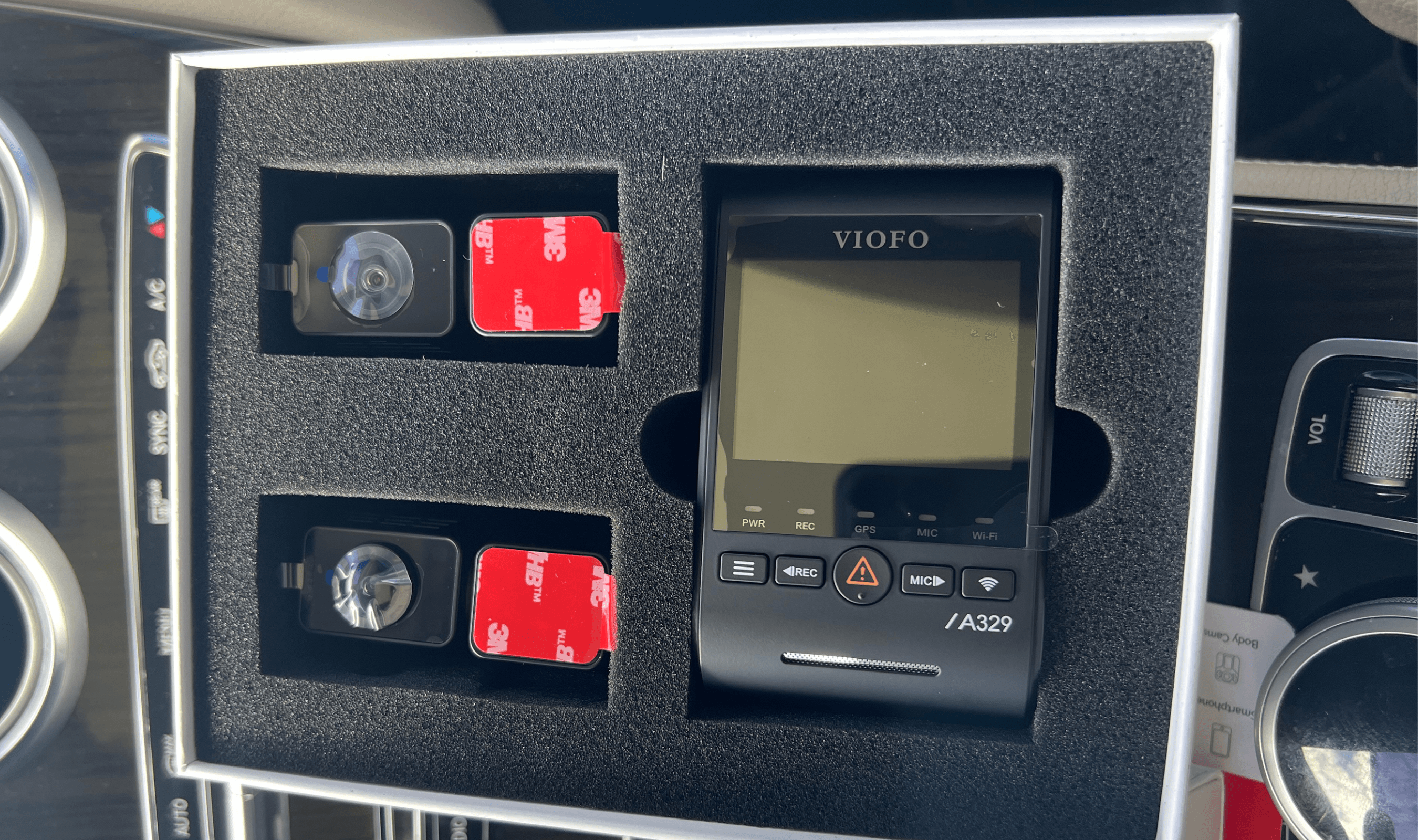
VIOFO deserves credit for what's included with the A329S 3CH package. You get the front camera with GPS mount, the rear camera, the interior fisheye camera with IR LEDs, rear and interior camera cables (with options up to 20 meters at purchase), a dual Type-C 45W car charger, a front CPL filter, a Type-C data cable, three windshield static stickers, spare adhesive pads, a trim removal tool, and a warning sticker. The inclusion of a CPL filter in the box is a particularly nice touch. Most competitors sell these separately for $15-20, and it makes a real difference in cutting windshield glare.
The dual Type-C car charger outputs enough power to run the dash cam system while still leaving a port free for your phone. It's a practical detail that shows VIOFO actually thinks about the user experience beyond just the camera itself.
What's not included: a microSD card (you'll need one, and I'd recommend VIOFO's own industrial-grade option for reliability), the HK6 hardwire kit (essential for parking mode), the Bluetooth remote control, and the SSD data cable. These are sold separately and, given the $469 price point, I wish at least the microSD card was bundled in.
Video Quality: Where the A329S Truly Excels
This is where the VIOFO A329S absolutely earns its price tag. The front camera uses a Sony STARVIS 2 IMX678 1/1.8-inch 8MP sensor, and the rear camera packs a Sony STARVIS 2 IMX675 1/2.8-inch 5MP sensor. Both are powered by a quad-core ARM Cortex A53 chipset. After extensive testing, I can confirm the video quality is outstanding.
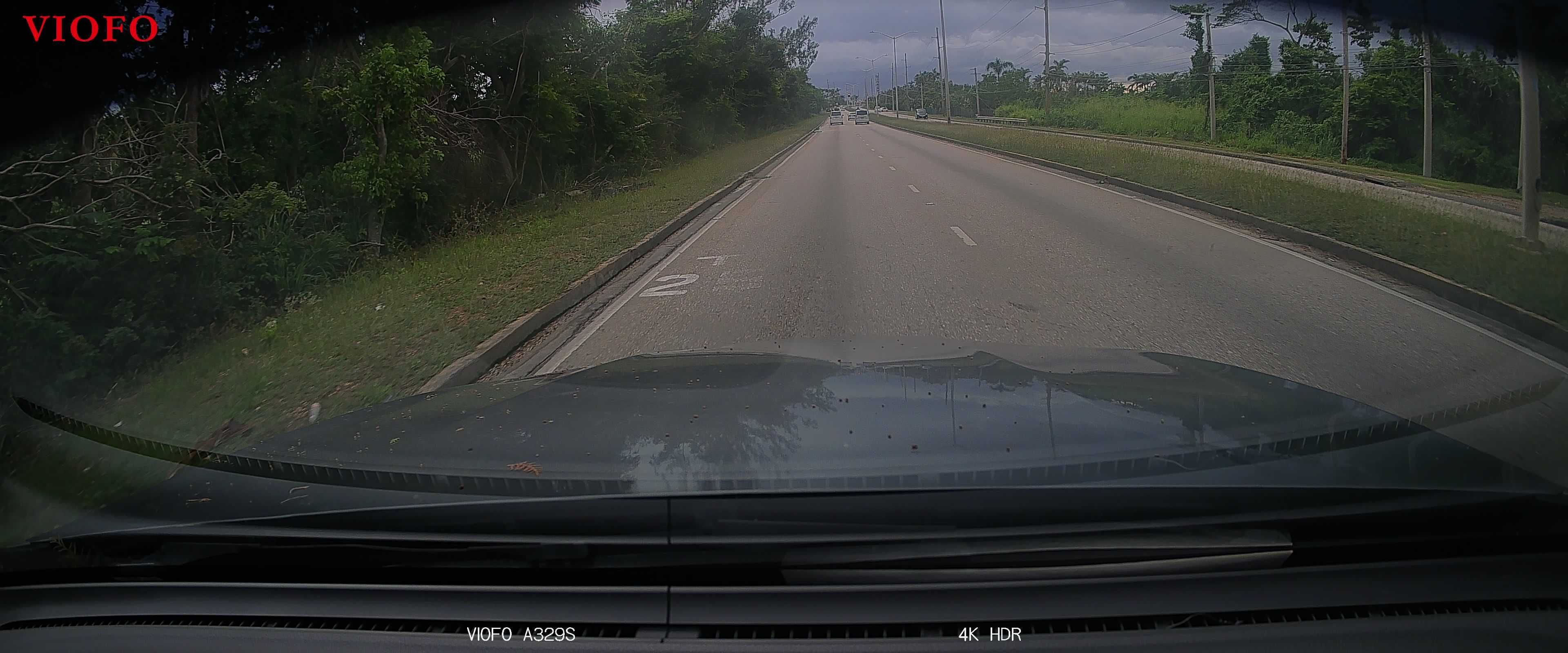
During the day, the front camera captures stunningly clear 4K footage at 60fps. License plates on vehicles two to three car lengths ahead are easily readable, road signs are crisp, and the color reproduction is natural and accurate. The 140-degree field of view covers multiple lanes without introducing significant barrel distortion at the edges. Switching to 4K 30fps enables HDR, which helps balance bright sky and shadowed areas, particularly useful when driving in and out of tunnels or under overpasses.
The rear camera records at 2K (2560x1440) at 30fps with its own HDR processing. The 160-degree field of view captures a wider angle than the front, which makes sense for monitoring what's happening behind you. Even at the back, license plates remain legible at reasonable distances. In real-world use, this is the best video quality I've seen from a triple-channel dash cam.
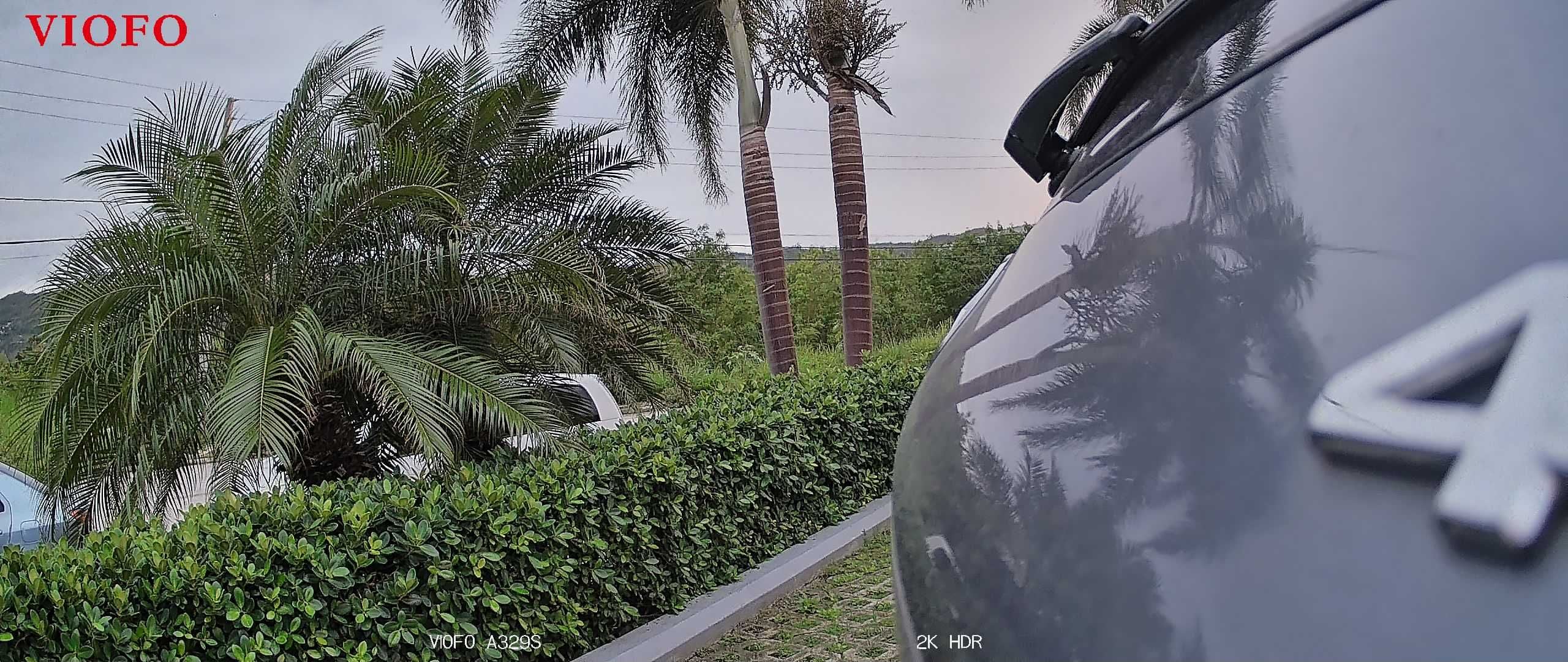
Nighttime is where the STARVIS 2 sensors really earn their reputation. The IMX678's larger 1/1.8-inch sensor size means more light hits each pixel, translating to less noise and more detail in low-light conditions. Sony claims the STARVIS 2 generation delivers 2.5 times wider dynamic range than the original STARVIS at the same pixel size. Street signs are readable, lane markings are clearly visible, and oncoming headlights don't blow out the entire image thanks to the HDR processing. I can zoom in on footage and read license plates of cars in front of me clearly, which is something I couldn't do with previous dash cams.
The 4K 60fps mode deserves special mention. At highway speeds, the difference between 30fps and 60fps becomes immediately apparent when you need to scrub through footage frame by frame. A vehicle passing at 70mph covers a lot of ground between frames at 30fps, making it difficult to freeze on a clean shot of a license plate. At 60fps, you have twice as many frames to work with, and the motion blur on each frame is significantly reduced. My recommendation: run 60fps during the day when natural lighting is abundant, and switch to 30fps HDR at night when you need the dynamic range more than the frame count.
You can even set a timer in the app to automate this switch. One thing worth noting: unlike some competitors, the A329S maintains its full 65.6 Mbps front camera bitrate even in 3-channel mode, so adding the interior camera doesn't degrade your front or rear video quality.
The interior fisheye camera records at 2K with its own HDR processing, and the 210-degree lens creates a distinctive fish-eye effect that captures far more than just the seats. You can clearly see out of both side windows, which is incredibly useful for documenting side-impact incidents or lane-change disputes. The IR night vision kicks in seamlessly when ambient light drops, and the cabin footage stays sharp and usable even in total darkness. For rideshare drivers who need documentation of passenger interactions, this camera is a standout addition.
The combination of STARVIS 2 sensors and HDR processing across all three channels is what makes the A329S particularly effective at capturing plates in challenging lighting. Bright headlights, dark tunnels, low sun angles. The HDR balances these extremes remarkably well.
Smart Features and Connectivity
The A329S is one of the first dash cams to support Wi-Fi 6, and the speed improvement is immediately noticeable. Downloading a one-minute 4K clip took under 10 seconds in my testing. That's a massive improvement over Wi-Fi 5 dash cams where the same transfer could take a minute or more. The 5GHz band support means less interference in areas crowded with Wi-Fi networks. If you've ever sat in your car impatiently waiting for a clip to download through a dash cam app, the Wi-Fi 6 upgrade alone makes this camera worth considering.
The built-in GPS module supports four satellite systems (GPS, BeiDou, Galileo, and GLONASS) and overlays speed, location, and time data on your recordings. This data is invaluable for insurance claims and legal proceedings. Playback through the VIOFO app or PC player shows your exact route on a map alongside the video.
Voice commands let you start recording, take photos, and toggle Wi-Fi without taking your hands off the wheel. It supports English, Chinese, Russian, and Japanese. The recognition is decent in a quiet cabin but struggles with background noise from music or open windows.
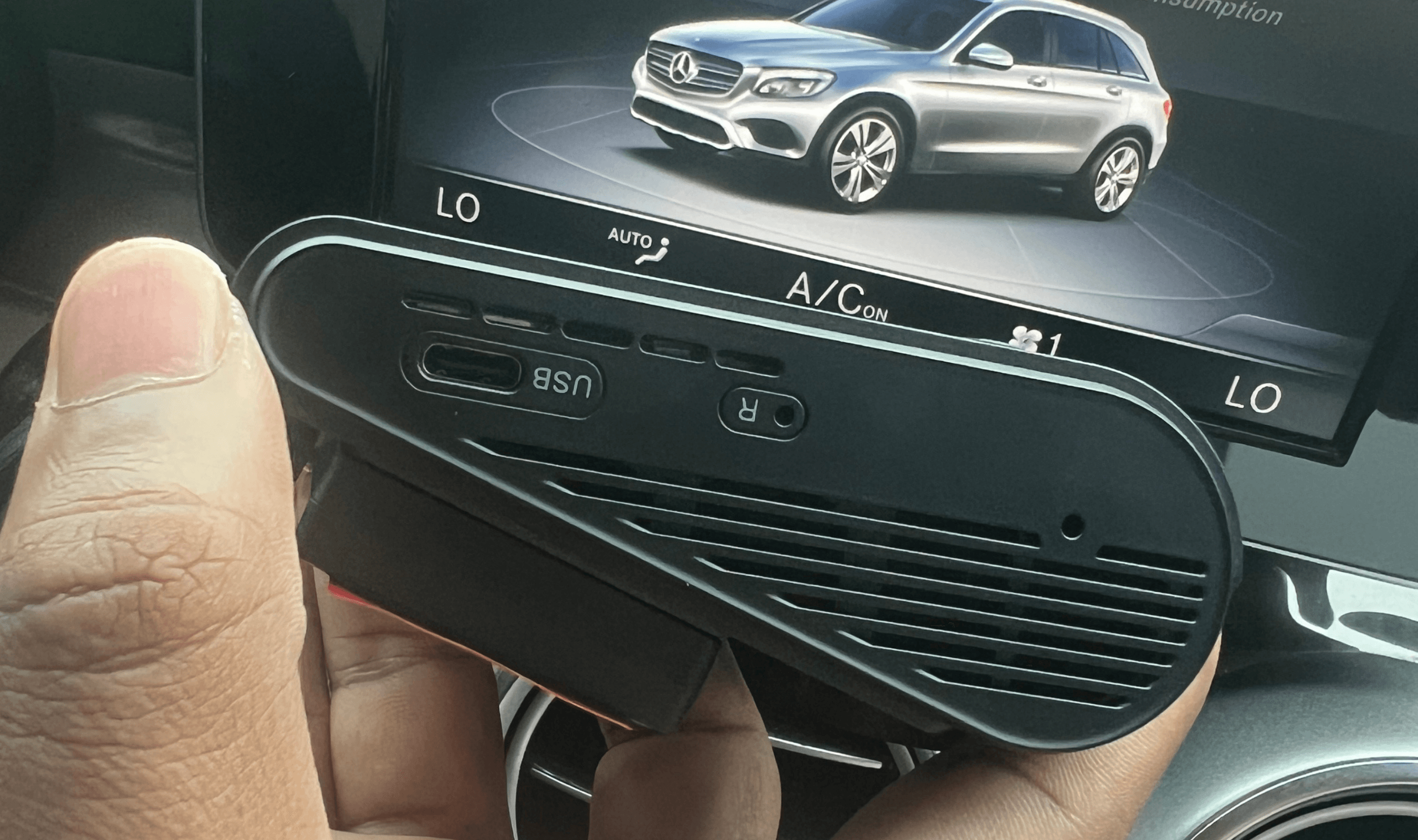
The USB-C 3.0 port enables ultra-fast video transfers to compatible devices at up to 55MB/s. Large 4K files move to your phone or laptop almost instantly. This is a meaningful upgrade over USB 2.0 connections found on most dash cams.
SSD Storage: A Game-Changer
This is one of the A329S's most compelling features, and the one that separates it from nearly every competitor. In addition to supporting microSD cards up to 512GB, the camera can connect to an external SSD up to 4TB via an optional Type-C cable. At the default 4K 60fps + 2K 30fps recording quality, a 1TB SSD stores approximately 12 days of footage (assuming 3 hours of daily driving). A 4TB drive extends that to 46 days.
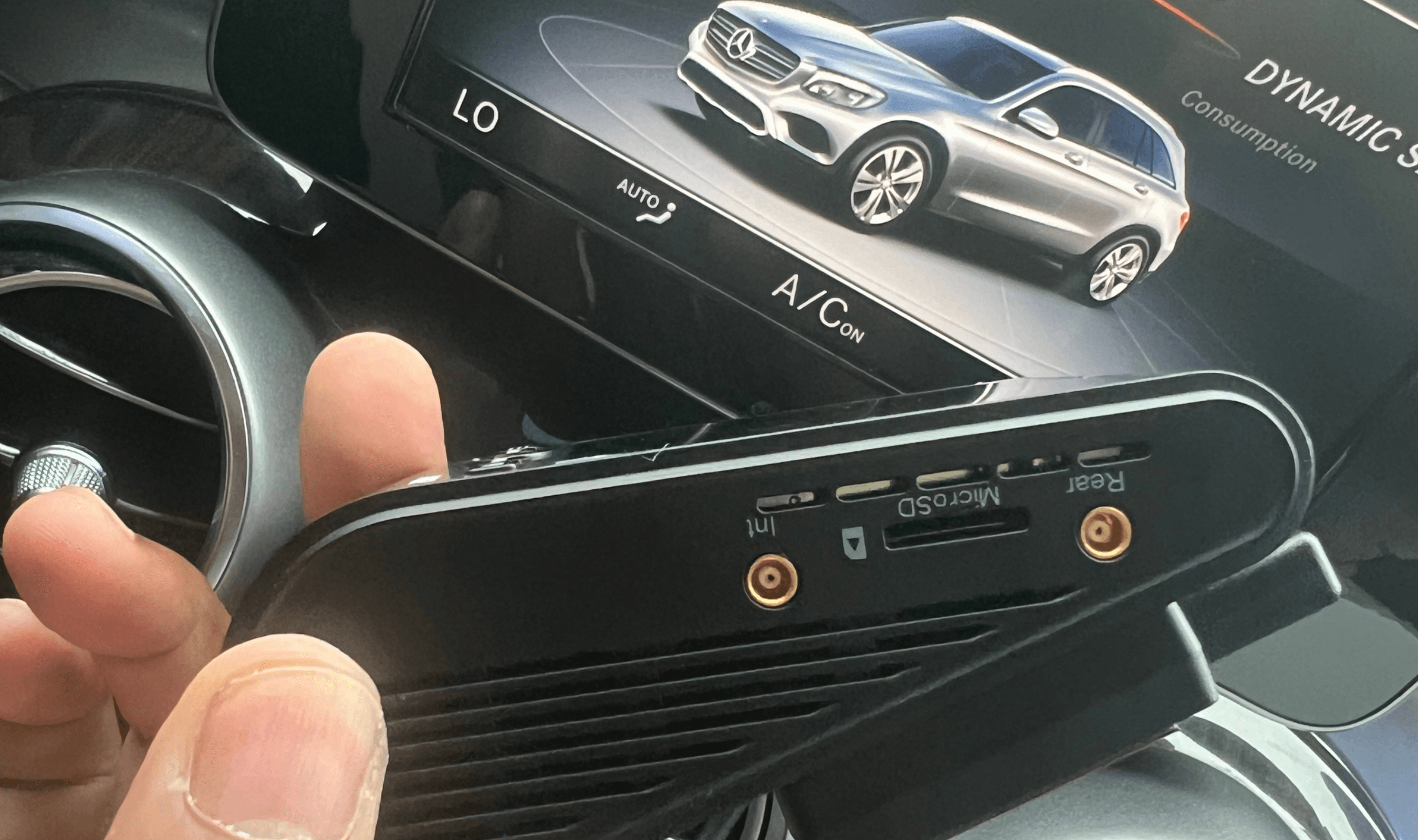
For road trip enthusiasts, delivery drivers, or anyone who wants extended footage retention, this is a massive advantage. The camera also supports backing up SD card footage to the SSD, so your most important clips are protected even if the SD card fails.
Compatible SSDs include the Western Digital 1TB My Passport, SanDisk Extreme Portable (1TB, 2TB, 4TB), and Samsung 4TB T9 Portable. One note: if you're using an SSD, you'll need to power the camera through the hardwire kit rather than the cigarette lighter adapter.
Parking Mode: Comprehensive Protection
The A329S offers five distinct parking modes, which is more than most competitors provide. This is where the "S" in A329S really earns its name.
Time-Lapse Recording records at 1-10fps with a new Super Night Vision feature for clearer low-light footage.
Low Bitrate Recording provides continuous recording at reduced file size with audio.
Auto Event Detection is motion-triggered recording with a 15-second pre-buffer and 30-second post-event capture.
Low Power Impact Detection puts the camera in ultra-low-power standby. It wakes within 2 seconds when the G-sensor detects an impact, recording for one minute. This mode draws minimal power, making it viable for extended parking without draining your battery.
Hybrid Parking Recording is the standout feature. It starts with one of the traditional recording methods (time-lapse, low bitrate, or event detection), then automatically transitions to low-power impact detection when the battery reaches a set voltage threshold. Your car gets active monitoring initially, then switches to impact-only detection as battery voltage drops. It maximizes security while intelligently managing your battery.
The Hybrid Parking mode requires the HK6 hardwire kit (sold separately, $32.99), which connects to your vehicle's fuse box. The HK6 also provides real-time Bluetooth battery voltage monitoring displayed on the camera's video overlay, and dual-layer battery protection through both software cut-off voltage settings and a physical failsafe switch.
There's also a Geo-Fencing feature that lets you designate up to three locations where parking mode automatically disables, like your home garage. No extra steps, it just saves battery when it knows your car is safe.
This product was provided to Technobezz for review. We independently select what we review. The manufacturer had no input on this article and did not see it before publication. All opinions are our own.
FAQ
Do I need the hardwire kit?
If you only want basic driving recording, no. The included car charger works fine. But to access parking mode (especially the hybrid parking and low-power impact detection), you'll need the HK6 hardwire kit ($32.99). I'd consider it essential for getting the full value from this camera.
What microSD card should I use?
VIOFO recommends their own industrial-grade cards, and based on user reviews, third-party cards occasionally cause issues . I'd suggest the VIOFO 256GB card for a good balance of capacity and reliability. The camera supports up to 512GB.
Can I use both SSD and microSD at the same time?
Yes. The camera can record to the microSD card and back up footage to the SSD, giving you redundant storage for important clips.
How does the A329S compare to the original A329?
The A329S adds Wi-Fi 6 (vs Wi-Fi 5), hybrid parking mode, low-power impact detection, thinner coaxial cables, USB 3.0, and native 3-channel recording. The 3CH version includes a 210-degree fisheye interior camera with IR night vision that the original A329 doesn't support. If you have the original A329 and it's working well, the upgrade is worth considering for the parking mode improvements and Wi-Fi 6 speed.
Does it work in extreme heat?
The supercapacitor design (no lithium battery) handles extreme temperatures better than battery-powered dash cams. Operating range is -20 to 65 degrees Celsius, which covers nearly all driving conditions. I've had no heat-related issues during testing.
Is the installation difficult?
The basic plug-and-play setup with the car charger takes about 20-30 minutes. Running cables cleanly takes longer. The hardwire kit installation adds complexity and may require professional help if you're not comfortable working with your car's fuse box. Expect about 2 hours total, with most of that time spent hiding wires.
Final Thoughts
The VIOFO A329S 3CH isn't cheap, and it doesn't pretend to be. This is a flagship dash cam built for people who demand the best in video quality, storage flexibility, and parking protection. After two weeks of daily use, I can say with confidence that it delivers on every major promise.
The 4K 60fps front recording is genuinely best-in-class, and having three cameras covering front, rear, and the entire cabin means there are virtually no blind spots. The STARVIS 2 sensors handle nighttime driving better than any dash cam I've tested at this price point. The hybrid parking mode is the smartest implementation of parking protection I've seen. It maximizes security while intelligently managing your battery. And the SSD support removes the storage anxiety that plagues microSD-only cameras.
Yes, the total investment climbs when you factor in the hardwire kit, microSD card, and optional accessories. But if protecting your vehicle with the clearest possible evidence is the goal, and for most dash cam buyers it should be, the VIOFO A329S 3CH is the camera to beat in 2026.
Share this article
More in News
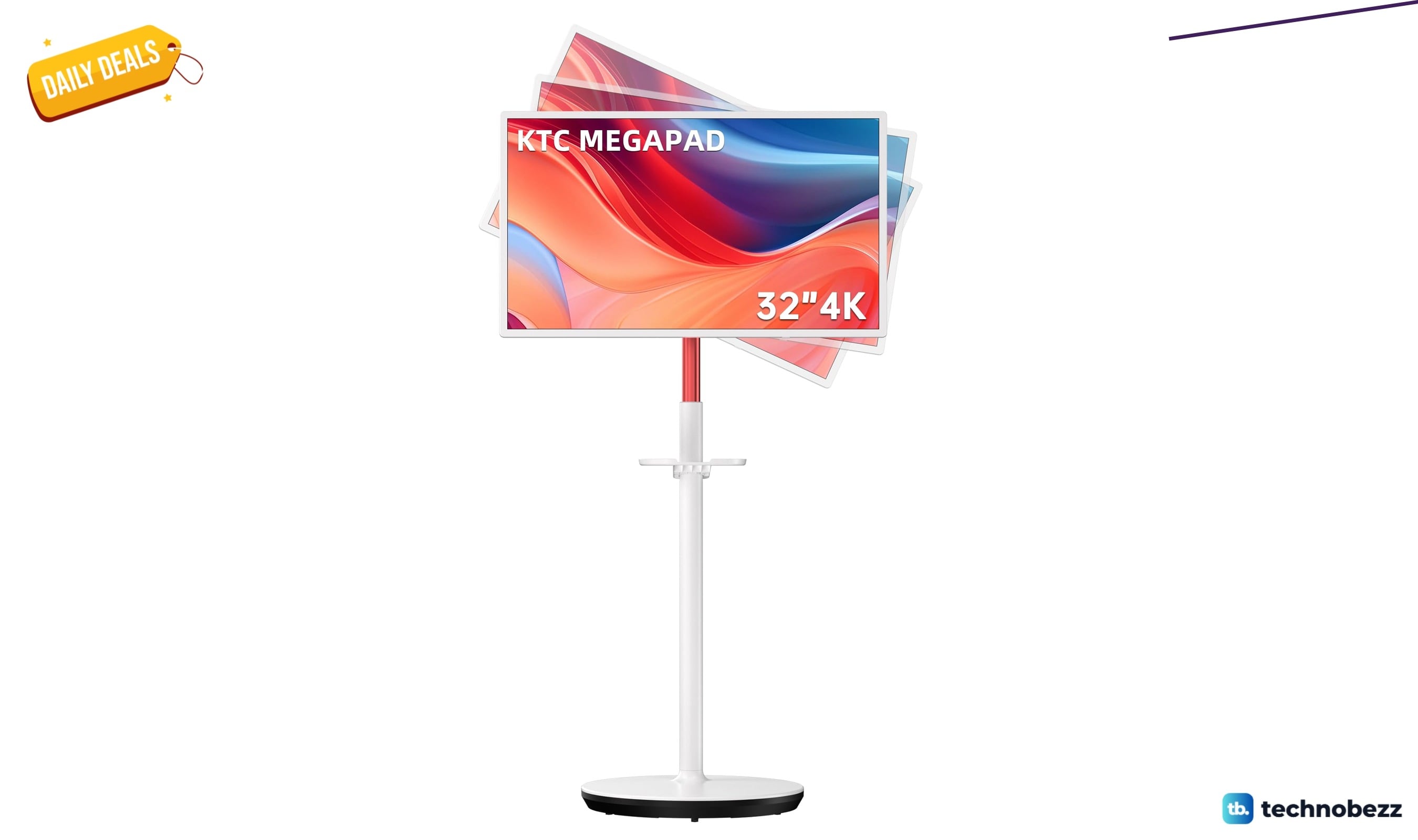
KTC MEGAPAD 32-inch 4K UHD Smart Portable TV down to $729.99 in latest price cut
KTC's 32-inch 4K touchscreen smart TV drops to $729.99, saving $170 on a versatile rolling display for any room.
4 min read
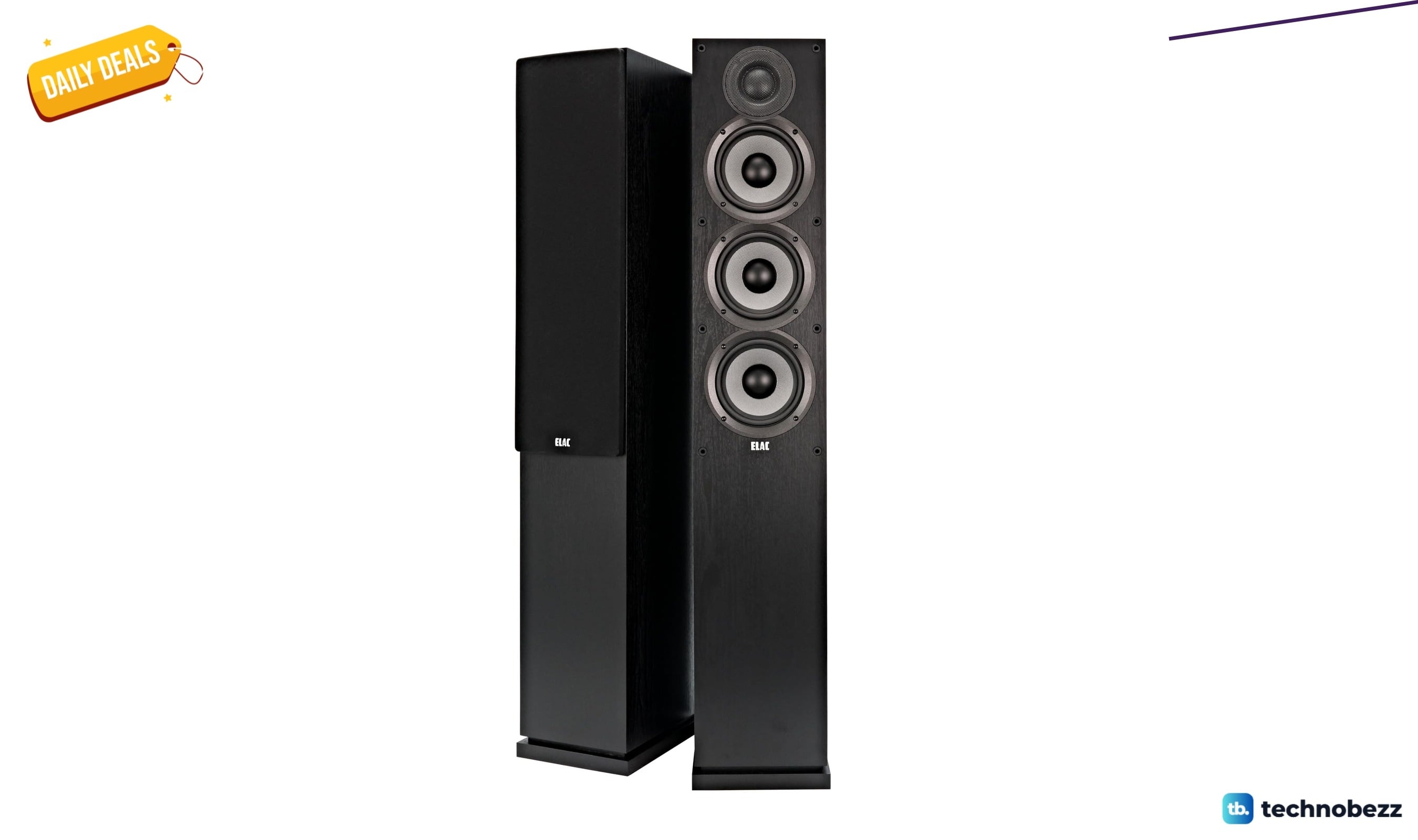
ELAC Debut 2.0 F5.2 Floorstanding Speaker price drops to $319
Get the ELAC Debut 2.0 F5.2 floorstanding speakers for $319, a $130 discount off the list price and one of the lowest recent prices.
3 min read
CiBest 1080P WiFi Bluetooth Projector is $57.99 at Woot
CiBest 1080P WiFi Bluetooth Projector is $57.99 at Woot in new condition, with a $99.99 Woot Reference Price.
5 min read

Auusda Business Computer slips to $315.86
Get the Auusda Business Computer with a 15.6-inch FHD display, backlit keyboard, and fingerprint login for $315.86 21% off at Amazon.
4 min read

Samsung coupon codes and deals
5 min read

Best tech coupon codes and online deals
4 min read
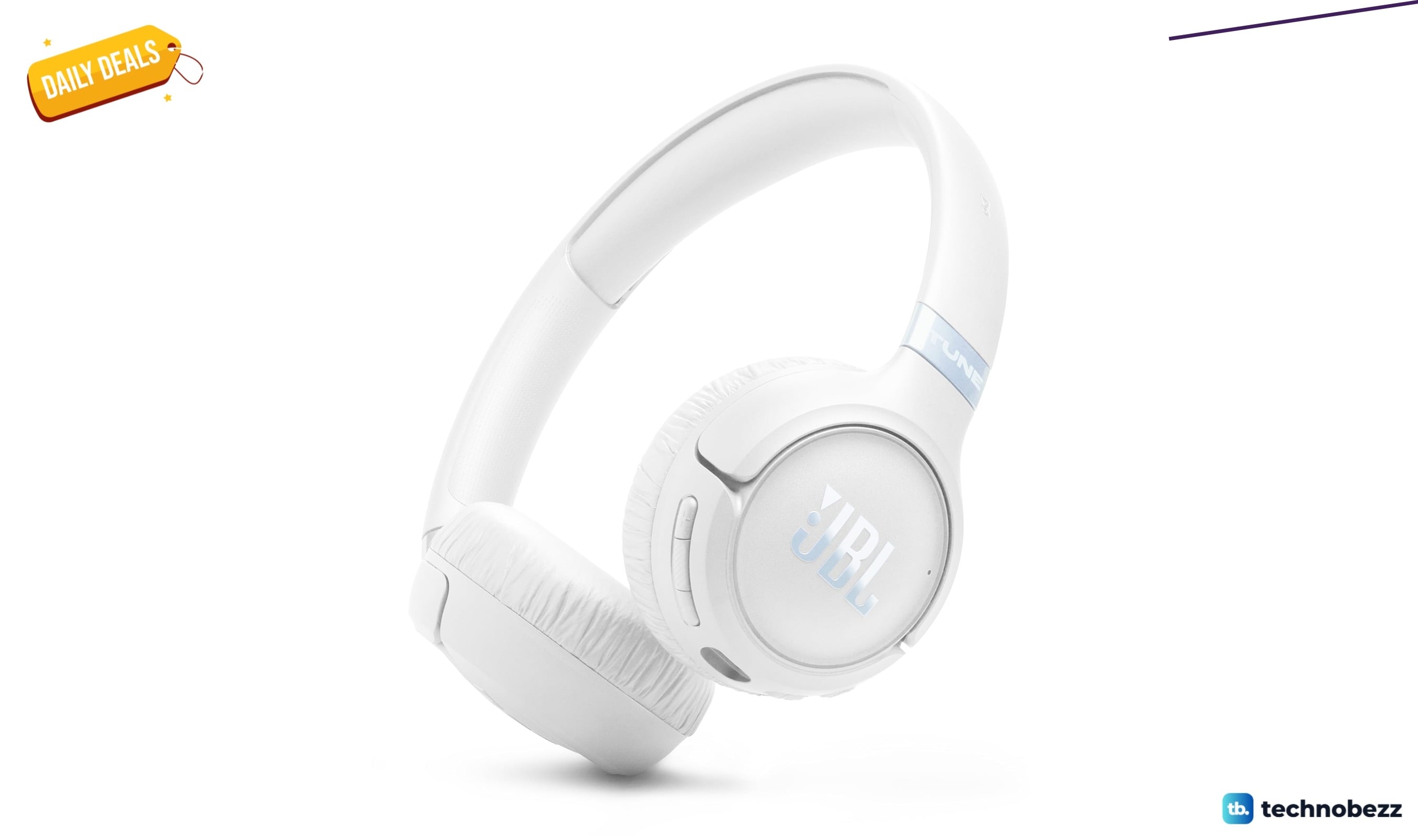
4 headphone deals we verified this week, starting at $35
5 min read
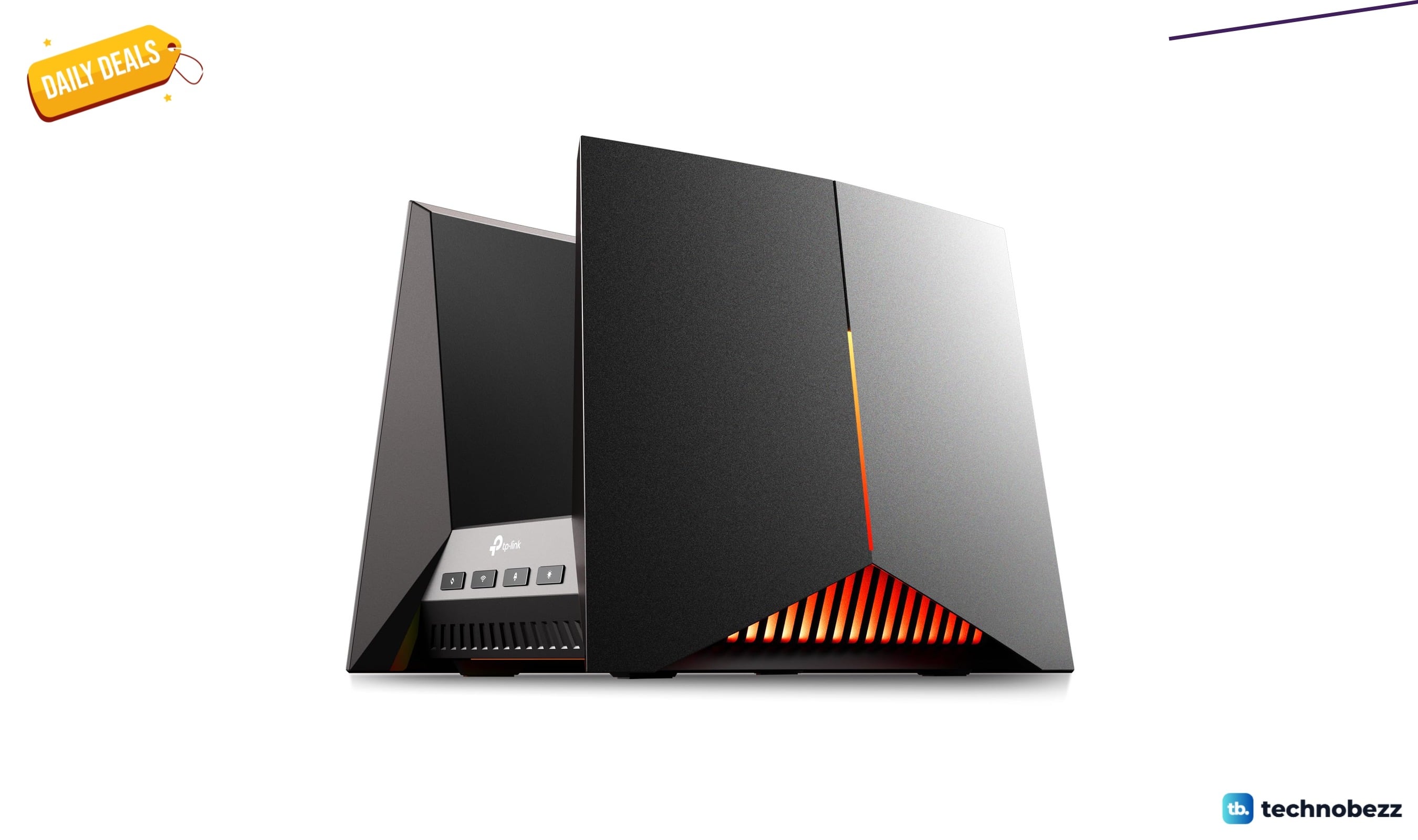
TP-Link Tri-Band BE19000 Wi-Fi 7 Gaming Router drops to $449.99
3 min read
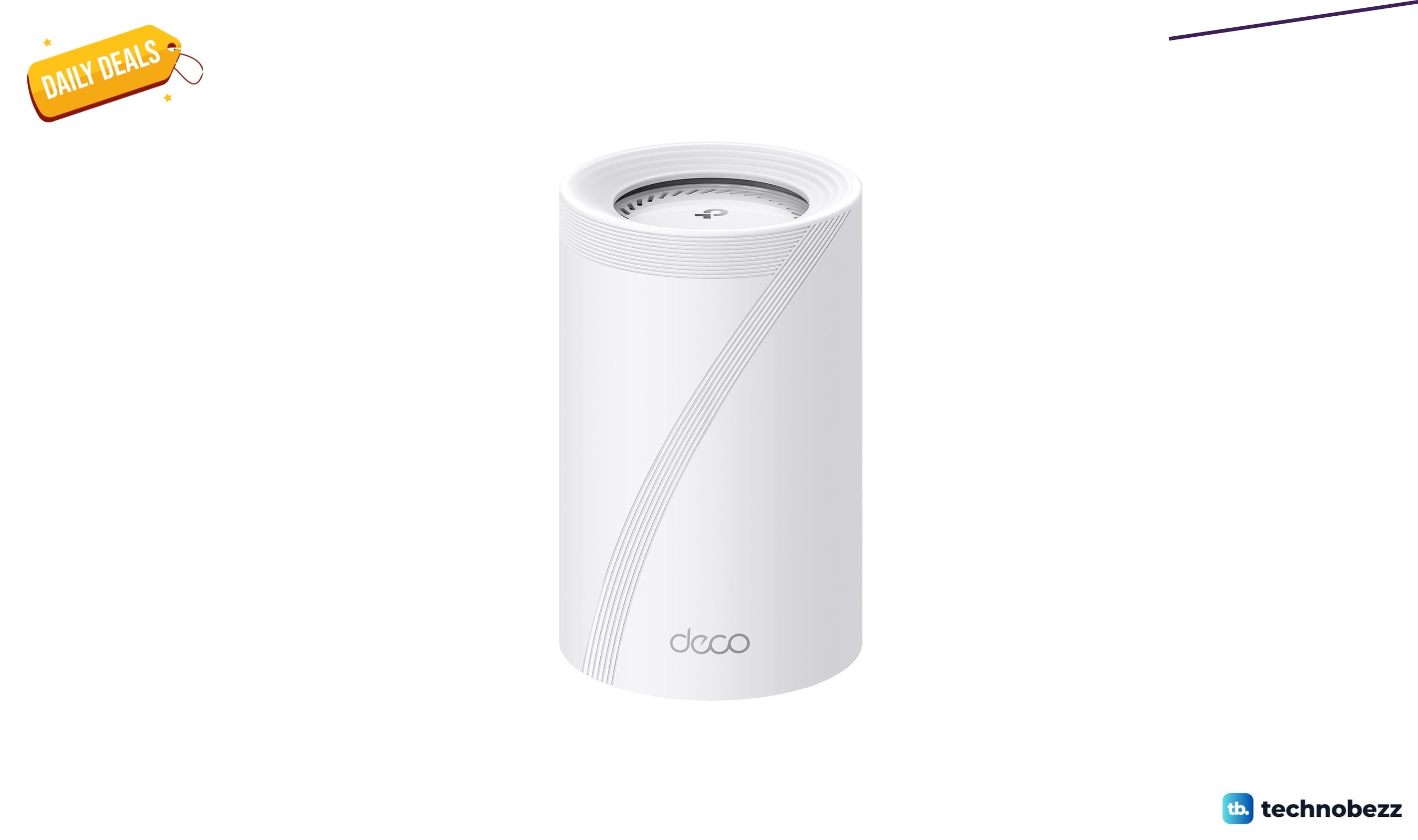
TP-Link Deco 7 Pro BE17000 Tri-Band Wi-Fi sees price cut to $299.98
5 min read
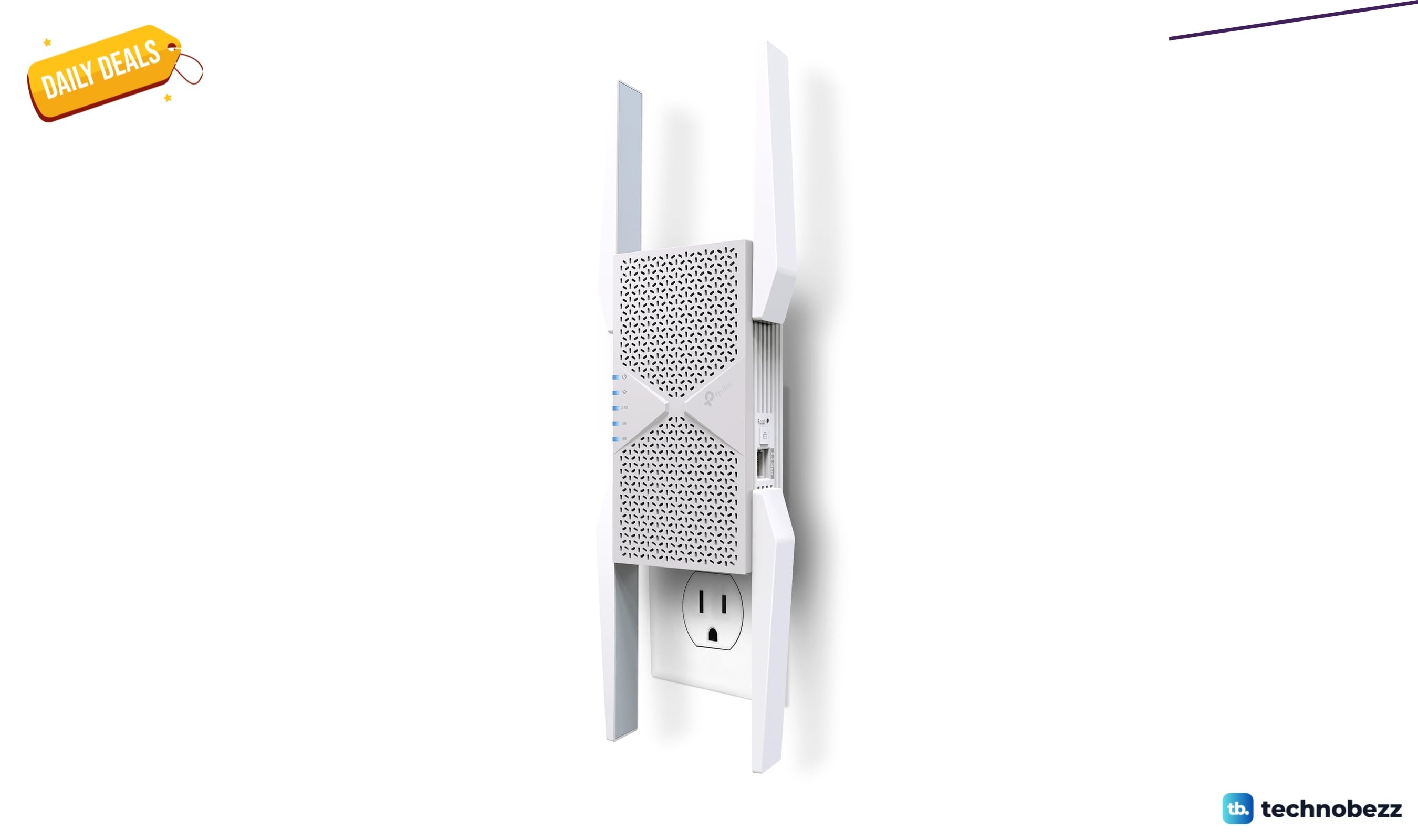
TP-Link BE10000 Wi-Fi 7 Range Extender RE653BE now $169.99, down from $199.99
4 min read
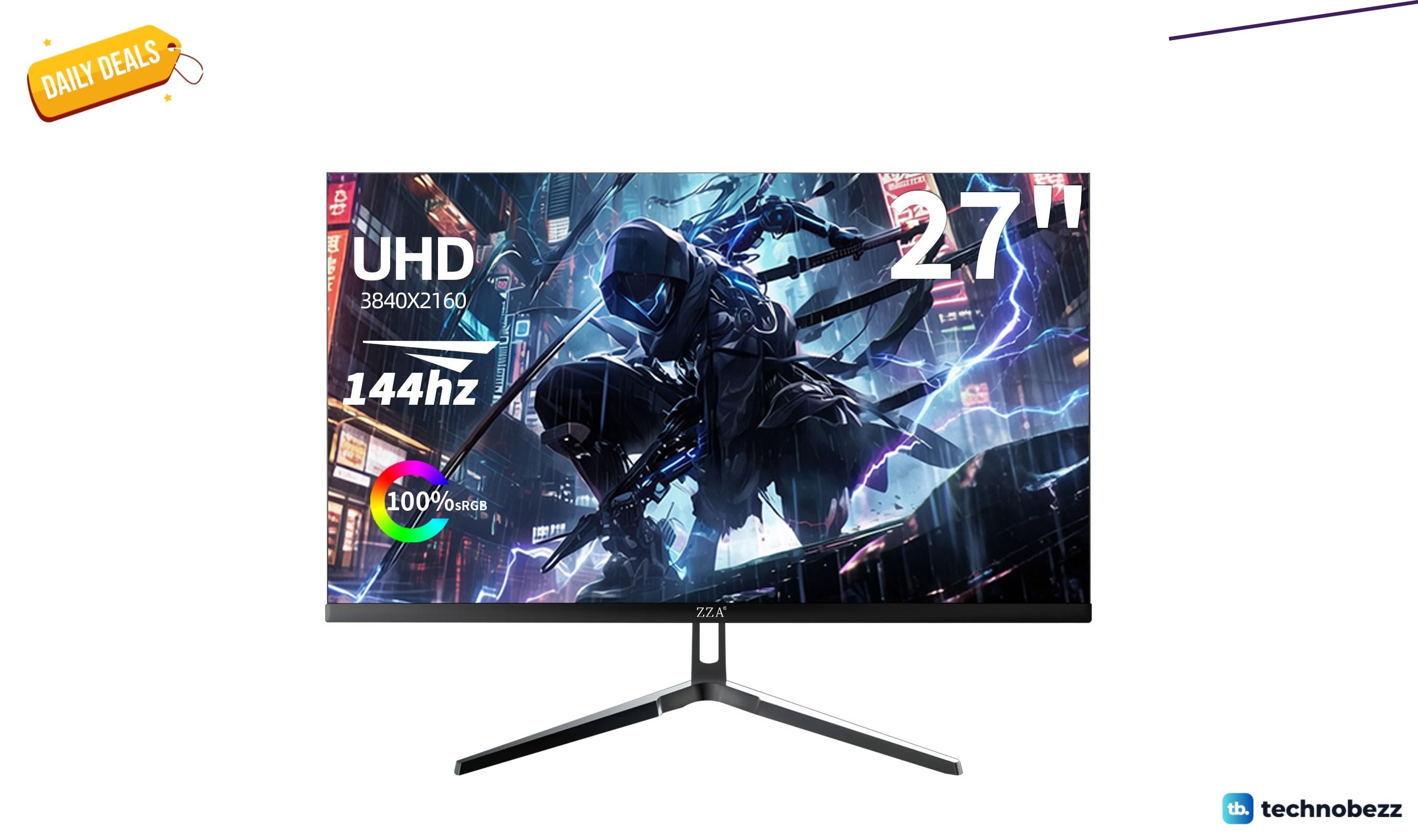
ZZA 4K Gaming Monitor now selling for $189.99
4 min read
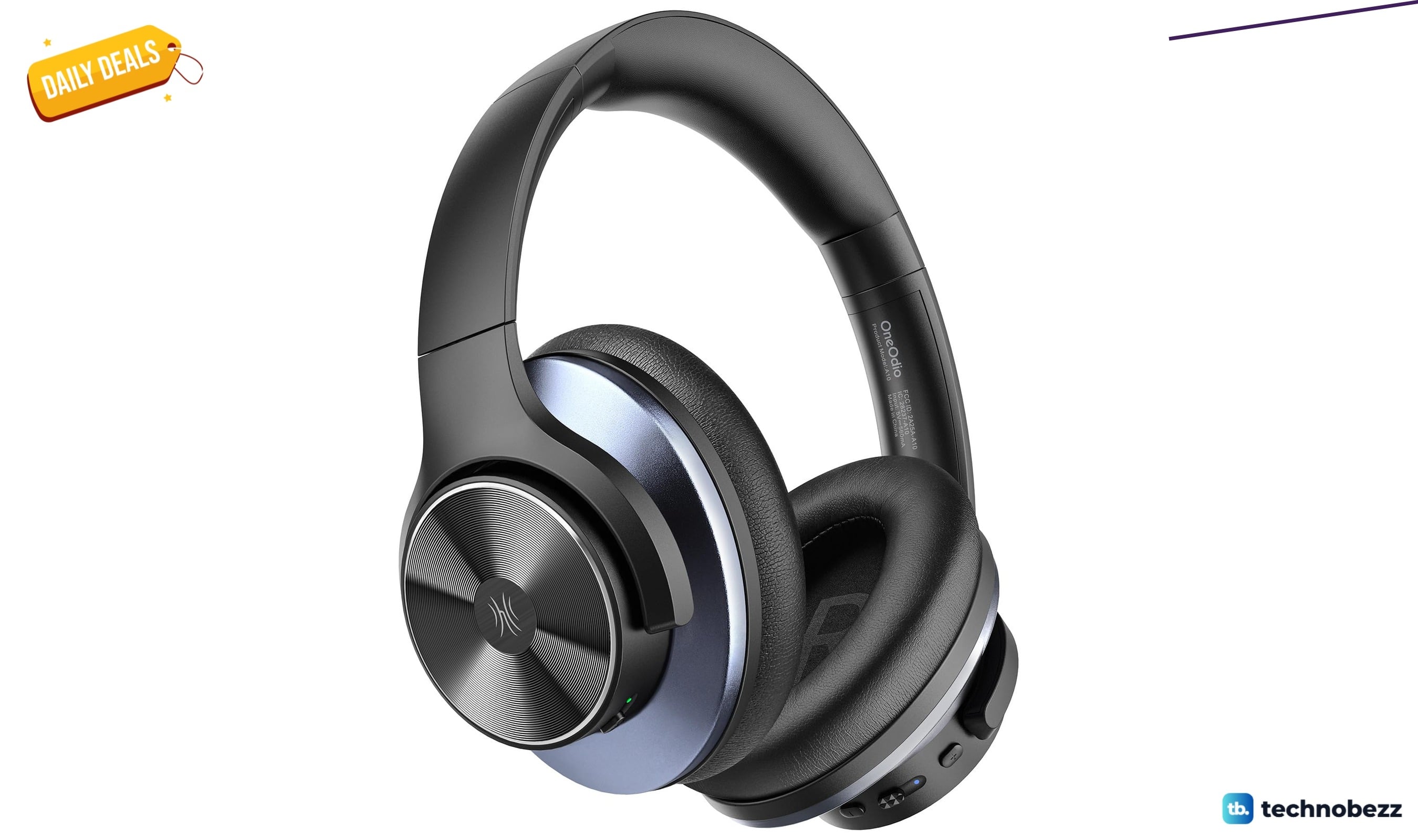
OneOdio Focus A10 Wireless Active Noise Cancelling Headphones now selling for $71.19
3 min read