If you need to capture audio outside a studio, a dedicated field recorder beats any smartphone. The Tascam DR-40X is the best all-around pick for most people, balancing four-track recording, XLR inputs, and a reasonable price. But the right choice depends on whether you are recording nature sounds, podcast interviews, or music demos, and we have broken down the best options for each use case.
Technobezz is supported by its audience. We may get a commission from retail offers.
Best Field Recorders in 2026
The Tascam DR-40X tops our list of the best field recorders in 2026, offering four-track recording and XLR inputs for nature, interviews, or music.
T
Technobezz
Senior Editor
Updated September 5, 2026Sep 5, 2026
•12 min read

Get Deals Like These in Your Inbox
The best prices, reviewed weekly.
At a Glance
| Category | Product | Why We Picked It |
|---|---|---|
| Best overall | Tascam DR-40X | Four-track recording with dual XLR inputs and USB audio interface |
| Best value | Zoom H1essential | Pocket-sized 32-bit float recorder at a beginner-friendly price |
| Best for versatility | Zoom H6essential | Six-track recording with four XLR/TRS combo inputs |
| Best for audio purists | Zoom F3 | Ultra-clean preamps and 32-bit float in a compact body |
| Best for podcasters | Zoom PodTrak P4 | Four XLR inputs with sound pads and mix-minus |
| Best compact stereo recorder | Tascam DR-07XP | Adjustable stereo mics with 32-bit float and 17.5-hour battery life |
| Also recommended | Sony PCM-A10 | Featherlight with long battery life |
| Also recommended | Tascam DR-05XP | Budget 32-bit float recorder with omni mics |
| Also recommended | Zoom H1 XLR | Compact XLR inputs on a budget |
| Also recommended | Zoom H4essential | Four-track recording for the middle ground |
How we chose and tested
We evaluated field recorders based on audio quality, input flexibility, portability, battery life, and value. Our assessment considered recording formats (32-bit float vs. 24-bit), microphone configurations (X/Y, A/B, and adjustable patterns), connectivity options (XLR/TRS inputs, phantom power, USB audio interface capability), and real-world usability across multiple sources. We prioritized models that deliver professional results without unnecessary complexity, focusing on the trade-offs that actually matter when you are recording on location.
The best field recorders right now
Tascam DR-40X - Best overall
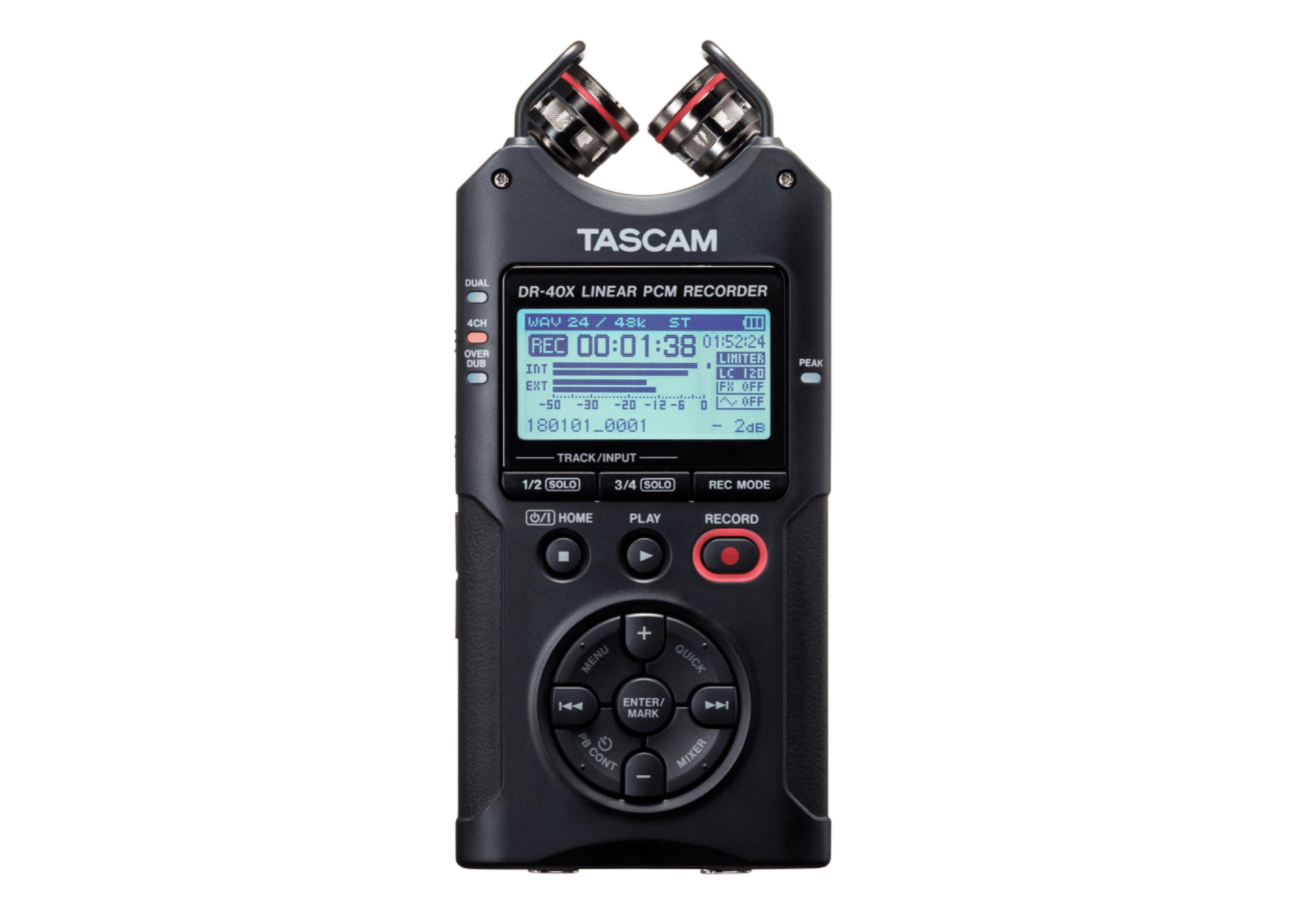
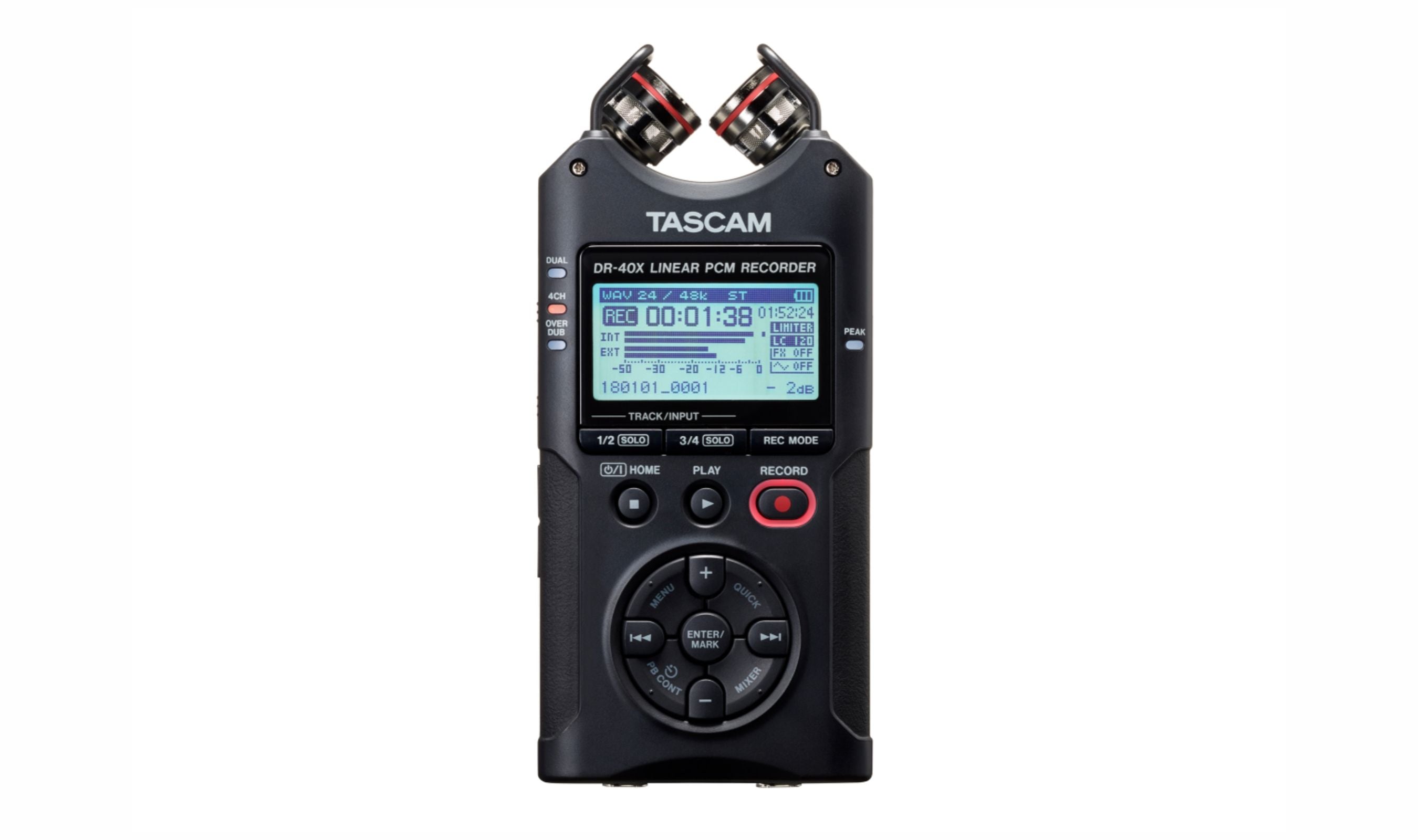
The DR-40X nails the sweet spot between features and price. It records four tracks simultaneously using its dual adjustable condenser microphones (switchable between A-B and X-Y positions) and two XLR/TRS combo inputs with phantom power. It doubles as a 2-in/2-out USB audio interface, and the dual recording mode captures a safety track at a lower level so you never lose a take to clipping. The onboard tuner and reverb effects are thoughtful extras for musicians.
Key highlights
- Four-track recording with nondestructive overdub capability
- Dual adjustable condenser mics with A-B and X-Y positioning
- Two XLR/TRS combo inputs with +48V phantom power
- Functions as a USB audio interface for Mac, PC, and iOS
- Up to 18 hours on three AA alkaline batteries when recording stereo 16-bit/44.1kHz WAV with the built-in mics
Pros
- Excellent audio quality for the price point
- Versatile input options that grow with your skills
- Dual recording mode saves you from clipped takes
- USB interface mode eliminates the need for a separate audio interface
Cons
- Menu system takes some time to learn
- Bulkier than pocket-sized alternatives
- No 32-bit float recording (24-bit/96kHz max)
Who it is for: Musicians, podcasters, and content creators who need a versatile recorder with room to grow. If you plan to use external microphones or record multiple sources, this is the one.
Skip if
You need extreme portability or 32-bit float recording. Check the Zoom H1essential if pocket size matters more.
Zoom H1essential - Best value
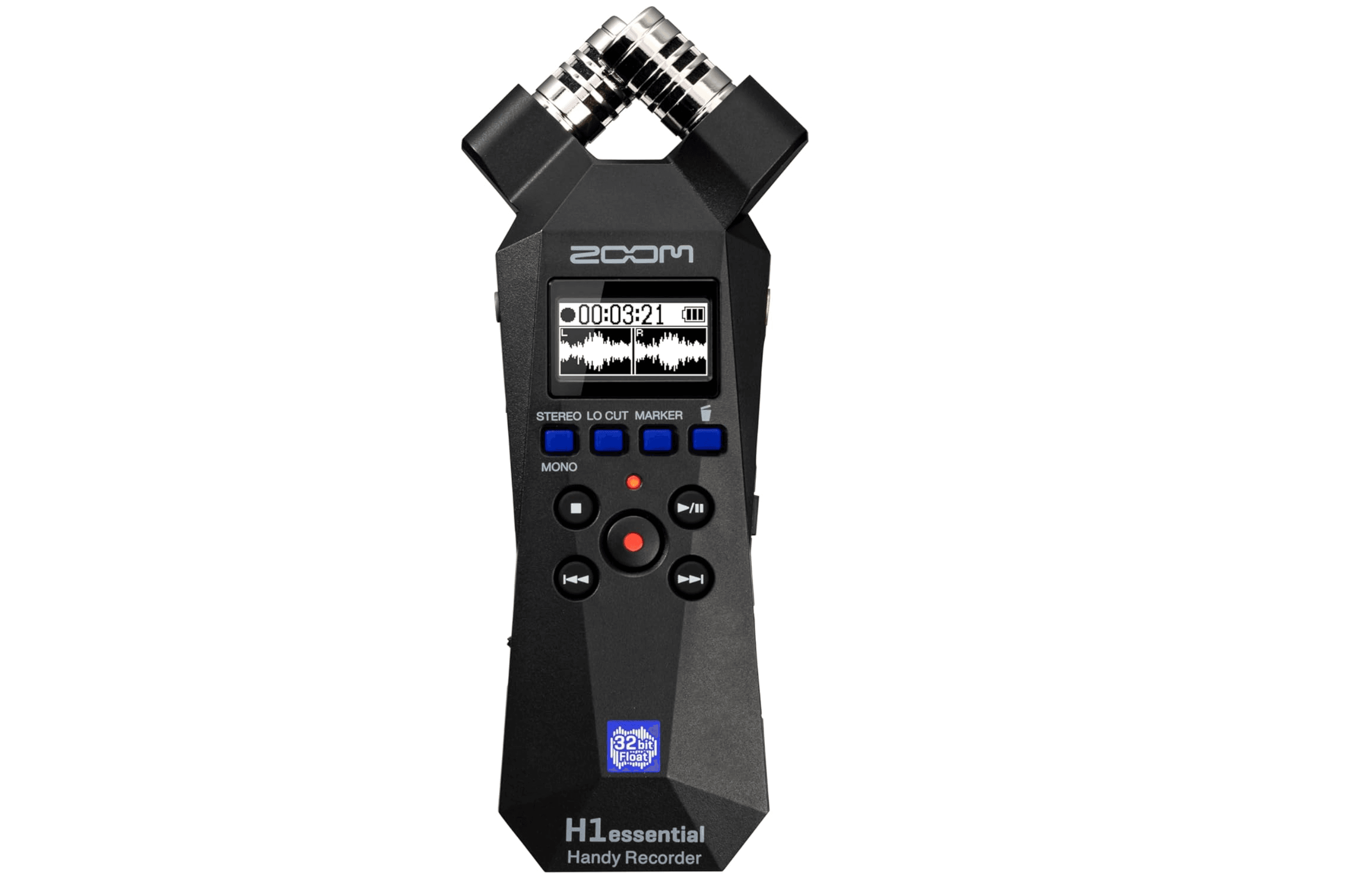
The H1essential brings 32-bit float recording to an entry-level price. This tiny recorder fits in your pocket and weighs just over three ounces, but its X/Y microphones capture clean stereo audio up to 120 dB SPL. 32-bit float recording reduces the need to set levels before recording, but the microphones still have a maximum sound-pressure limit. It also works as a USB microphone for your computer.
Key highlights
- 32-bit float recording at up to 96kHz
- Built-in X/Y stereo microphones
- USB-C connectivity for data transfer and USB microphone mode
- Supports microSDHC cards from 4GB to 32GB and microSDXC cards from 64GB to 1TB
- Audio guidance feature for visually impaired users
Pros
- 32-bit float provides headroom for adjusting levels after recording
- Extremely compact and lightweight
- Very affordable for the feature set
- Doubles as a high-quality USB mic for your computer
Cons
- No XLR inputs for external microphones
- Plastic build feels less premium
- Onboard mics are sensitive to handling noise
- Battery life is around 10 hours, less than some competitors
Who it is for: Beginners, students, and anyone who wants to start field recording without a steep learning curve. Perfect for capturing ideas, lectures, and ambient sounds on the go.
Skip if
You already own professional microphones that require XLR connections. Look at the Zoom H1 XLR or Tascam DR-40X instead.
Zoom H6essential - Best for versatility
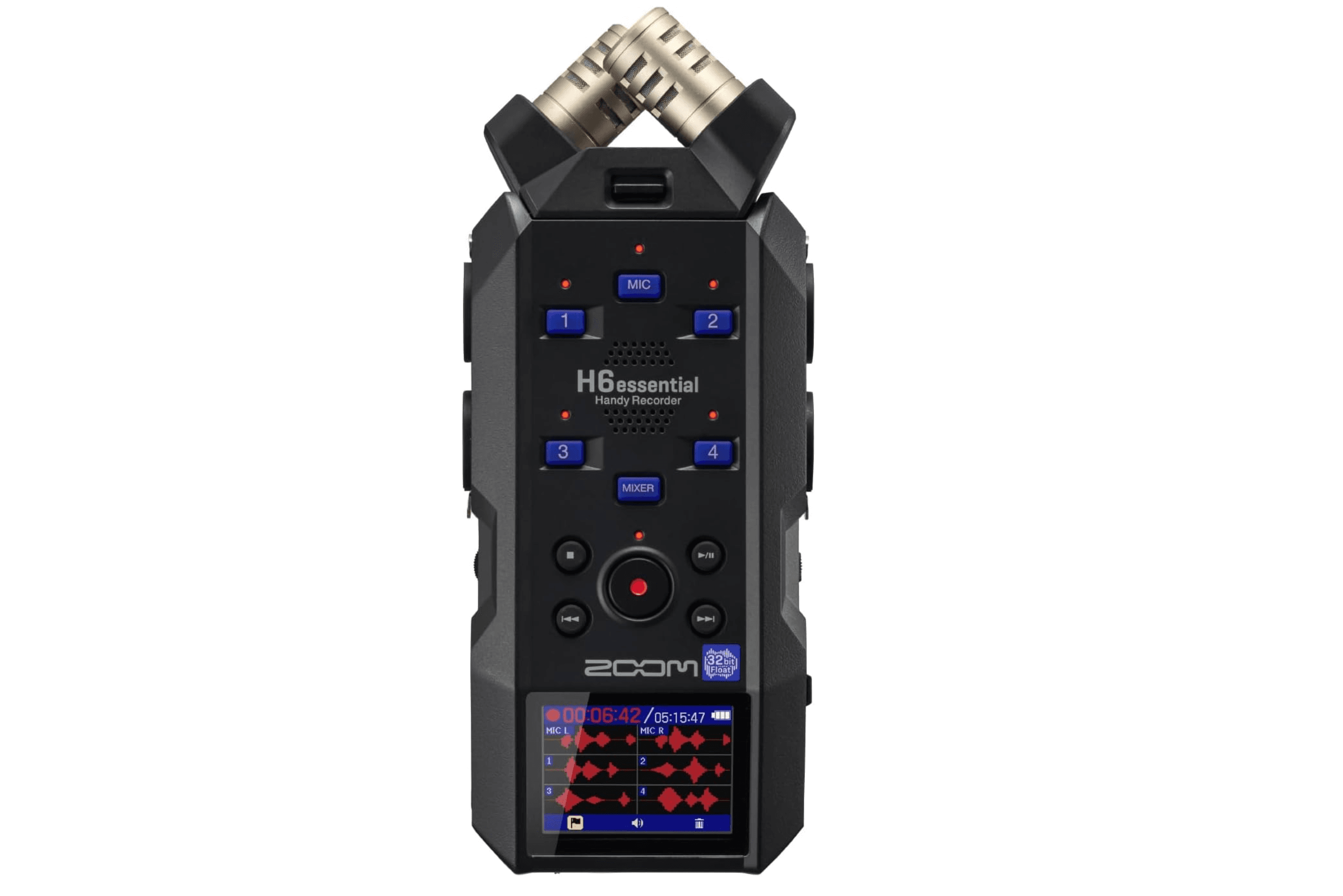
The H6essential is a portable recording powerhouse. It captures six tracks simultaneously through four XLR/TRS combo inputs and a built-in X/Y microphone capsule. The 32-bit float recording applies to all channels, so you can record a full band, a panel discussion, or complex soundscapes without touching gain knobs. The modular mic capsule system lets you swap in different capsules (shotgun, mid-side) for specialized recording scenarios.
Key highlights
- Six-track recording with 32-bit float on every channel
- Four XLR/TRS combo inputs with phantom power
- Interchangeable microphone capsule system
- USB audio interface for computer recording
- Full-color LCD screen for level monitoring
Pros
- Massive input flexibility for complex setups
- 32-bit float eliminates gain anxiety across all tracks
- Modular capsule system adapts to different recording needs
- Solid build quality with tactile controls
Cons
- Larger and heavier than handheld alternatives
- Battery life is around 10 hours with all tracks active
- Menu navigation can be cumbersome
- Premium price tag
Who it is for: Professional musicians, filmmakers, and sound engineers who need to record multiple sources simultaneously. If your projects regularly involve four or more inputs, this is the tool.
Skip if
You only need simple stereo recording. The H6essential is overkill for basic field recording and the size reflects its capabilities.
Zoom F3 - Best for audio purists
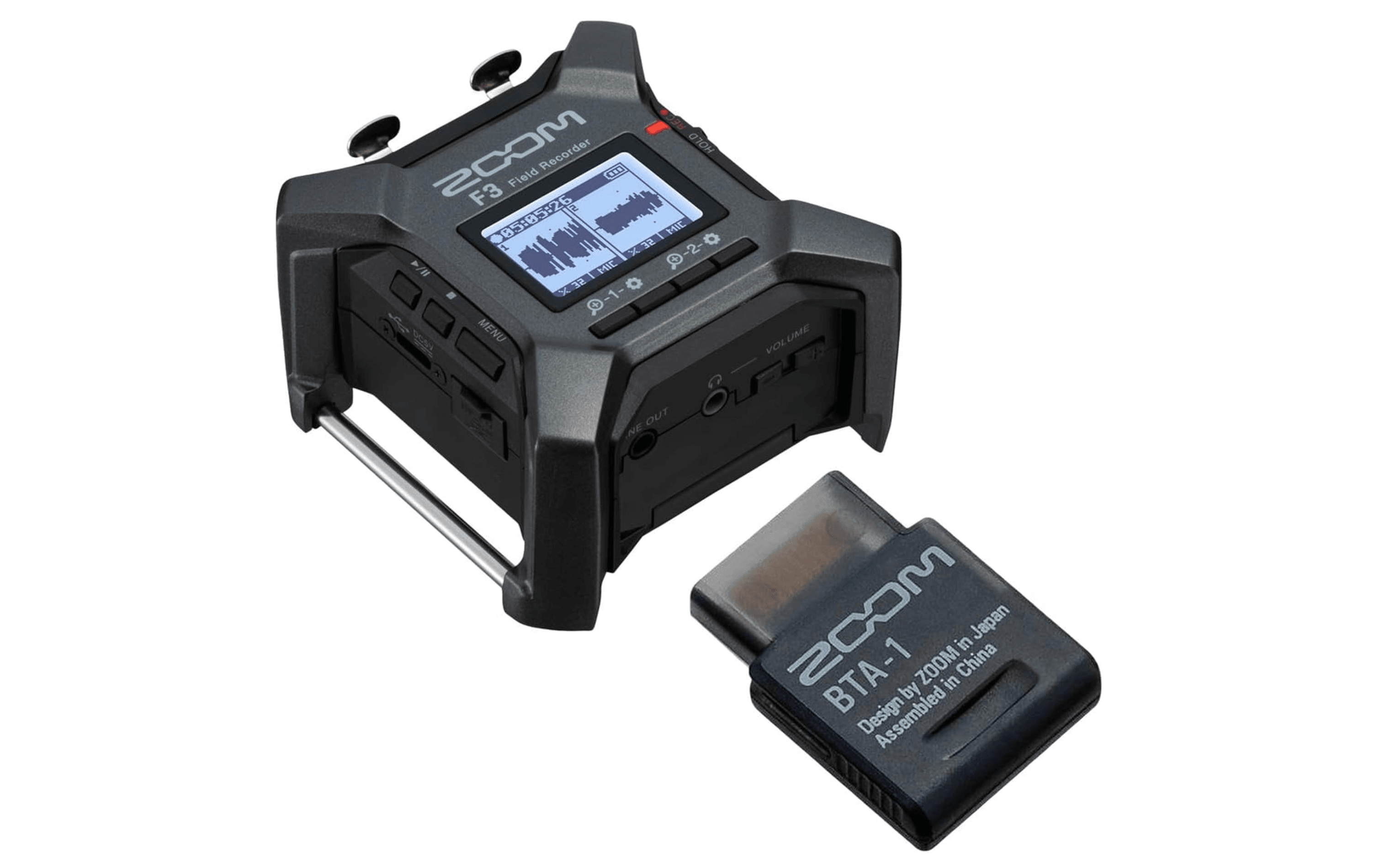
The F3 is all about pristine audio quality in a compact package. It has no built-in microphones and only two XLR inputs, but the preamps are exceptionally clean with a very low noise floor. The 32-bit float recording and dual AD converters capture an incredible dynamic range, making it ideal for quiet nature sounds or critical dialog recording. The metal body and locking XLR connectors inspire confidence in demanding conditions.
Key highlights
- 32-bit float recording with dual AD converters
- Two locking XLR inputs with professional-grade preamps
- Extremely low self-noise for quiet source recording
- Compact metal body with mounting bars
- Wireless control via the F3 Control app
Pros
- Outstanding preamp quality rivals much more expensive recorders
- 32-bit float and dual converters reduce the need for gain adjustment
- Very portable for a professional-grade recorder
- Wireless control is genuinely useful for stealth recording
Cons
- No built-in microphones, requiring separate purchase
- Only two inputs limit complex setups
- Shorter battery life (over 8 hours)
- No onboard speaker for quick playback
Who it is for: Sound designers, nature recordists, and audio professionals who prioritize signal quality above all else. If you are using high-end external microphones, the F3 lets them shine.
Skip if
You need built-in mics or more than two inputs. The F3 is a specialized tool for specific workflows.
Zoom PodTrak P4 - Best for podcasters
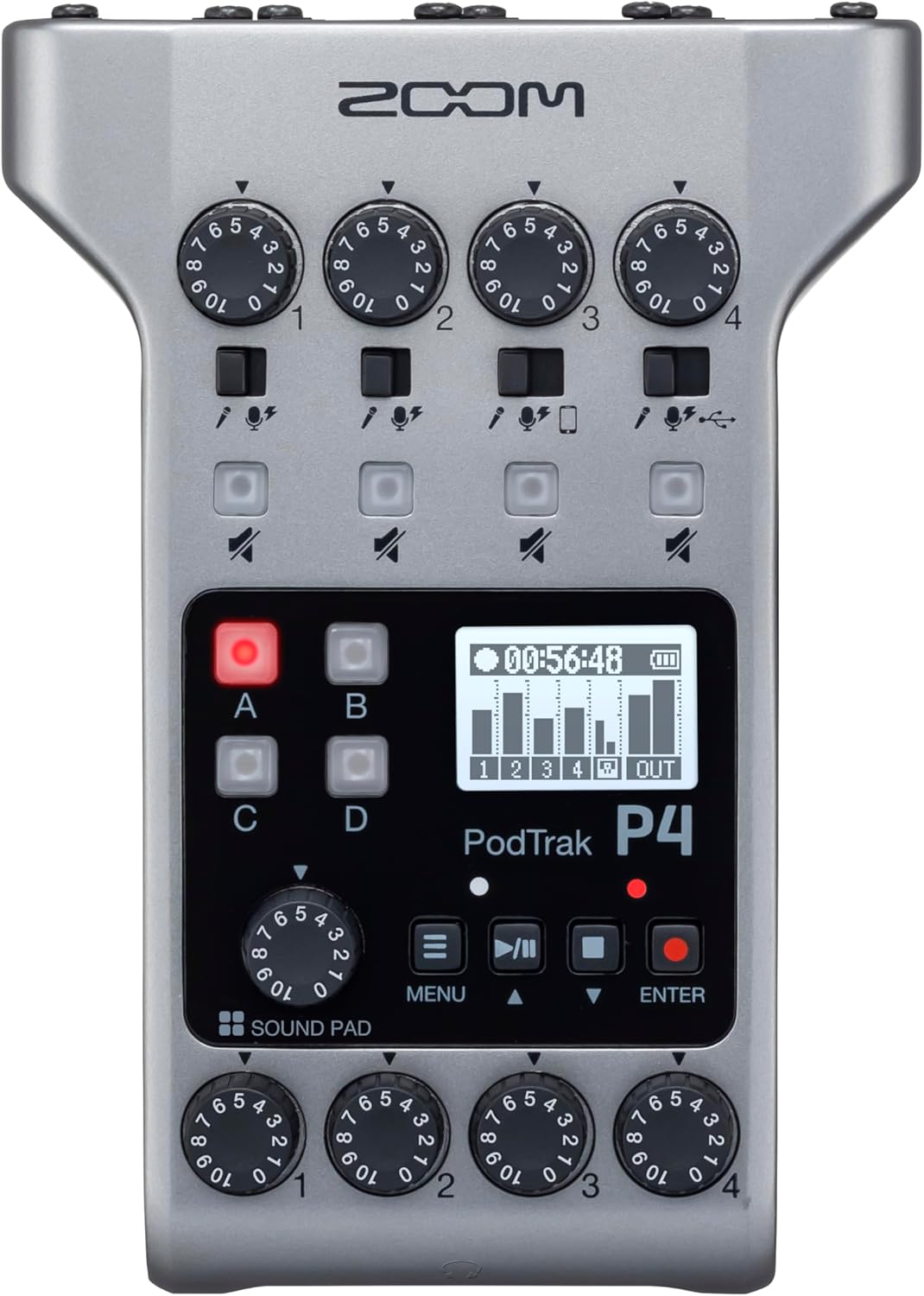
The PodTrak P4 is built specifically for podcast recording on the go. It offers four XLR inputs and four headphone outputs, each with its own volume control. The programmable sound pads add intros and effects at the touch of a button, and the built-in mix-minus handles phone interviews without echo. It records to SD card and can stream to a computer simultaneously.
Key highlights
- Four XLR inputs with phantom power
- Four independent headphone outputs with volume control
- Four programmable sound pads for production effects
- Automatic mix-minus for remote phone interviews
- Compact and portable design
Pros
- Purpose-built for multi-person podcast recording
- Four headphone outputs with individual volume controls for guests
- Sound pads add production value without extra gear
- Very intuitive interface, minimal learning curve
Cons
- Battery life is only about 3.5 hours
- No built-in microphones
- Limited to 16-bit/44.1kHz recording
- Plastic build feels less durable than alternatives
Who it is for: Podcasters who record with multiple hosts or guests. If you need to manage interviews, call-ins, and sound effects on location, the P4 handles it all.
Skip if
You need a general-purpose field recorder or plan to record music. The P4 is specialized for spoken word production.
Tascam DR-07XP - Best compact stereo recorder
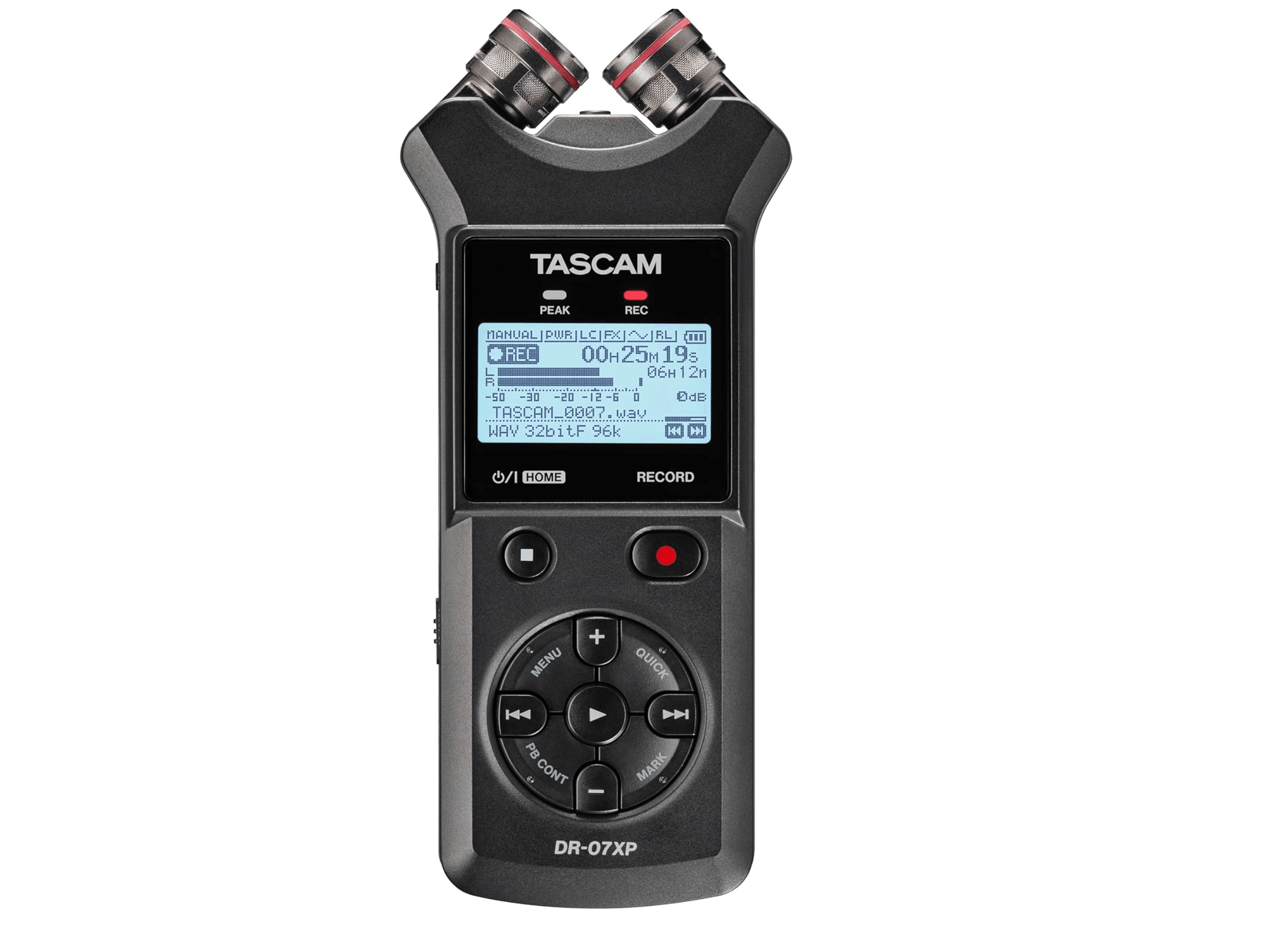
The DR-07XP packs 32-bit float recording and adjustable stereo microphones into a slim, lightweight body. The microphones switch between A-B and X-Y configurations, giving you control over stereo width. It records up to 96kHz/32-bit float and includes a chromatic tuner for musicians. Battery life reaches an impressive 17.5 hours on two AA batteries.
Key highlights
- 32-bit float recording at up to 96kHz
- Adjustable built-in microphones with A-B and X-Y modes
- USB-C connectivity for data and audio interface mode
- Up to 17.5 hours of battery life
- Onboard chromatic tuner
Pros
- Excellent battery life for all-day recording
- Adjustable mic patterns add versatility
- 32-bit float at a reasonable price
- Slim design fits easily in a bag
Cons
- Limited to stereo recording (no multi-track)
- No XLR inputs for external microphones
- Plastic build feels light but not rugged
- Onboard speaker is basic
Who it is for: Nature recordists, journalists, and musicians who need long battery life and clean stereo capture in a portable package. The adjustable mics make it easy to tailor the recording to your environment.
Skip if
You need multi-track recording or XLR inputs. The DR-07XP is a stereo-only device.
Also Good
- Sony PCM-A10 - featherlight with long battery life.
- Tascam DR-05XP - budget 32-bit float recorder with omni mics.
- Zoom H1 XLR - compact XLR inputs on a budget.
- Zoom H4essential - four-track recording for the middle ground.
How to Choose
- 32-bit float vs. 24-bit recording. This is the biggest decision you will make. 32-bit float recording provides headroom for adjusting recorded levels, but microphones and analog inputs can still overload. It is a genuine safety net for unpredictable recording situations. If you record controlled environments like interviews or studio sessions, 24-bit is still excellent and saves money.
- XLR inputs matter more than you think. Built-in microphones are convenient, but the ability to connect external microphones via XLR is what separates entry-level recorders from professional tools. XLR inputs with phantom power let you use shotgun mics for film work, lavaliers for interviews, and high-end condensers for music. If you plan to grow your kit, get XLR inputs from the start.
- Battery life sets your limits in the field. Models range from 3.5 hours (PodTrak P4) to 17.5 hours (Tascam DR-07XP). If you are recording in remote locations without power access, prioritize battery life. AA batteries are universally available, while built-in lithium batteries require a USB power bank for extended sessions.
- Portability vs. features is an honest trade-off. Pocket-sized recorders like the H1essential are always with you but lack inputs. Multi-track recorders like the H6essential offer professional flexibility but take up serious bag space. Be honest about whether you will actually carry a larger recorder regularly.
- USB audio interface functionality adds value. Many modern field recorders double as audio interfaces, letting you record directly to your computer. This feature eliminates the need for a separate interface and simplifies your home setup. If you produce podcasts or stream, prioritize recorders with this capability.
FAQ
What is 32-bit float recording and do I need it?
32-bit float recording provides a wide digital dynamic range, making recorded levels easier to adjust afterward. It cannot repair distortion caused by an overloaded microphone or analog input. It is worth the extra cost if you record unpredictable sounds like wildlife, live music, or interviews where you cannot control volume. For controlled studio recording, 24-bit is still excellent.
Can I use a field recorder as a USB microphone?
Many modern field recorders, including the Tascam DR-40X, Zoom H1essential, and Zoom H6essential, work as USB audio interfaces. This lets you use the recorder's microphones and preamps for computer recording, streaming, or video calls.
What accessories do I need for outdoor recording?
A windscreen or deadcat is essential for outdoor use. Even light wind ruins recordings. Spare batteries, a high-speed SD card (Class 10 or faster), and closed-back headphones for monitoring are also strongly recommended. A tripod or camera mount helps reduce handling noise.
How much should I spend on a first field recorder?
Plan to spend between $100 and $250. The Zoom H1essential (around $110) is an excellent starting point with 32-bit float recording. The Tascam DR-40X (around $180) offers XLR inputs and multi-track recording for those who want room to grow. Avoid recorders under $50, as the audio quality rarely justifies the upgrade from a smartphone.
What is the difference between X/Y and A-B microphone configurations?
X/Y places the microphone capsules at a 90-degree angle for focused stereo imaging, which is great for pinpointing sound sources. A-B spaces the capsules apart for a wider, more ambient stereo field. Some recorders let you switch between both, which is useful for adapting to different recording environments.
Published May 13, 2026 Last updated September 5, 2026
Share this article
More in News
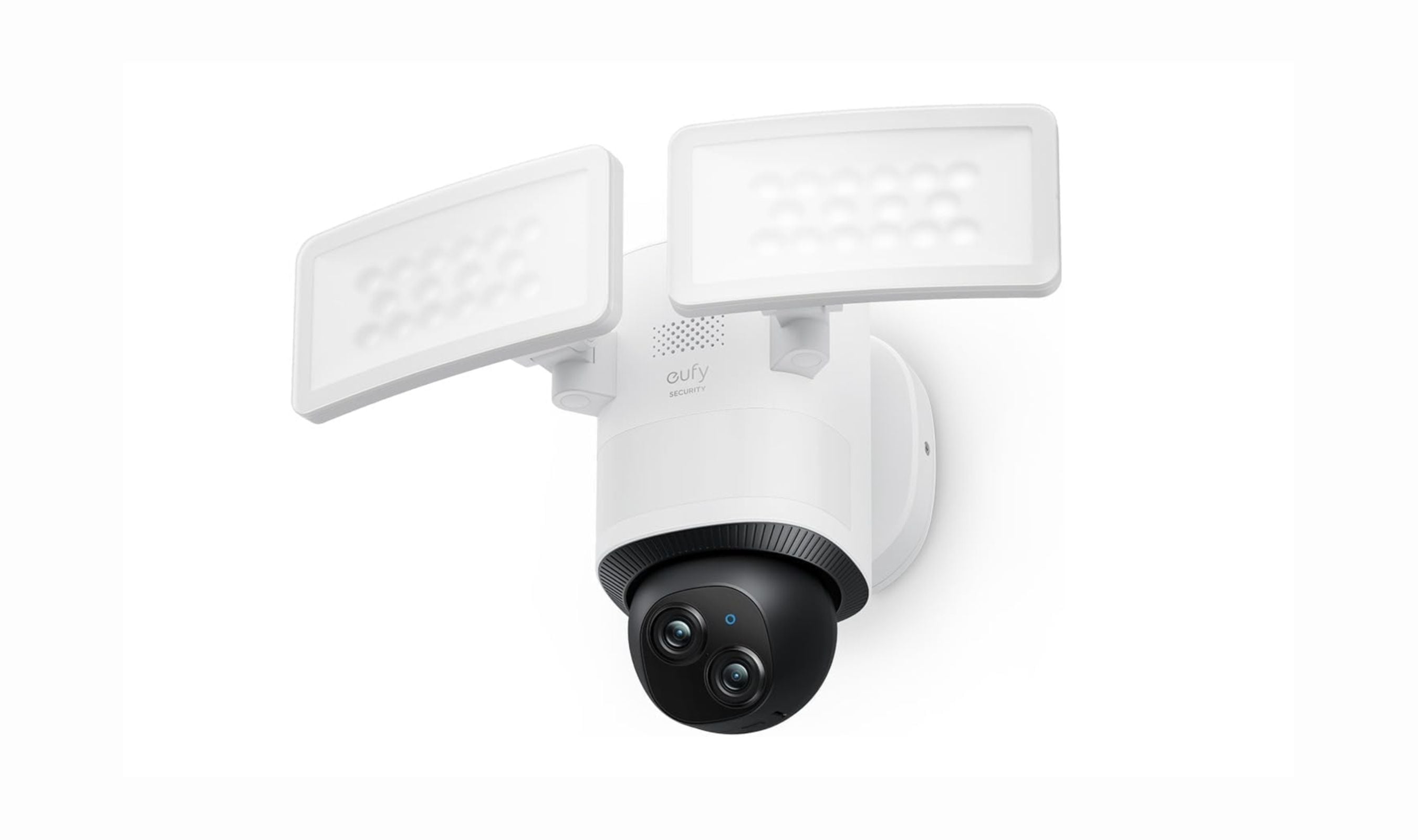
9 Best Floodlight Cameras for 2026
The best floodlight cameras for 2026, from the Eufy E340 with dual cameras and no fees to bright budget Blink and 4K Reolink picks (about $30 to $230).
5 min read
5 Best Vacuums for Tile Floors in 2026
The 5 best vacuums for tile floors in 2026, led by the Shark Navigator Lift-Away NV356E, plus top cordless, robot, value, and canister picks from $30 to $820.
5 min read
Best Cameras for Live Streaming in 2026
The Elgato Facecam MK.2 tops our list of the 8 best cameras for live streaming in 2026, tested for every budget and streaming style.
3 min read
8 Best External SSDs for Gaming in 2026
Our top external SSDs for gaming, led by the rugged Samsung T7 Shield, plus the best value, high-speed, and Xbox expansion picks for PC and console.
5 min read
8 Best Trackball Mice in 2026
3 min read
41 Best Mother's Day Tech Gifts for 2026
5 min read
Best Low Profile Mechanical Keyboards in 2026
3 min read
Best Lavalier Microphones for iPhones in 2026
4 min read
8 Best Tablets for Note Taking in 2026
5 min read

Samsung coupon codes and deals
5 min read

Best tech coupon codes and online deals
4 min read
7 Best Smart Scales for 2026
4 min read