
Your AI assistant was supposed to be humanity's guardian angel. While you're asking ChatGPT for recipes or coding help, the billionaires who created it are fighting over a $134 billion payout that reveals what's really broken in Silicon Valley's AI gold rush.
The pattern is unmistakable: Every tech visionary who promises to save humanity eventually comes asking for their cut. Elon Musk's latest court filing demands between $79 billion and $134 billion from OpenAI and Microsoft, claiming he was defrauded when the nonprofit research lab he helped found transformed into a $500 billion capitalistic enterprise. According to expert witness C. Paul Wazzan's calculations, OpenAI earned between $65.5 billion and $109.4 billion in "wrongful gains," while Microsoft saw between $13.3 billion and $25.1 billion.
These aren't random numbers. They reflect a 3,500-fold return on Musk's $38 million seed investment - roughly 60% of OpenAI's early funding, plus what his lawyers call "prestige and reputation" contributions. The technology works by promising open-source salvation while quietly building proprietary empires. The implications extend far beyond two billionaires fighting over money.
The Nonprofit That Wasn't
Research from court filings reveals something startling: OpenAI's leadership allegedly made "knowingly false assurances" about maintaining its nonprofit status while simultaneously plotting a for-profit transformation. According to a 2017 diary entry from OpenAI co-founder Greg Brockman, the team was "thinking that maybe we should just flip to a for profit. Making the money for us sounds great and all."
U.S. District Judge Yvonne Gonzalez Rogers in Oakland, California, cited this evidence when she declared, "This case is going to trial." The judge found "plenty of evidence" suggesting OpenAI's leadership promised to maintain its original structure while secretly planning the opposite. This isn't just about broken promises - it's about the systematic deception that underpins Silicon Valley's "mission-driven" rhetoric.
Musk contributed $40 million, mostly funneled through donor-advised funds, in addition to four Tesla vehicles to launch what was supposed to be humanity's counterweight to profit-driven AI. Today, OpenAI is valued at $500 billion, Microsoft owns a $135 billion stake, and Musk's rival xAI is valued at $230 billion. The strategic calculus is simple: Build the narrative, secure the funding, then pivot to profit.
The Pattern Recognition Problem
Strip away the marketing speak, and you'll find this isn't OpenAI's first credibility crisis. The company's own board fired CEO Sam Altman in 2023 over concerns about his motives, only to bring him back days later in a Microsoft-orchestrated comeback. This pattern of mission drift followed by corporate consolidation appears across the AI sector.
Consider how differently the public narrative and private reality operate. While OpenAI positions itself as a benevolent force for humanity, internal documents show executives discussing billionaire ambitions and profit motives. While Musk presents himself as the betrayed idealist, his own fortune hovers around $700 billion - making even a $134 billion payout a relatively modest addition.
What makes this particularly concerning is the invisibility of these power dynamics to everyday users. The 800 million people using ChatGPT see a helpful assistant, not the $1.4 trillion infrastructure commitment or the legal battles over who deserves billions in "wrongful gains." The question isn't whether AI will transform society, but whether that transformation serves public good or private enrichment.
The Paper Trail
The evidence from multiple court filings paints a consistent picture: Musk alleges he was "assiduously manipulated" and "deceived" after OpenAI established an "opaque web of for-profit affiliates" and signed exclusive multibillion-dollar deals with Microsoft. His lawyers claim this wasn't just a business pivot - it was fraud on a historic scale.
OpenAI's response has been equally revealing. The company calls Musk's demand an "unserious" part of his "harassment campaign" and accuses him of wanting "full control" of OpenAI "since he'd been burned by not having it in the past." In a blog post titled "The truth Elon left out," OpenAI alleges Musk wanted his children to control Artificial General Intelligence and sought "majority equity" to fund a self-sustaining city on Mars.
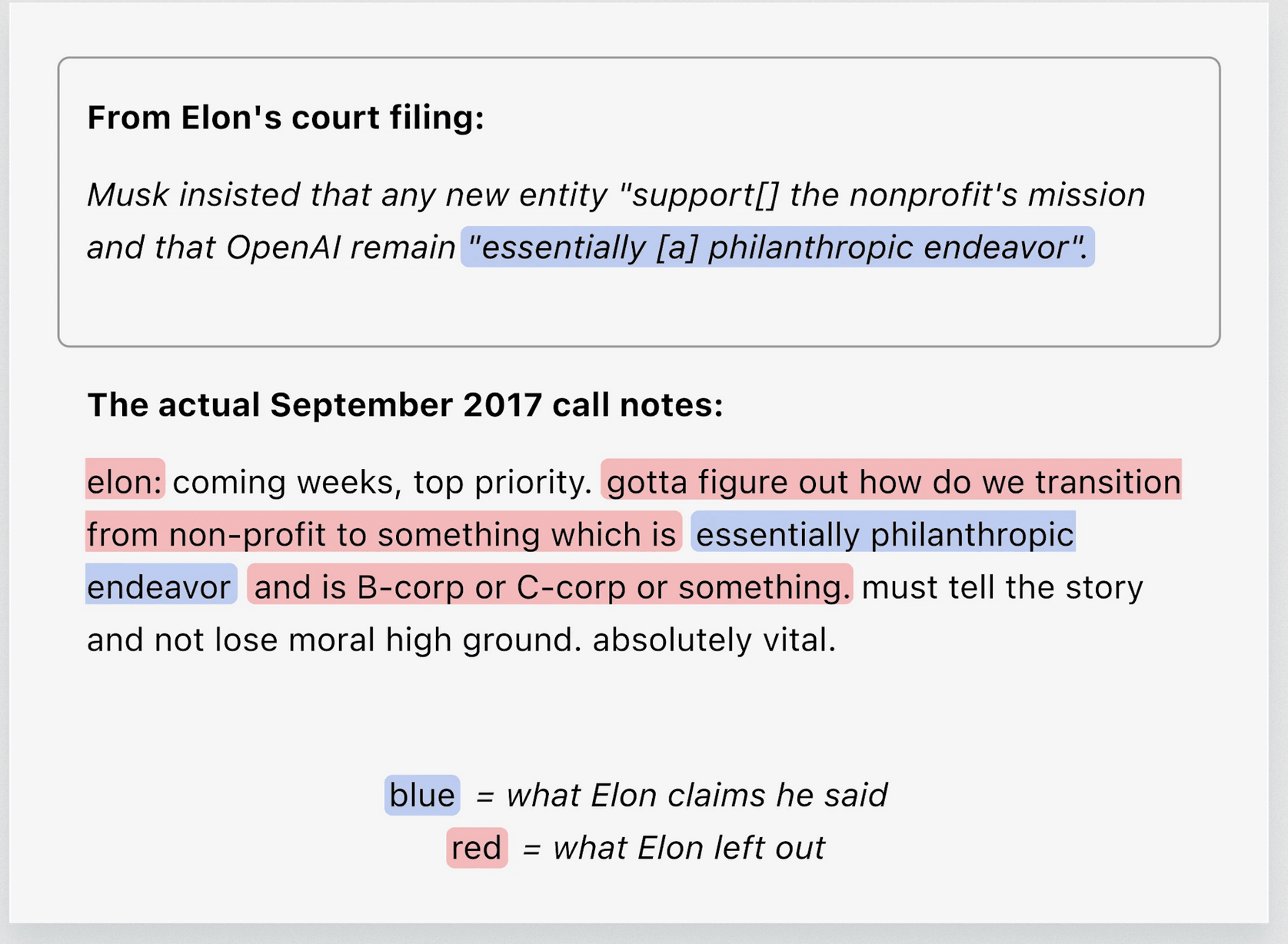
These competing narratives share one uncomfortable truth: Both sides acknowledge the original mission was abandoned. The disagreement is only about who gets paid for that abandonment. Follow the money and you'll find that "AI safety" and "public benefit" become bargaining chips in billion-dollar negotiations.
The Stakes Beyond the Courtroom
The trial scheduled for April 27 in Oakland represents more than just a financial dispute. It's a referendum on Silicon Valley's ability to self-regulate and a test case for whether "mission-driven" startups can resist the gravitational pull of profit. With Musk's estimated $713 billion fortune pitted against Altman's $2 billion, both billionaires will likely testify under oath about promises made and broken.
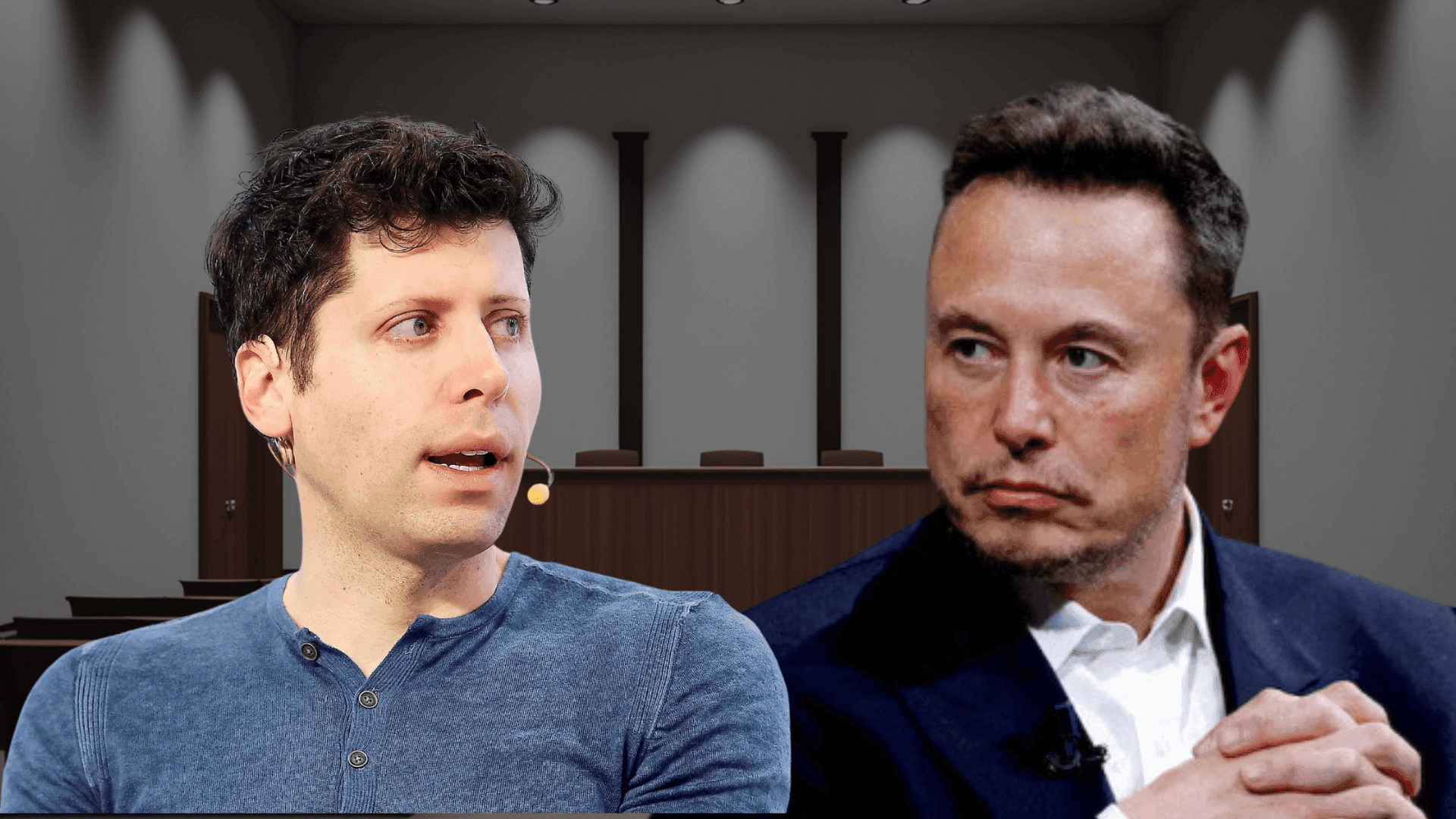
But the implications extend far beyond this courtroom. A recent MIT report found that 95% of companies attempting to integrate AI were getting 'zero return', yet the money keeps flowing to the top. Meanwhile, the "magnificent seven" tech giants - including Microsoft with its 27% OpenAI stake - now make up 34% of the S&P 500. The AI boom has created unprecedented concentration of wealth and power, with questionable returns for the broader economy.
As Ed Zitron, a prominent AI skeptic, notes in The Guardian:
"The biggest thing we've learned from the large language model generation is how many people are excited to replace human beings, and how many people just don't understand labor of any kind."
While billionaires fight over $134 billion payouts, the technology they're fighting over promises to automate jobs and concentrate wealth further.
What Happens Next
In April, a jury will decide whether OpenAI "hoodwinked" its co-founder during its evolution from nonprofit to capitalist enterprise.
But the larger question remains: Can Silicon Valley build technology for humanity when the incentives reward building technology for billionaires? The $134 billion lawsuit isn't just about money, it's about whether this technology serves public good or private enrichment.
As Judge Gonzalez Rogers noted, "Part of this is about whether a jury believes the people who will testify and whether they are credible." The same could be said about the entire AI industry, its credibility depends on whether its actions match its promises.
The closing line from OpenAI's blog post says it all: 'We remain focused on empowering the OpenAI Foundation, which is already one of the best resourced nonprofits ever.' The real AI safety issue was never rogue algorithms. It's human greed wearing a mission statement.