
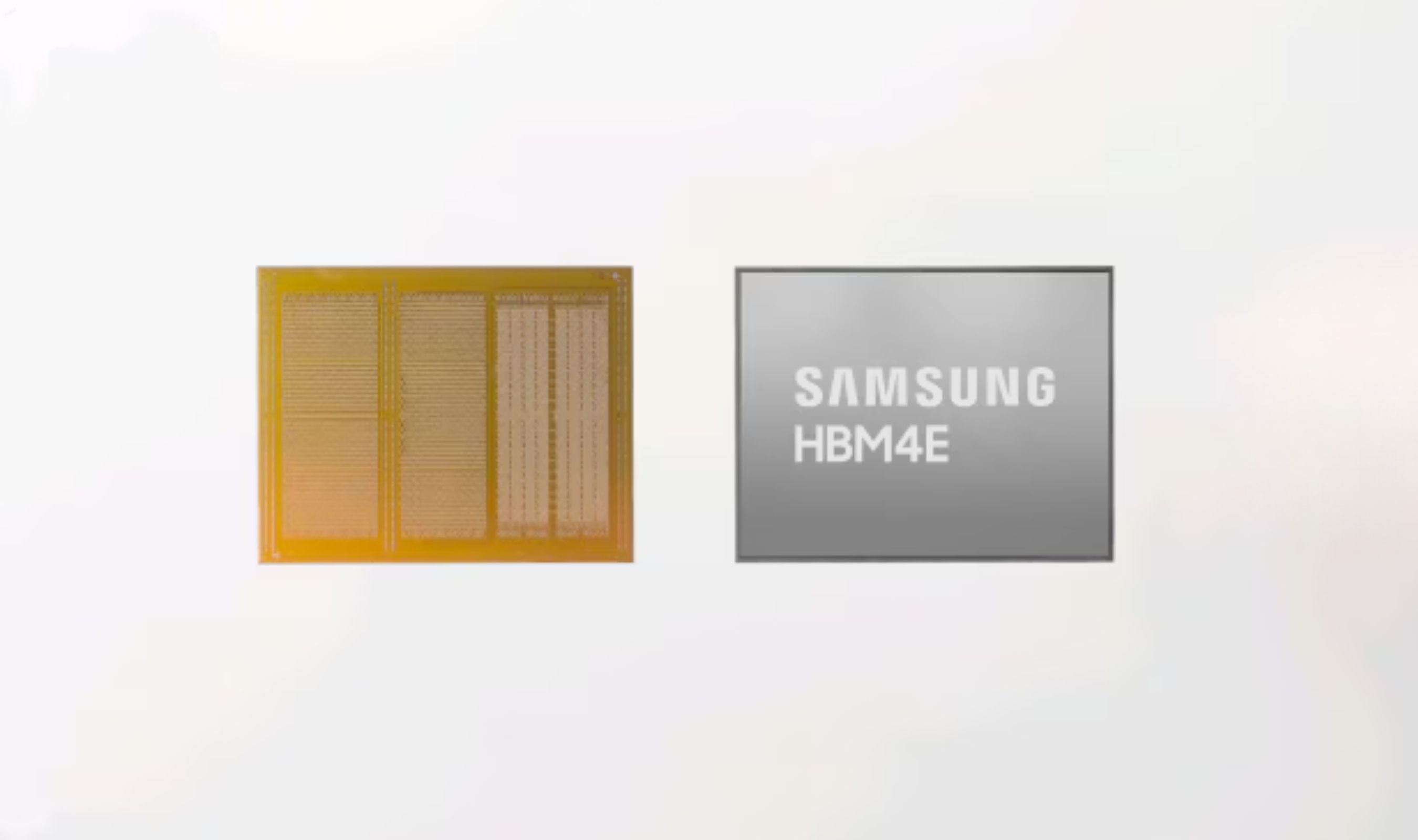
Samsung's 12-layer HBM4E samples are now in the hands of customers worldwide, putting direct pressure on Micron just days after the Boise chipmaker crossed $1 trillion in market value for the first time.
Samsung Electronics began shipping its first 12-layer HBM4E samples to major clients this week, a move Bloomberg described as taking an early lead in the race to supply the most advanced memory for AI accelerators made by Nvidia Corp. The stock surged as much as 6.5% on the news, and Samsung's market cap pushed past the $1 trillion mark in May. The 12-layer HBM4E chip delivers 48-gigabyte capacity, more than 30% greater than the previous generation, with speeds up to 16 Gigabits per second. Samsung said it will also offer 8-layer 32GB and 16-layer 64GB configurations depending on client needs.
The timing puts Micron on notice. The memory maker hit a $1 trillion market cap on May 26 after shares jumped 19%, driven by UBS tripling its price target to $1,625 and citing long-term agreement opportunities. By Friday, Micron shares climbed another 4.6% to $966, pushing its valuation past $1.1 trillion. But Samsung's HBM4E push signals the Korean giant is serious about reclaiming the lead in high-bandwidth memory after losing ground to SK Hynix in earlier HBM generations. Samsung had been shipping HBM3E to Nvidia since February, but the leap to 12-layer HBM4E samples represents its most aggressive AI memory move yet.
Micron isn't standing still. It locked in all of its HBM4 production for 2026 through binding multi-year contracts, according to reports, and announced a $2 billion expansion of its Manassas, Virginia fab. The company expects fully qualified series production by the end of 2026, with output targeting automotive, defense, aerospace, and medical markets.
Wall Street is watching closely. Mizuho set a Micron price target of $1,150, Barclays at $1,175, and Melius Research at $1,100.
Bank of America lifted its target to $950, and Citi to $840, citing a 40% surge in DRAM pricing during Q2 2026. The competitive market is complicated by Samsung's internal turmoil. The company averted a strike by nearly 48,000 workers on May 20 after agreeing to allocate 10.5% of its semiconductor division's operating profit to employee bonuses, a deal that triggered an immediate shareholder lawsuit over whether the company is sacrificing long-term investment for near-term payouts.
Samsung chip workers stand to receive bonuses averaging roughly $340,000 this year. The profit-sharing deal was shaped largely by SK Hynix, which agreed in September 2025 to allocate 10% of annual operating profit to employee bonuses with no upper limit. That deal triggered a wave of approximately 200 Samsung engineers defecting to SK Hynix in the months before Samsung's strike threat, according to union statistics.
All three memory makers, Samsung, SK Hynix, and Micron, have now crossed the $1 trillion market cap threshold this week, a milestone fueled by AI demand that continues to outstrip supply. Micron reports its next earnings in June, where investors will look for confirmation that its long-term customer contracts are holding up against the new Samsung threat.