
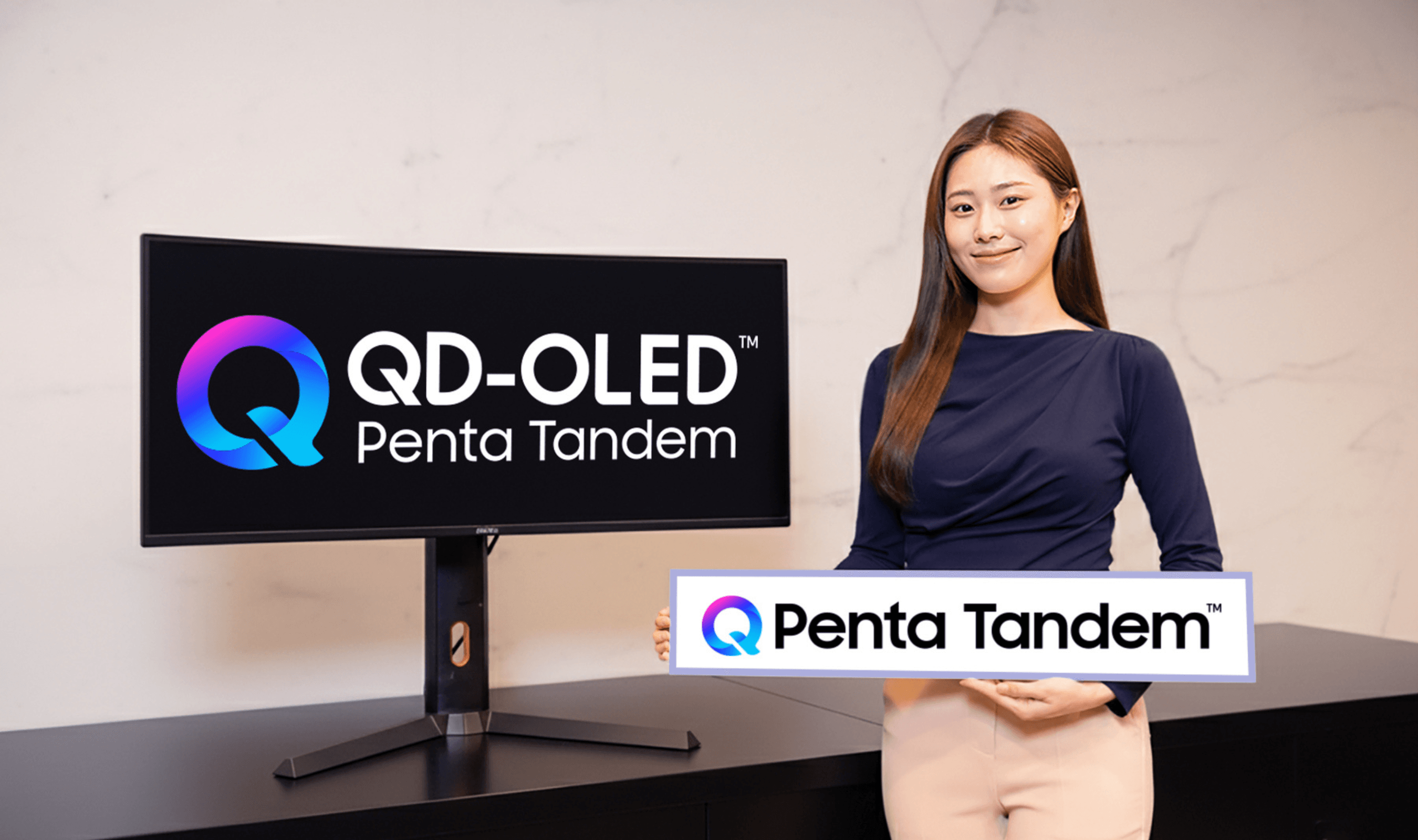
Samsung Display announced its QD-OLED Penta Tandem branding on February 12, trademarking a five-layer organic light-emitting structure for premium monitors and TVs. The technology delivers 30% better luminance efficiency and doubles panel lifespan compared to last year's four-layer design.
The "Penta" designation refers to the five-layer blue emitting stack, up from four layers in previous QD-OLED panels. Samsung Display moved to this architecture starting last year, pairing it with newer organic materials to improve operating characteristics.
The company cites peak brightness of up to 4,500 nits for TVs and 1,300 nits for monitors, measured at 3% On Pixel Ratio.
QD-OLED panels use blue OLED emission as the light source, with quantum dots converting portions to red and green for the final image. As resolutions increase and pixel density rises, each pixel's effective emission area shrinks, making stable luminance harder to maintain without pushing materials harder.
The five-layer structure addresses this by distributing energy more effectively across organic materials.
Samsung Display claims the change translates to measurable efficiency and durability gains. Compared with its previous four-layer implementation, the company reports a 1.3× improvement in luminous efficiency and a 2× increase in lifespan.
Panels can target higher brightness at similar power or maintain given brightness while reducing power consumption.
The rollout plan for 2026 is comprehensive. Samsung Display will extend QD-OLED Penta Tandem across its full range of panel sizes and supply it for flagship products from major customers like the upcoming Galaxy S26 series.
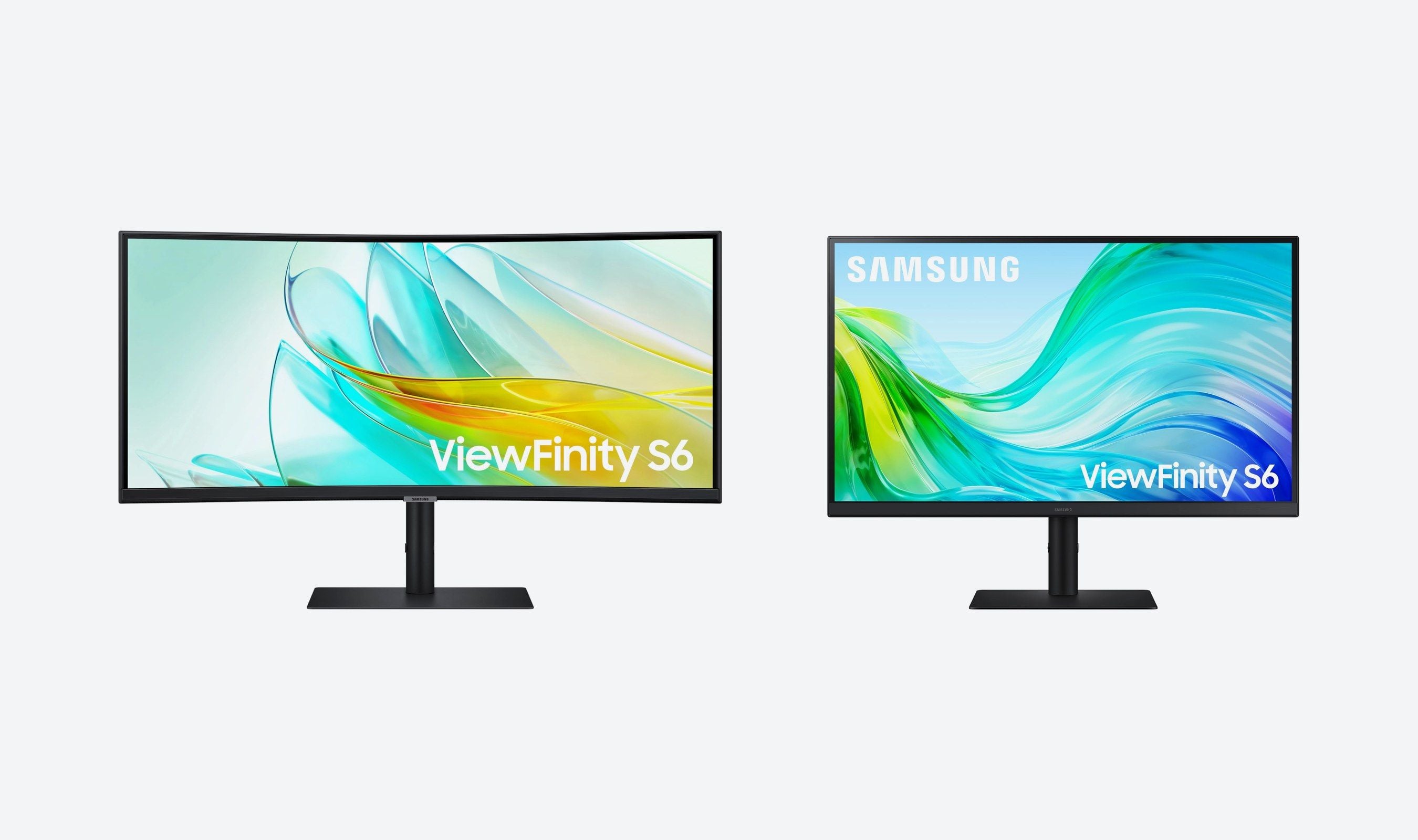
Following the 27-inch UHD (3840×2160) panel introduced last year, the technology will expand to include a 49-inch Dual QHD (5120×1440) product in the second half of this year.
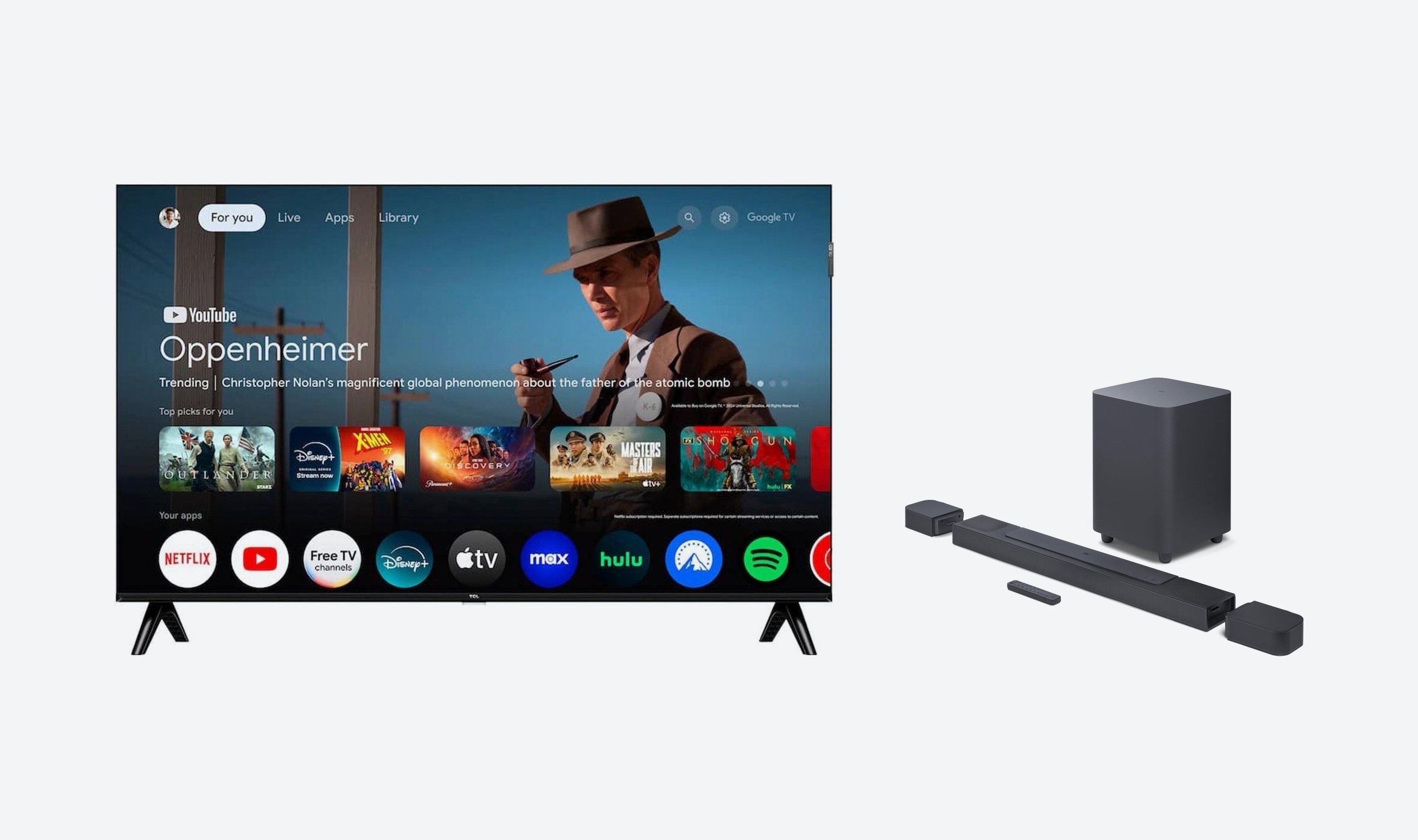
For TVs, Penta Tandem has already been used in top-tier self-emissive TV lineups from key customers since 2025. The branding standardizes how the market identifies Samsung's newest stack generation moving forward.
The company points to its 27-inch UHD QD-OLED panel as the first to use the five-layer tandem structure, quoting a 160 PPI pixel density.
Samsung Display positions the five-layer stack as a key enabler for pushing resolution and pixel density while keeping efficiency and longevity within target. The firm states it is the only manufacturer mass-producing 27-inch 160 PPI self-emissive displays in this class.
Products featuring the technology can meet VESA DisplayHDR True Black 500 certification, requiring a black level of 0.0005 nits or lower while reaching peak brightness of up to 500 nits on a 10% window.
The organic material stacking technology requires know-how in selecting materials, thickness, and combinations beyond simply increasing layer count. Samsung Display plans to expand Penta Tandem to all product sizes this year and supply it to flagship models of major customers.
The technology represents what the company calls "the ultimate choice" for customers seeking to prove the premium value of QD-OLED displays.