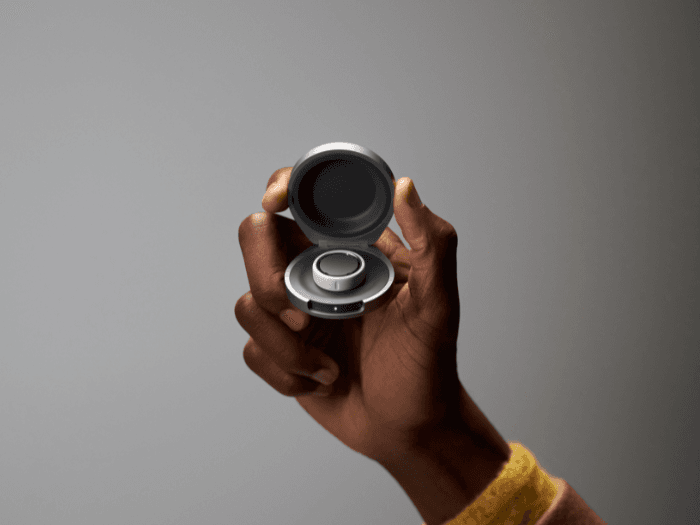
Oura launched its first portable charging case for the Ring 4 smart ring this week, priced at $99. The recycled aluminum accessory stores five full charges and charges via USB-C in under 90 minutes.
The case addresses a common user complaint: one in ten Oura members already purchased extra chargers for home and travel use. Ring 4 owners previously needed separate charging plinths for different locations.
Made from recycled aluminum, the splash-resistant case measures pocket-sized at 7.9mm wide. It doubles as protective storage when the ring isn't worn, with LED indicators showing both case and ring battery levels.
Compatibility remains limited to Ring 4 and Ring 4 Ceramic models. Each case fits specific ring sizes, requiring separate purchases for households with multiple rings.
Charging performance varies between 20-80 minutes depending on ring battery level. The case's five-charge capacity extends usage to weeks without wall charging.
Samsung's Galaxy Ring includes a charging case standard, but only provides 1.5 charges compared to Oura's five. Samsung recently investigated a Galaxy Ring injury that was caused by a cracked internal molding leading to battery swelling. The Ring 4 starts at $349, with the ceramic version launching last fall.
Oura recently expanded health tracking with a $99 Health Panel subscription offering 50+ cardiometabolic blood markers. The system integrates ring data with blood metrics for comprehensive wellness insights.
The charging case arrives as smart rings gain mainstream attention. Packers quarterback Jordan Love's wife, Ronika Stone Love, credited her Oura Ring with detecting pregnancy after it showed major signs of something straining her body.
Portable charging addresses a key smart ring limitation: extended travel without daily charging access. The accessory positions Oura against Samsung's integrated case approach while emphasizing sustainability through recycled materials. Anker also unveiled new smart charging products at CES 2026 earlier this month, introducing display technology and modular designs. Solid-state battery technology continues to advance with commercial applications now reaching the market.