
Most common developer workflows happen in a browser. OpenAI built its Computer Use feature for the desktop Codex app, then checked the data and found that reality.
So it shipped a Chrome extension instead.
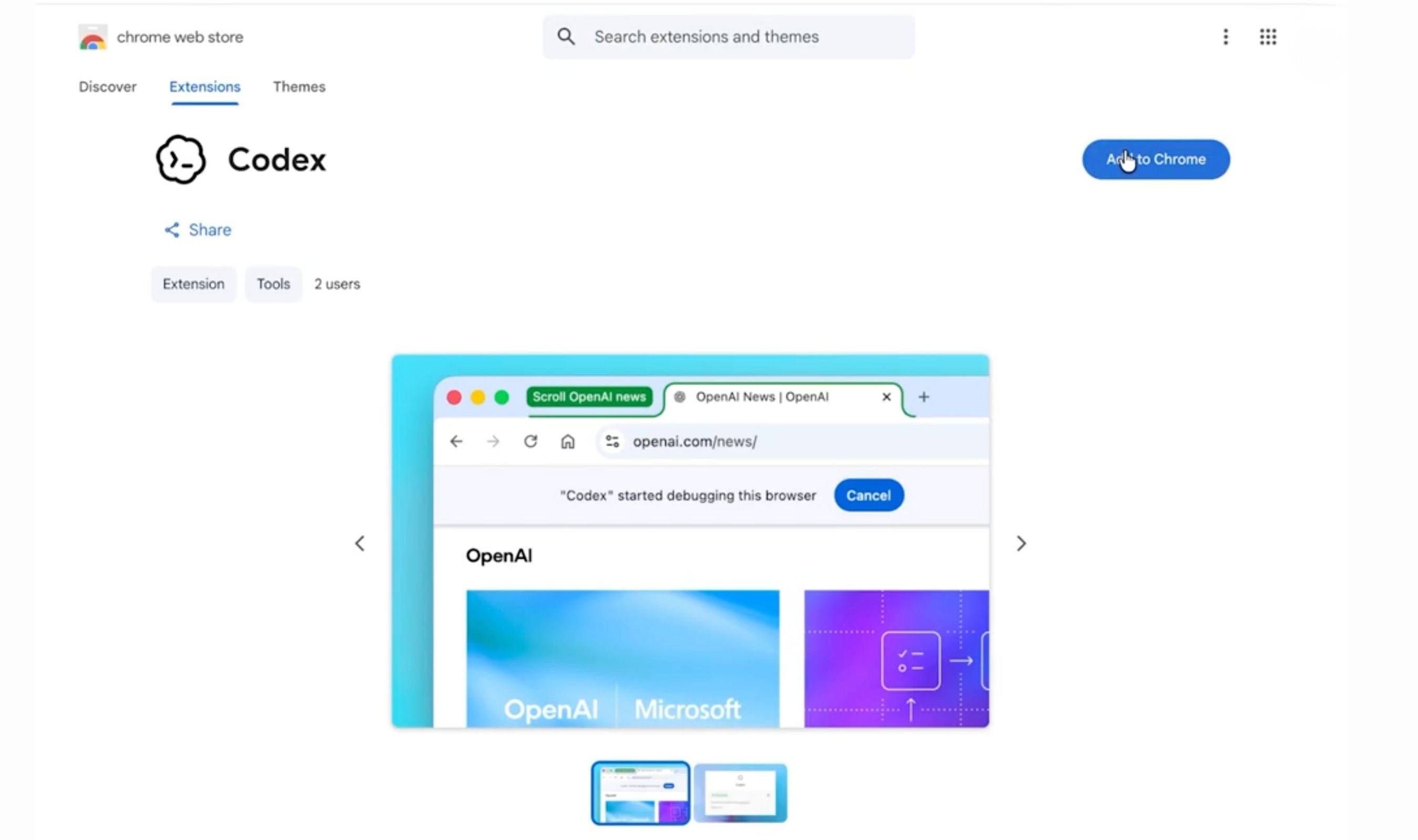
Codex for Chrome, launched May 7 on macOS and Windows, gives the AI agent its own tab groups to test web apps, gather context across signed-in sites like Salesforce and Gmail, and run Chrome DevTools in parallel. The critical design choice: it does not take over the user's active browsing session.
Computer Use hijacks the screen. The Chrome plugin runs in the background.
"The new Chrome plugin in the Codex app... can test web apps, gather context across tabs, use web DevTools efficiently in parallel, and keep results organized without taking over your browser," OpenAI announced. The isolation matters. By confining Codex to its own browser instance with separate tab groups, OpenAI limits the risk of the agent disrupting active workflows.
Users install the extension through the Codex Plugins menu, then grant site-by-site permissions through allowlists and blocklists managed in Computer Use settings. The official developer docs detail the permission model: Codex asks before interacting with each new website, and browser history access is scoped per request with no always-allow option. The release follows a rapid expansion cadence. OpenAI launched Codex as a macOS app in February, added features in April, and now ships the Chrome plugin alongside a Windows desktop app. The company's broader roadmap includes a combined app that unites Codex with the ChatGPT chatbot and the Atlas web browser.
Codex now has over 4 million weekly active users, an 8x increase since the beginning of 2026. OpenAI told Paul Thurrott that the extension targets "browser-based workflows like inspecting logs, testing web apps, reviewing dashboards, and moving through internal tools."
Two additional capabilities are maturing in parallel. Voice mode, powered by the freshly released GPT-Realtime-2 model (OpenAI's first speech model with GPT-5-class reasoning and a 128K context window), could arrive inside Codex around Google I/O on May 19-20. A Remote Control feature in testing would let Codex connect to machines over SSH, operate them persistently, and enable phone-to-desktop control, text strings in ChatGPT for Android version 1.2026.125 reference session restoration, remote composer commands, and launcher shortcuts for desktop Codex access.