
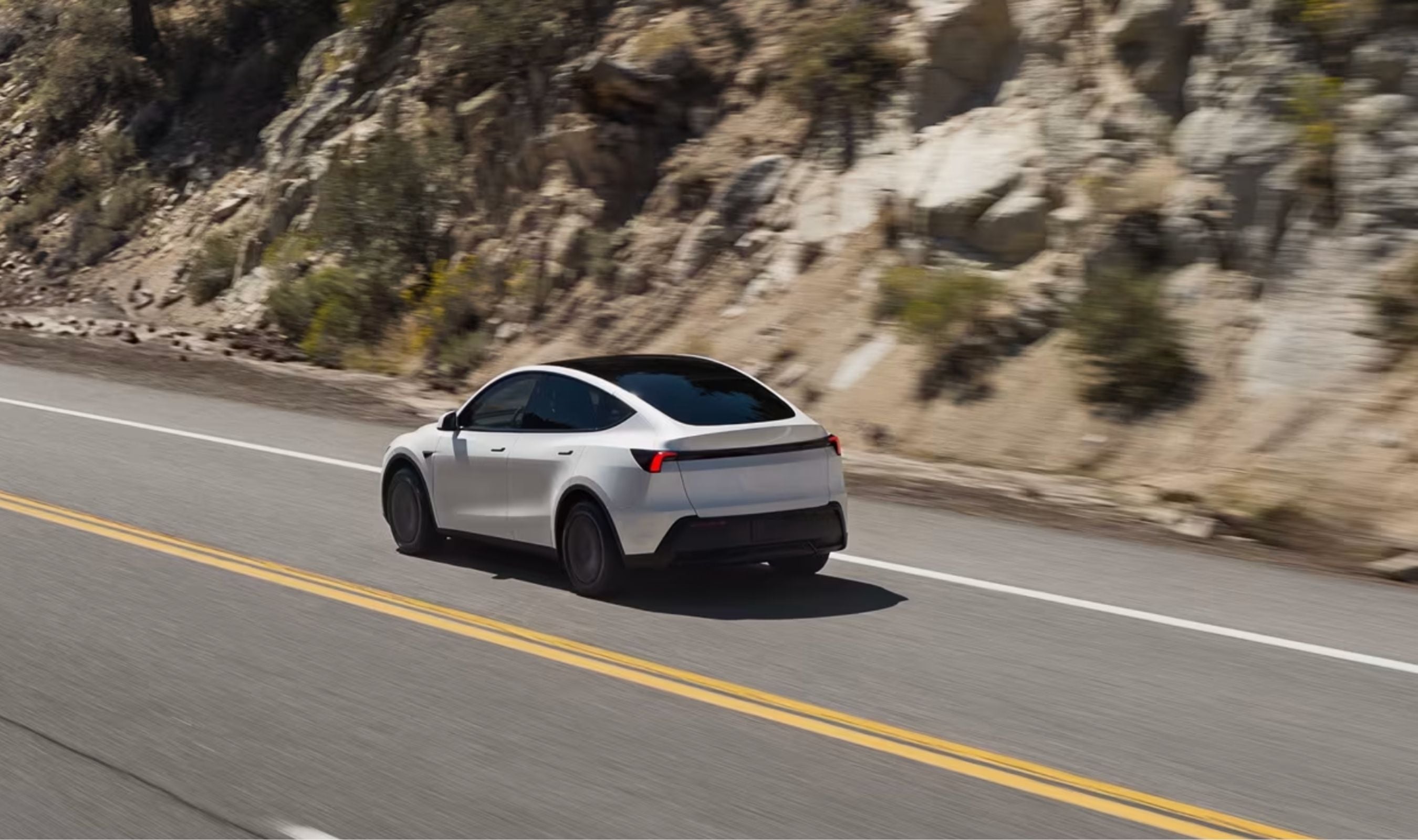
The 2026 Tesla Model Y is the first vehicle to pass NHTSA's new advanced driver assistance system benchmark, earning a regulatory seal of approval for features most automakers already offer. The same agency is also investigating whether Tesla's more ambitious Full Self-Driving software is safe enough to stay on the road.
NHTSA announced May 7 that Model Y units built on or after November 12, 2025, passed all eight ADAS evaluations under the updated New Car Assessment Program. Four were newly added: pedestrian automatic emergency braking, lane keeping assistance, blind spot warning, and blind spot intervention. The vehicle also cleared the original four criteria including forward collision warning and crash imminent braking. The tests are pass/fail. There is no scoring scale, and the results do not affect a vehicle's five-star safety rating, which remains based on crashworthiness.
Tesla conducted its own tests and submitted the results to NHTSA, a permitted option for the 2026 model year. The agency will confirm the findings and plans to begin its own independent assessments using contracted labs for model year 2027.
Any automaker that falsely claims a passing result will have its recognition removed.
NHTSA Administrator Jonathan Morrison called the achievement "a step forward" and said the Model Y "sets a high bar for the industry." That framing drew scrutiny. The ADAS features the Model Y passed -- blind spot warnings, lane keeping, pedestrian braking -- are standard or widely available on vehicles from Toyota, Honda, Hyundai, BMW, and others.
The Model Y is "first" only because most automakers haven't submitted vehicles yet. NHTSA originally finalized these NCAP updates in late 2024, but a one-year delay pushed full implementation to model year 2027 after the Alliance for Automotive Innovation, the industry's main lobbying group, asked for more time. The press release itself was titled "Trump's Transportation Department Announces Tesla Model Y Is the First Vehicle to Pass NHTSA's New 'Advanced Driver Assistance System' Tests."
The political branding in a federal safety announcement is unusual and raised questions about whether the timing served regulatory goals or publicity objectives. The contradiction runs deeper. While NHTSA's communications team celebrated the Model Y, its enforcement arm is conducting an Engineering Analysis investigation into Tesla's Full Self-Driving system covering approximately 3.2 million vehicles.
That probe found FSD's camera-based Vision system fails to detect common visibility impairments such as sun glare and fog and does not adequately warn drivers before crashes. NHTSA has also flagged potential under-reporting of FSD-related crashes. At least one fatal crash is part of the investigation. The same agency is simultaneously certifying Tesla's basic driver assistance features and investigating whether its advanced system presents a safety risk.
Both conclusions can be accurate -- the ADAS tests and FSD are different systems operating at different levels of capability. But the timing makes the announcement read more like a PR victory lap than a genuine safety milestone. The 2026 Model Y is available in three trims starting at $39,990. All trims offer supervised Full Self-Driving as a subscription add-on. The vehicle has been the world's best-selling electric car since 2023 and received a major refresh in 2025.