
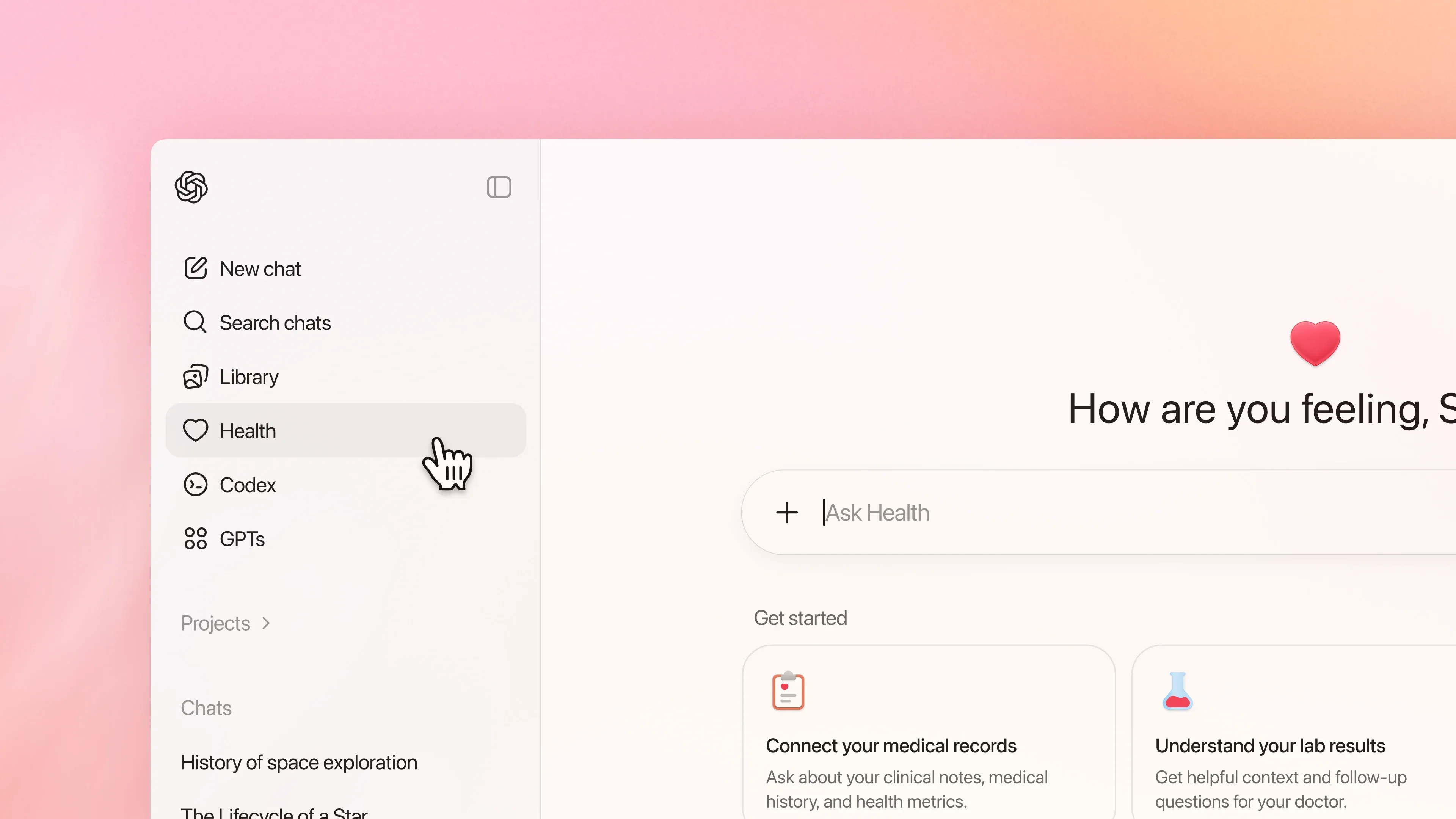
OpenAI launched ChatGPT Health on Wednesday, creating a dedicated medical assistant for the 40 million users who already consult the AI daily for health questions.
The specialized health mode connects to Apple Health and MyFitnessPal, with medical records accessible through b.well's secure network in the United States. Users can upload lab reports, track cholesterol trends, and prepare questions for doctor appointments with personalized context from their health data.
ChatGPT Health operates in a separate, encrypted environment with isolated memory systems. Health conversations receive purpose-built encryption and won't train foundation models, addressing privacy concerns that surfaced after previous ChatGPT data leaks.
OpenAI developed the platform over two years with more than 260 physicians across 60 countries. The collaboration generated 600,000 feedback instances across 30 focus areas, shaping how the AI escalates urgent symptoms and communicates medical information.
The system uses HealthBench, an evaluation framework created with physician input that assesses responses based on safety, clarity, and appropriate care escalation rather than medical exam performance. This approach prioritizes supporting patient-clinician relationships over diagnostic accuracy.
Medical record integration currently works only in the United States, while the broader health mode excludes users in the European Economic Area, Switzerland, and the United Kingdom due to strict digital privacy regulations. OpenAI plans web and iOS availability within weeks after initial testing with early users.
ChatGPT Health explicitly avoids diagnosis and treatment recommendations. Instead, it helps users understand test results, compare insurance plans, and manage wellness routines while emphasizing professional medical consultation for serious concerns.
The launch follows OpenAI's January report showing 40 million Americans use ChatGPT daily for health guidance, with rural areas and hospital deserts accounting for disproportionate query volumes. About 70% of health-related messages arrive during evenings, nights, or weekends when traditional clinics are closed.
OpenAI faces ongoing lawsuits alleging ChatGPT contributed to drug overdose and suicide deaths, including cases where users reportedly bypassed safety controls. The company maintains Health includes enhanced safeguards and clear boundaries against providing medical advice.
Industry regulators appear receptive to health AI development. The FDA recently indicated wellness software and wearables won't face strict regulation if companies avoid "medical grade" claims, while Utah became the first state to permit AI-prescribed medication renewals.
ChatGPT Health represents OpenAI's most significant healthcare initiative to date, building on earlier moves including HealthBench's May 2025 debut, partnerships with Kenya's Penda Health, and high-profile healthcare executive hires throughout 2025.
Users can join the waitlist through ChatGPT's interface, with access initially limited to Free, Go, Plus, and Pro subscribers outside restricted regions. The platform will expand gradually as OpenAI refines the experience based on early user feedback.