
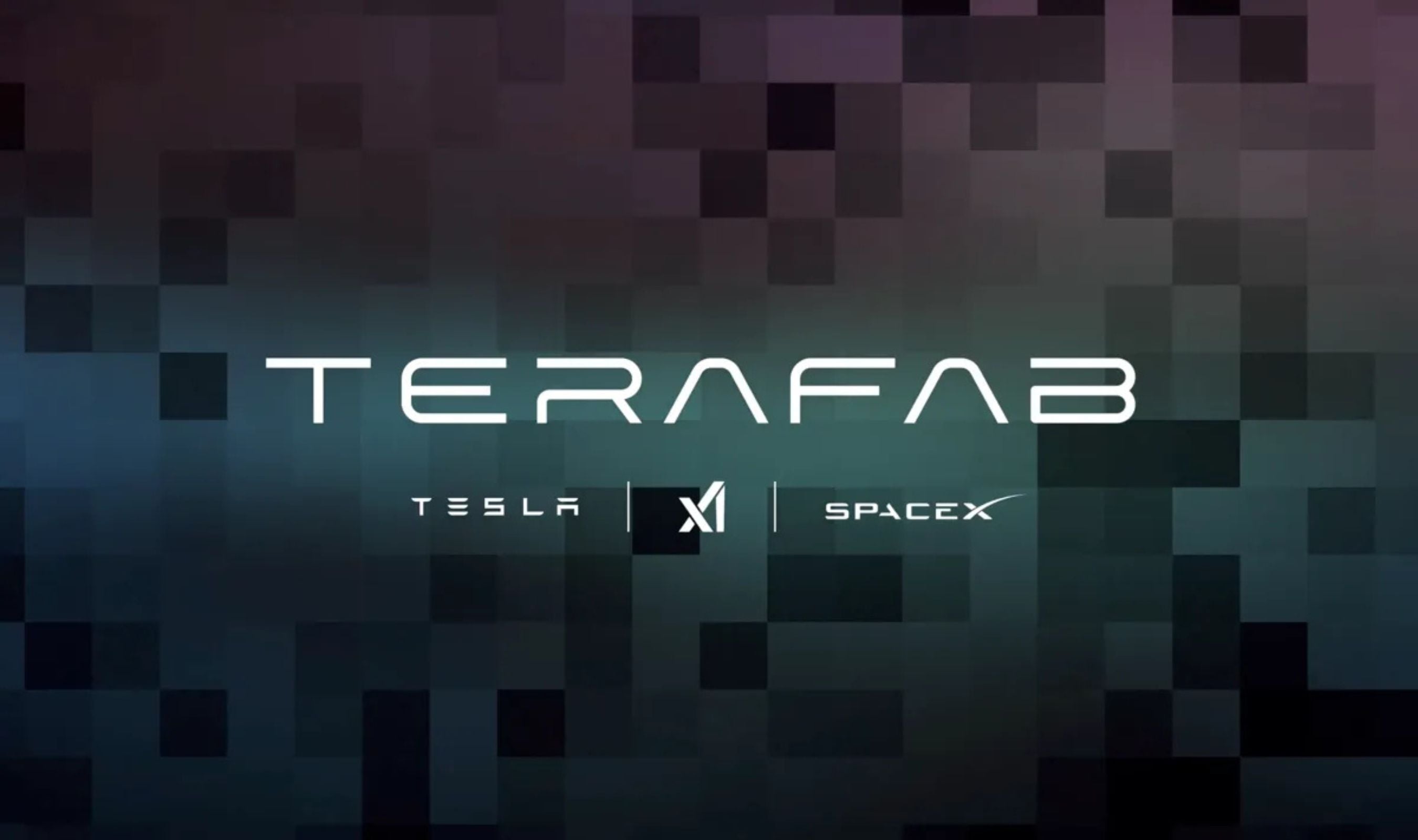
Elon Musk unveiled plans for what he calls "the most epic chip-building exercise in history," a $20-25 billion semiconductor facility that would dwarf current global production capacity.
The Terafab project, announced at an event in Austin's Seaholm power plant on Saturday night, aims to produce one terawatt of computing power annually, which Musk claims would be roughly double what he estimates as the current total U.S. electrical generation capacity.
Tesla, SpaceX, and xAI will jointly build what Musk described as "the largest chip manufacturing facility ever," combining logic, memory, and advanced packaging under one roof near Tesla's existing Gigafactory in Austin.
Construction work was already visible near the site last week according to local reports. The facility targets an initial output of 100,000 wafer starts per month with ambitions to scale to one million monthly wafer starts at full capacity.
For context, that full-scale target would represent roughly 70% of TSMC's entire current global output, from a single facility operated by companies that have never fabricated chips before.
"We either build the Terafab or we don't have the chips," he said during the announcement.
Musk claims existing semiconductor manufacturers produce only about 2% of what his companies need across all projects.
"We need a high‑powered chip designed for space that takes into account the harsher environment."
Terafab will actually consist of two separate fabrication plants according to Musk's Sunday clarification on X. One will produce inference chips for Tesla vehicles and Optimus humanoid robots, while the second will manufacture D3 chips custom-designed for orbital AI satellites operating in space environments.
The project's most striking feature is its planned distribution: 80% of Terafab's compute output will be directed toward space-based orbital AI satellites powered by solar energy, with only 20% allocated for ground-based applications including Tesla's autonomous vehicles and robotics programs.
"We're starting a galactic civilization," Musk declared during the launch event.
He envisions billions of robots helping build and operate the facility while supporting interplanetary ambitions including cities on Mars and travel to other star systems.
The Austin-area facility will focus on chip design as part of the larger Terafab initiative, which Musk says will eventually support between 100 and 200 billion custom AI and memory chips annually. Volume production is projected for 2027 according to some reports.
SpaceX recently merged with xAI ahead of a potential public listing that could value the company around $1.75 trillion. The Terafab announcement comes as Tesla continues developing its Full Self-Driving software, Cybercab robotaxi program, and Optimus humanoid robot line, all requiring massive computing resources currently constrained by supplier limitations.