
Motional targets commercial driverless robotaxi service in Las Vegas by late 2026, pivoting to an AI-first architecture after pausing operations in 2024. The Hyundai-Aptiv joint venture will begin trial runs early this year with human safety operators before removing them entirely.
Hyundai Motor Group's autonomous driving subsidiary announced the reboot during a January 8 briefing at its Las Vegas technical center. CEO Laura Major said the company made a "hard decision" to pause commercial activities in 2024 to rebuild its system around artificial intelligence. Motional plans to launch Level 4 autonomous service using Hyundai's IONIQ 5 electric vehicles.
The shift moves Motional from traditional rule-based systems to an end-to-end AI architecture. The company will deploy a Large Driving Model that processes data from multimodal sensors including cameras, LiDAR, and radar. This approach positions Motional between Waymo's rule-based systems and Tesla's camera-only E2E learning methods.
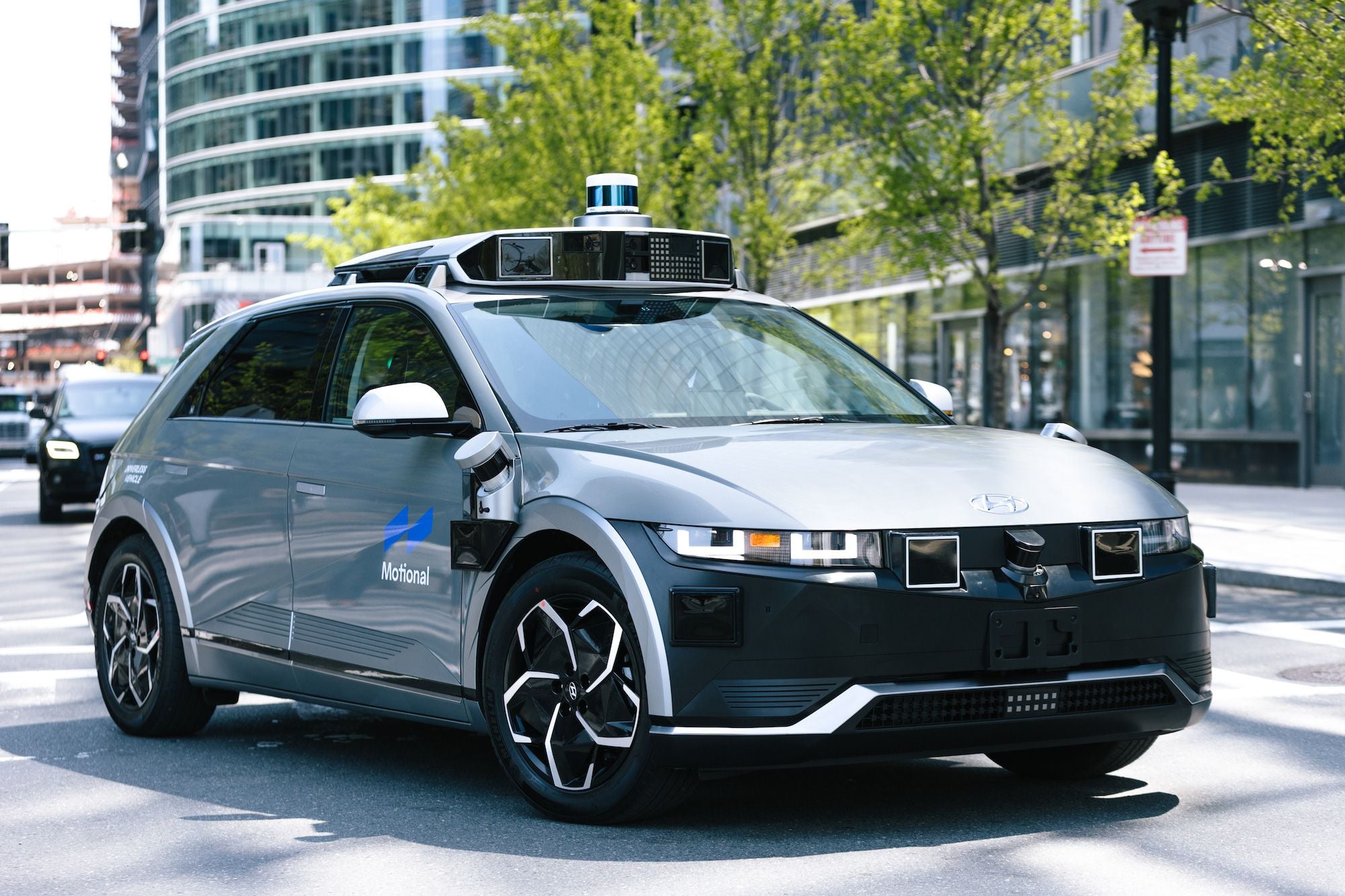
Motional has logged over 130,000 public rides through Lyft and Uber partnerships, accumulating more than two million autonomous miles without a single at-fault incident. The company uses 13 cameras, 11 radars, and five LiDARs on its IONIQ 5 robotaxis for 360-degree sensing in urban environments.
Hyundai increased its stake in the joint venture to approximately 86 percent through additional capital injections. The original 2020 partnership with Aptiv involved a $4 billion investment, with Hyundai reportedly adding another $1 billion after Aptiv reduced its financial backing. Motional underwent a 40 percent workforce reduction in May 2024, dropping from 1,400 employees to fewer than 600.
The Las Vegas launch serves as a strategic proving ground before potential expansion to Pittsburgh. The city's complex road environment and high tourism traffic provide challenging validation conditions. Motional will initially operate with human safety operators for employees before opening service to the public through an unnamed ride-hailing partner.
Competition in the robotaxi market intensified after CES 2026, with Nvidia announcing plans to launch a service with Mercedes-Benz in the first quarter. Motional positions safety and cost efficiency as its core advantages against established players like Waymo and Tesla. The company developed a Pedestrian Yield Intent tool that autonomously handles about 95 percent of curb-side pedestrian scenarios.
Motional's technology will integrate with Hyundai's broader autonomous driving strategy, including the 42dot subsidiary acquired in 2022. The parent company aims to apply robotaxi operational experience to its software-defined vehicle development. Hyundai executives said they are reviewing potential service launches in South Korea and other regions based on accumulated technology and competitiveness.
The AI-first reboot addresses scalability challenges that hindered earlier autonomous driving efforts. Traditional systems using specialized models for different tasks struggled with generalization to new cities. Motional's unified AI foundation model aims to reduce deployment time and costs while maintaining safety standards through minimal rule-based guardrails.
Media test drives in Las Vegas demonstrated smooth throttle and brake control with precise stops at intersections. The system showed strong situational awareness during lane changes and signal transitions. However, conservative driving behavior on uneven surfaces and challenges in construction zones highlighted areas for refinement before full commercialization.