
A bad Windows Update driver can turn a stable PC into a crashing, blue-screening mess. Microsoft is finally building a kill switch for those moments. The company announced Cloud-Initiated Driver Recovery, a new feature that automatically rolls back problematic drivers delivered through Windows Update to a previously working version. No Safe Mode hunting.
No manual driver uninstalls. No waiting for OEMs to publish a fix.
Currently, when Windows Update distributes a driver that causes crashes, boot failures, or instability, the burden falls entirely on the user or the hardware vendor. Users have to manually roll back the driver or enter recovery environments.
Vendors have to submit an updated driver and wait for it to pass review. "This creates a gap where devices may remain on a low-quality driver for an extended period," Microsoft said in a Hardware Dev Center blog post.
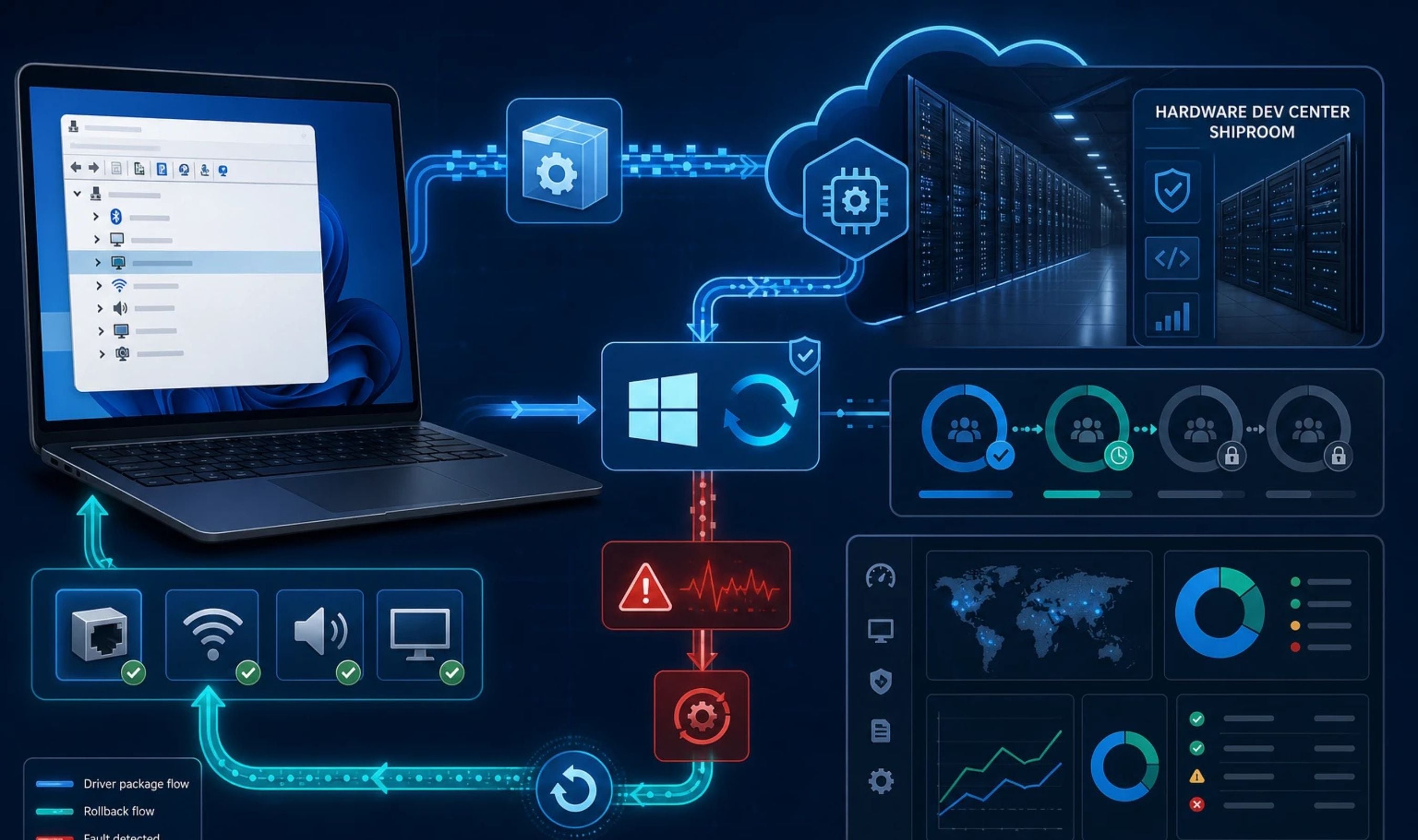
Cloud-Initiated Driver Recovery closes that gap. When Microsoft's Driver Shiproom identifies a driver as having quality issues during rollout testing. The company can trigger a cloud-based recovery action.
Windows Update receives the rollback instructions and replaces the bad driver with the last known-good version or the next best approved release.
"Microsoft can now initiate a recovery action from the cloud, replacing the problematic driver on affected devices without requiring manual intervention from the user or the hardware partner," said Garrett Duchesne, principal program manager at Microsoft, in a statement to The Verge. The system operates through existing Windows Update infrastructure. No additional software, recovery applications, or system agents are required.
Microsoft handles the entire process end-to-end.
There is one limitation. The automatic rollback only works when Windows Update already has a validated fallback driver available for the affected hardware.
If no approved replacement exists. Users may still need to troubleshoot manually or wait for a vendor update.
Testing and verification began this month and will run through August. Microsoft plans to start rolling out the feature to Windows PCs in September 2026. The feature is part of Microsoft's broader push to improve Windows 11 reliability and reduce the disruption caused by updates. Hardware partners will be notified through existing communication channels whenever a recovery action is taken on one of their submissions.
After a recovery, partners can submit an updated driver through the standard Hardware Dev Center publishing process.