
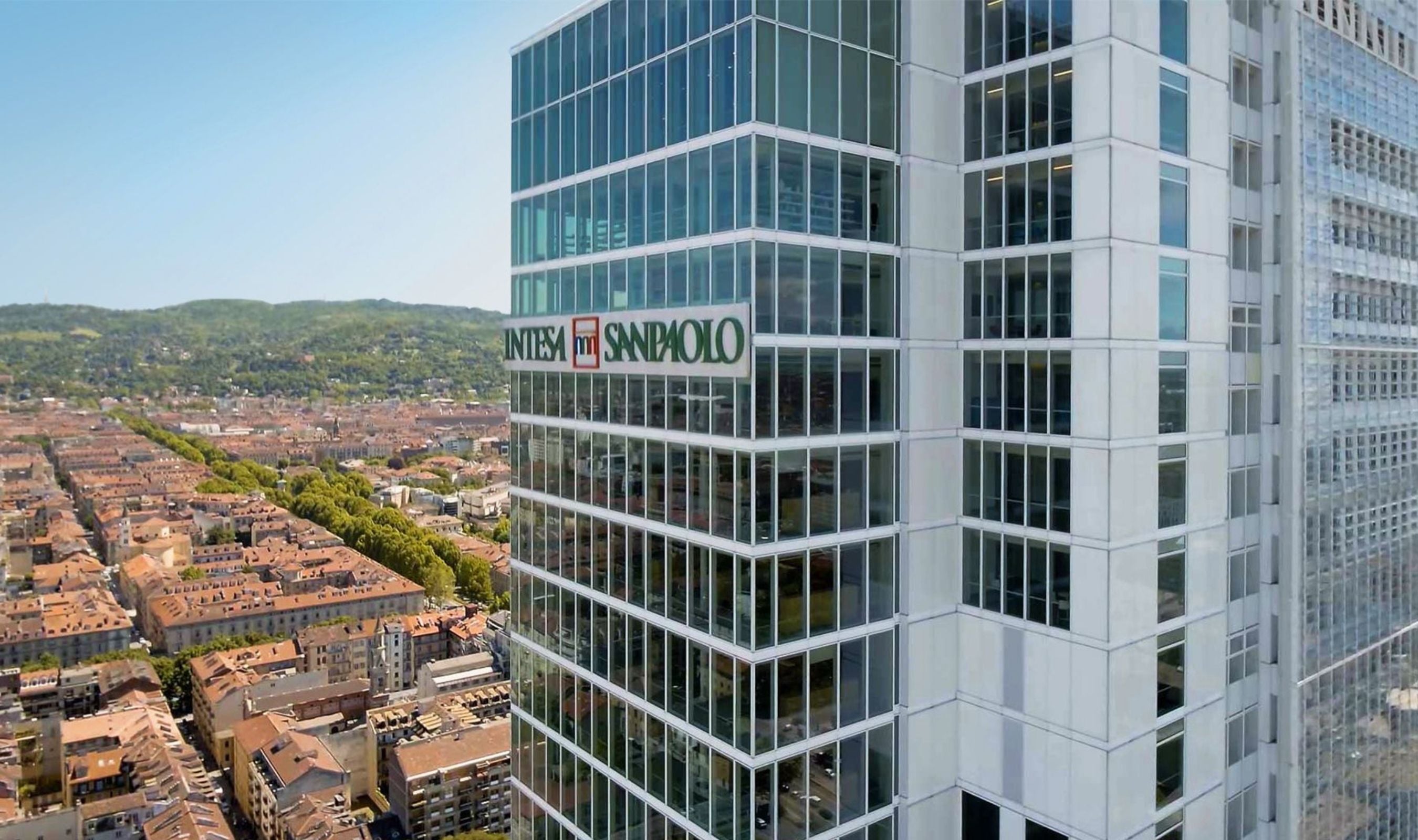
Italy's largest bank announced Thursday it completed the cloud shift of its core IT systems, a multi-year project carried out with Google Cloud and telecom operator TIM. Over 800 applications were moved to Google Cloud infrastructure and an equal number were decommissioned from its physical headquarters, the companies said in a joint statement. Zero major incidents were reported.
The migration relied on two Google Cloud regions in Turin and Milan, hosted inside TIM's data centers. The setup handled massive workload volumes while maintaining "high security standards, speed, and minimum latency between cloud environments and legacy systems," according to the statement.
Intesa did not jump straight in. In 2023, it launched Isybank, a cloud-native digital bank built with British tech firm Thought Machine. By moving millions of customers to Isybank, the lender used it as a testing ground for the full transition.
Massimo Proverbio, Intesa Sanpaolo's Chief Data, AI and Technology Officer, said the project allowed the lender to hit all its 2022-2025 goals and set up for its 2026-2029 business plan. "By partnering with Google Cloud and TIM, we changed technology, reduced costs and, at the same time, laid the foundations for building Isytech, the cloud-native digital technology platform serving customers and colleagues across our Group," Proverbio said. Intesa joins a small group of European banks pursuing large-scale cloud migration, including Denmark's Danske Bank, Britain's Lloyds and HSBC, and Spain's Santander and BBVA.
Replacing mainframe-based core banking systems, often a tangle of software stacks accumulated through decades of mergers, is one of the hardest technology projects a lender can attempt. Legacy IT puts traditional financial institutions at a disadvantage against cloud-native challengers, and European Central Bank supervisors have repeatedly flagged weak legacy systems as a source of operational and cyber risk.
Elio Schiavo, Chief Enterprise & Solutions Officer at TIM, called the project "a highly significant achievement" for TIM Enterprise, adding that the migration demonstrated the company's ability to "govern end-to-end projects and accompany businesses and public organizations on innovation paths that combine technological openness and strategic autonomy."
Intesa now says its infrastructure is AI-ready, faster, and more secure. The next phase: building on this foundation through 2029 as part of its 2026-2029 business plan.