

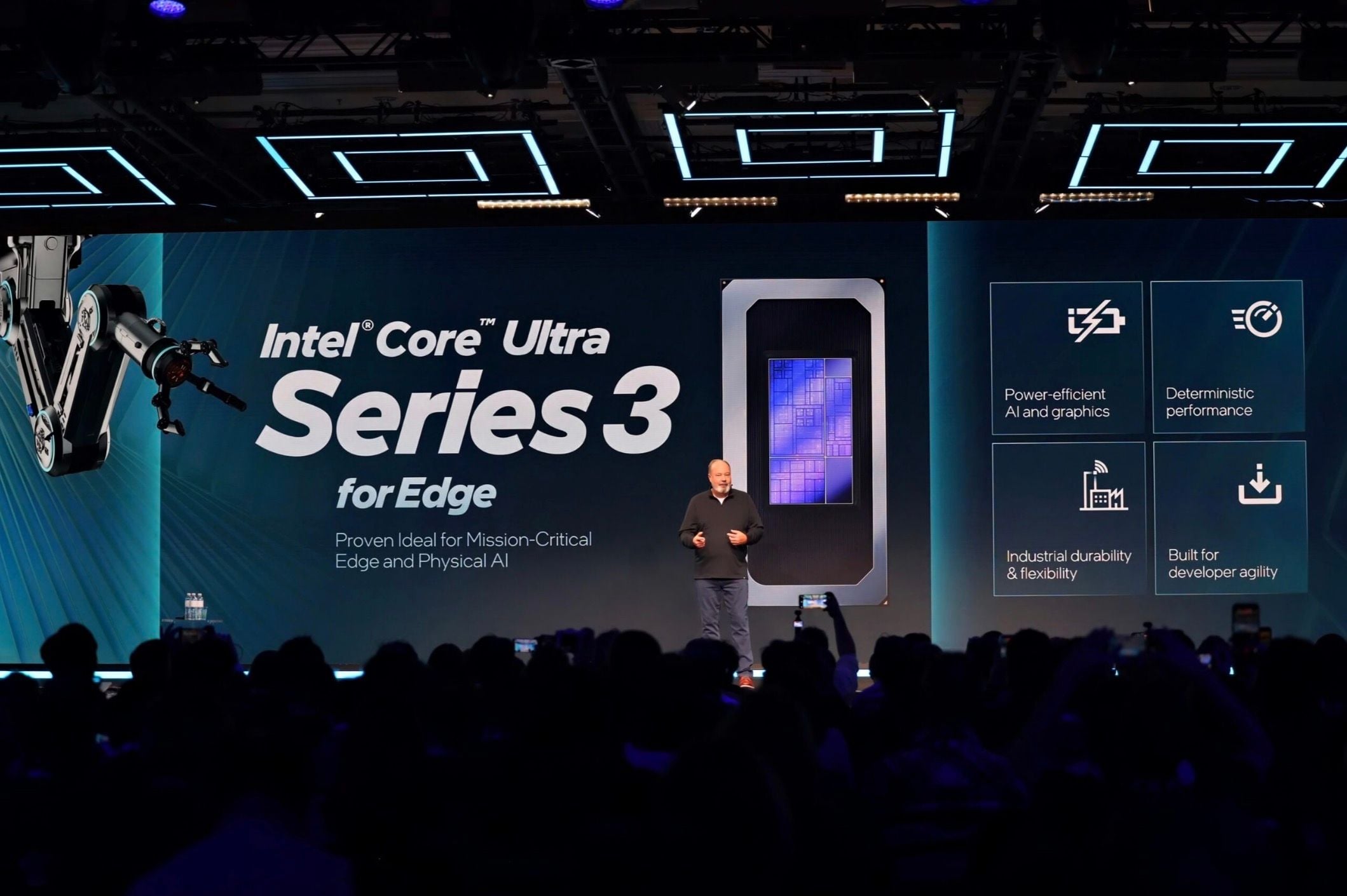
Intel unveiled its Core Ultra Series 3 processors at CES 2026, promising 76% faster gaming performance than its previous Lunar Lake chips. The Panther Lake architecture delivers up to 60% better CPU performance and targets handheld gaming devices.
Pre-orders for laptops with the new chips begin today, January 6, with global shipping starting January 27. Over 200 laptop designs from global partners will feature the Series 3 processors, according to Intel's CES announcement.
The top-end Core Ultra 388H features 16 CPU cores with a 5.1GHz maximum frequency and Intel Arc B390 graphics with 12 Xe3 GPU cores. Intel claims this configuration can run Battlefield 6 at 147fps on 1080p Overkill settings using integrated graphics alone.
Panther Lake's graphics architecture separates GPU cores onto their own tile, providing 50% more GPU cores and double the cache compared to Lunar Lake. The new XeSS 3 upscaler includes multi-frame generation technology similar to Nvidia's Maxwell cards.
Battery life improvements represent another major focus, with Intel promising up to 19 hours of video streaming and 9 hours of continuous Microsoft Teams meetings, according to company claims. The 18A manufacturing process uses new RibbonFET gates for more efficient power delivery.
Intel also confirmed plans for a dedicated handheld gaming platform based on Panther Lake chips. The company aims to challenge AMD's dominance in the portable gaming PC market with this specialized hardware.
AI performance reaches up to 180 TOPS total compute power according to Intel, surpassing Lunar Lake's 120 TOPS. The neural processing unit delivers 50 TOPS specifically for AI workloads, positioning Panther Lake as Intel's fastest consumer chip for AI processing.
Wi-Fi 7 support comes standard, though Thunderbolt 5 connectivity remains absent. The chipmaker described its 18A process as "the most advanced semiconductor process ever developed and manufactured in the United States."
Competition intensifies as Qualcomm launched its Snapdragon X2 Plus chips on the same day, also emphasizing battery life improvements. Intel senior VP Jim Johnson called 2026 "one of the most interesting times" he's experienced at the company.
The gaming performance claims depend heavily on XeSS 3's frame generation technology, which creates artificial frames to boost perceived performance. Real-world efficiency gains remain unverified until independent testing begins later this month.