
Agentic AI is flipping the data center math, and Intel used its Computex 2026 keynote to argue that the CPU is coming back as the centerpiece.
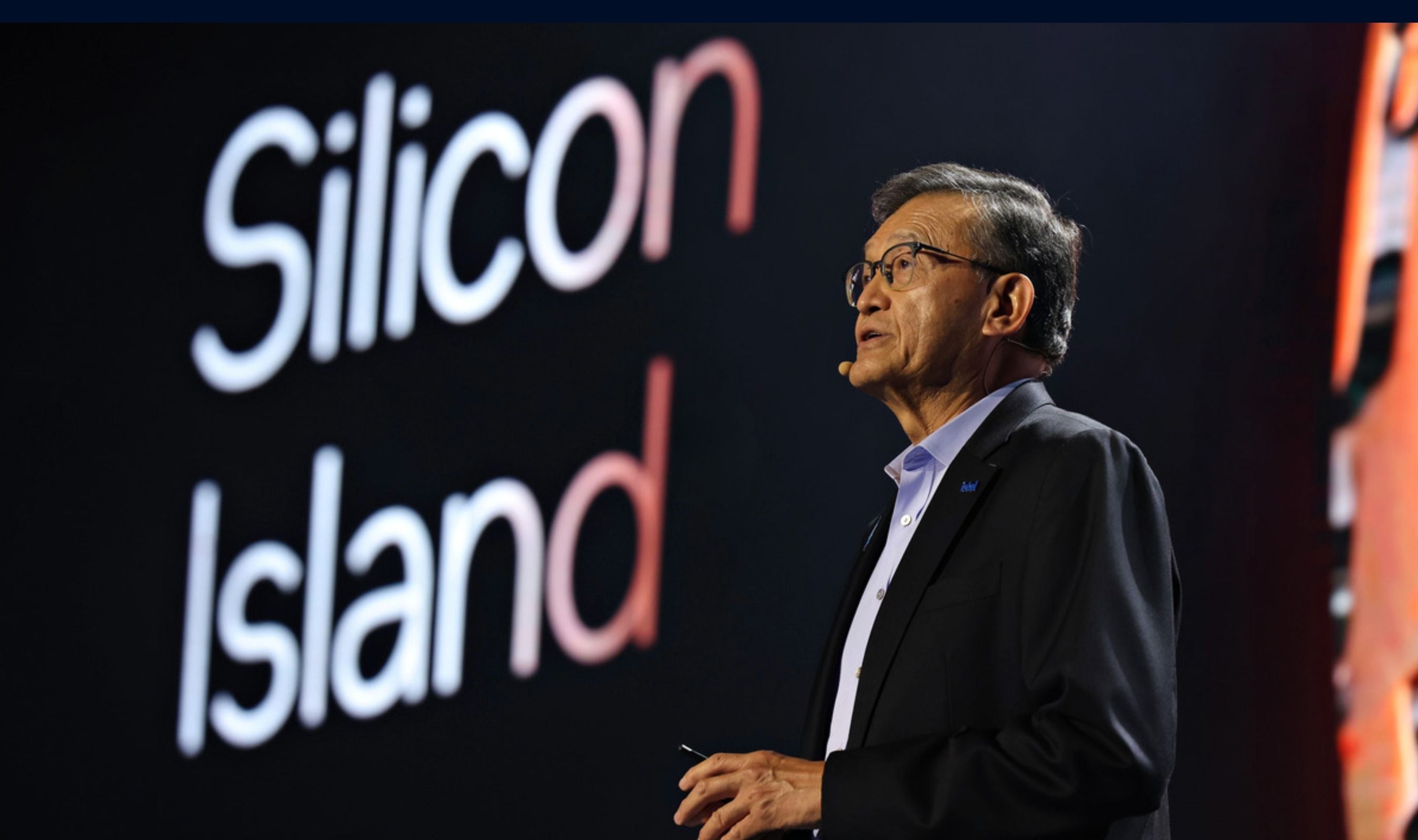
CEO Lip-Bu Tan took the stage in Taipei on June 1 as the sole x86 vendor keynoting this year -- AMD sat out -- and delivered a 60-minute address titled "The Next Era of AI" that was less about new hardware and more about why Intel's silicon is suddenly essential again. The venue was packed, and for good reason: the company that largely missed the GPU-driven AI boom is now betting that agentic workloads change the equation.
Tan argued that agentic AI is fundamentally different from the training-dominated AI of the last two years. Where training required a 1:8 CPU-to-GPU ratio, agentic workloads shift that to 1:1 or better, because CPUs orchestrate the reasoning, planning, and tool execution that agents need.
One rack of Intel's new Xeon 6+ processors can run up to 150,000 agents, according to Intel's data center group.
Intel announced the Xeon 6+ (codenamed Clearwater Forest) at the start of Computex, its first data center CPU built on the Intel 18A process. It packs 288 e-cores and a 576MB L3 cache. The company also confirmed that next-gen big-core Xeon Diamond Rapids won't arrive until 2027, and previewed Crescent Island, a data center GPU based on Xe3P architecture shipping in a 350-watt PCIe card form factor. But the keynote's centerpiece was the concept Intel calls the "Intelligence Center" -- rackscale infrastructure purpose-built for inference and agentic AI. Tan brought Foxconn Chief Product Officer Jerry Hsiao on stage to announce an expanded partnership on rackscale AI systems, Intel's answer to similar initiatives from Nvidia and AMD.
"Picking the right silicon for your needs is critical," Tan said during the keynote, as reported by ServeTheHome.
Tan also demonstrated hybrid AI computing with Perplexity CEO Aravind Srinivas, showing how sensitive data stays on local Intel chips while non-sensitive tasks go to cloud models. Perplexity created the first hybrid local server for inference orchestration, dynamically scaling between local and cloud environments based on device capabilities. On the client side, Intel recapped its existing product stack rather than announcing new silicon. The Core Ultra Series 3 -- first product built on Intel 18A -- has already hit 325 designs across consumer and commercial segments.
Alex Katouzian, Intel's new leader for Client Computing and Physical AI, reintroduced the Core Series 3 (debuted in April) and highlighted the Arc G3 series for handheld gaming, which will be available later this month powering devices like the Acer Predator Atlas 8.
Intel's edge ecosystem now counts over 4,000 partners with more than 100,000 deployments in manufacturing, robotics, and retail. The company plans to extend that into physical AI form factors including autonomous machines and robotics.
Tan closed by announcing Intel as the official compute partner of McLaren Racing, a symbolic cap on a keynote that was equal parts vision and partnership showcase. The company is also collaborating with SambaNova, Vista Equity Partners, and Cambium Equity on cost-efficient inference solutions, with SambaNova's SN-50 Rack -- combining Intel Xeons with SambaNova NPUs -- shipping later this year. For a company that spent the last two years on the sidelines of the AI conversation, Intel's Computex 2026 keynote was a declaration that the next phase belongs to the CPU.