
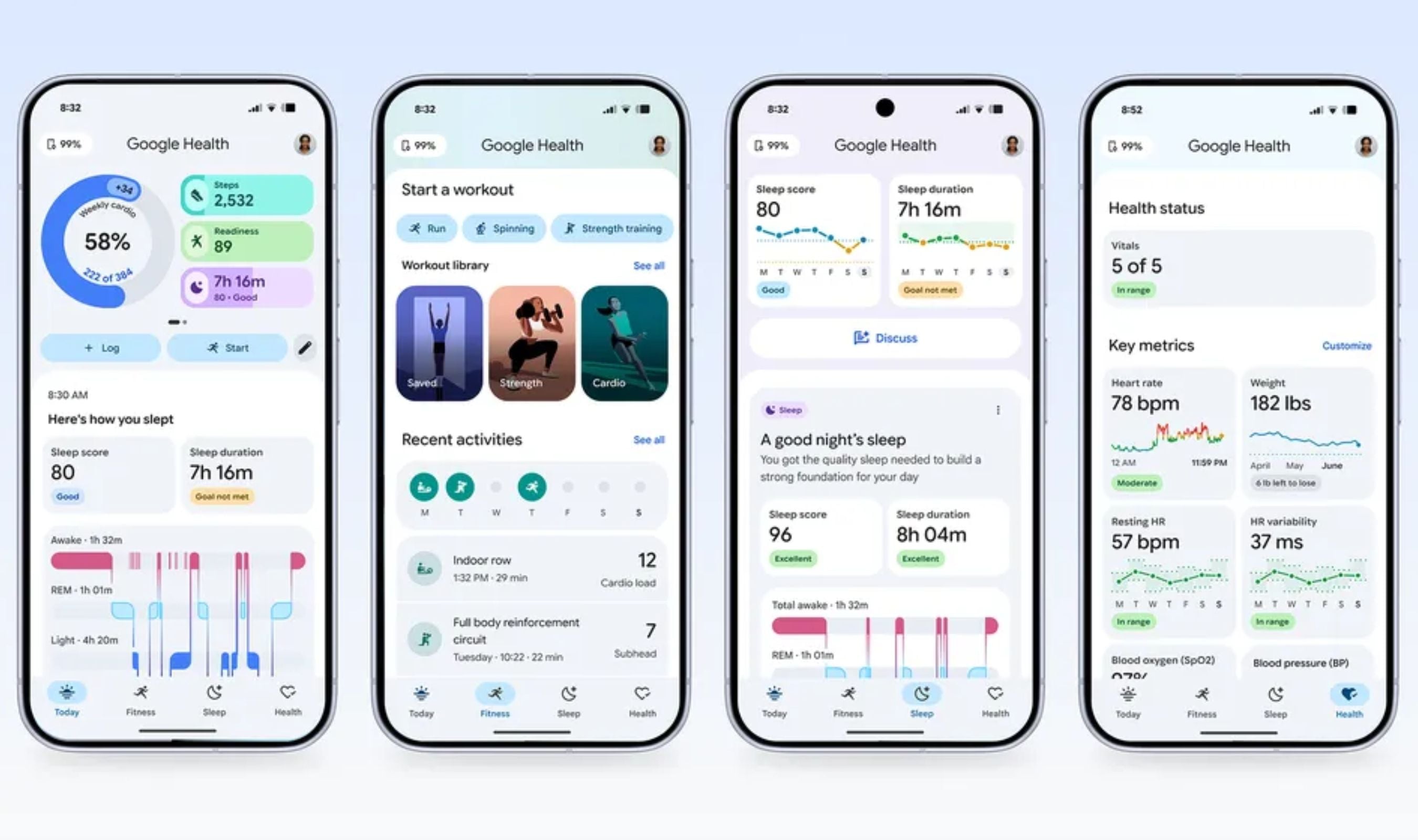
Google's replacement of the Fitbit app with Google Health has gone so poorly the company is now publishing a public roadmap of bug fixes and feature promises, a rare move that signals just how badly the rollout has backfired. On May 19, Google began force-updating the Fitbit app on Android and iOS into Google Health, a fully redesigned app built around an AI coach powered by Gemini. The switch coincided with the launch of the Fitbit Air, a screenless fitness band.
Version 5.0 is required to set up the new device, meaning users had no choice but to upgrade. Almost immediately, users revolted. Complaints on Reddit and the Play Store paint a picture of an app that shipped unfinished. Runs were mislabeled as generic workouts. Sleep scores went missing in parts of the app. AI summaries were verbose and sycophantic. The food tracker broke.
Data points were inconsistent between different sections of the app. One App Store reviewer wrote food logging is "so difficult I will not use it." The visual redesign drew its own criticism, with users calling the interface noisy and hard to parse. Google also removed the monthly sleep animal feature that assigned users to one of six animals based on sleep metrics, a small but beloved part of the Fitbit experience.
Sleep Profile is gone entirely. The company had warned some features would not carry over, but the scale of the backlash suggests many users felt blindsided.
Google published a support center roadmap on May 27 detailing more than 39 fixes and improvements planned for the weeks ahead. Some fixes are rolling out immediately: runs that were incorrectly labeled as general workouts will be corrected this week, and split times will be added to run summaries. The company is also promising to make AI coach messages more concise, add custom food logging, improve sleep score display, and bring back hourly step goal charts.
The roadmap commitment is an unusual public posture for Google, which has historically been slow to acknowledge app migration failures. The company's transition from the Nest app to Google Home took years to reach feature parity, and the Nest app still hasn't been fully retired. For Google Health Premium subscribers, costs remain unchanged at $9.99 per month or $99.99 per year. New users get a three-month trial after updating. But the subscription offering, which includes access to the Gemini-powered Health Coach, is part of what's fueling the backlash. Users who never asked for an AI assistant are now stuck scrolling through AI-generated summaries to find basic metrics.
Data from removed features like Sleep Profile, monthly sleep animals, and skin temperature minute-by-minute readings will be available for download or deletion until July 15, after which Google says it will begin deleting that data from its systems.