
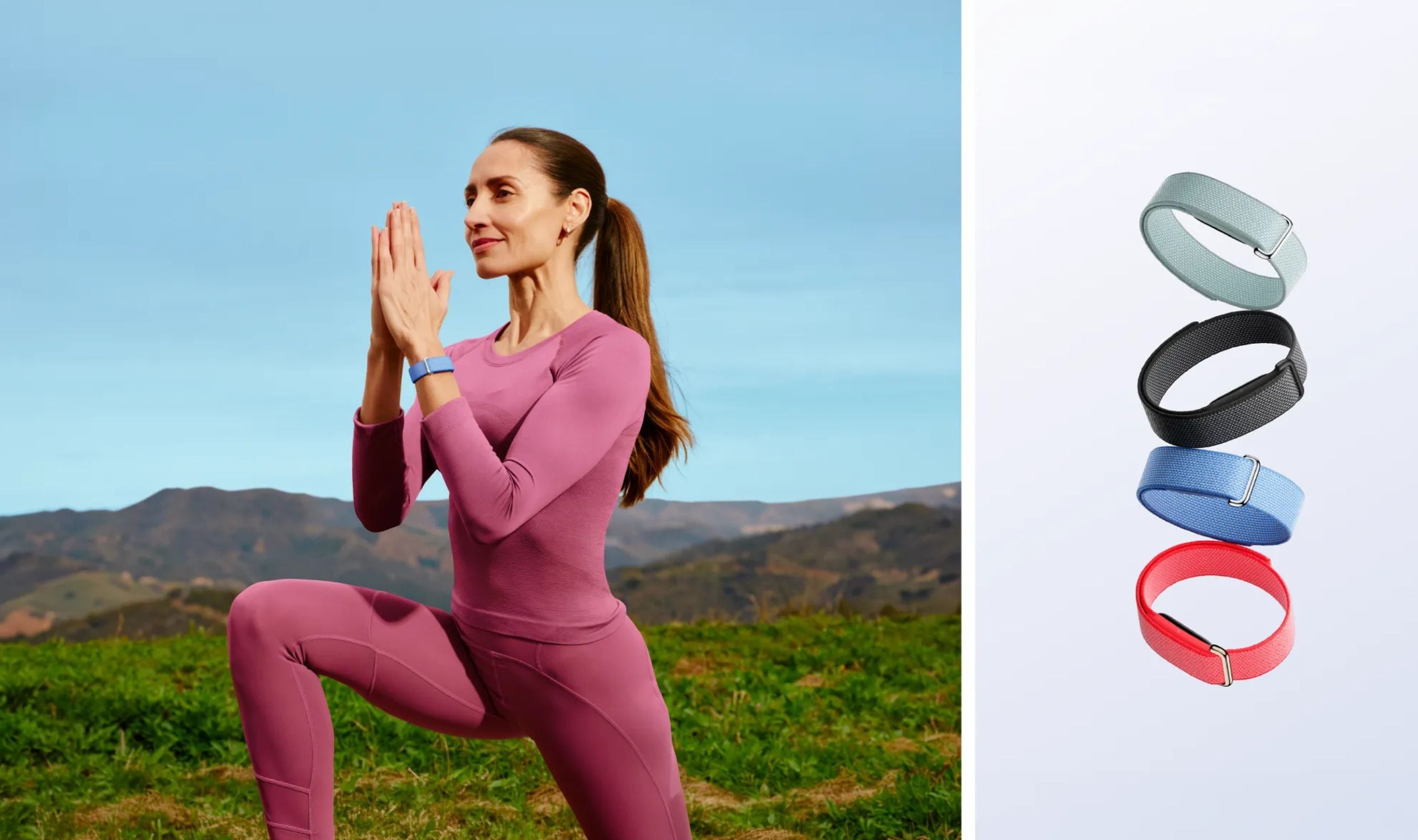
Alphabet Inc.'s Google on Thursday launched the Fitbit Air, a $99 screenless fitness band that takes direct aim at Whoop and other display-free wearables, while simultaneously retiring the Fitbit app name after 15 years in favor of Google Health. The pebble-shaped device straps to the wrist with no screen and no physical buttons. A battery and sensor pack underneath handles heart rate tracking, sleep monitoring, step counting, and activity recognition. The device automatically detects and logs common workouts, and users can voice-log meals and activities through the companion app.
Fitbit Air goes up for preorder today at $99.99 via the Google Store, with shipping starting May 26. A Stephen Curry Special Edition, featuring a water-resistant coating and raised interior print, runs $129.
Both include a three-month trial of Google Health Premium.
Google says the device lasts about a week between charges, with 90 minutes of charging bringing it to full. It comes in four colors (obsidian, fog, lavender, berry), and additional bands start at $35. The business model is the differentiator. Fitbit Air costs $100 upfront with an optional $10 per month Google Health subscription for premium features.
Whoop doesn't charge for hardware but requires a $200 annual subscription. Oura's ring starts at $349, and Apple's cheapest smartwatch (the SE 3) is $249.
Rishi Chandra, who runs Google's wearables and health division, told The Hindu BusinessLine the Fitbit Air marks the beginning of a resurgence for Fitbit after a several-year lull in launches.
The Fitbit name disappears from software
Starting May 19, the Fitbit app begins rolling out as Google Health on both Android and iOS via an OTA update, with the transition completing by May 26. The Google Fit app will migrate to the new platform later this year.
Existing workout logs transfer automatically.
Google Health introduces an AI-powered Health Coach built on Gemini models, launching May 19. It also adds customizable dashboards, expanded social leaderboards for steps, and the ability to securely share health data with doctors and family.
Sleep tracking accuracy improves 15% over the previous Fitbit app's models thanks to upgraded machine learning. The app also features A-Fib detection and a daily Readiness score.
Google Health Premium costs $9.99 per month or $99.99 annually (up from $79.99 for Fitbit Premium). It's included at no extra cost with a Google AI Pro or Ultra plan.
Google has not confirmed whether existing Fitbit Premium subscribers will be automatically migrated. The Fitbit brand survives on hardware for now, with all existing devices still supported.
Fitbit held roughly 6% of the global wristband market in 2025, followed by Whoop at 2%, according to IDC. Xiaomi controlled about half the market.
"We're just getting started and will continue to make health more accessible and intuitive for everyone," Google said today.