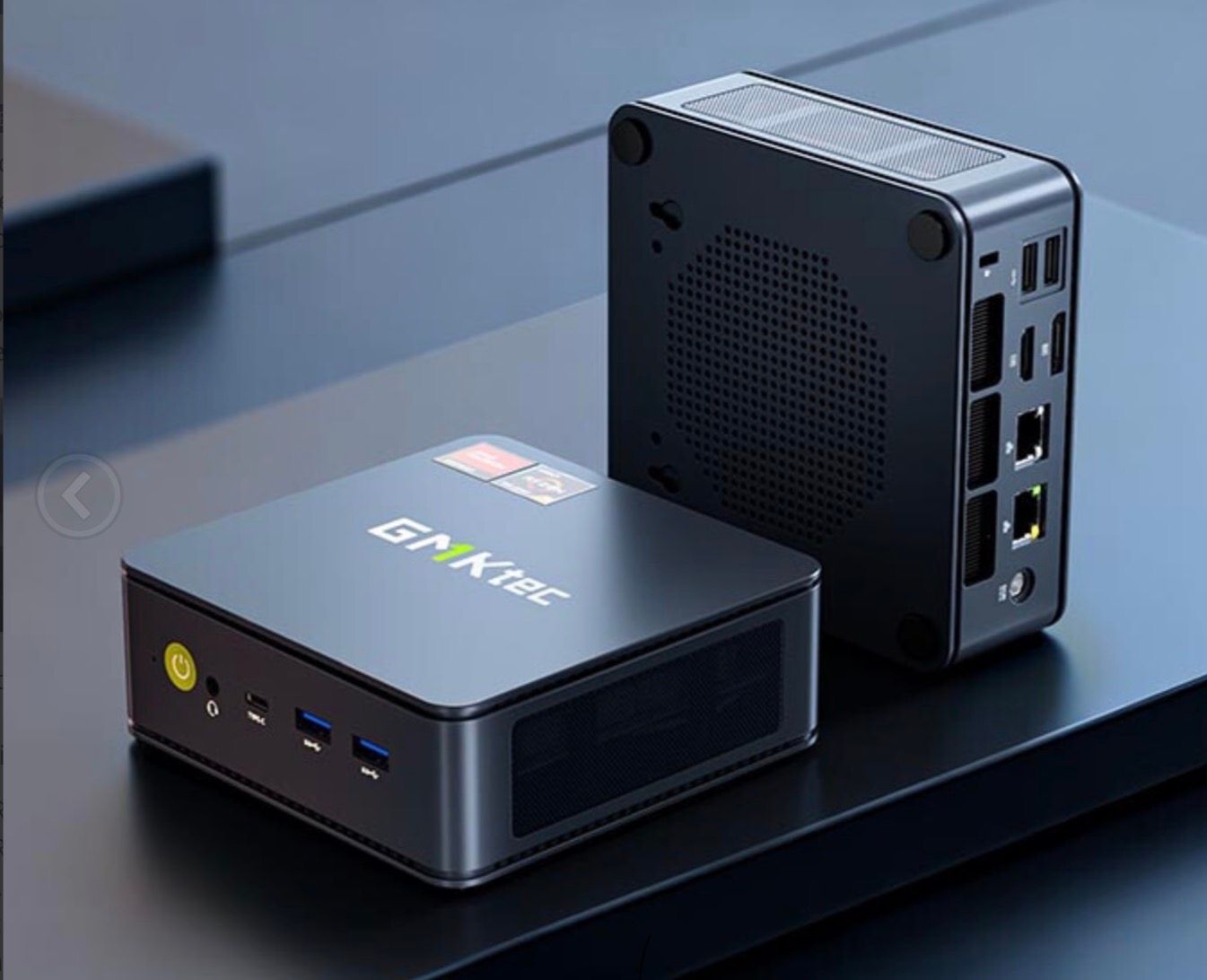
GMKtec's NucBox M5 Ultra mini PC delivers entry-level flexibility at $260 barebones, featuring AMD's Ryzen 7 7730U processor with dual 2.5GbE LAN ports and dual M.2 slots.
The system marks GMKtec's third iteration of the M5 platform, upgrading from the Zen 2 Ryzen 7 5700U in the original M5 to the Zen 4 Ryzen 7 7730U. While core counts remain at eight cores and sixteen threads, the new chip offers improved CPU and GPU clock speeds with better power efficiency.
Pricing starts at $249.99 for US buyers purchasing directly from GMKtec as a barebones system, according to Notebookcheck, though TechRadar reports $259.99. This configuration requires users to supply their own DDR4 SODIMM memory and Gen 3 NVMe storage. Fully configured models with 32GB RAM and 1TB storage cost $359.99 according to Notebookcheck, though TechRadar reports $489.99 for its review specification.
Dual 2.5GbE LAN ports distinguish the M5 Ultra from competing mini PCs, making it suitable for network appliance applications like hardware firewalls. The system supports up to 64GB of DDR4 memory across two SODIMM slots and includes two M.2 NVMe slots, though both operate at PCIe 3.0 speeds rather than Gen 4.
The AMD Ryzen 7 7730U represents an unusual choice in the mini PC market. Released in January 2023 as part of AMD's 7030 series Barcelo-R chips, the processor arrived around the same time AMD introduced its 7040-series with Zen 4 architecture at CES 2023. This timing limited the chip's adoption among system builders.
Technical limitations include DDR4 memory support instead of DDR5 and PCI Express 3.0 with 16 usable lanes. The system lacks USB4 connectivity, with USB 3.2 Gen 2 representing its fastest port option. GMKtec's M7 Ultra model reportedly addresses these limitations for users requiring newer standards.
Competing systems using the same processor remain scarce. Available alternatives include the AceMagic Kron Mini K1 at $408.49 for 32GB/1TB configuration via Amazon and the Kamrui E3B Mini PC priced at $479. Both alternatives lack the M5 Ultra's dual LAN ports and dual M.2 expansion.
Benchmark comparisons reveal performance inconsistencies. TechRadar testing showed the Alliwava U58 with AMD Ryzen 7 5825U outperforming the M5 Ultra by approximately 10% across multiple tests, despite both processors sharing similar core configurations and DDR4 memory support.
Physical construction utilizes plastic throughout the enclosure, with a fine paint finish that shows wear easily. GMKtec includes a VESA mounting bracket for rear-of-monitor installation, which helps protect the system while maintaining accessibility to front and rear ports.
Port distribution includes USB Type-A and Type-C options on the front panel, with additional Type-A ports on the rear. Video outputs consist of one HDMI and one DisplayPort connection. The system includes a label warning users about Windows 11 update delays when first connecting to networks.
Internal access follows GMKtec's established design approach. Removing the top panel reveals four screws securing a plastic fan mount, which provides cooling for the system. Once removed, both memory slots and M.2 storage locations become accessible for upgrades.
The M5 Ultra's value proposition centers on flexibility rather than raw performance. For users with existing DDR4 memory and NVMe storage, the barebones configuration offers significant cost savings. The dual LAN ports and storage expansion options enable multiple use cases beyond basic desktop computing.
Market positioning places the M5 Ultra as a logical replacement for older desktop systems rather than a cutting-edge performance solution. The system's combination of affordable pricing, upgrade flexibility, and network connectivity options creates a niche for budget-conscious users requiring specific hardware features.
GMKtec's approach highlights the ongoing demand for DDR4-based systems in the entry-level market. While DDR5 adoption accelerates across the industry, cost-sensitive segments continue to benefit from mature DDR4 technology and available component inventories.
The M5 Ultra demonstrates how specialized features can differentiate products in competitive markets. Dual 2.5GbE ports remain uncommon in budget mini PCs, creating opportunities for network-focused applications where traditional desktop systems would require additional hardware.
Future mini PC development will likely follow two paths: premium systems adopting the latest connectivity standards and DDR5 memory, while budget models continue leveraging established technologies with targeted feature enhancements. The M5 Ultra represents the latter approach executed with specific user needs in mind.