
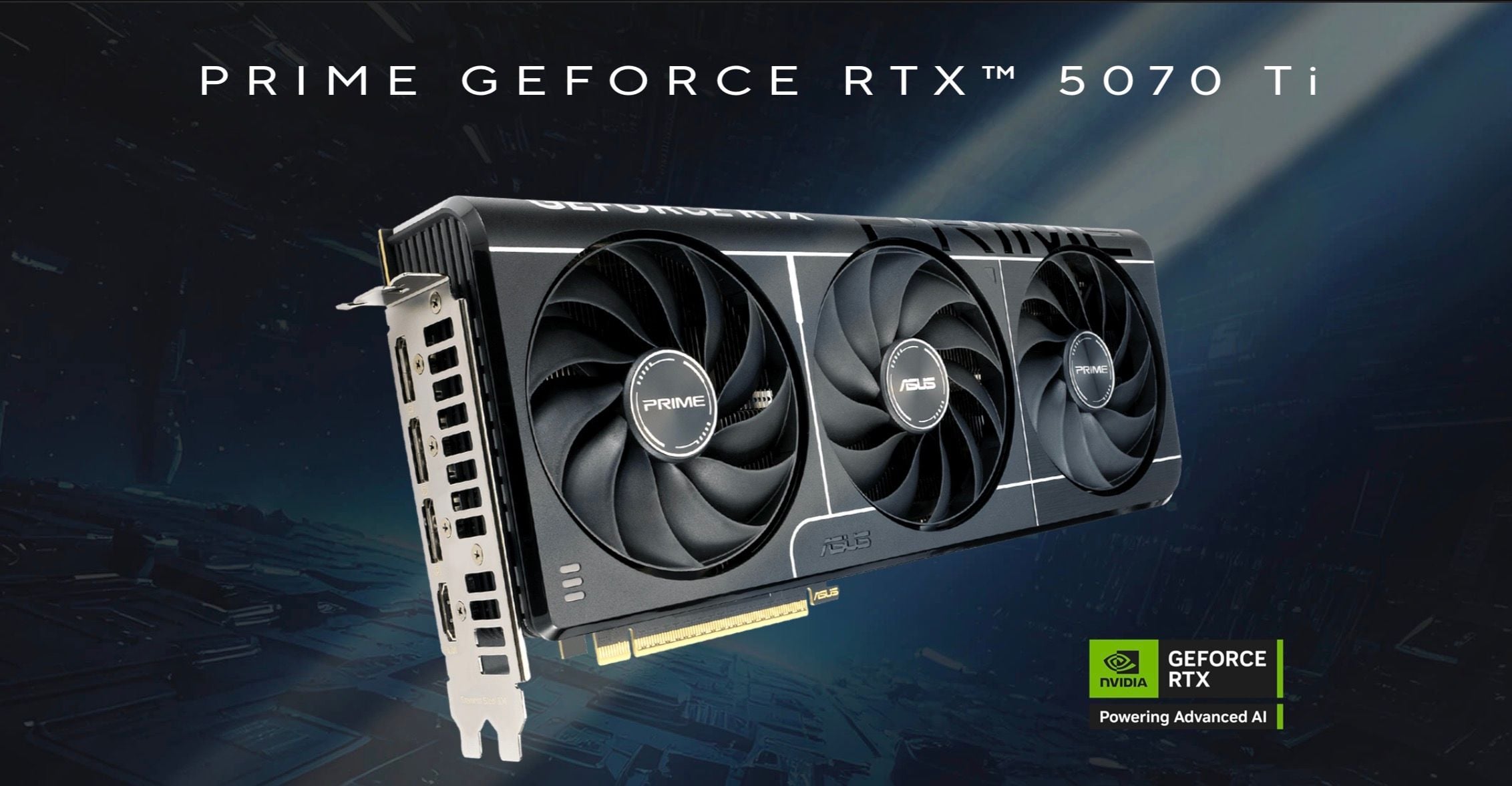
ASUS clarified that GeForce RTX 5070 Ti and RTX 5060 Ti 16GB graphics cards remain in production despite severe memory shortages. The statement counters reports that NVIDIA's board partner had designated the GPUs as end-of-life.
Memory supply constraints have temporarily limited production output and restocking cycles, ASUS confirmed. The company said it will continue supporting both models and is working with partners to stabilize supply as conditions improve.
NVIDIA separately stated it continues shipping all GeForce SKUs while working with suppliers to maximize memory availability. The GPU maker acknowledged strong demand for RTX GPUs alongside constrained memory supply.
The clarification follows Hardware Unboxed reporting that ASUS advised the RTX 5070 Ti 16GB was no longer available or being produced. ASUS attributed that information to incomplete details from a PR representative.
Current market conditions show the RTX 5070 Ti selling for around $1,100 from third-party vendors, a 50% markup over its $749 MSRP. US prices for the GPU have climbed from approximately $730 in November to $830 this month.
Australian retailers report similar price increases from $1,200 AUD to $1,400 AUD. Stores there cannot order new 5070 Ti stock through partners or distributors, with shortages expected through at least the first quarter.
The broader DRAM crisis extends beyond graphics cards to affect SSDs, hard drives, and smartphones. High-capacity M.2 NVMe SSDs have seen 60% price increases in recent weeks, with 2TB WD drives jumping from $230 to $370.
Memory manufacturers Samsung, SK Hynix, and Micron are allocating bulk resources to AI data centers rather than PC components. This supply shift creates cascading price effects across consumer electronics.
NVIDIA reportedly prioritizes GPU production based on revenue per gigabyte calculations. According to Gigabyte CEO Eddie Lin, the company focuses on segments delivering higher revenue contributions per memory unit.
This strategy makes 16GB models like the RTX 5070 Ti and 5060 Ti less attractive for mass production. An RTX 5060 Ti with 8GB VRAM reportedly delivers $50 per gigabyte revenue versus $32 for a $500 card with 16GB.
The RTX 5070 Ti has fallen out of Amazon's top 10 best-selling GPUs in the US. AMD's competing Radeon RX 9070 XT has also dropped from top positions amid price increases.
AMD reportedly delays next-generation GPU launches until 2027 to avoid competing with NVIDIA's RTX 6000 series. The memory shortage and larger VRAM configurations would make next-gen cards significantly more expensive.
NVIDIA may reduce RTX 50 series production by up to 40% in 2026 due to ongoing memory constraints. The company faces pressure to allocate silicon toward AI products delivering higher profit margins.
Smartphone manufacturers Xiaomi, Oppo, and Transsion cut output forecasts by approximately 20% as component prices rise. Global smartphone shipments could decline 2% this year amid the memory crisis.
For consumers seeking RTX 5070 Ti cards, remaining inventory represents time-sensitive opportunities. Once current stock sells through, no clear timeline exists for stable supply return.
Alternative options include moving to RTX 5080 models with similar 16GB memory at higher prices. AMD's RX 970 XT benefits from availability in this performance bracket despite competitive disadvantages.
The memory shortage shows no signs of immediate resolution as AI demand continues absorbing manufacturing capacity. PC component prices likely remain elevated through 2026 as supply chain adjustments progress.