
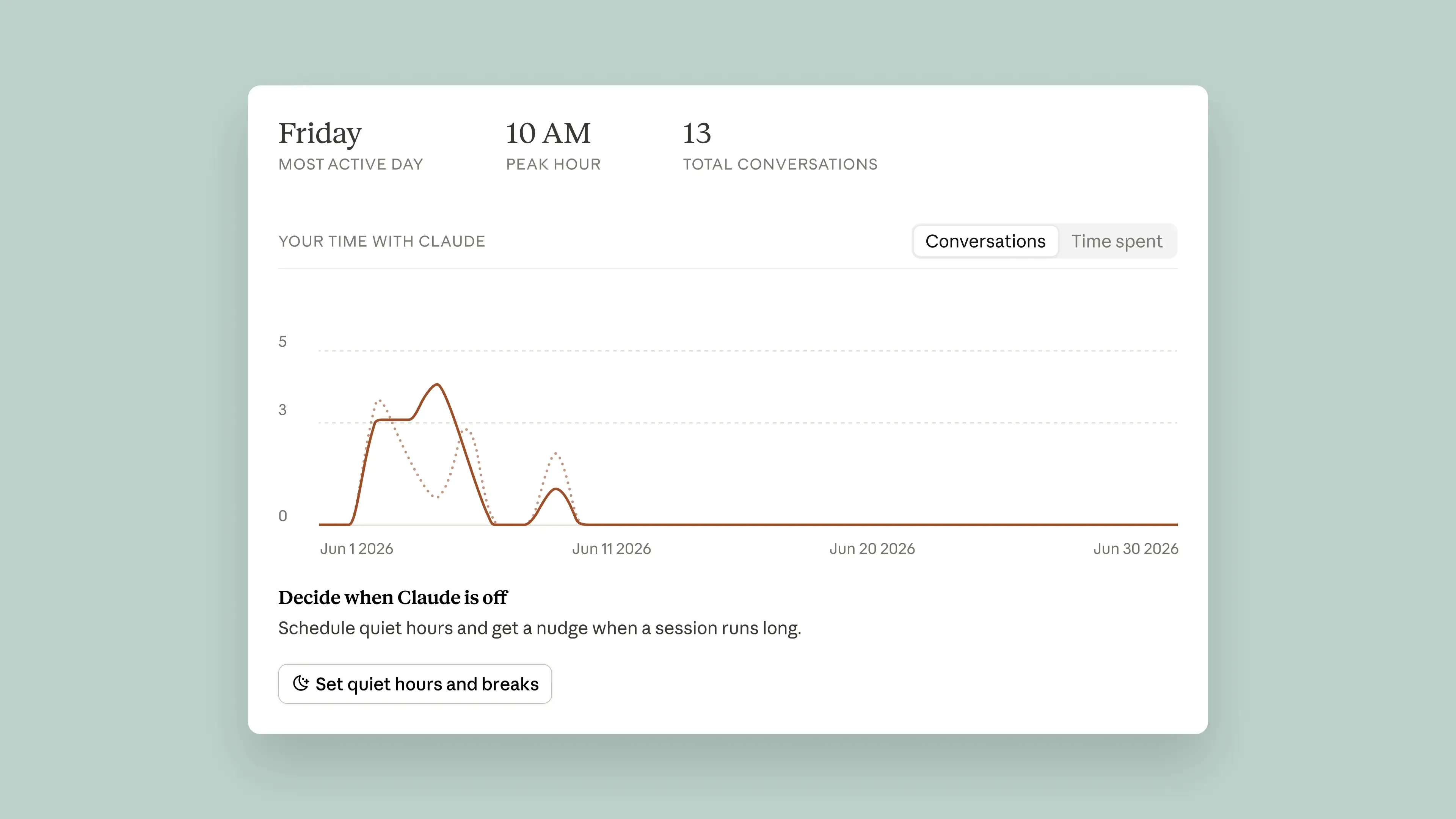
Anthropic launched Claude Reflect on Thursday, a dashboard offering a Spotify Wrapped-style breakdown of how people interact with the AI chatbot across customizable timeframes. The tool analyzes chat history over the past month, three months, six months, or a full year, surfacing your most frequent topics, the types of tasks you delegate, and your peak usage windows complete with visual graphs.
Reflect is available immediately for Free, Pro, and Max tier users. It requires Memory to be enabled in Settings. The dashboard borrows from two well-known product playbooks.
On one side, it mirrors the personalized year-in-review format that Spotify, YouTube, and Uber have popularized. On the other, it functions like Google's Digital Wellbeing, giving people controls to manage their AI habits.
People can set quiet hours and receive "nudges" from the system when it's time to step away. Anthropic frames Reflect as a way to "see your patterns and shape them," blending self-reflection with limits. It also breaks down activity by task type, showing time spent drafting documents, organizing schedules, and other common workflows.
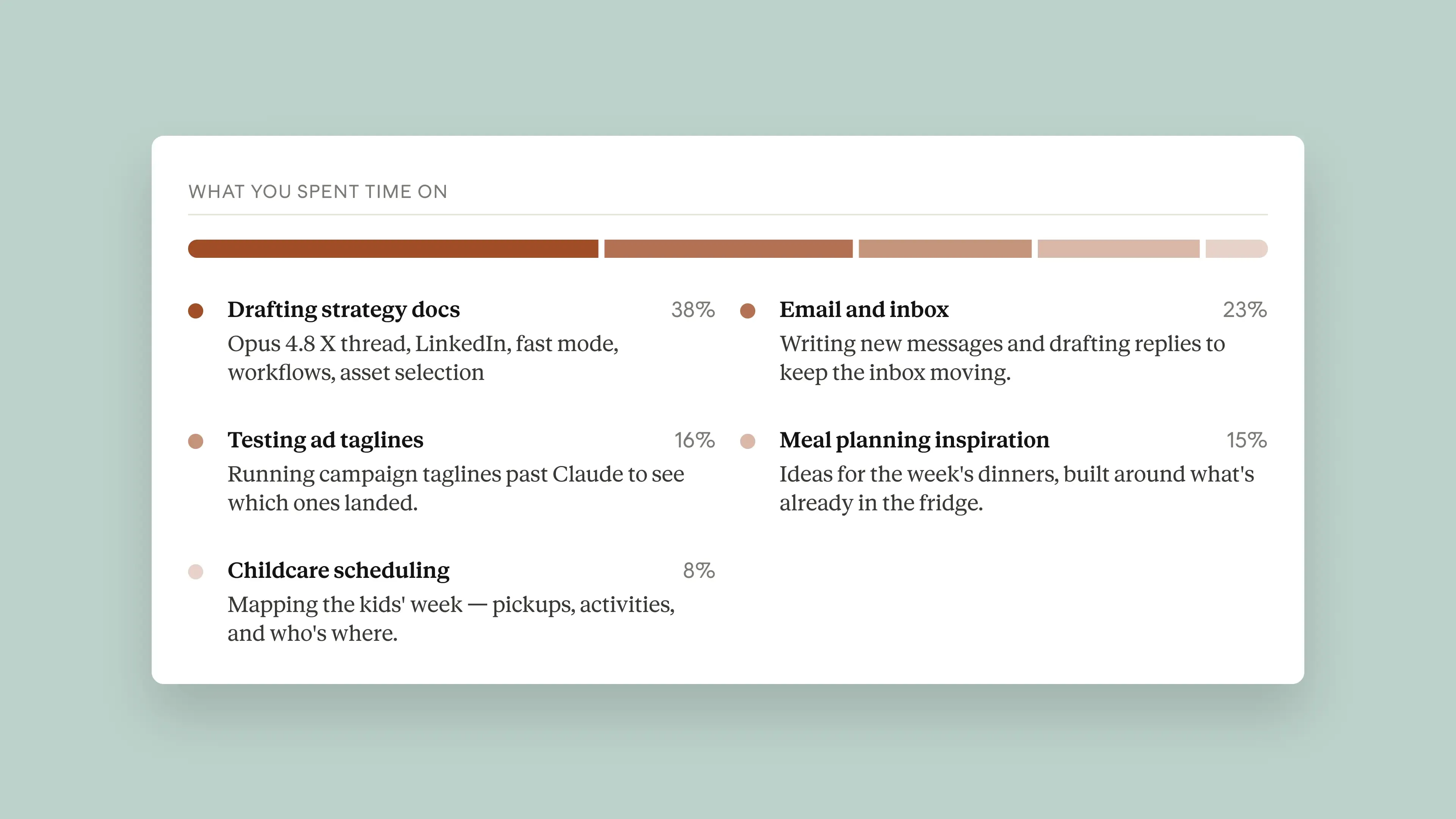
Based on history, it suggests new ways to incorporate the AI that you haven't tried yet. For Anthropic, the move is strategic. While OpenAI's ChatGPT commands roughly 200 million weekly active users, Anthropic has built a following among professionals who value longer context windows and measured responses.
Surfacing analytics directly encourages deeper engagement and positions the chatbot as a tool people can consciously manage rather than unconsciously depend on. The launch also addresses growing transparency concerns around AI dependency. As chatbots become embedded in daily work, Reflect gives visibility into personal consumption patterns without analyzing conversation content, a deliberate privacy boundary that matches Anthropic's positioning as a more privacy-conscious alternative.
Anthropic noted that the data Reflect surfaces is already being collected, now anyone with Memory enabled can see it for themselves.