
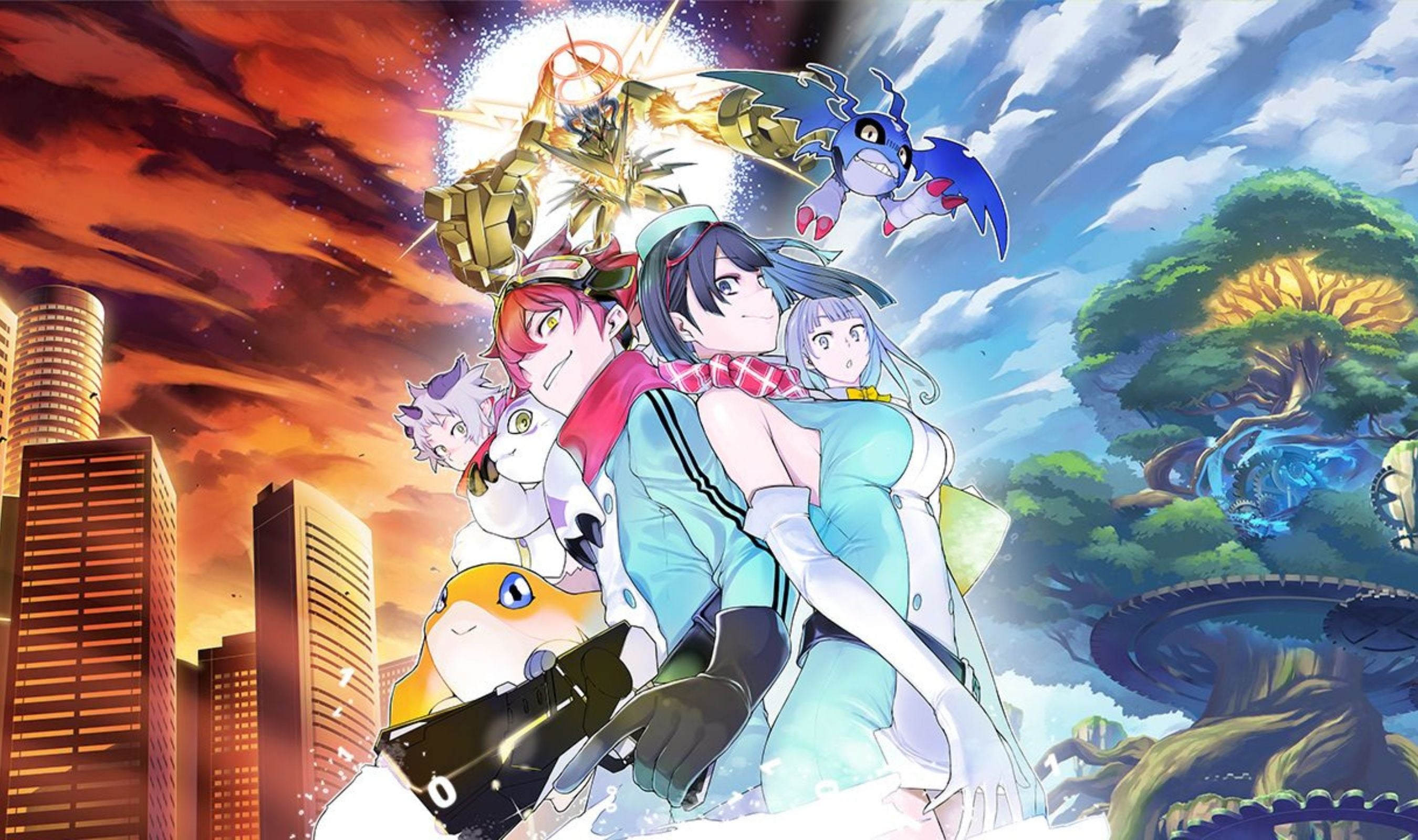
Bandai Namco's Digimon Story Time Stranger arrives on Nintendo Switch and Switch 2 on July 10, nine months after its debut on PS5, PC, and Xbox Series, but the late port comes with a free update that adds features the original launch didn't have. The Switch 2 version delivers a choice between a 30fps 4K Quality Mode and a 60 fps Performance Mode, along with HDR support when docked. The game's clean anime visual style means textures are basic by modern standards, but the lower-fidelity art direction actually works in the Switch 2's favor.
Multiple reviewers found Quality Mode introduced motion blur that made certain environments uncomfortable to handle, while Performance Mode ran smoothly at a locked 60 fps both docked and undocked. A free update hitting all platforms alongside the Switch release includes Terriermon Assistant as a playable character, a Photo Mode for field exploration, a screen to check Digivolution Conditions in the Digifarm, and the Graphics Mode selection option. The update also fixes bugs from the original release, including Digimon disappearing and crashes tied to outfit changes.
Time Stranger is the seventh game in the Digimon Story series and took roughly eight years to develop. The story follows a silent protagonist who, after witnessing Tokyo's destruction by a Digimon attack called the Shinjuku Inferno, gets thrown eight years into the past to prevent the disaster. The narrative leans into time-travel mechanics, with smaller Digimon met early on growing into mature forms by the time the protagonist returns to the present.
The combat system layers a three-type attribute system (Data, Vaccine, Virus) on top of elemental weaknesses, creating damage multipliers that can reach up to 400% when both advantages line up. Players can field three active Digimon with up to three guest fighters and three reserves, though managing seven slots simultaneously can be cumbersome.
Quality-of-life features include battle speed options up to 5x, auto-battle, and post-fight health regeneration that eliminates the need for item chugging between encounters. The Digivolution system lets players evolve and de-evolve Digimon freely, with cumulative stats carrying over to encourage cycling through forms. Over 450 Digimon are available, with multiple evolution paths per creature.
The Digifarm returns as a passive training ground where Digimon gain experience and stats can be influenced through treadmill sessions and feeding. The $29.99 Season Pass includes three already-released DLC chapters, each introducing a handful of new Digimon.
A major DLC update is also planned for 2027. A Nintendo eShop demo is available now.
Early impressions highlight lighting problems as the port's main technical weakness. Darker environments make it easy to miss enemy Digimon blending into walls and floors, and the brightness calibration at the title screen can produce harsh glare that obscures characters.
Beyond those issues, the Switch 2 version runs cleanly with fast load times and no frame drops. For players new to the franchise, Time Stranger serves as an accessible entry point. The game runs roughly 30-40 hours for a standard playthrough, with side quests, card-based minigames, and outer dungeons extending that significantly.
The base game offers substantial content without the DLC, though including the season pass as a bundle incentive would have been a welcome gesture for late adopters. The free update is available day one.