
Amazon secured Federal Communications Commission approval to deploy 4,500 additional satellites for its Leo broadband network, expanding its planned constellation to 7,700 spacecraft. The February 10 authorization comes as the company faces a July deadline for its first-generation satellites, having launched only 180 of the required 1,616 units.
The FCC cleared Amazon to launch 3,212 second-generation satellites between 590-630 kilometers altitude and 1,292 polar spacecraft operating 600-650 kilometers above Earth. These Gen 2 systems will operate across Ku-, Ka-, and V-band frequencies, supporting satellite television and 5G connectivity with expanded polar coverage.
Amazon must deploy half of the newly approved satellites by February 10, 2032, with the full constellation required by February 10, 2035. The company separately requested an extension for its first-generation deadline, asking to move the July 2026 cutoff to July 2028 after reaching just 11% of the required deployment.
Rajeev Badyal, vice president of technology for Amazon Leo, stated the Gen 2 satellites will deliver "more capacity, more coverage including polar and additional throughput." He emphasized the importance for enterprise and government customers needing to move large data volumes through the network.
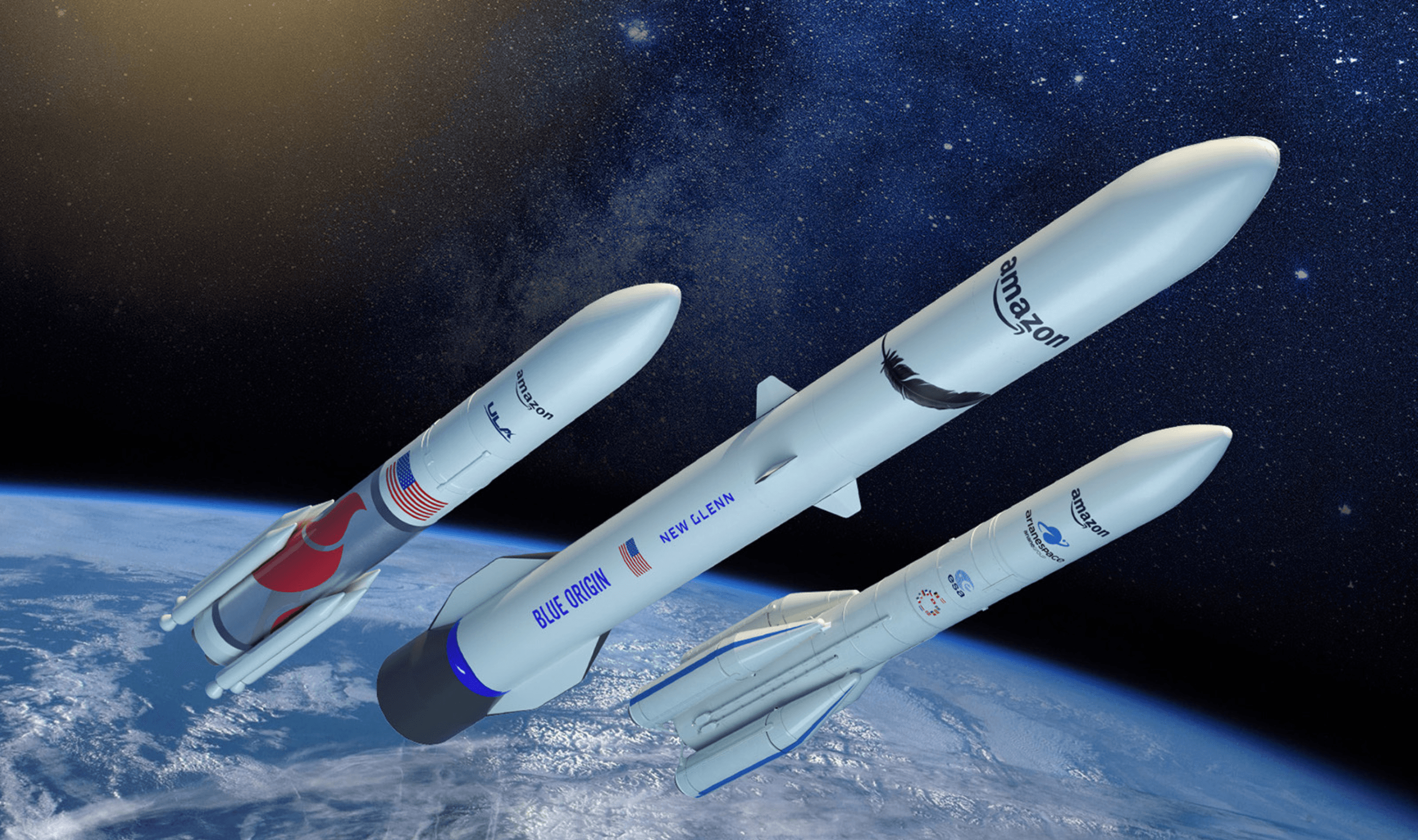
Amazon has invested $10 billion in its satellite internet service and plans to spend another $1 billion this year. The company scheduled over 20 launches for 2026 and more than 30 for 2027, with the next mission sending 32 satellites aboard an Arianespace Ariane 6 rocket on February 12.
SpaceX's Starlink network currently dominates the market with over 9,000 satellites and approximately 9 million customers. Amazon's expanded constellation positions it to challenge that dominance while addressing global connectivity gaps in underserved regions.
The FCC authorization includes conditions requiring coordination with federal spectrum users and semiannual orbital debris reporting. Amazon's Gen 1 satellites received permission to use additional V-band spectrum alongside existing Ka-band allocations.
Amazon launched its satellite internet initiative in 2019 as Project Kuiper, renaming the service to Leo in November 2025. The company has deployed over 150 satellites since April 2025 using multiple launch providers including United Launch Alliance and SpaceX.
The next Amazon Leo mission will use Ariane 6's heavy-lift configuration for the first time, marking Arianespace's initial launch under its contract with the company. Amazon's expanded constellation now totals 7,700 satellites, as authorized by the FCC on February 10.