A good powerbank should match the devices you carry every day. Phone-first chargers can stay small and light, while laptop-ready banks need higher USB-C output, larger cells, and a better port layout.
Product
Technobezz is supported by its audience. We may get a commission from retail offers.
7 Best Powerbanks in 2026
The Anker Laptop Power Bank 25K 165W is the top pick for laptop-ready travel power, built-in cables, and phone charging.
T
Technobezz
Senior Editor
Updated July 19, 2026Jul 19, 2026
•13 min read

Get Deals Like These in Your Inbox
The best prices, reviewed weekly.
The Anker Laptop Power Bank 25K 165W is the best overall pick because it combines 25,000mAh capacity, 165W total output, two built-in USB-C cables, and a 90Wh rating that sits under the usual 100Wh airline carry-on limit.
This guide also covers compact daily carry banks, high-output laptop options, magnetic wireless charging, and a rugged outdoor model. Choose by wattage, capacity, size, port setup, and charging style.
At a Glance
| Category | Product | Why We Picked It |
|---|---|---|
| Best overall | Anker Laptop Power Bank 25K 165W | The strongest blend of capacity, output, built-in cables, and travel practicality |
| Best value | INIU Pocket Rocket P50 10K 45W | Compact 10,000mAh power with 45W USB-C output at a strong value |
| Best everyday carry with cable | Anker Nano Power Bank 10K 45W | A polished daily charger with a retractable USB-C cable |
| Best premium high-output | Anker Prime Power Bank 26K 300W | Maximum output for power users with demanding USB-C gear |
| Best laptop value | UGREEN Nexode Power Bank 25K 200W | High laptop output and 90Wh capacity without going fully premium |
| Best Qi2.2 wireless bank | Baseus PicoGo AM52 10K Qi2.2 | Fast magnetic wireless charging with useful 45W wired output |
| Best rugged power bank | NESTOUT Outdoor Battery 15K 32W | A tougher 15,000mAh bank for wet, dusty, and rough use |
How we chose and tested
We selected powerbanks by matching each model to a clear buyer need: everyday carry, travel, laptop charging, wireless charging, and rugged outdoor use. Capacity, USB-C wattage, total output, port selection, charging convenience, size, weight, display quality, durability, and carry-on suitability carried the most weight. The best picks combine enough power for their intended devices with practical size, clear controls, and charging features that solve real daily problems.
The best powerbanks right now
Anker Laptop Power Bank 25K 165W - Best overall
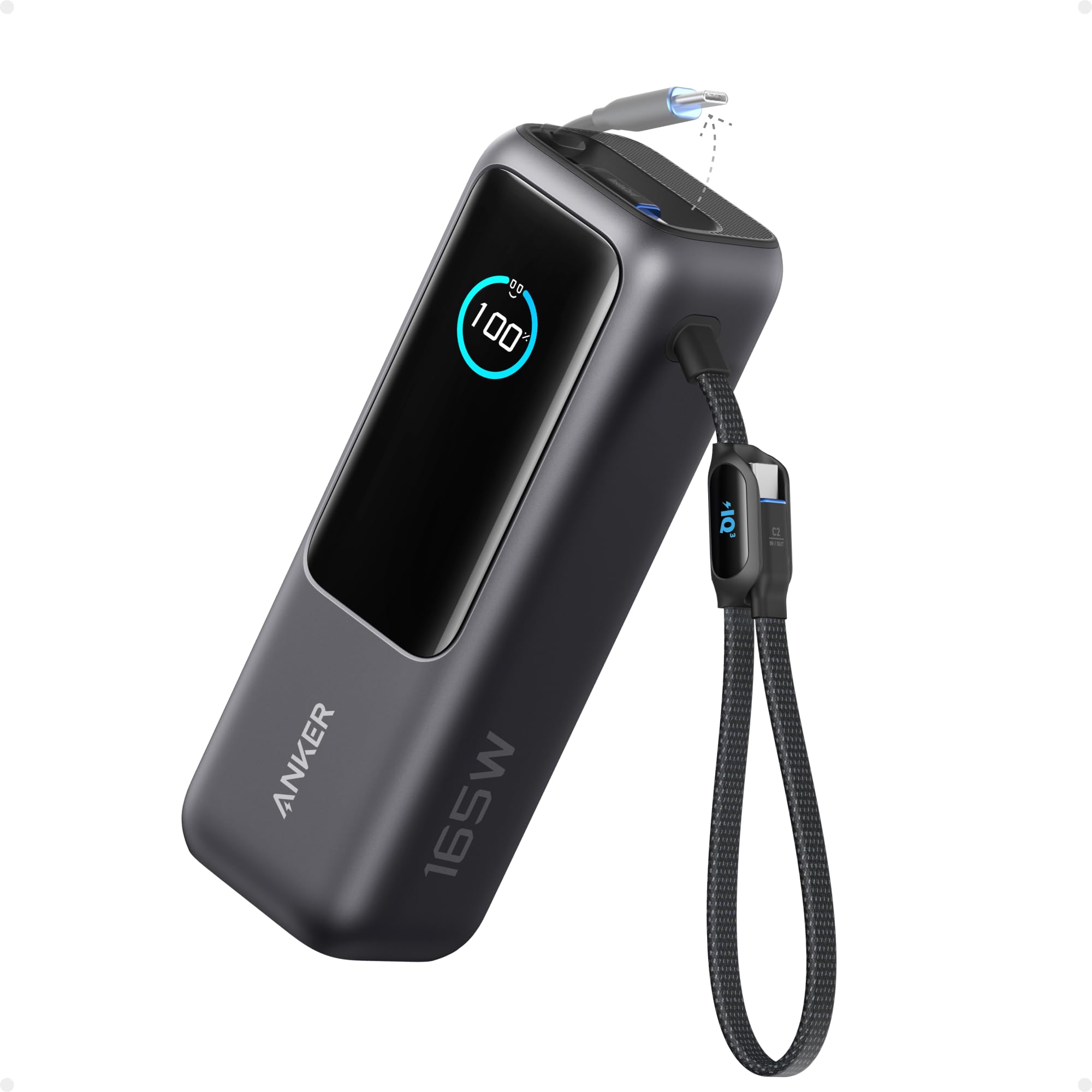
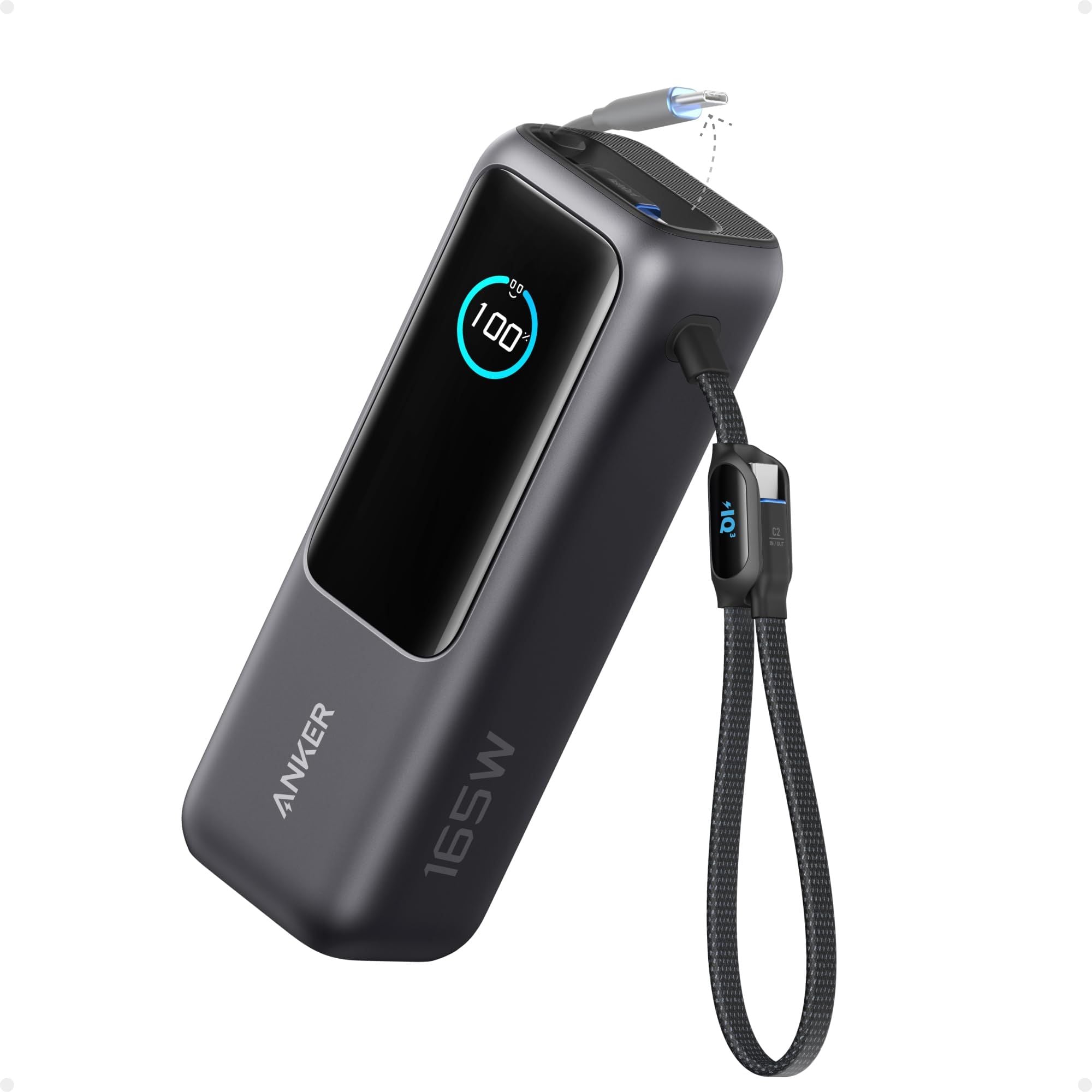
Anker's 25K model is the most complete powerbank here for people who move between laptops, phones, tablets, and smaller accessories. Its 25,000mAh capacity and 90Wh rating give it serious travel utility while staying under the usual 100Wh airline carry-on limit.
The 165W total output supports multi-device charging, and a single USB-C connection can reach 100W. Two built-in USB-C cables reduce cable clutter, while the separate USB-C and USB-A ports make it flexible for mixed gear.
This belongs in a bag, not a pants pocket. The built-in cables are the key convenience feature, but they also create a durability tradeoff because damage to a fixed cable reduces the product's value.
Key highlights
- 25,000mAh / 90Wh capacity
- 165W max total output
- 100W max single USB-C output
- Two built-in USB-C cables
- One USB-C port and one USB-A port
- 6.18 x 2.12 x 1.93 in; 21.0 oz
Pros
- Excellent mix of laptop-level output, capacity, and price
- Two built-in USB-C cables reduce the chance of forgetting a cable
- 90Wh rating stays under the usual 100Wh airline carry-on limit
- Smart display is useful for monitoring remaining power and output
Cons
- Too large for pants-pocket carry
- 100W single-port output is lower than 140W PD 3.1 models
- Built-in cables are convenient but become a liability if damaged
Who it's for
Travelers who want one dependable battery for a laptop, phone, tablet, and earbuds without carrying extra USB-C cables.
Skip if
Choose something smaller if you only need an emergency phone top-up or need 140W single-port laptop charging.
INIU Pocket Rocket P50 10K 45W - Best value
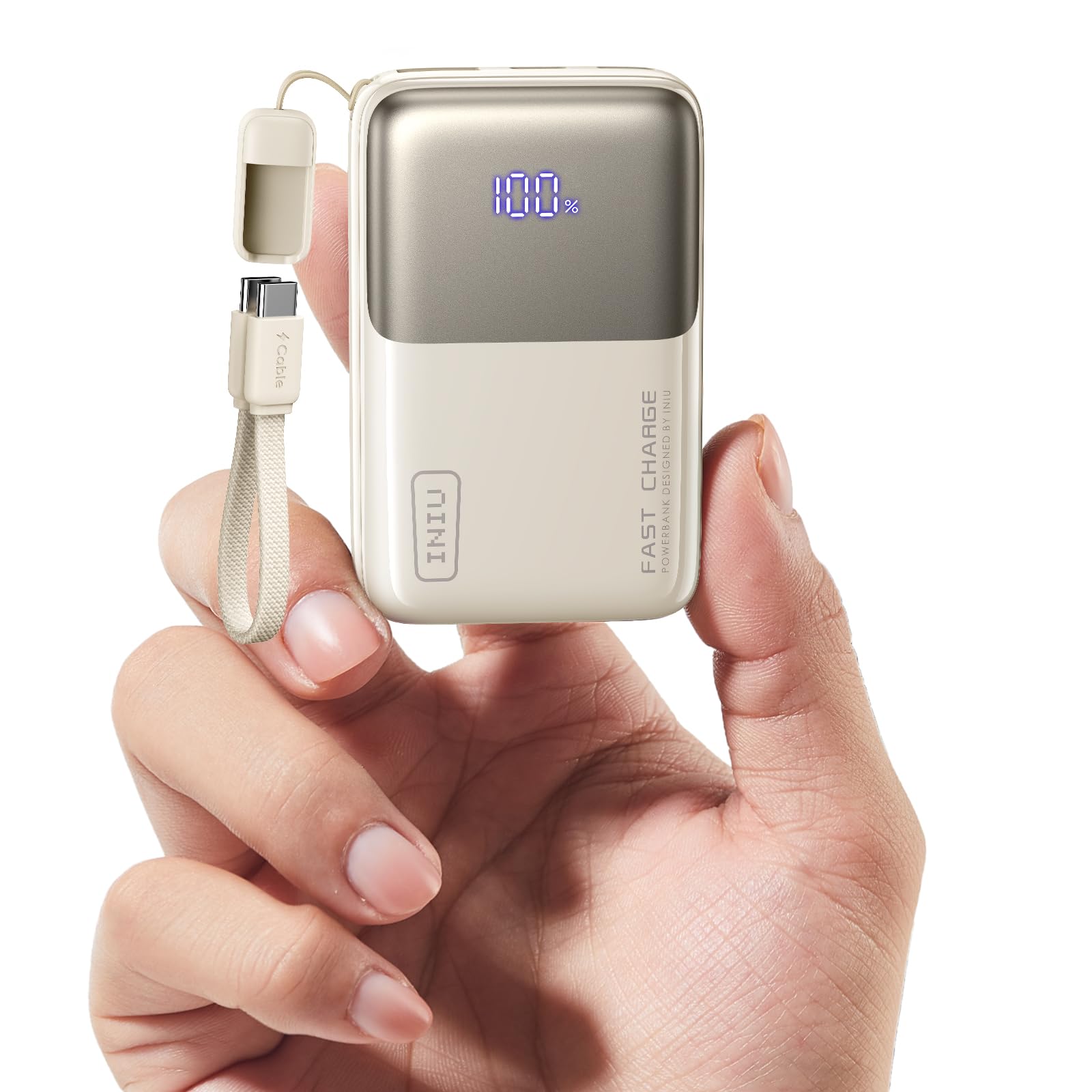
INIU's Pocket Rocket P50 focuses on the sweet spot for everyday wired charging: 10,000mAh capacity, 45W USB-C output, and a body small enough for daily carry. At 3.3 x 2.0 x 1.0 in and 5.6 oz / 160g +/-10g, it is one of the easiest picks to keep in a bag.
Two USB-C outputs and one USB-A output make it more useful than a basic phone-only battery. The digital battery display is also easier to read than simple four-dot indicators.
Its limits show up when laptop charging becomes the main job. It can help with occasional small-laptop top-ups, but all-day laptop power calls for a larger bank.
Key highlights
- 10,000mAh capacity
- 45W max output from USB-C outputs
- Two USB-C outputs and one USB-A output
- 3.3 x 2.0 x 1.0 in
- 5.6 oz / 160g +/-10g
- 2 hour recharge time
Pros
- Very strong price-to-performance for a 45W 10,000mAh bank
- Compact and light enough for everyday carry
- Supports modern fast-charge protocols including PD and PPS
- Digital battery display is better than four-dot indicators
Cons
- 20W input is slower than some competing 10K models
- Multi-device output drops sharply when ports are combined
- Not a real laptop workhorse despite emergency MacBook Air capability
Who it's for
Anyone who wants a compact, affordable power bank for fast phone, tablet, handheld, and occasional small-laptop top-ups.
Skip if
Look at a larger bank if you need all-day laptop power or magnetic wireless charging.
Anker Nano Power Bank 10K 45W - Best everyday carry with cable
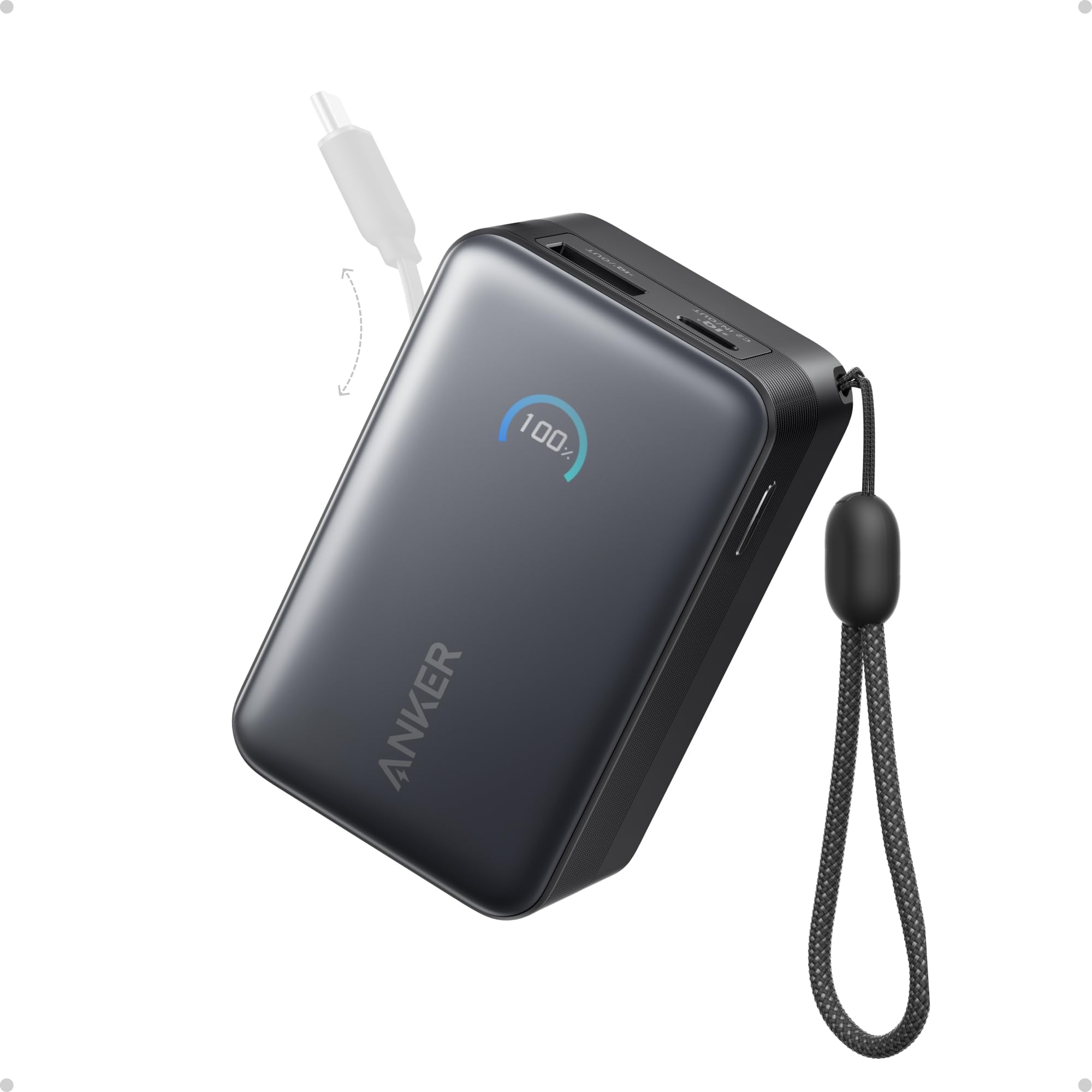
The Anker Nano Power Bank 10K 45W puts cable convenience first. Its retractable 2.3-foot USB-C cable makes daily charging simpler for commuting, campus use, and travel days when a separate cable is easy to forget.
The 10,000mAh capacity and 45W USB-C output suit fast phones, tablets, Switch-class devices, and light laptop emergencies. It can recharge through the USB-C cable or port at up to 30W, and it also includes a USB-C port plus a USB-A port for accessories.
Compared with the INIU P50, this Anker is thicker and heavier. Its strongest appeal is the built-in cable and smart display, not pocket slimness or the lowest cost.
Key highlights
- 10,000mAh capacity
- 45W max USB-C output
- USB-C cable or port input up to 30W
- Built-in retractable USB-C cable
- USB-C port and USB-A port
- 3.21 x 1.99 x 1.42 in; 0.51 lb
Pros
- Retractable 2.3-foot USB-C cable is genuinely useful
- 45W output is enough for fast phones, tablets, Switch-class devices, and light laptop emergencies
- Smart display shows more useful charging information than simple LEDs
- Anker brand support and broad retail availability
Cons
- Thicker and heavier than the INIU P50
- Combined multi-port output is limited to 22.5W max
- Costs more than many similar 10K wired banks
Who it's for
Daily carry buyers who want a polished charger with a cable built in and do not mind a thicker shape.
Skip if
Choose the INIU P50 if pocket slimness or lowest cost matters more than the retractable cable.
Anker Prime Power Bank 26K 300W - Best premium high-output
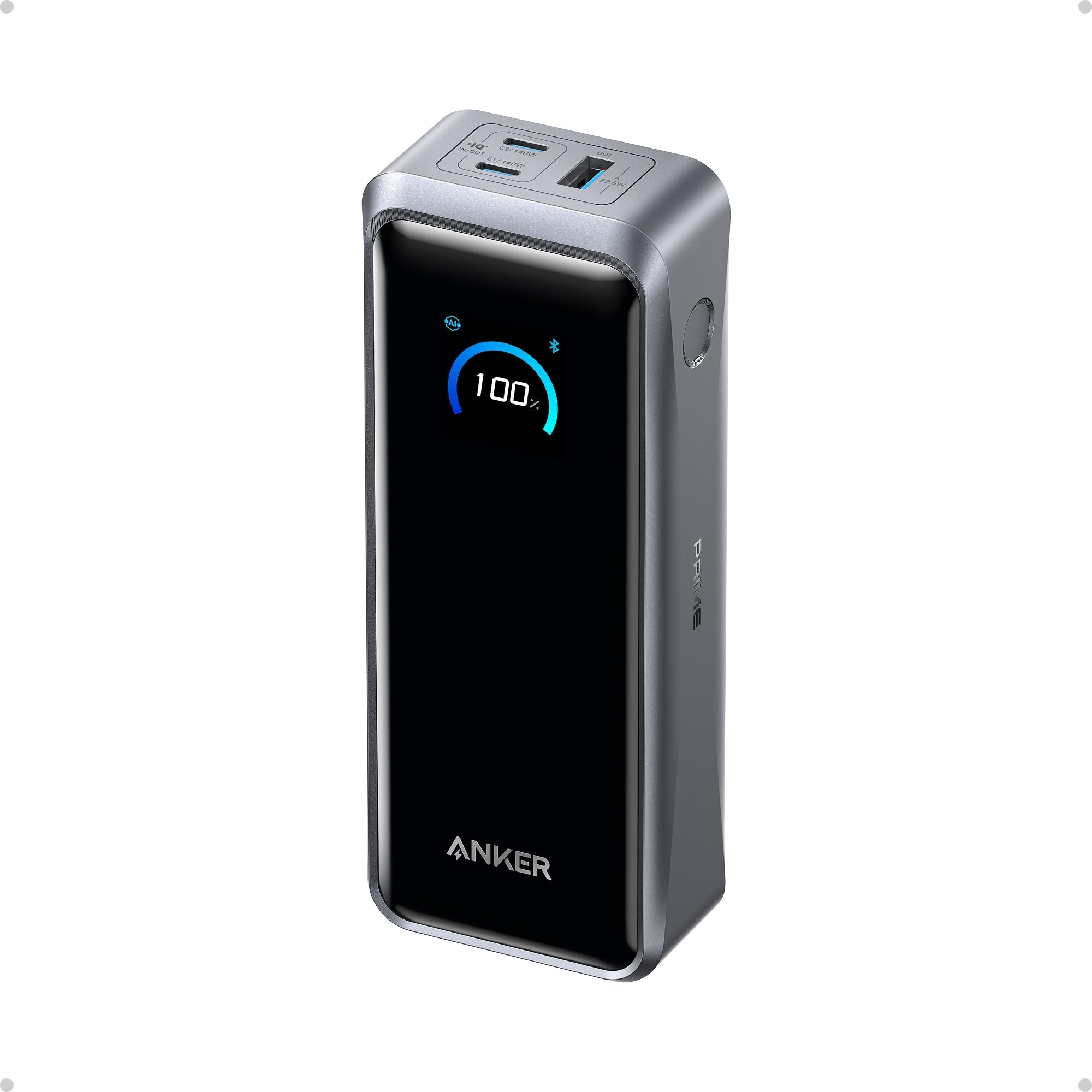
The Anker Prime Power Bank 26K 300W is built for serious laptop and multi-device charging. Its 26,250mAh capacity gives it near-maximum carry-on utility, while 300W total output puts it far beyond ordinary phone banks.
Each USB-C port can deliver up to 140W, making it a strong fit for demanding USB-C laptops. Two USB-C ports and one USB-A port cover a useful range of devices, and the display plus app controls suit users who monitor power closely.
This is more charger than most phone users need. It also requires high-wattage chargers and 5A cables to reach its best speeds, and it does not include a built-in cable.
Key highlights
- 26,250mAh capacity
- 300W max total output
- 140W max USB-C output per USB-C port
- Two USB-C ports and one USB-A port
- 6.3 x 1.5 x 2.5 in
- 1.32 lb / 600g
Pros
- One of the strongest airline-compliant laptop power banks available
- Can charge demanding USB-C laptops at up to 140W
- Very fast dual-input recharging with the right chargers
- Display and app controls suit power users
Cons
- Expensive overkill for phones
- No built-in cable
- Needs high-wattage chargers and 5A cables to reach its best speeds
Who it's for
People who carry power-hungry laptops, tablets, cameras, or multiple devices and want near-maximum carry-on capacity.
Skip if
A simpler bank makes more sense for phone charging or devices that do not benefit from 100W-plus USB-C charging.
UGREEN Nexode Power Bank 25K 200W - Best laptop value
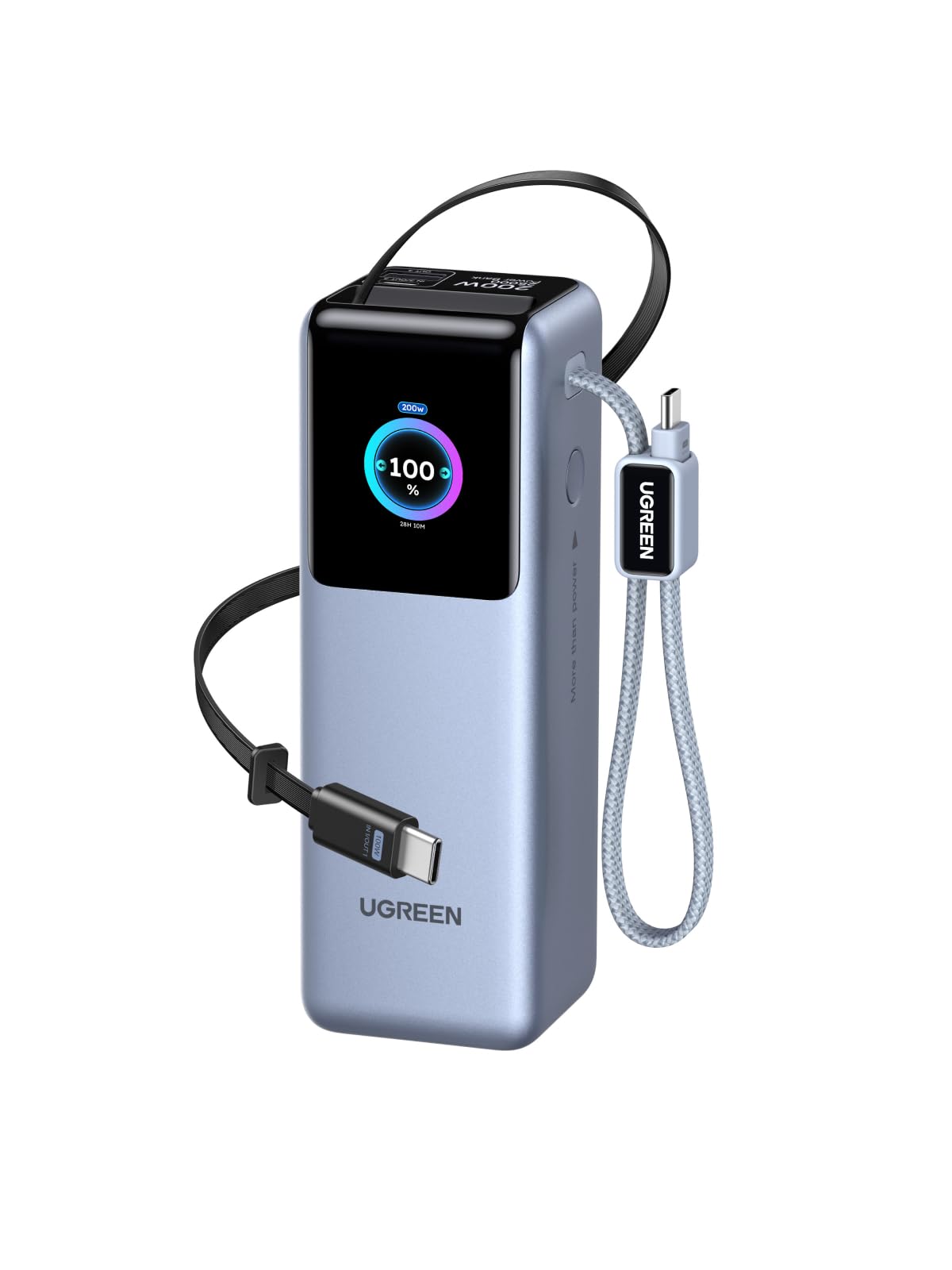
UGREEN's Nexode Power Bank 25K 200W targets laptop users who want high output and large capacity. It combines 25,000mAh / 90Wh capacity with 200W total output for work bags, travel days, and longer stretches away from wall power.
The built-in cables are a real draw: two retractable USB-C cables cut down on loose cords, and each USB-C port reaches up to 100W. USB-C input supports recharging at up to 65W.
The TFT display gives useful charging status, and the 90Wh rating helps keep it travel-friendly for carry-on rules. It is still chunky for everyday phone carry, and its 65W self-recharge is slower than newer premium banks.
Key highlights
- 25,000mAh / 90Wh capacity
- 200W max total output
- USB-C1 up to 100W
- USB-C2 up to 100W
- USB-C input up to 65W
- 155 x 54 x 51 mm; 609g
Pros
- Strong 100W USB-C output for MacBook Pro-class charging
- Usually undercuts premium Anker Prime models
- 90Wh capacity is travel-friendly for carry-on rules
- TFT display gives useful charging status
Cons
- 65W self-recharge is slower than newer premium banks
- 100W max per USB-C port is lower than 140W PD 3.1 rivals
- Chunky for everyday phone carry
Who it's for
Laptop users who want high USB-C output and large capacity without moving to Anker Prime 300W pricing.
Skip if
Choose another model if you need the fastest possible power-bank recharge or a single 140W USB-C port.
Baseus PicoGo AM52 10K Qi2.2 - Best Qi2.2 wireless bank
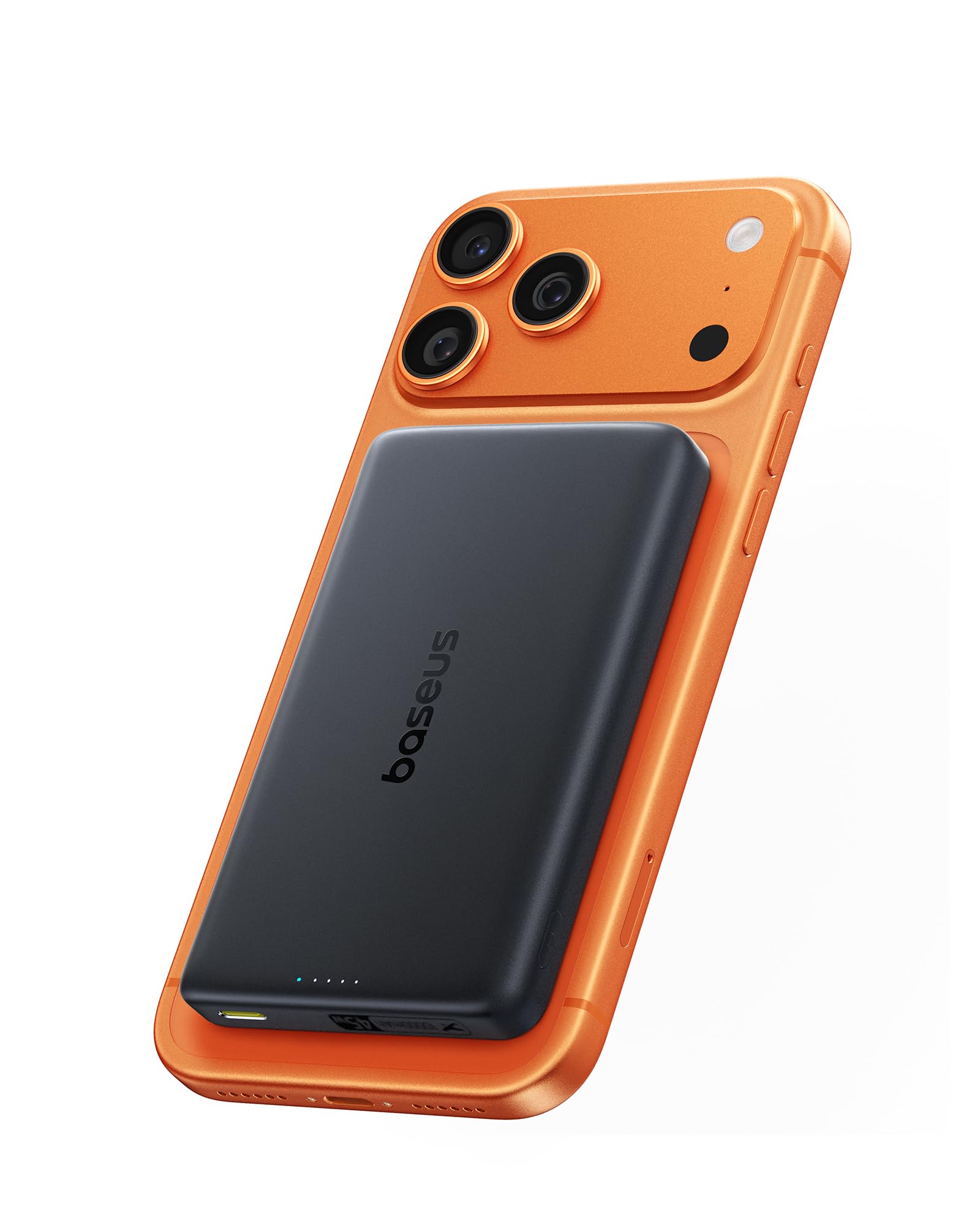
Baseus gives magnetic charging users a faster wireless option with the PicoGo AM52 10K Qi2.2. Its Qi2.2 magnetic wireless charging reaches up to 25W when paired with a compatible phone.
The USB-C wired output reaches up to 45W, so this is more versatile than most magnetic battery packs. The 10,000mAh capacity, 0.6 in slim body, and soft-touch design make it easy to carry for travel or daily use.
Device support matters here. Phones that top out at 15W Qi2 will not get the full Qi2.2 benefit, and the body does not include a detailed display.
Key highlights
- 10,000mAh capacity
- Qi2.2 magnetic wireless charging up to 25W
- USB-C wired output up to 45W
- 0.6 in slim body
- MagSafe-compatible magnetic design
- Built for iPhone 12 and newer compatibility
Pros
- Qi2.2 25W wireless charging is ahead of older 15W Qi2 packs
- 45W wired output makes it more versatile than most magnetic banks
- Slim, soft-touch design is easy to travel with
- Strong independent review support for fast wireless performance
Cons
- No detailed display on the body
- Qi2.2 benefit depends on phone support
- Baseus model naming can be confusing across PicoGo variants
Who it's for
Users who want the fastest current magnetic wireless charging for a compatible iPhone or Qi2.2 phone, plus useful wired speed.
Skip if
A wired bank is the better buy if your phone tops out at 15W Qi2 or you mostly charge by cable.
NESTOUT Outdoor Battery 15K 32W - Best rugged power bank
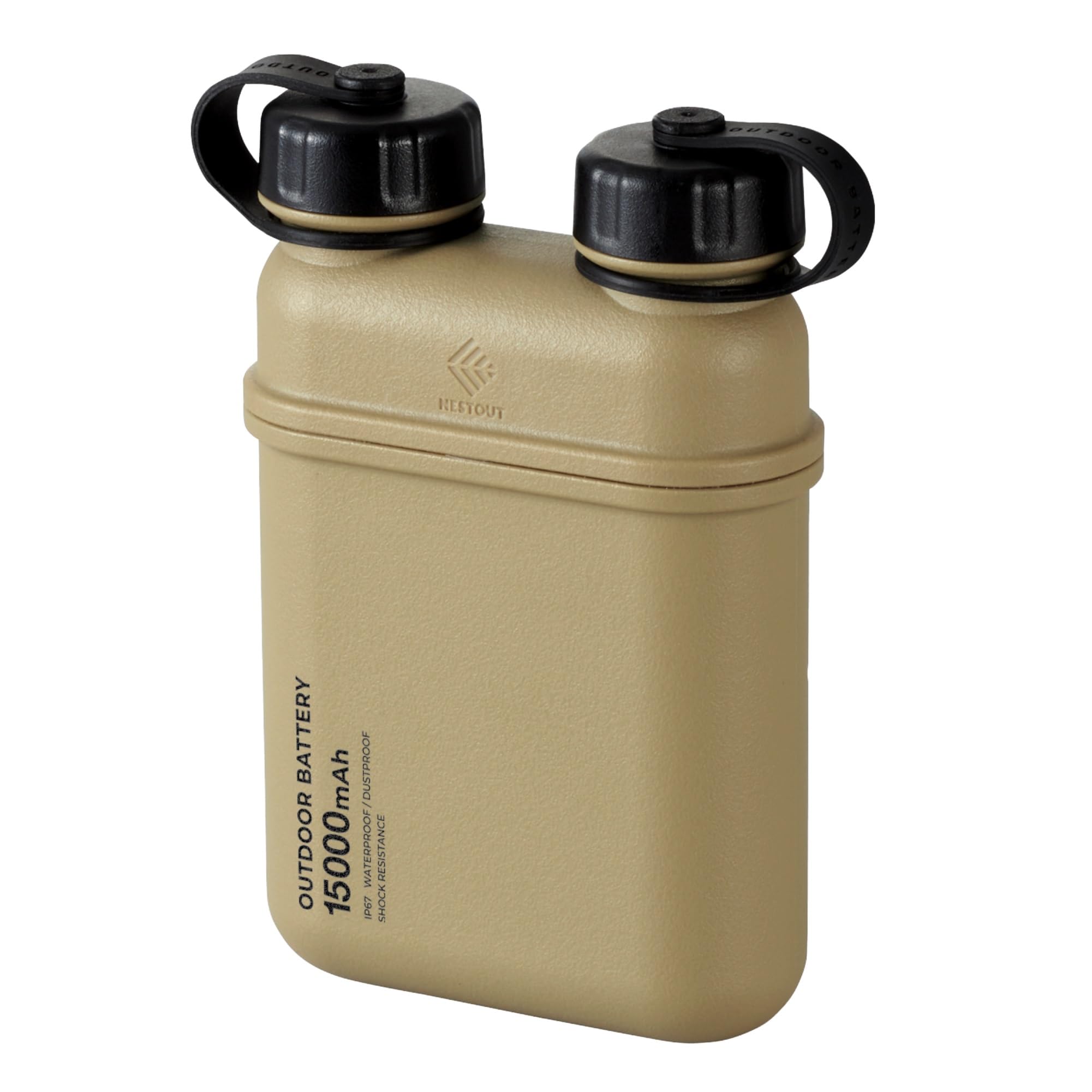
The NESTOUT Outdoor Battery 15K 32W is built for harsher conditions than a typical plastic power bank. Its IP67 waterproof and dustproof rating, plus claimed MIL-STD-810G shock resistance, make it a practical pick for camping, job sites, boating, and emergency kits.
Its 15,000mAh capacity sits in a useful middle ground for weekend use, and 32W max output is enough for phones, tablets, and smaller gear. One USB-C port and two USB-A ports support both newer and older devices.
Rugged design brings bulk. This is not the lightest choice for hiking, 32W is modest for laptop charging, and the analog battery indicators are less precise than a percentage display.
Key highlights
- 15,000mAh capacity
- 32W max output
- One USB-C port and two USB-A ports
- IP67 waterproof and dustproof rating
- MIL-STD-810G shock resistance claimed
- DE-NEST15000A series model family
Pros
- Much tougher than ordinary plastic power banks
- IP67 sealing is useful for camping, job sites, boating, and emergency kits
- Works with NESTOUT's modular lights and outdoor accessories
- 15,000mAh capacity is a practical middle ground for weekend use
Cons
- Bulky and heavy for its capacity
- 32W output is modest for laptops
- Analog battery indicators are less precise than a percentage display
Who it's for
People whose power bank may get wet, dusty, dropped, or used with campsite lighting accessories.
Skip if
A lighter or higher-output model is better for minimal hiking loads or fast laptop charging.
How to Choose
- Match wattage to the biggest device you charge. Phones are usually fine with 20W to 45W, tablets and handhelds benefit from 30W to 65W, and larger USB-C laptops often need 100W to 140W for full-speed charging.
- Use watt-hours for air travel. Most airlines follow the 100Wh carry-on limit for lithium power banks without special approval. A 25,000mAh bank is often around 90Wh, while some 40,000mAh packs exceed the easy-travel limit.
- Do not overbuy capacity for daily carry. A 10,000mAh bank is the practical everyday size for one to two phone charges. 20,000mAh to 27,000mAh is better for laptops and long travel, but the weight increase is real.
- Consider the tradeoff with built-in cables. Integrated USB-C cables are excellent for commuting and airports, but if the cable fails, part of the product's value is gone. Frequent travelers should still carry a spare cable.
- Choose wireless for convenience and wired for speed. Qi2 and Qi2.2 magnetic banks are great for iPhones, but wired USB-C charging is usually faster and wastes less battery capacity.
- Check recall and brand support. Lithium battery quality matters. Favor brands with clear model numbers, warranty support, and recall transparency, and avoid recalled models even if they are discounted.
Can I bring a power bank on a plane?
Usually yes, but it must go in carry-on luggage. Power banks under 100Wh are generally allowed without airline approval, while larger packs may need approval or may be prohibited.
How many times will a 10,000mAh power bank charge a phone?
Real usable capacity is lower than the printed cell capacity because of voltage conversion losses. Expect roughly one to two full modern-phone charges, depending on the phone and charging method.
Is 45W enough for a laptop?
It can top up small USB-C laptops like a MacBook Air in a pinch. For regular laptop charging, 65W to 100W is a better minimum, and 140W is better for larger MacBook Pro-class machines.
Are magnetic power banks only for iPhone?
They are best with MagSafe iPhones or Qi2/Qi2.2 phones and cases. Some Android phones can use them with a magnetic Qi-compatible case, but fit and speed vary.
Why does a power bank get warm?
Heat is normal during fast charging and recharging because voltage conversion is not perfectly efficient. Use high-wattage banks in open air and avoid charging under pillows, blankets, or in hot cars.
Share this article
More in News
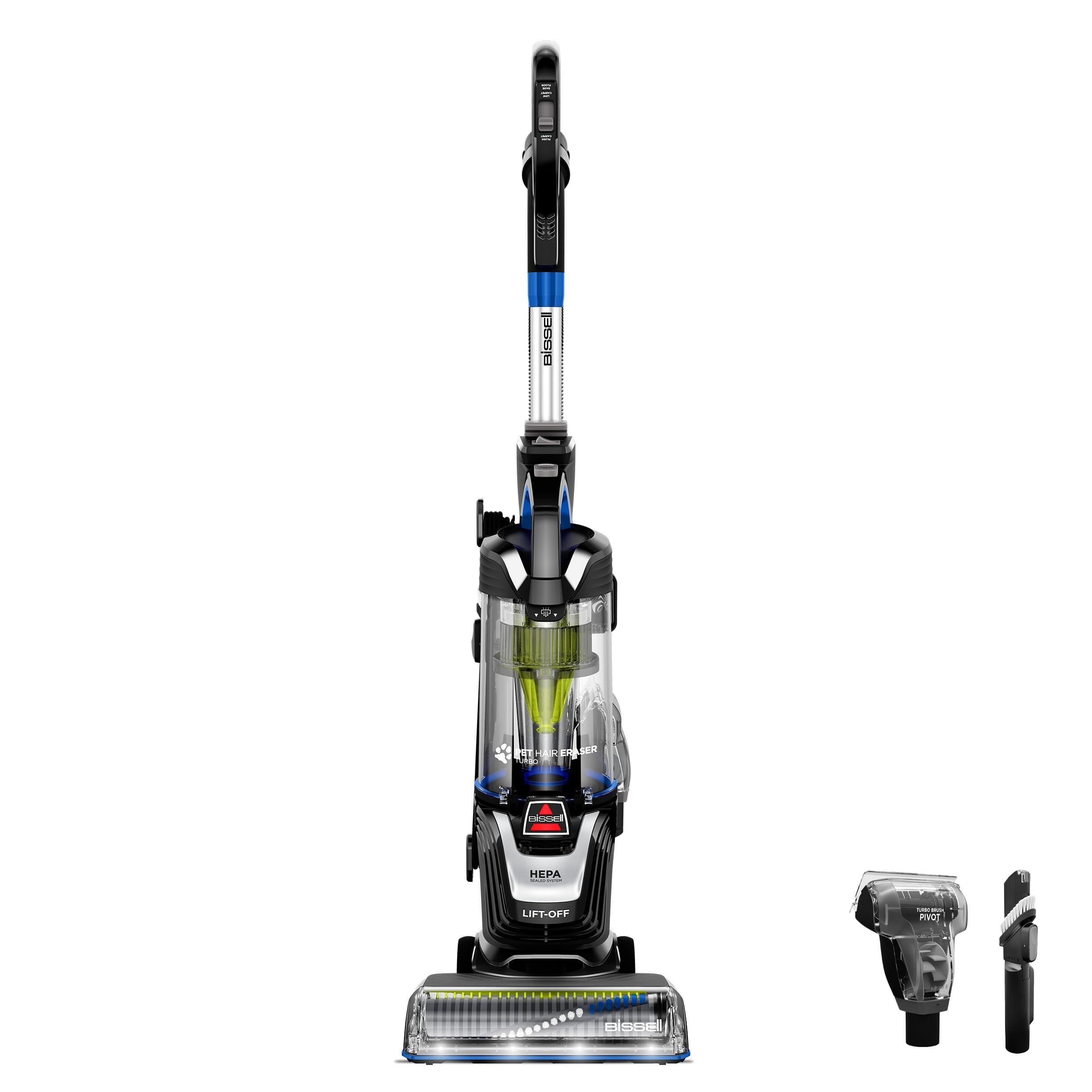
Best Vacuums for Pet Hair in 2026
Bissell Pet Hair Eraser Turbo Lift-Off 3774F is the top pick for pet hair on floors, stairs, and upholstery.
4 min read
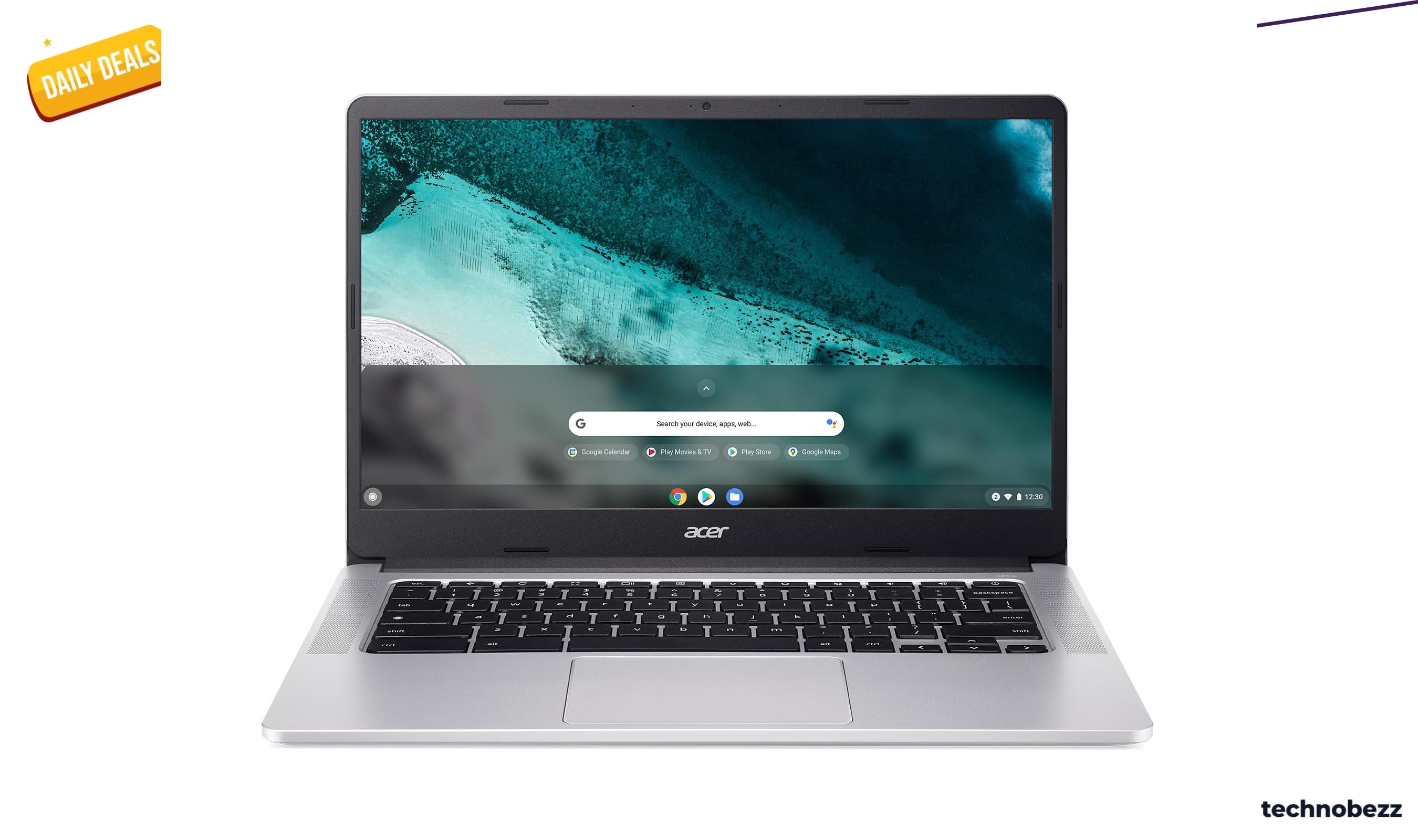
Acer Chromebook 314 with Intel Celeron drops to $299.24 on Amazon
Save $50.75 on the Acer Chromebook 314 with Intel Celeron, now $299.24 on Amazon, featuring a 14-inch touchscreen and Wi-Fi 6.
3 min read
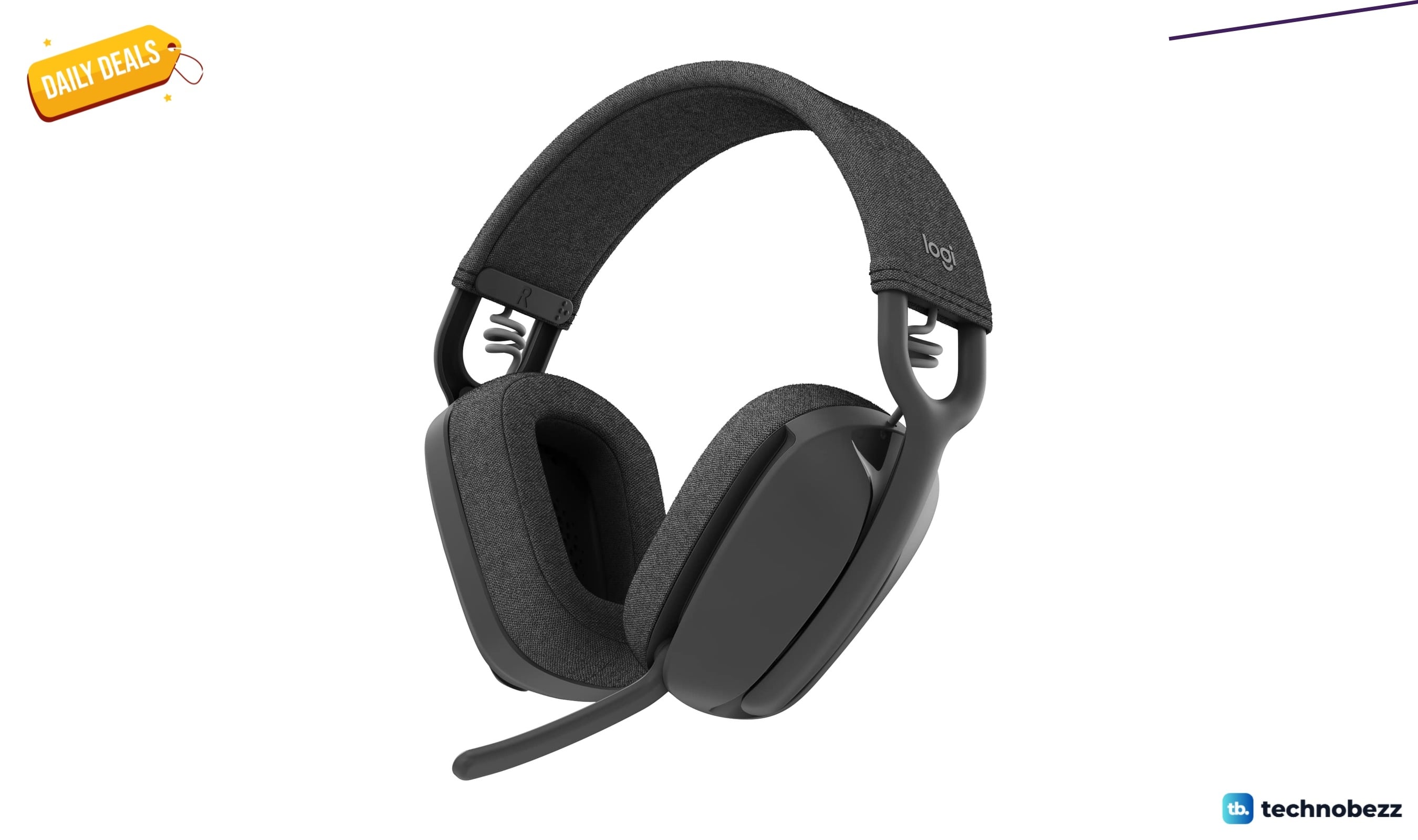
Logitech Zone Vibe 100 Lightweight Wireless Over drops to $59.99
Save $40 on the Logitech Zone Vibe 100 wireless headset, now $59.99 for all-day comfort and clear calls.
4 min read
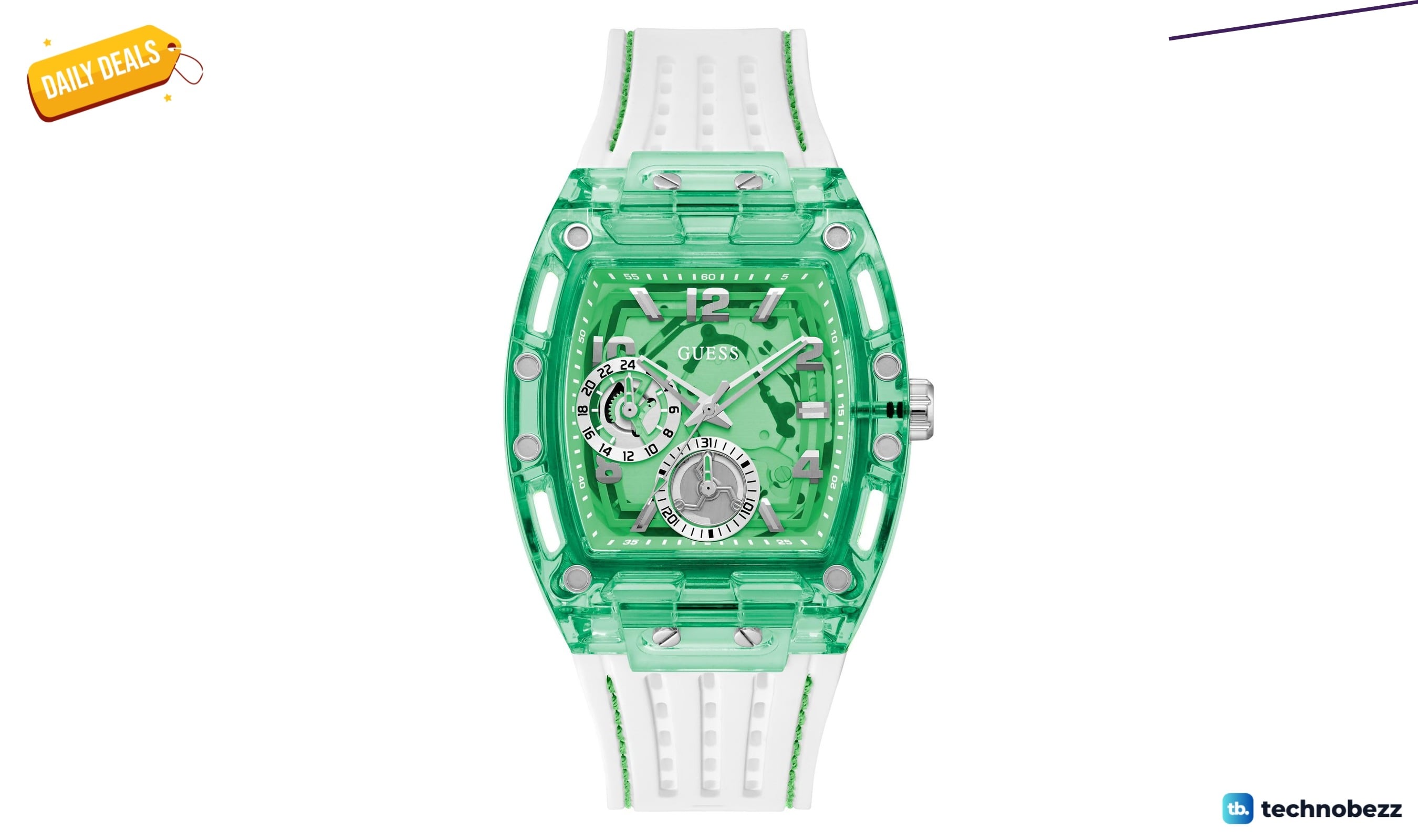
Guess Men's 42mm Watch with White Strap drops to $126.74 on Amazon
Save 23% on the Guess Men's 42mm Watch with a white strap and green dial, now at its lowest price of $126.74 on Amazon.
3 min read
SANDISK Optimus 5100 NVMe SSD drops to $169.75 on Amazon
5 min read
BUSlink 4-Bay Raid USB 3.0/eSATA External Desktop drops to $2207.08
4 min read
Samsung Galaxy Watch 6 Classic 47mm LTE drops to $219.90 on Amazon
4 min read

Samsung QHC LFD 50 inch display drops to $1016.18 on Amazon
3 min read
Philips Momentum 329M1RV 32 4K HDR 400 drops to $854.99 from $899.99
5 min read
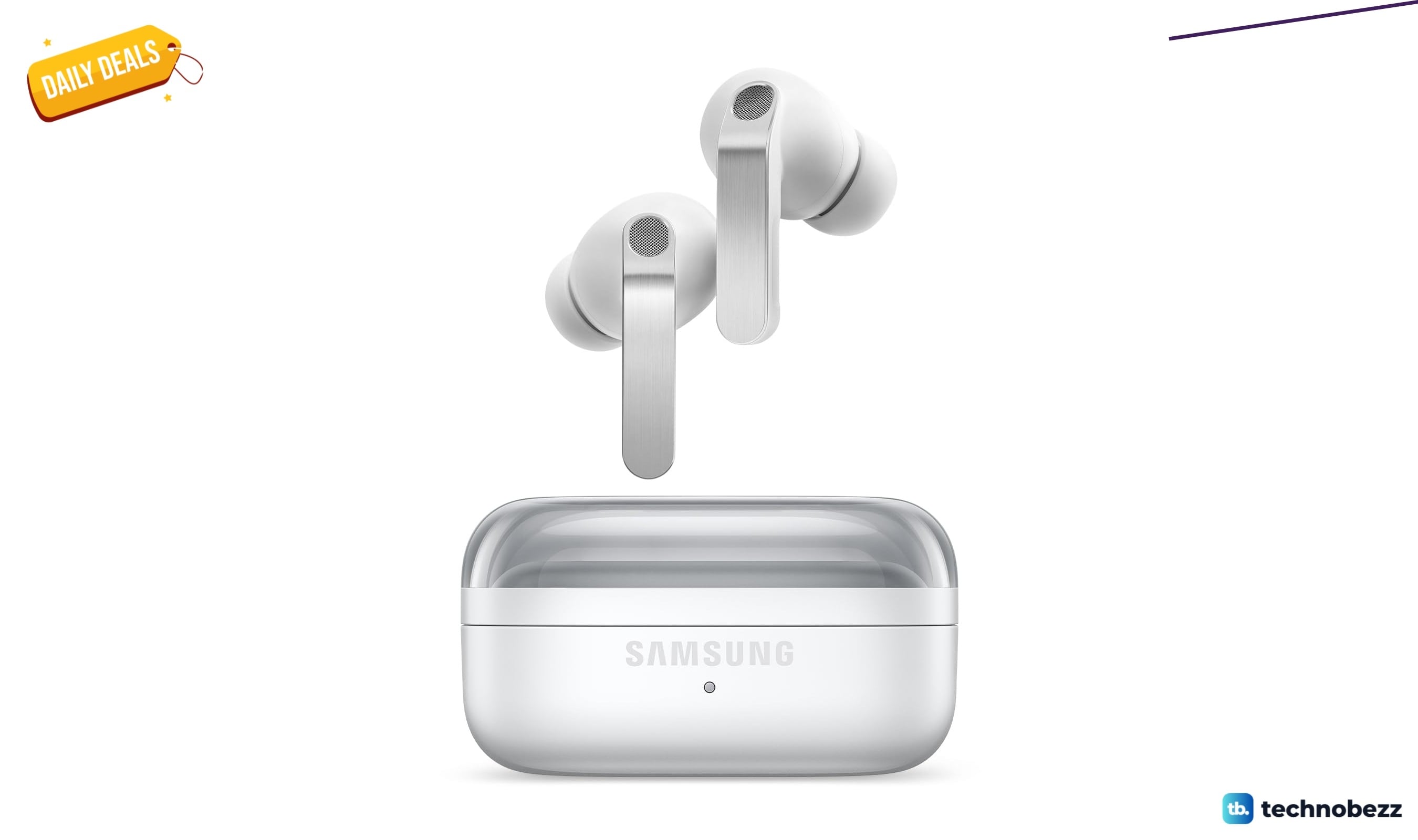
Samsung Galaxy Buds 4 Pro AI True drops to $219.99 on Amazon
4 min read
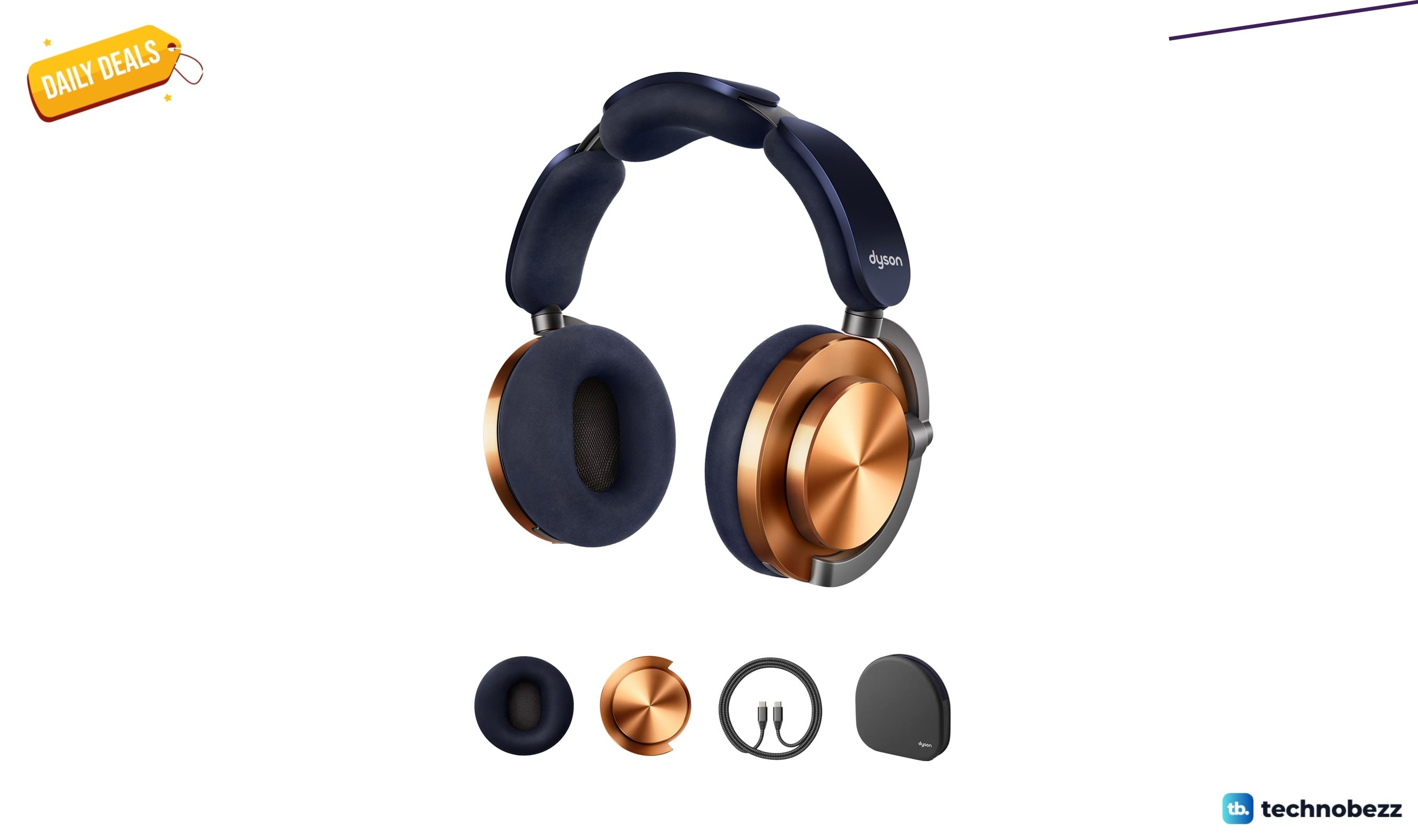
Dyson OnTrac CNC Copper headphones now available for $199
3 min read
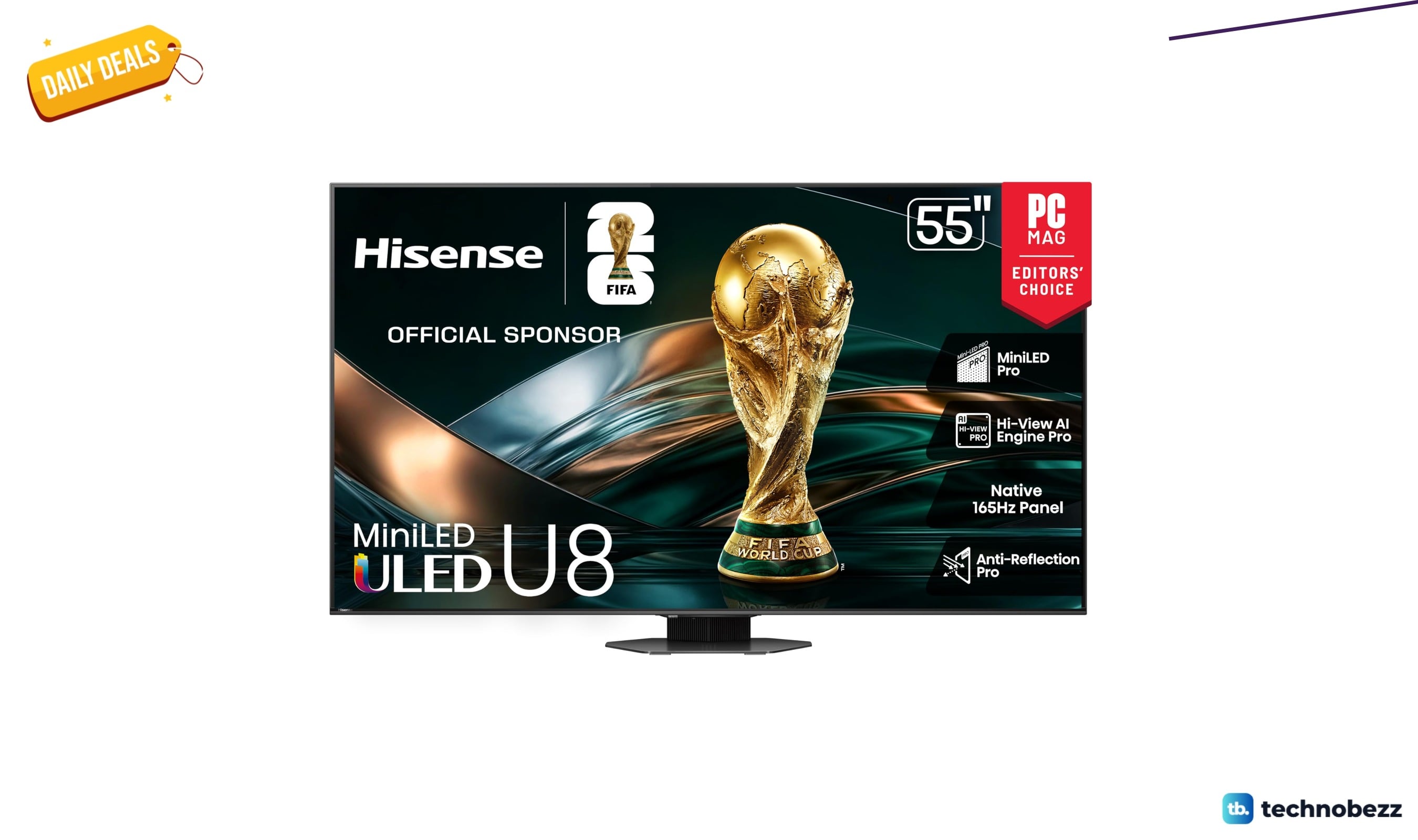
Hisense 55 inch U8 ULED Mini-LED 4K UHD falls to $698 on Amazon
4 min read