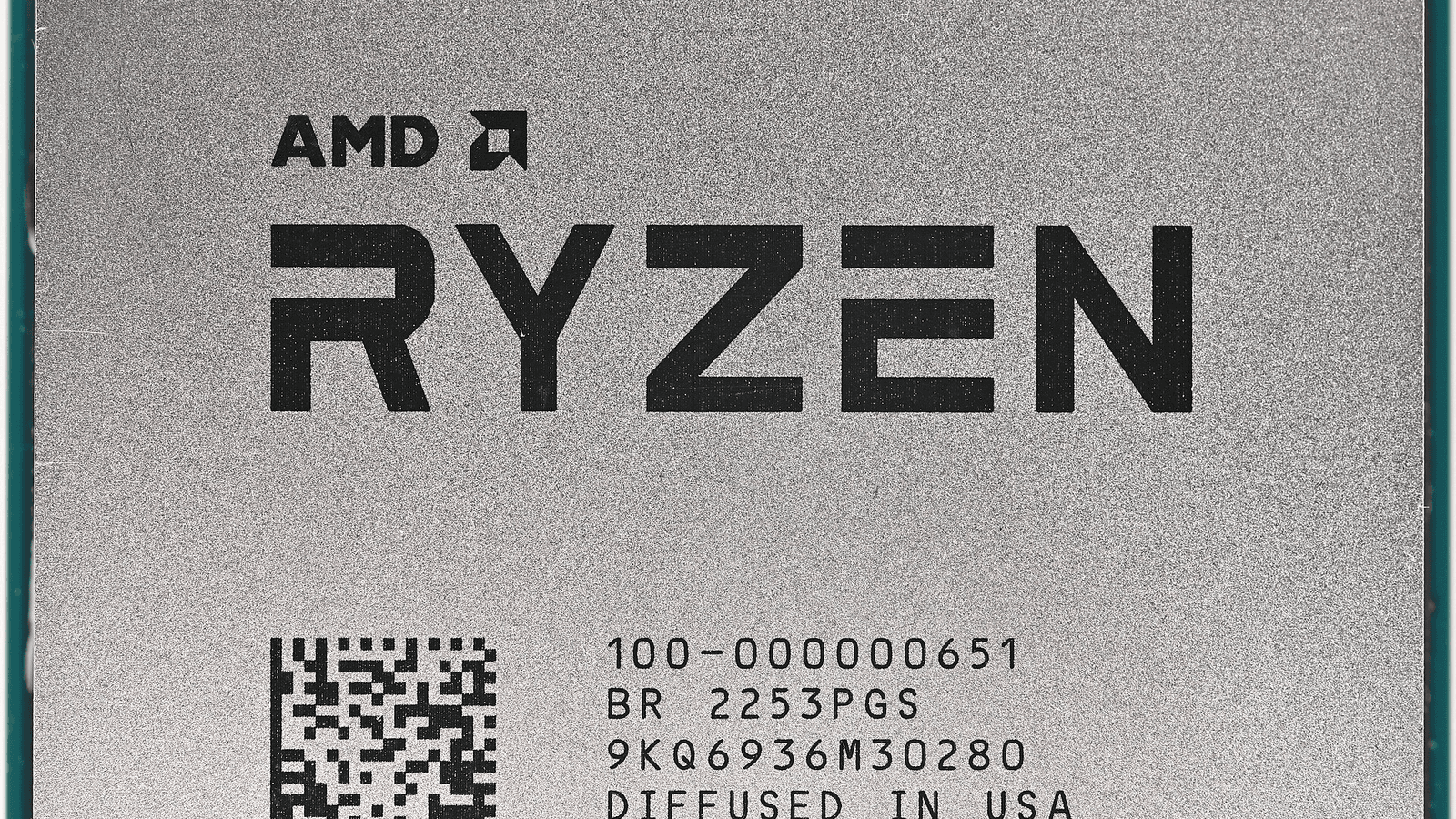
A German Valorant player says a secondhand Ryzen 7 5800X3D got them banned the first time they launched the game, because the chip's previous owner had been caught cheating. The story spread fast enough that Riot's head of anti-cheat stepped in, and his answer takes much of the sting out of it.
The player bought the processor on September 21 on Kleinanzeigen, Germany's answer to eBay, and described what happened on Reddit. It worked normally until they opened Valorant and were kicked out right away, even though the game had run fine with their old CPU.
A Ban That Came With the Chip
When the player contacted Riot, support told them the CPU's ID was blacklisted in Vanguard. The chip had received a hardware ban on August 12, weeks before the sale, because the previous owner used it to cheat.
The player also said support told them the rest of their system had landed on the blacklist, and that nothing could be done. That claim is what turned a strange Reddit post into a warning shared across PC gaming.
Riot Says the Ban Will Not Last
Phillip Koskinas, who leads anti-cheat at Riot, replied on X that he could not find the player's ticket and called the account pretty unlikely. Riot's hardware bans last four months at most, they only apply to the game where the cheating happened, and support tells players how long a ban has left when they write in.
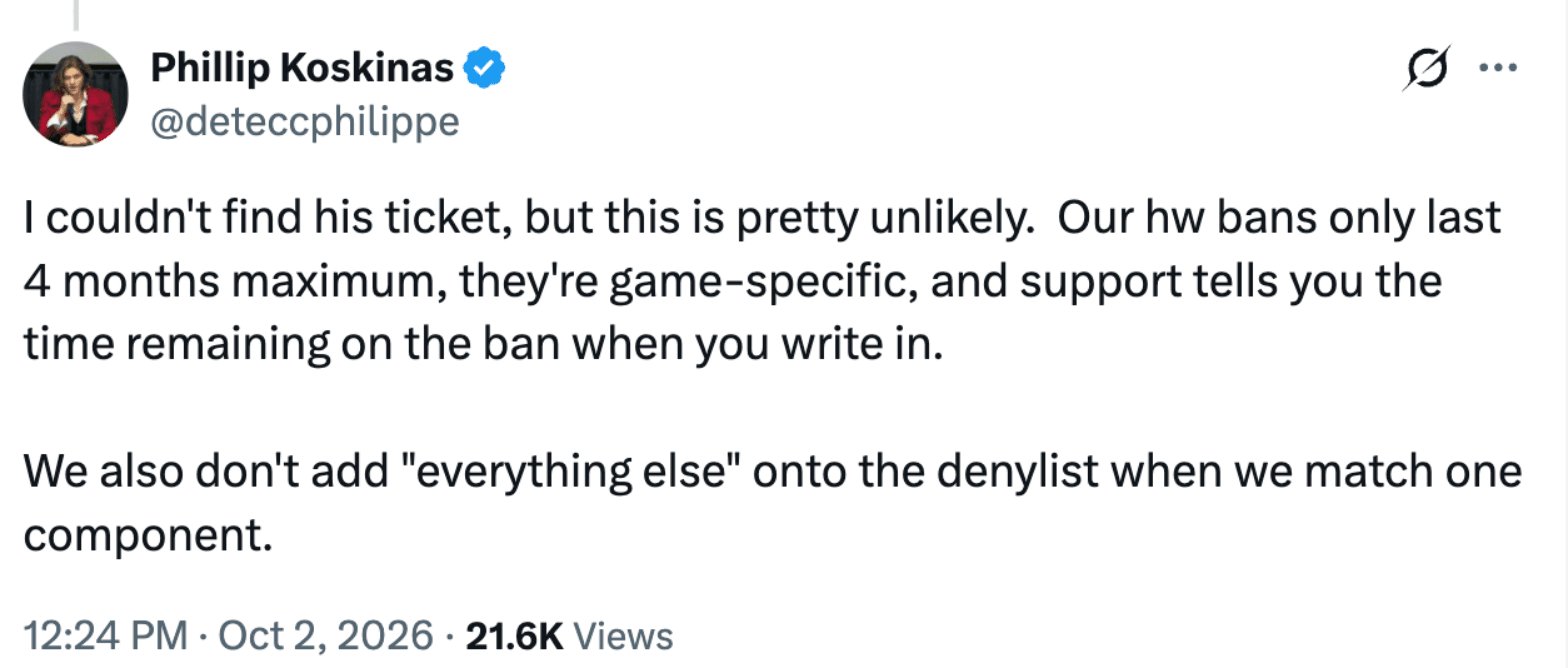
He also said Riot does not add "everything else" in a PC to its denylist when one component matches. If the chip was flagged on August 12, the four-month limit means the ban should run out by mid-December.
Koskinas kept it light, too. When someone said they had shown the original screenshot to their kid as a warning about cheating, he replied, "Soon, we'll have bans at the soul level, and they'll follow you into heaven."
Why Anti-Cheat Can Ban a Part, Not Just a Player
Modern anti-cheat software tracks hardware as well as accounts and IP addresses. Vanguard runs with deep access to the system and only works when Secure Boot and a Trusted Platform Module are enabled, which is part of why Valorant still is not available on Linux or SteamOS.
Cases like this are rare, but they are not new. Secondhand parts triggering anti-cheat bans for their new owners have come up in competitive games for years.
What It Means for Used Parts Buyers
Used hardware is tempting while PC parts are this expensive, and a used CPU already comes with no warranty and no history. This adds a risk buyers cannot check: there is no public way to see whether a processor, graphics card or motherboard carries an anti-cheat ban unless the seller says so.
For this player, Riot's answer means the lockout should be temporary. It is still a good reason to ask a seller directly whether a part has ever been banned.
Photo: Phiarc via Wikimedia Commons (CC BY-SA 4.0)