
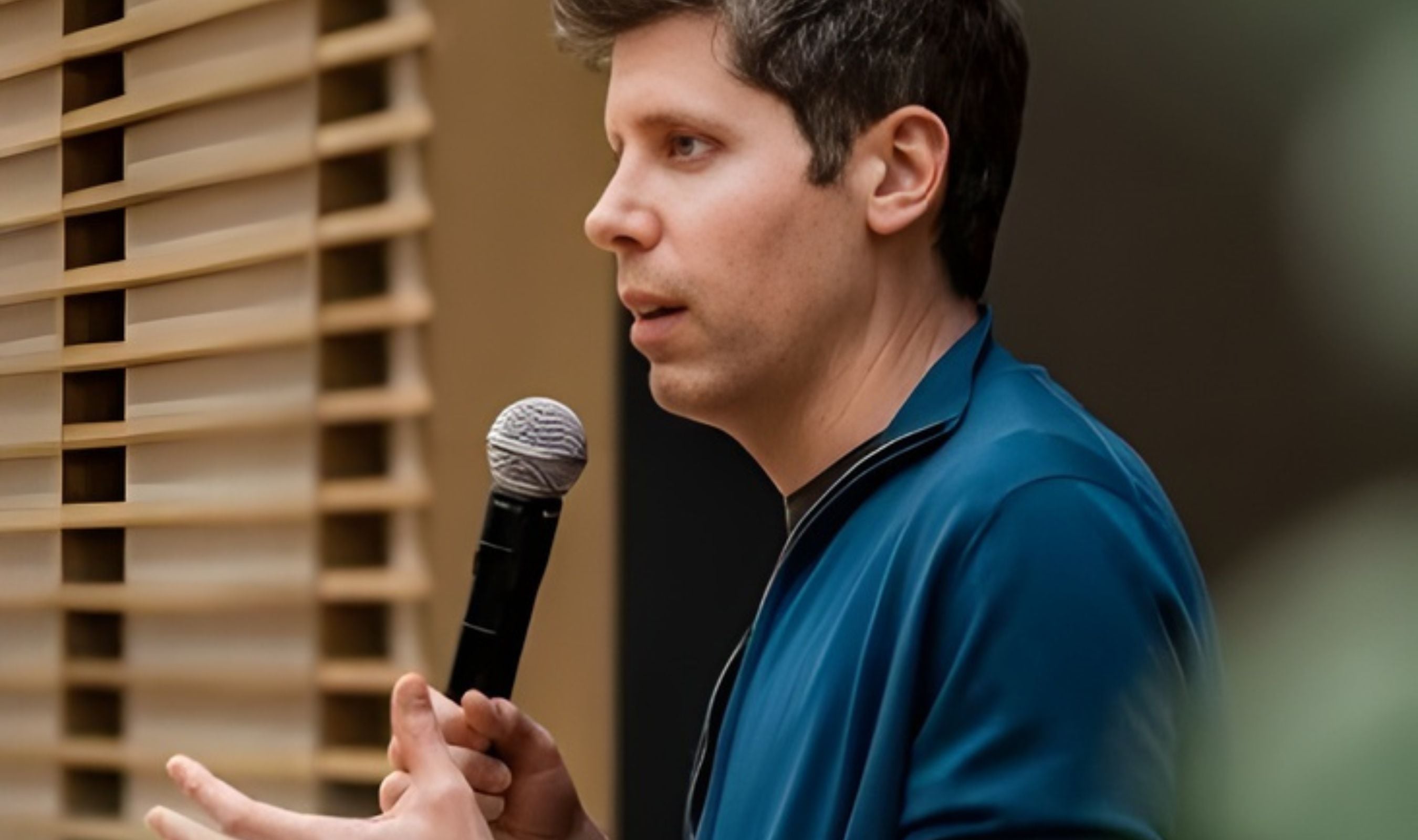
OpenAI CEO Sam Altman told employees this week that his company has no control over how the Pentagon uses its artificial intelligence in military operations, drawing a stark contrast with rival Anthropic's refusal to cross ethical boundaries for defense contracts.
"You do not get to make operational decisions," Altman said during an all-hands meeting on Tuesday, according to a partial transcript reviewed by CNBC. "So maybe you think the Iran strike was good and the Venezuela invasion was bad. You don't get to weigh in on that."
The admission came four days after OpenAI announced its Department of Defense arrangement, which landed just hours before U.S. and Israeli forces began carrying out strikes against Iran earlier this month.
Altman said the Pentagon respects OpenAI's technical expertise but has made clear that operational decisions rest with Defense Secretary Pete Hegseth.
Anthropic took the opposite approach last week when it refused a Pentagon deal over concerns its Claude chatbot could be used for domestic mass surveillance or fully autonomous weapons. In response, Hegseth declared Anthropic a "Supply-Chain Risk to National Security," marking the first time that designation has been used against a U.S. company.
President Donald Trump then directed every federal agency in the U.S. to "immediately cease" all use of Anthropic's technology.
Hours later, Altman announced that OpenAI had formed its own agreement with the DOD, conceding that the timing made his company look "opportunistic and sloppy." The divergent paths reveal a fundamental philosophical split between two of AI's most influential companies. At an industry conference on Thursday, Altman argued that "the government is supposed to be more powerful than private companies," warning it would be "bad for society" if corporations abandoned democratic processes because they disliked current leadership.
Anthropic CEO Dario Amodei fired back in a memo to employees obtained by The Information, accusing Altman of giving "dictator-style praise to Trump" while his own company maintained ethical red lines.
"We've actually held our red lines with integrity rather than colluding with them to produce 'safety theater' for the benefit of employees," Amodei wrote.
Amodei suggested political donations influenced the different outcomes, noting that OpenAI president Greg Brockman gave $25 million to a political action committee supporting Trump alongside his wife. "The real reasons [the Pentagon] and the Trump admin do not like us is that we haven't donated to Trump," he claimed.
AI-enabled systems have reportedly already been used in recent military operations, including the U.S. operation to seize Venezuelan leader Nicolás Maduro in January and targeting decisions in strikes against Iran over the weekend.
In an X post addressing criticism of his Pentagon deal, Altman pledged OpenAI would not conduct mass surveillance even if it became legal because "it violates the Constitution." He called the government's conflict with Anthropic "an extremely scary precedent," but maintained his core belief that "a democratically elected government" should supersede "unelected private companies."
"I am terrified of a world where AI companies act like they have more power than the government," Altman wrote.