
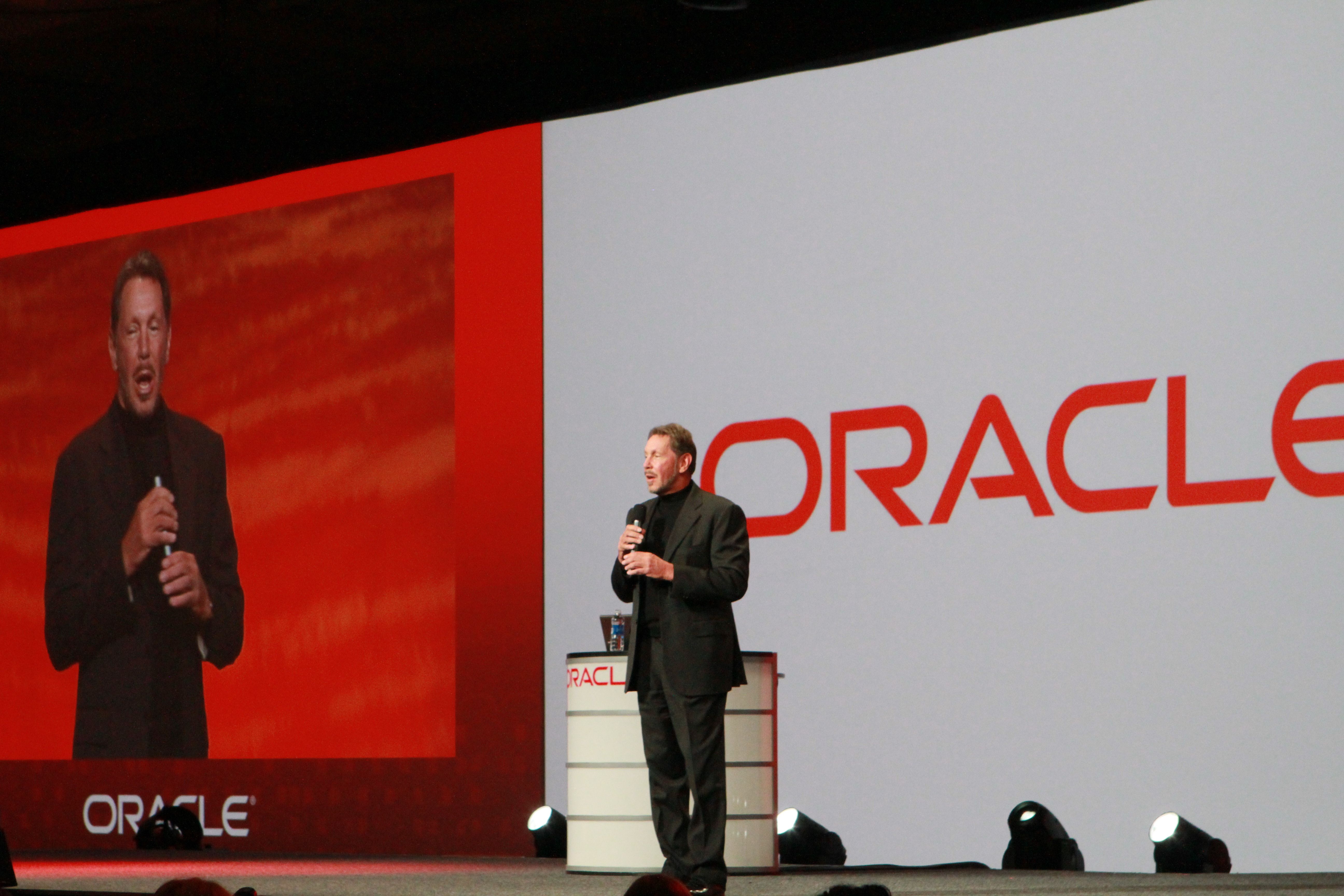
Remember when Oracle CEO Larry Ellison briefly became the world's richest person back in September? That feels like ancient history now. In a dizzying three-month reversal, Oracle's stock has shed 40% of its value, transforming from AI darling to what some analysts are calling the "poster child for AI-related excess."
The story starts with what looked like an unstoppable ascent. In early September, Oracle's quarterly earnings report sent shockwaves through Wall Street, with shares rocketing 36% in a single day. The company revealed it had secured a staggering $455 billion in remaining performance obligations, contracts that guarantee future revenue - which represented a jaw-dropping 359% increase from the previous year. Wall Street analysts, who had been expecting something closer to $180 billion, were left scrambling to update their models.
But here's the thing about rocket ships: they need constant fuel. Oracle's surge wasn't just about impressive numbers, it was turbocharged by a $300 billion deal with OpenAI, committing the ChatGPT maker to purchasing computing power from Oracle over the next five years. That's right, $300 billion. For context, that's about as much power as 4 million homes would consume. The announcement briefly pushed Ellison past Elon Musk in the billionaire rankings, creating headlines about the world's richest person changing hands.
Fast forward to November, and the mood has shifted dramatically. Oracle's latest earnings report showed revenue of $16.1 billion for the quarter ending in November, representing 14% growth year-over-year. On the surface, that sounds solid, especially considering their AI-focused Oracle Cloud Infrastructure (OCI) business saw a 68% surge in sales. But investors focused on what they didn't like: capital expenditures ballooned to $12 billion, up from about $4 billion the previous year and well above the $8 billion analysts had projected.
The company also raised its full-year capital expenditure guidance to $50 billion from $35 billion, signaling even more spending ahead. Meanwhile, Oracle recently took on $18 billion in new debt to fund its infrastructure buildout, pushing total debt over the $100 billion mark. Suddenly, the narrative shifted from "unstoppable AI growth" to "mounting costs and debt concerns."
What's really happening here is a classic case of market psychology meeting financial reality. Oracle has become what analysts are calling the "canary in the coal mine" for AI bubble fears. The company's dramatic rise and fall mirrors broader concerns about whether the AI boom is built on sustainable business models or speculative hype.
Consider this: according to an MIT study cited by market analysts, 95% of 52 organizations surveyed achieved zero return on investment despite spending $30-40 billion on generative AI initiatives. That's a sobering statistic when you're talking about companies like Oracle committing hundreds of billions to infrastructure.
The OpenAI connection adds another layer of complexity. As one analyst put it, "Oracle's earnings arrive as investors weigh whether its massive OpenAI partnership might mean overexposure with a customer currently in the spotlight over profitability concerns." Translation: if OpenAI stumbles, Oracle could be holding the bag on a $300 billion commitment.
Ellison himself struck a cautious tone in recent statements, acknowledging that "there are going to be a lot of changes in AI technology over the next few years and we must remain agile in response to those changes." He even introduced a policy of "chip neutrality," saying Oracle would buy chips from any manufacturer to serve clients - a subtle snub to Nvidia, which has dominated the AI chip market.
The broader context matters here too. JP Morgan Asset Management notes that AI-related stocks have accounted for 75% of S&P 500 returns since ChatGPT launched in November 2022. When one sector drives that much of the market's performance, any cracks in its foundation get magnified.
So where does this leave Oracle and the AI sector? The company's shares, while down 40% from their September peak, are still up more than a third since the start of the year. Some analysts remain bullish, pointing to the $455 billion backlog and the strategic importance of Oracle's cloud infrastructure in the AI race.
But the volatility tells a story of its own. Credit traders have started buying protection against Oracle defaulting on its debt, with credit default swaps - essentially insurance against borrower default, hitting crisis-era highs. That's not something you typically see for a company with Oracle's history and scale.
The truth is, we're witnessing the market trying to price in two competing narratives. One sees AI as the next industrial revolution, worth trillions in investment. The other sees it as a bubble inflated by hype and questionable economics. Oracle's wild ride suggests the answer might be somewhere in between: real transformation, but at a pace and cost that makes even Wall Street nervous.
As one investment consultant noted, "the big questions being asked are whether tech stocks are overvalued and will the AI bubble burst." Oracle's 40% drop doesn't answer that question, but it certainly makes investors ask it more loudly.