
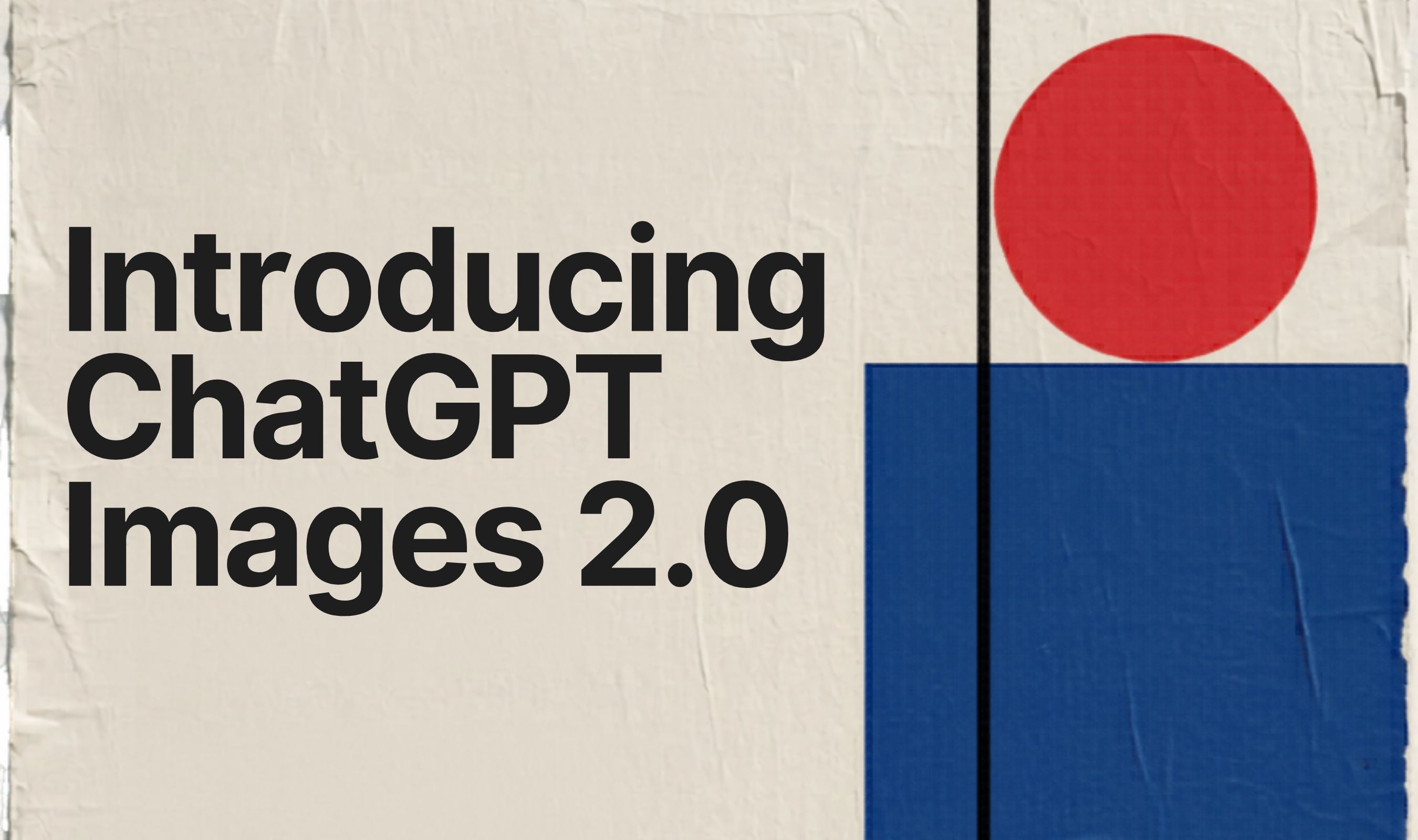
OpenAI's latest image generation model fixes what has been AI's most persistent visual flaw: garbled text. ChatGPT Images 2.0 launched this week with reasoning capabilities that let it search the web, verify information, and produce up to eight consistent images from a single prompt.
The new model transforms what was once a novelty tool into a professional design system aimed at working professionals who need text-heavy assets like infographics, scientific posters, and marketing materials. Unlike previous AI image generators that struggled with basic spelling, Images 2.0 renders clean typography even in small fonts and technical labels.
Teachers can create illustrated lesson plans while marketing managers generate social media posts with consistent branding across multiple assets. The model maintains visual coherence when producing multi-page reports or campaign variations, addressing a critical need for businesses that require uniform design elements.
ChatGPT Images 2.0 taps into the platform's reasoning engine to plan complex scenes before generating them. This allows the AI to search for recent information online and double-check its work, producing more accurate outputs based on current data with a knowledge cutoff of December 2025.
Multilingual support extends beyond English to include Japanese, Korean, Chinese, Hindi, and Bengali with natural text rendering in each language. The flexibility also covers aspect ratios ranging from ultra-wide 3:1 formats suitable for website banners to tall 1:3 layouts optimized for social media content.
All ChatGPT and Codex users gain access to basic generation capabilities starting this week according to OpenAI's announcement. Paid subscribers on Plus, Pro, and Business plans unlock advanced reasoning functions and thinking models that enable more sophisticated outputs.
Developers can integrate the technology through the gpt-image-2 API with pricing based on output quality and resolution options. The model supports resolutions up to 2K, with 4K resolution available in beta testing. The company positions this release as part of its broader vision for economically valuable creative tasks within its super app strategy.
"Visual intelligence represents a critical component of personal assistant development because creative assistance forms an essential part of individual identity."
OpenAI product lead for ChatGPT Images Adele Li explained this during a press briefing.