
Today's NYT Strands is live for Sunday, April 26, 2026 (Puzzle #784). Stuck on today's Strands? We've got progressive hints, from gentle nudges to full solutions, so you can solve at your own pace.
How Strands Works (New Players Start Here)
Strands hides themed words inside a 6x8 letter grid. Your mission: find every word connected to the day's theme. Letters link in any direction (horizontal, vertical, diagonal) and words can twist and turn. Every letter gets used exactly once.
The spangram is the key word or phrase that captures the theme and stretches across the entire board, touching opposite edges.
Need a boost? Find any 4+ letter word (even non-theme words) three times, and the game reveals a hint highlighting theme word letters.
Theme Decoder
Today's Theme Prompt: "Get into it"
What It Really Means
This theme is all about verbal conflict and heated disputes. Every word on the board describes a form of arguing, disagreeing, or clashing with someone. Think raised voices, tense conversations, and unresolved differences.
Think About...
- Synonyms for fighting with words rather than fists
- Words that describe a heated back-and-forth exchange
- Terms for disagreements that escalate beyond a simple discussion
Spangram Clues
Orientation: Across and down, from top to bottom
Letter Count: 9 letters
Starting Zone: Third letter of the first row
Progressive Spangram Hints
Hint 1 (Gentle): Two animals pushing against each other, neither willing to back down.
Hint 2 (Warmer): This word describes what happens when opposing forces meet head-on with no compromise in sight.
Hint 3 (Almost There): First letter is L, last letter is S
---
---
---
---
---
LOCKHORNS
Word-by-Word Hints
Solve as many as you can before peeking. Each word includes escalating clues.
Word 1
Vague: A petty, often repetitive exchange of complaints.
Closer: Think of two people sniping at each other over something trivial.
Letter Clue: Starts with B, 6 letters total
Answer
BICKER
Word 2
Vague: A noisy, childish disagreement that goes nowhere fast.
Closer: The kind of argument you'd expect from kids on a playground.
Letter Clue: Starts with S, 8 letters total
Answer
SQUABBLE
Word 3
Vague: A polite way of saying two people see things differently.
Closer: This word can mean "to disagree" without necessarily implying hostility.
Letter Clue: Starts with D, 7 letters total
Answer
DIFFER
Word 4
Vague: A full-blown argument, often loud and angry.
Closer: This word suggests a serious rift, not just a minor spat.
Letter Clue: Starts with Q, 7 letters total
Answer
QUARREL
Word 5
Vague: The most direct word for stating a conflicting position.
Closer: To present reasons for or against something in a heated back-and-forth.
Letter Clue: Starts with A, 5 letters total
Answer
ARGUE
Word 6
Vague: A prolonged, often bitter dispute that drags on.
Closer: This word evokes the image of wrestling with a problem or person.
Letter Clue: Starts with W, 7 letters total
Answer
WRANGLE
Full Answers
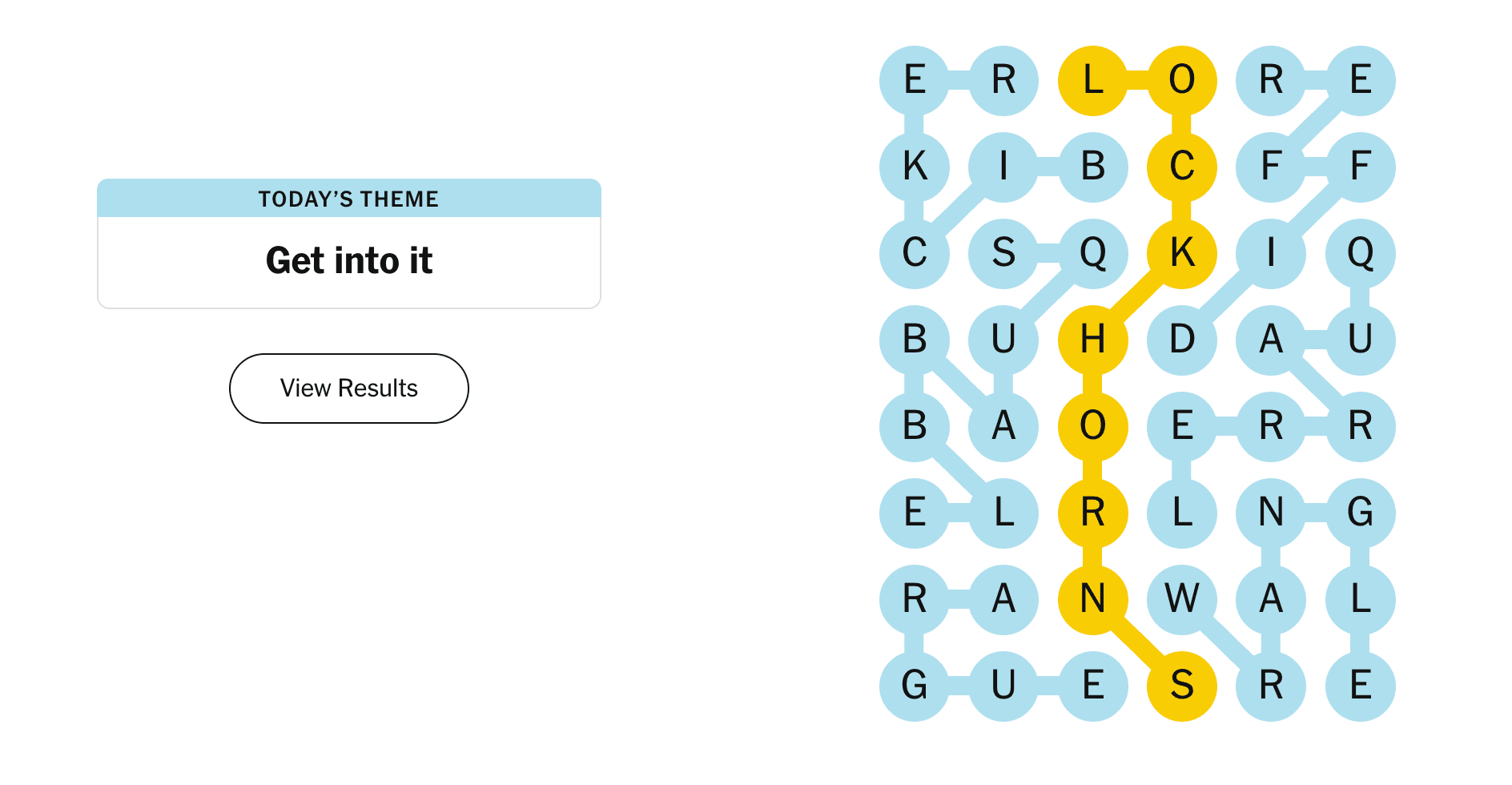
Spangram: LOCKHORNS
Theme Words:
- BICKER
- SQUABBLE
- DIFFER
- QUARREL
- ARGUE
- WRANGLE
Puzzle Debrief
Difficulty Rating: Moderate
Trickiest Word: DIFFER (It's the mildest term in the set and can slip past you since it also means "to be unlike" in a non-confrontational context.)
Our Take: A satisfyingly cohesive theme with a strong spangram payoff. "LOCKHORNS" ties the whole board together nicely, and each theme word captures a distinct shade of disagreement, from the petty (BICKER) to the intense (WRANGLE). The grid rewards players who think in synonyms rather than literal objects.