

Friday brings a fresh set of NYT Pips puzzles with a balanced challenge across all three difficulty levels. The zone layout features identical color-coded conditions for Easy, Medium, and Hard, making this a great day to practice your pip-summing skills and domino placement strategy.
How to Play Pips
Pips is a domino placement puzzle where you fill a grid of color-coded zones. Each zone has a condition you must satisfy using the pip values on your dominoes. The twist: you must use every domino and meet every condition to win.
Zone Conditions:
- = All pips in this zone must equal the same number
- Not Equal All pips must be different numbers
- > Pips must be greater than the listed number
- < Pips must be less than the listed number
- Exact Number Pips must total that exact value
- No Color Free space, any domino value works
Click or tap dominoes to rotate them. Each puzzle has one or more valid solutions.
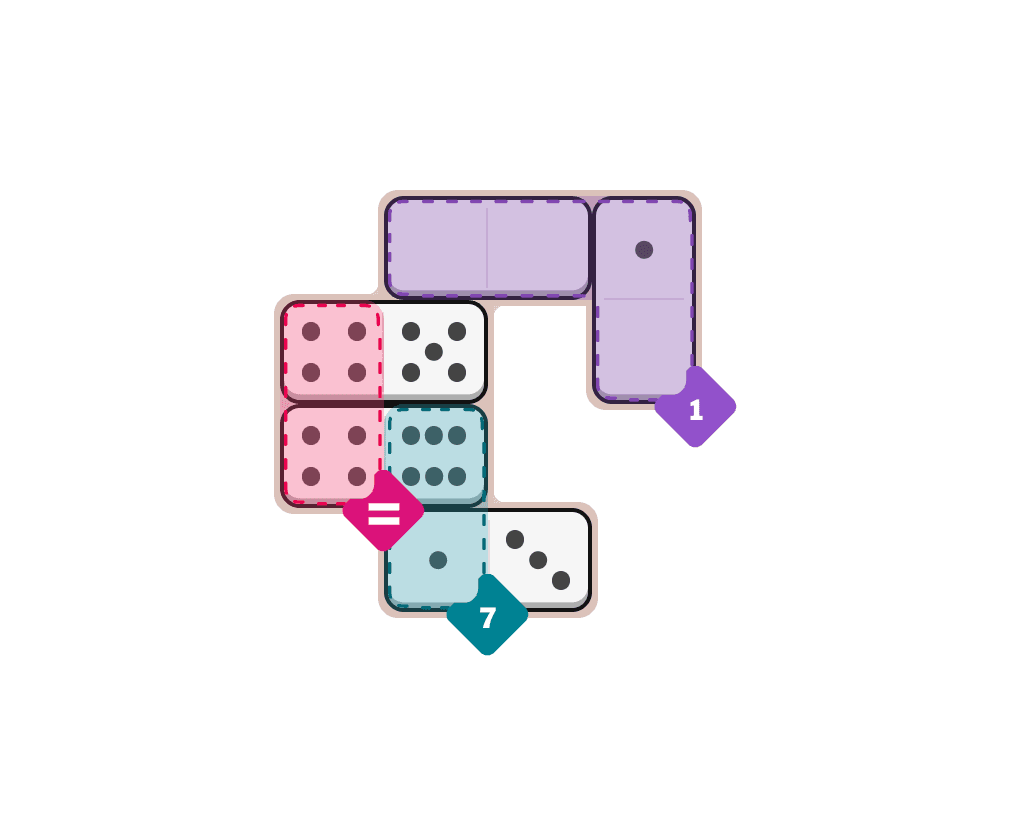
Today's Easy Pips
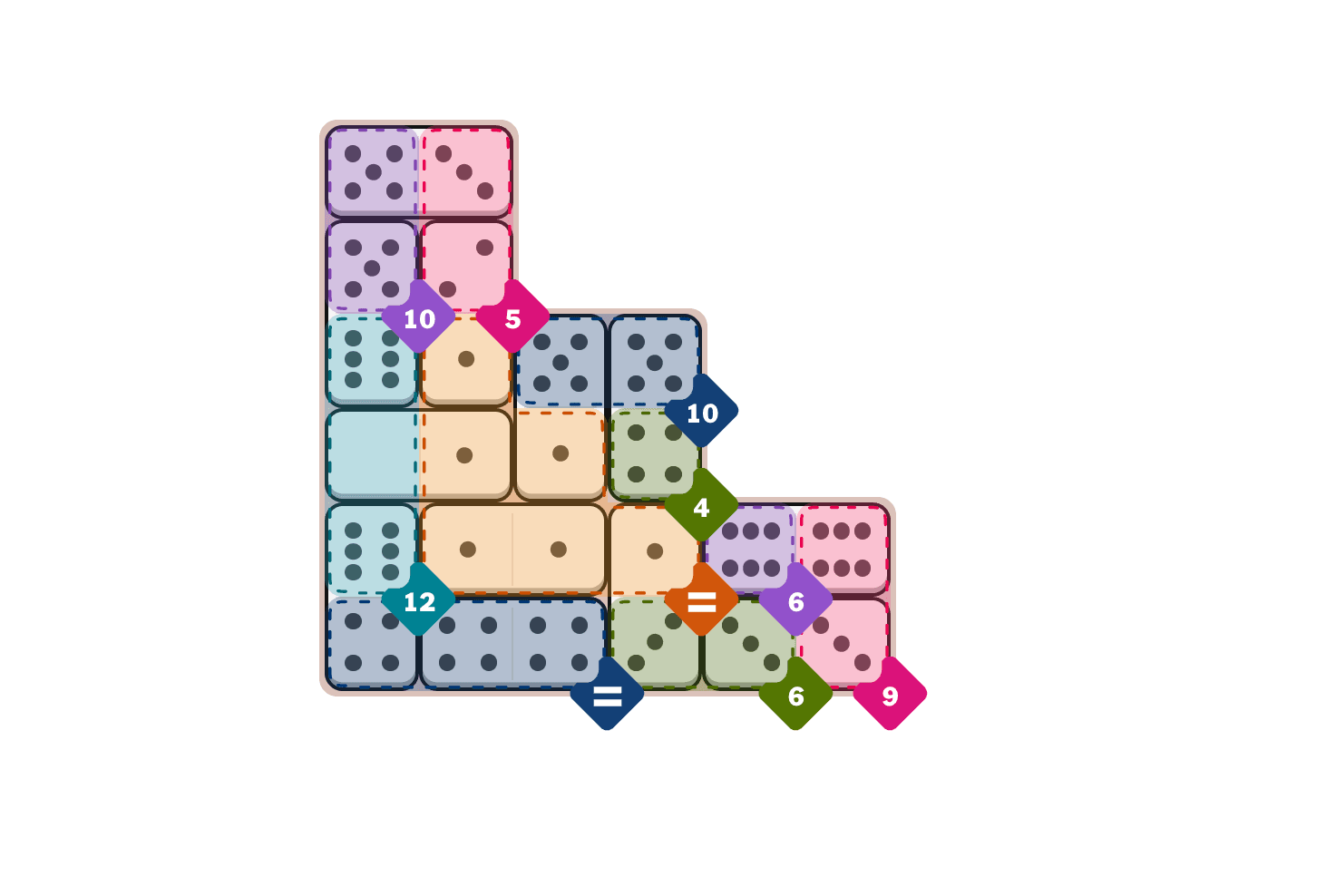
Today's Medium Pips
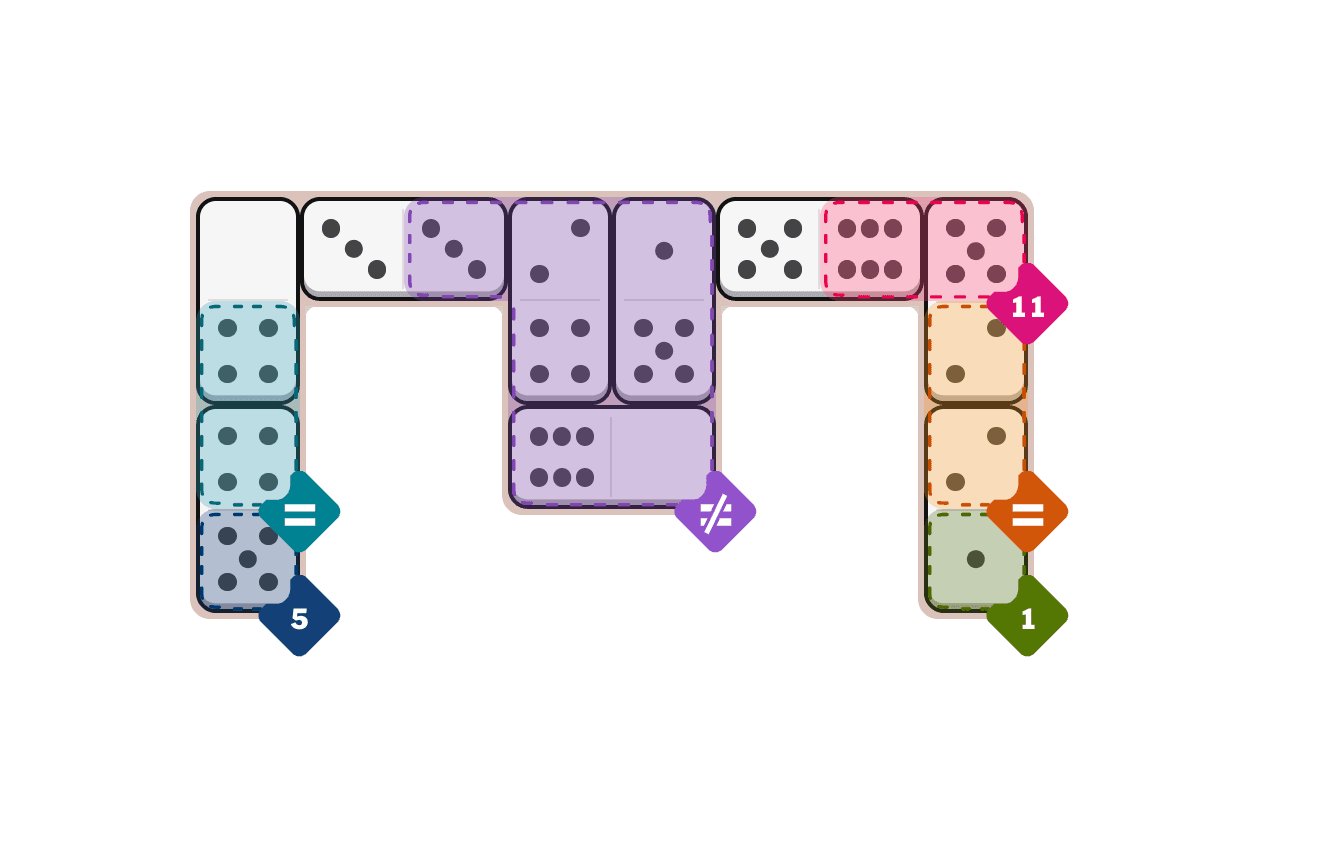
Today's Hard Pips
Quick Hints (No Spoilers)
Starting Point: The exact-sum zones -- purple (10), teal (12), and navy (10) -- are your most constrained starting positions. Solve these first to narrow the possibilities everywhere else.
Key Insight: The orange (=) zone touches five dominoes across multiple color boundaries. Identify the common pip value early by testing which number appears most frequently across the dominoes that intersect orange.
Watch Out For: The green zone appears with two different conditions: green (4) and green (6). Do not confuse them. Green (4) requires an exact sum of 4, while green (6) requires the pips to be less than 6. Misreading these will break your solution.
Step-by-Step Walkthrough
- 1.Start with the purple (10) exact-sum zone. Only two dominoes fit here: 5/3 and 5/6. Place 5/3 horizontally so the 5 sits in purple and the 3 bridges into pink (5). Place 5/6 vertically so the 5 sits in purple (5+5=10, done) and the 6 bridges into teal (12).
- 2.Move to teal (12). You already have a 6 from the purple bridge. You need 6 more pips total. Place 0/2 horizontally across teal and orange (=) -- the 2 goes into teal. Place 6/4 vertically across teal and navy (=) -- the 4 goes into teal. Teal is now 6+2+4=12, satisfied.
- 3.Now solve orange (=). Five dominoes touch this zone: 2/1 (from pink), 0/2 (from teal), 5/1 (from navy), 1/1 (fully inside), and 1/3 (into green). Every domino that touches orange must show the same pip value on the orange side. The only value that works across all five is 1. Place the 2/1 vertically with the 1 in orange. Then place the 0/2 horizontally across teal (12) and orange (=) exactly as the official solution shows, with the 0 in teal and the 2 in orange. It looks like the odd one out next to the 1s, but this is the published solution placement.
- 4.Place the 5/1 vertically in navy (10) and orange (=). Navy gets 5, orange gets 1.
- 5.Place the 5/4 vertically in navy (10) and green (4). Navy reaches 5+5=10 (done). Green (4) gets a 4, meeting the exact sum.
- 6.Place the 6/4 vertically in teal (12) and navy (=). The 6 goes in teal (already complete), the 4 goes in navy (=) which requires equal values on both sides -- the 4 matches the 4/4 placed later.
- 7.Place the 1/1 horizontally entirely within orange (=). Both sides are 1, consistent with orange's common value.
- 8.Place the 1/3 vertically in orange (=) and green (6). Orange gets 1, green (6) gets 3 (less than 6, satisfied).
- 9.Place the 4/4 horizontally in navy (=). Both sides equal, condition satisfied.
- 10.Place the 6/6 horizontally in purple (6) and pink (9). Purple (6) gets 6 (exact). Pink (9) gets 6 (less than 9).
- 11.Place the 3/3 horizontally in green (6) and pink (9). Green (6) gets 3 (less than 6). Pink (9) gets 3 (less than 9). All conditions satisfied.
Hard Pips Solution
Last chance to solve independently
---
---
---
---
---
- 1.Place the 5/3 domino horizontally in the purple (10) zone and pink (5) zone
- 2.Place the 5/6 domino vertically in the purple (10) zone and teal (12) zone
- 3.Place the 2/1 domino vertically in the pink (5) zone and orange (=) zone
- 4.Place the 0/2 domino horizontally in the teal (12) zone and orange (=) zone
- 5.Place the 5/1 domino vertically in the navy (10) zone and orange (=) zone
- 6.Place the 5/4 domino vertically in the navy (10) zone and green (4) zone
- 7.Place the 6/4 domino vertically in the teal (12) zone and navy (=) zone
- 8.Place the 1/1 domino horizontally in the orange (=) zone
- 9.Place the 1/3 domino vertically in the orange (=) zone and green (6) zone
- 10.Place the 4/4 domino horizontally in the navy (=) zone
- 11.Place the 6/6 domino horizontally in the purple (6) zone and pink (9) zone
- 12.Place the 3/3 domino horizontally in the green (6) zone and pink (9) zone
Puzzle Debrief
Overall Difficulty: Moderate challenge -- the zone layout is identical across all three difficulty levels, which is unusual. The orange (=) zone's multi-domino constraint is the central puzzle mechanism that demands careful attention.
Trickiest Puzzle: Hard -- the green zone appears with two distinct conditions (exact sum of 4 and less-than-6), which is easy to misread under time pressure. The orange (=) zone also requires tracking five domino intersections simultaneously, making it the most error-prone part of the solve.
Our Take: Friday's set rewards systematic thinking over speed. The shared zone layout across all three difficulties means mastering the Easy puzzle effectively teaches you the Medium and Hard solutions too. Focus on the exact-sum zones first, use the orange (=) constraint to lock values, and double-check your green zone conditions before committing.
Tomorrow's Pips drops at midnight. See you then.